
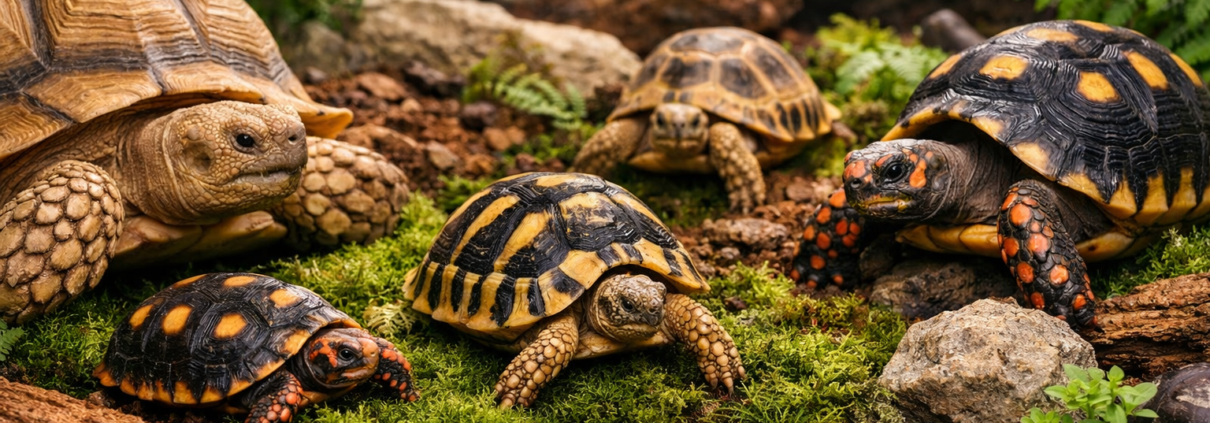
Captive Bred Tortoises for sale
Quick Answer: Captive bred tortoises are tortoises hatched and raised in controlled environments by licensed breeders, making them healthier, better socialized, and more ethically sourced than wild-caught alternatives. In 2026, buyers can find a tortoise for sale across 24+ species from reputable online breeders, with prices typically ranging from $130 to well over $1,000 depending on species, age, and rarity. Whether you’re a first-time reptile keeper, a school looking for a classroom mascot, or a nonprofit organization planning a unique fundraiser, captive bred tortoises represent one of the most rewarding and responsible choices in the reptile hobby.
Key Takeaways
- Captive bred is always preferable to wild-caught: healthier animals, no parasites from wild exposure, and no negative conservation impact.
- Species range from tiny to enormous: Egyptian tortoises top out near 4 inches; Galápagos tortoises can exceed 500 lbs.
- Prices vary widely: Sulcata hatchlings can start around $130 [7], while rare species like Aldabra tortoises command $1,000+.
- Reputable breeders offer live arrival guarantees, overnight shipping, and detailed care documentation [4].
- 24+ captive bred species are available from established vendors in 2026 [2].
- Longevity matters: Most tortoise species live 50–100+ years, so this is a multi-generational commitment.
- Schools, nonprofits, and sports teams have successfully used tortoise adoption events and “sponsor a hatchling” campaigns as unique fundraisers.
- Legal compliance is essential — some species require CITES documentation; always buy from licensed breeders.
What Makes a Captive Bred Tortoise Different From Wild-Caught?
Captive bred tortoises are hatched from eggs laid by parent animals that live entirely in human care — never removed from the wild. This distinction matters enormously for the animal’s health and your experience as a keeper.
Wild-caught tortoises frequently carry internal parasites, suffer from relocation stress, and often refuse food for weeks or months after capture. Captive bred animals, by contrast, are accustomed to human interaction from day one. They recognize feeding schedules, accept a variety of foods, and adapt quickly to enclosure life.
Key differences at a glance:
| Factor | Captive Bred | Wild-Caught |
|---|---|---|
| Parasite load | Typically low | Often high |
| Stress on arrival | Minimal | Significant |
| Feeding response | Usually immediate | Often delayed |
| Legal/ethical status | Fully compliant | Potentially problematic |
| Conservation impact | None | Negative |
| Socialization | Human-acclimated | Fearful of people |
Multiple licensed breeders — including Tortoise Town, CB Reptile, Big Apple Herp, and ReptMart — now promote exclusively 100% captive bred stock as their primary selling point [1][2][4][5]. That shift in the industry reflects both consumer demand and growing awareness of conservation concerns.
Choose captive bred if: You want a healthy, handleable tortoise with a clear history. Wild-caught animals are never recommended for beginners, schools, or fundraising contexts.
A Complete Guide to Captive Bred Tortoise Species: Small to Giant
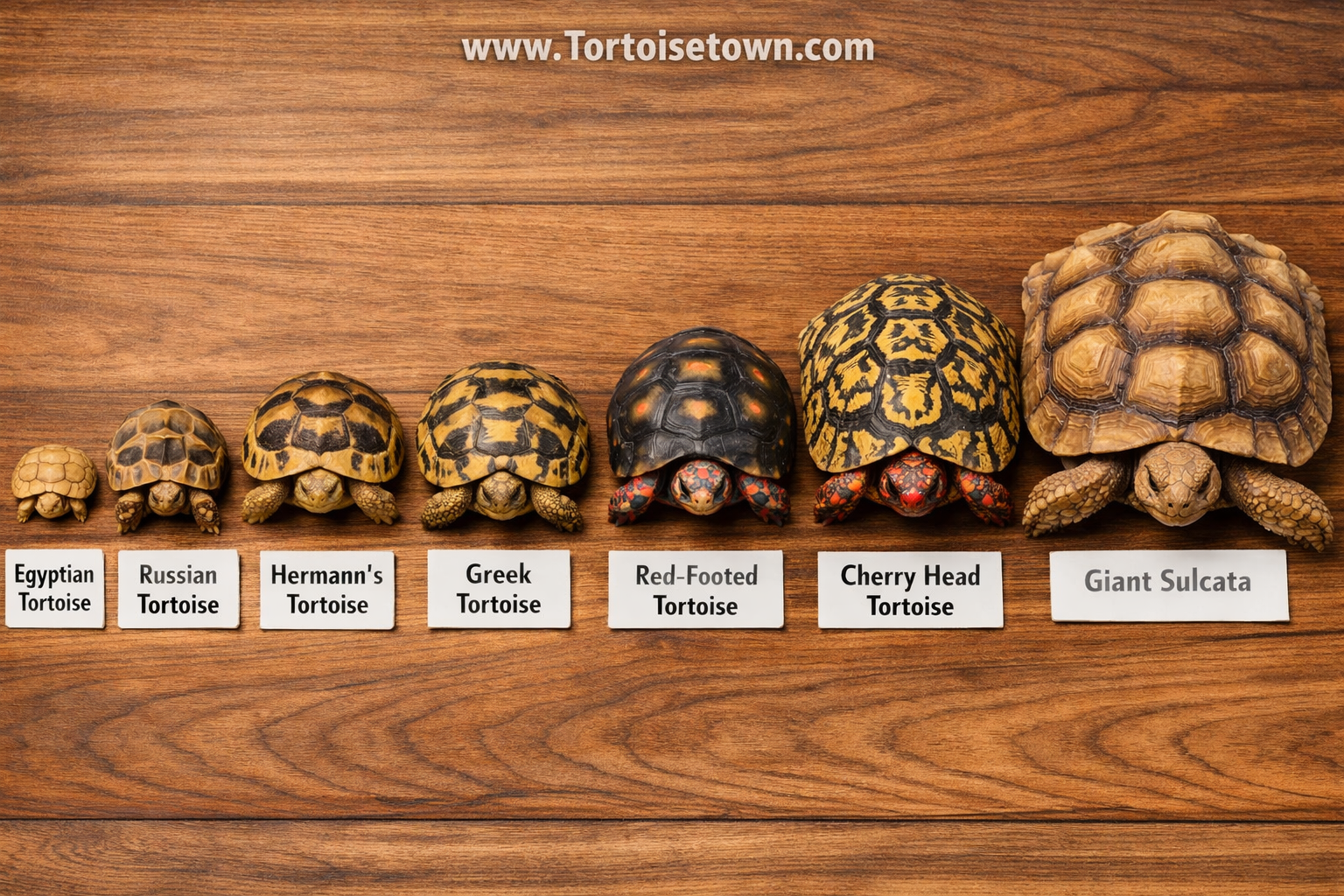
The tortoise world spans an astonishing size range. Below is a comprehensive breakdown organized from smallest to largest, covering the species most commonly available as captive bred animals in 2026.
🐢 Small Species (Under 8 Inches)
Egyptian Tortoise (Testudo kleinmanni)
The smallest tortoise species in the Northern Hemisphere, Egyptian tortoises typically reach just 3–4 inches as adults. Their golden-tan shells and compact size make them highly sought after, but they’re also one of the rarest captive bred options available. They require warm, arid conditions and very specific humidity levels. Not recommended for beginners.
Russian Tortoise (Agrionemys horsfieldii)
Russian tortoises are among the most popular captive bred species for good reason: they’re hardy, personable, and manageable at 6–9 inches as adults [1]. CB Reptile lists captive bred baby Russian tortoises at $329.99–$479.00 in 2026 [1]. They tolerate cooler temperatures better than most species, making them ideal for keepers in northern climates. They’re also one of the best choices for school classroom pets.
Hermann’s Tortoise (Testudo hermanni)
Hermann’s tortoises are a European classic, reaching 6–8 inches at maturity. They come in two subspecies: Western Hermann’s (smaller, more colorful) and Eastern Hermann’s (larger, more subdued). Both thrive in Mediterranean-style enclosures with good UV exposure and a varied diet of leafy greens and grasses. Captive bred Hermann’s are widely available and typically priced in the $200–$400 range [5].
*Greek Tortoise (Testudo graeca)
Also called the spur-thighed tortoise, the Greek tortoise is a close relative of the Hermann’s and shares similar care requirements. Adults reach 5–8 inches. There are numerous subspecies, and coloration varies considerably. ReptMart lists captive bred Greek tortoises among their available stock [5].
🐢🐢 Medium Species (8–14 Inches)
Red-Footed Tortoise (Chelonoidis carbonarius)
Native to South America, red-footed tortoises are named for the bright red or orange scales on their legs. They reach 10–14 inches as adults and are notable for being more omnivorous than most tortoise species — they accept fruits, vegetables, and occasional protein. Captive bred red-foots are friendly, curious, and relatively forgiving of humidity fluctuations. Prices typically fall in the $189–$279 range [5].
Cherry Head Red-Footed Tortoise (Chelonoidis carbonarius “cherry head”)
The cherry head is a smaller, more vividly colored locality variant of the red-footed tortoise, originating from the Brazilian state of Pará. Adults typically stay under 12 inches. The bright red coloration on the head intensifies with age, making these animals particularly striking. They command a slight price premium over standard red-foots.
Yellow-Footed Tortoise (Chelonoidis denticulatus)
The yellow-footed tortoise is the larger South American cousin of the red-foot, with yellow-orange scales replacing the red. Adults can reach 12–16 inches. They prefer higher humidity than red-foots and do best in tropical or subtropical setups. Captive bred yellow-foots are less commonly available but can be found through specialty breeders [2].
Marginated Tortoise (Testudo marginata)
The marginated tortoise is the largest European tortoise species, reaching 10–14 inches. Its most distinctive feature is the dramatically flared rear marginal scutes that give it a skirt-like appearance. Captive bred marginated tortoises are available but less common than Hermann’s or Greeks. They share similar care requirements with other Mediterranean species.
🐢🐢🐢 Large Species (14 Inches and Above)
Leopard Tortoise (Stigmochelys pardalis)
Leopard tortoises are the fourth-largest tortoise species in the world, with adults commonly reaching 16–18 inches and weighing 40–70 lbs. Their bold black-and-yellow spotted shells are unmistakable. They’re native to the African savanna and require large outdoor enclosures in warm climates. Captive bred leopard tortoises are available through specialty breeders and are considered an intermediate-level species.
Sulcata Tortoise (Centrochelys sulcata)
Also called the African spurred tortoise, the sulcata is the third-largest tortoise species on Earth and the most commonly kept giant tortoise in captivity. Hatchlings are irresistibly small, but adults routinely reach 24–30 inches and 100–200 lbs. Arizona Tortoise Compound lists well-started 2026 sulcata hatchlings at $130.00 [7]. Buyers should understand that a sulcata hatchling will eventually need a space the size of a small backyard. This species is frequently surrendered to rescues when owners underestimate their adult size — please research thoroughly before purchasing.
Aldabra Tortoise (Aldabrachelys gigantea)
Aldabra tortoises are among the largest land animals on Earth, with adults reaching 3–4 feet in length and weighing 300–500+ lbs. They originate from the Aldabra Atoll in the Seychelles and are one of only two remaining giant tortoise species. Captive bred Aldabras are available but expensive, often $1,000–$3,000+ for hatchlings. They require substantial outdoor space in warm climates and are strictly for experienced keepers with serious resources.
Galápagos Tortoise (Chelonoidis niger)
The Galápagos tortoise is the largest living tortoise species, with some individuals exceeding 500 lbs and living well past 100 years. Private ownership of Galápagos tortoises is extremely restricted and requires special permits in most jurisdictions. They are generally not available through standard commercial channels and are mentioned here for completeness rather than as a practical purchase option.
How to Find a Reputable Tortoise for Sale in 2026
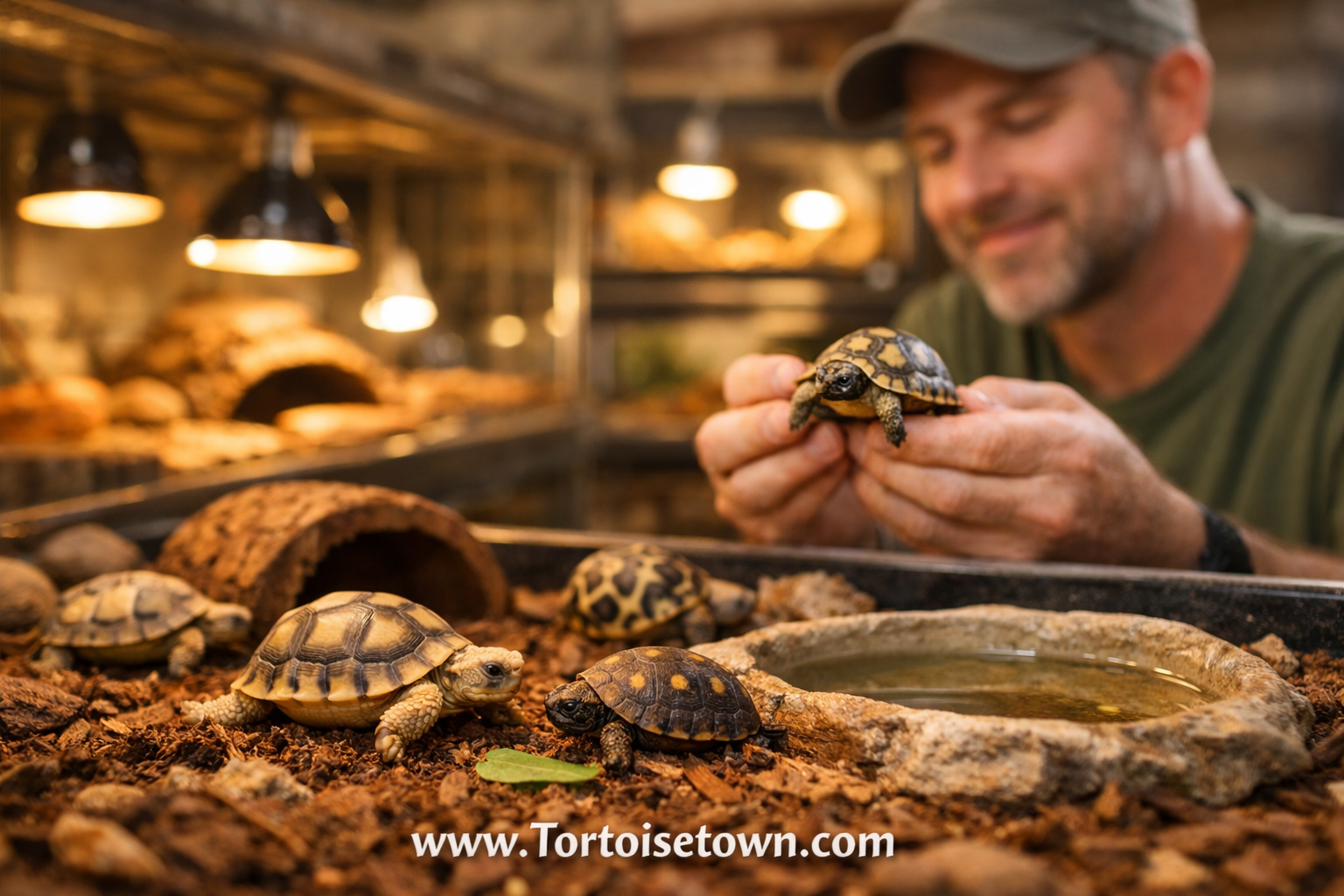
Finding a legitimate captive bred tortoise for sale requires more than a quick Google search. The reptile market has both excellent breeders and bad actors, so knowing what to look for protects both you and the animal.
What separates reputable breeders from the rest:
- They sell exclusively captive bred animals — no wild-caught stock, ever [1][2][4][5].
- They provide detailed care sheets with every purchase.
- They offer a live arrival guarantee and use insulated, temperature-controlled overnight shipping [4].
- They can answer specific questions about the animal’s hatch date, feeding history, and parentage.
- They’re transparent about pricing and don’t pressure buyers.
Tortoise Town maintains 24+ species of captive bred hatchlings for sale, including hand-raised juveniles and adults [2]. CB Reptile lists captive bred baby Russian tortoises with clear pricing and size data [1]. ReptMart offers Sulcata, Red-Footed, Hermann’s, Russian, Greek, Elongated, and Grenada Island Red-Footed tortoises, with prices ranging from $189–$279.99 [5].
When you find a pet tortoise you’re interested in, ask the seller these questions before committing:
- What is the hatch date or approximate age?
- What have you been feeding it, and how often?
- Has it been dewormed or had a vet check?
- What are your shipping protocols and live arrival guarantee terms?
- Do you have CITES documentation (for regulated species)?
Common mistake: Buying from a local pet chain store without verifying captive bred status. Many large retailers still source from intermediaries who may mix wild-caught and captive bred animals without clear labeling.
What Does a Captive Bred Tortoise for Sale Actually Cost?
Tortoise prices in 2026 vary dramatically by species, age, and source. Here’s a realistic breakdown to set expectations before you shop.
Approximate price ranges by species (2026):
| Species | Hatchling | Juvenile | Adult |
|---|---|---|---|
| Sulcata | ~$130 [7] | $150–$300 | $300–$600 |
| Russian | $329–$479 [1] | $400–$600 | $500–$800 |
| Hermann’s | $200–$350 | $300–$500 | $400–$700 |
| Greek | $189–$279 [5] | $250–$400 | $350–$600 |
| Red-Footed | $189–$279 [5] | $250–$450 | $400–$700 |
| Cherry Head | $250–$400 | $350–$550 | $500–$900 |
| Yellow-Footed | $300–$500 | $450–$700 | $600–$1,000 |
| Leopard | $300–$500 | $500–$800 | $700–$1,200 |
| Aldabra | $1,000–$2,000 | $2,000–$4,000 | $5,000+ |
Beyond the purchase price, budget for:
- Initial enclosure setup: $150–$600 depending on size
- UV-B lighting (essential for all species): $50–$150
- Substrate, hides, and water dishes: $50–$100
- First vet visit: $75–$200
- Ongoing food costs: relatively low (most species eat leafy greens, grasses, and weeds)
Essential Care Requirements for Captive Bred Tortoises
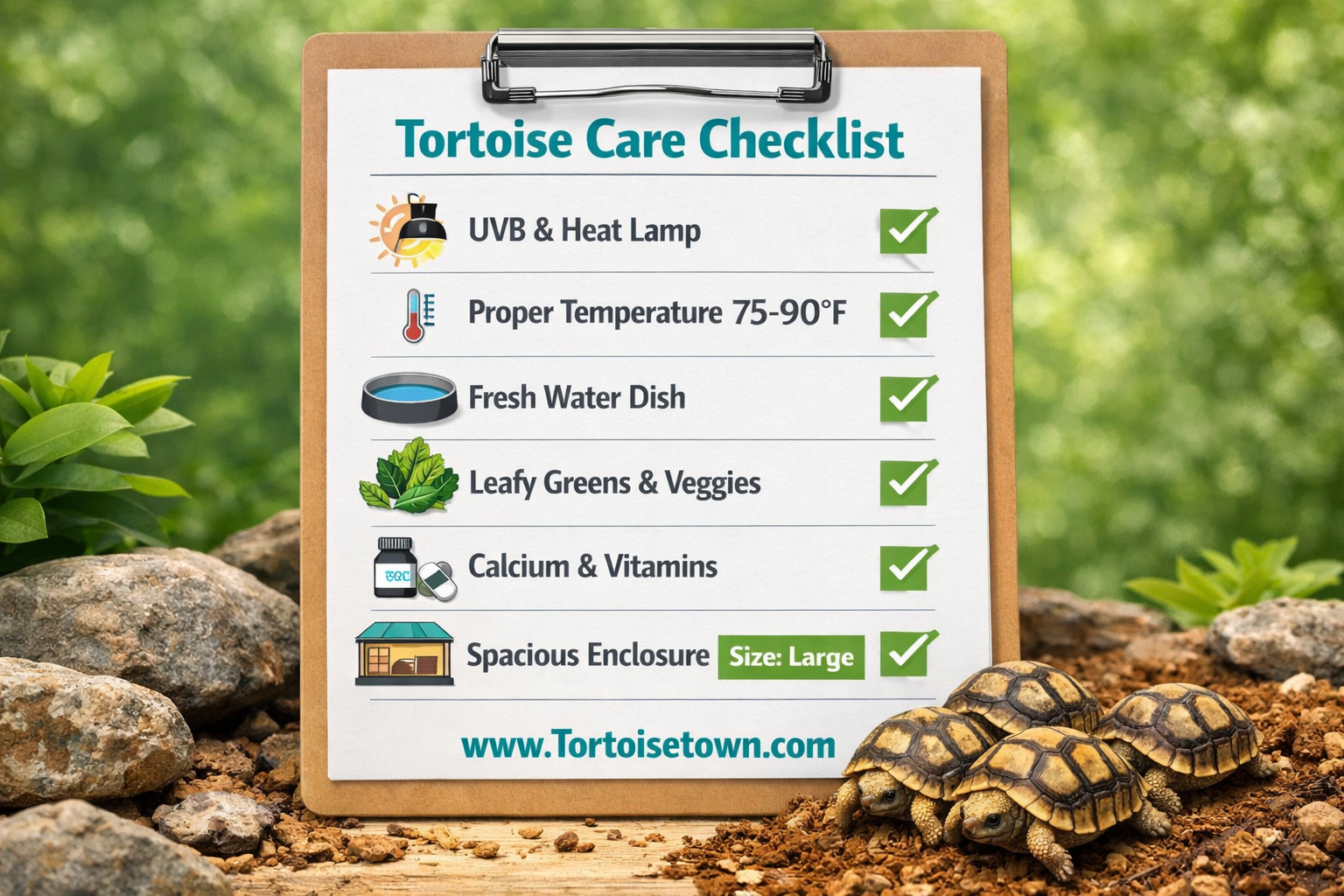
Every tortoise species has specific needs, but several core care principles apply across the board. Getting these right from day one dramatically improves your tortoise’s long-term health.
Temperature and UV-B Lighting
All tortoises are ectotherms — they rely on external heat sources to regulate body temperature. Every enclosure needs a basking spot (95–110°F for most species), a warm ambient zone (75–85°F), and a cooler retreat (65–75°F). UV-B lighting is non-negotiable: without it, tortoises cannot synthesize vitamin D3, which leads to metabolic bone disease over time.
Substrate and Hydration
Most Mediterranean species (Russian, Hermann’s, Greek) do well on a mix of topsoil and play sand. Tropical species (red-footed, yellow-footed) need a substrate that retains some moisture, such as coconut coir or cypress mulch. All tortoises should have access to a shallow water dish and benefit from regular warm soaks, especially hatchlings.
Diet
- Mediterranean species: Timothy hay, grasses, dandelion greens, hibiscus flowers, and occasional calcium supplementation.
- South American species: Leafy greens, tropical fruits (in moderation), and occasional protein sources.
- Giant species (sulcata, leopard): High-fiber grasses and hay make up the bulk of the diet; fruit and protein should be minimal.
Avoid: Spinach, kale (in excess), iceberg lettuce, and any food high in oxalic acid or goitrogens.
Can Captive Bred Tortoises Work as Fundraising Animals?
This is a genuinely underused fundraising angle, and it works better than most people expect. Schools, nonprofits, youth sports teams, and community organizations have successfully used tortoises as the centerpiece of creative fundraising campaigns.
Why tortoises work for fundraisers:
- They’re universally appealing — kids and adults are equally fascinated by them.
- They’re calm and handleable, making them safe for supervised public events.
- Their longevity creates a compelling “sponsor a hatchling” narrative.
- They generate social media content naturally — people love sharing tortoise photos.
Fundraising formats that work well:
- “Sponsor a Hatchling” campaigns: Supporters pay to name and sponsor a captive bred hatchling that the organization keeps as a mascot. Monthly updates keep donors engaged.
- Tortoise adoption events: Partner with a local breeder to host an adoption event where a portion of each sale goes to your organization.
- Educational classroom visits: Charge admission for a “meet the tortoise” educational event at schools or community centers.
- Merchandise: Tortoise-themed merchandise (shirts, stickers, mugs) tied to a named mascot sells well for school and sports team fundraisers.
- “Slow and Steady” pledge drives: A fun themed campaign where donors pledge per day or per milestone, playing on the tortoise’s famous patience.
Real example: A youth soccer team in Arizona used a sulcata hatchling named “Goalie” as their mascot for a season-long fundraiser, raising funds through merchandise sales and a “sponsor Goalie’s food for a month” campaign. The tortoise is still their team mascot years later.

Frequently Asked Questions About Captive Bred Tortoises
Q: What is the best captive bred tortoise for a first-time owner?
A: Russian tortoises and Hermann’s tortoises are the top recommendations for beginners. Both are hardy, manageable in size (6–9 inches), tolerate a range of temperatures, and are widely available as captive bred animals [1][5].
Q: How long do captive bred tortoises live?
A: Most common species live 50–80 years in captivity, and some individuals exceed 100 years. This makes tortoise ownership a multi-generational commitment — many owners include their tortoise in estate planning.
Q: Are captive bred tortoises legal to own?
A: In most U.S. states, yes. However, some species (particularly Aldabra and certain Testudo species) may require CITES documentation. Always verify your state’s regulations before purchasing, and only buy from licensed breeders who provide proper paperwork.
Q: Do captive bred tortoises carry salmonella?
A: Like all reptiles, tortoises can carry Salmonella bacteria without showing symptoms. Basic hygiene practices — washing hands after handling, not allowing tortoises near food preparation areas, and supervising young children — effectively manage this risk.
Q: Can I keep a tortoise outdoors year-round?
A: It depends on your climate and species. Sulcata and leopard tortoises thrive outdoors in USDA zones 9–11. Mediterranean species can tolerate cooler temperatures and may hibernate naturally. Most tropical species need indoor supplemental heating in winter.
Q: What’s the difference between a tortoise and a turtle?
A: Tortoises are fully terrestrial and have dome-shaped shells and elephantine feet. Turtles are semi-aquatic or aquatic with flatter shells and webbed feet. All tortoises are technically turtles, but not all turtles are tortoises.
Q: How do I verify a tortoise is truly captive bred?
A: Ask for the hatch date and parent information. Reputable breeders like those on Tortoise Town [2] and CB Reptile [1] provide documentation. Wild-caught animals often have worn, scarred shells, are underweight, and refuse food initially.
Q: What’s the smallest tortoise I can buy as a pet?
A: The Egyptian tortoise (Testudo kleinmanni) is the smallest commonly available species, reaching just 3–4 inches as an adult. However, they’re rare and require experienced care. Russian tortoises are a more practical small-species option for most buyers.
Q: Is a sulcata tortoise a good pet for a school or organization?
A: Sulcata hatchlings are affordable and engaging, but their adult size (100–200 lbs) means your organization needs a long-term plan for housing them. Many schools successfully keep sulcatas for years with proper planning and community involvement.
Q: Do tortoises need companions?
A: Most tortoise species are solitary by nature and do not require companions. In fact, housing multiple males together often leads to aggression. A single tortoise in a well-enriched enclosure is typically content.
Q: How often do captive bred tortoises eat?
A: Most species should be offered food daily or every other day. Hatchlings benefit from daily feeding to support healthy growth. Adults can go longer between meals without issue, though consistent access to fresh greens is ideal.
Q: Where is the best place to find a tortoise for sale online?
A: Reputable online sources include Tortoise Town [2], CB Reptile [1], Big Apple Herp [4], ReptMart [5], and Snakes at Sunset [3]. Always verify captive bred status, live arrival guarantees, and shipping protocols before purchasing.
Conclusion: Your Next Steps With Captive Bred Tortoises
Captive bred tortoises are among the most rewarding animals you can bring into a home, classroom, or organization. They’re calm, long-lived, endlessly fascinating, and — when sourced responsibly — carry no conservation guilt. Whether you’re drawn to the pocket-sized charm of a Russian tortoise or the prehistoric grandeur of a sulcata, there’s a species that fits your space, budget, and experience level.
Here’s how to move forward:
- Choose your species using the size chart and care requirements above. Match the species to your climate, available space, and experience level.
- Set a budget that includes not just the purchase price but the full first-year setup cost.
- Find a reputable breeder — look for captive bred documentation, live arrival guarantees, and transparent care information [1][2][4][5].
- Prepare the enclosure before the tortoise arrives. Get temperatures stable, UV-B lights cycled in, and substrate in place at least a week ahead.
- If you’re fundraising, start with a “sponsor a hatchling” concept — it’s low-cost to launch, highly engaging, and creates a long-term community asset.
- Connect with the community. The Tortoise Forum [6] is an excellent resource for species-specific advice from experienced keepers.
The tortoise’s legendary patience is, in a way, its greatest lesson for new owners: slow down, do the research, and set things up right from the start. The payoff is an animal that will outlive most of your other pets — and possibly you.
References
[1] Russian Tortoise For Sale – https://www.cbreptile.com/product/russian-tortoise-for-sale/
[2] Captive Bred Tortoise For Sale – https://www.tortoisetown.com/product-category/captive-bred-tortoise-for-sale/