
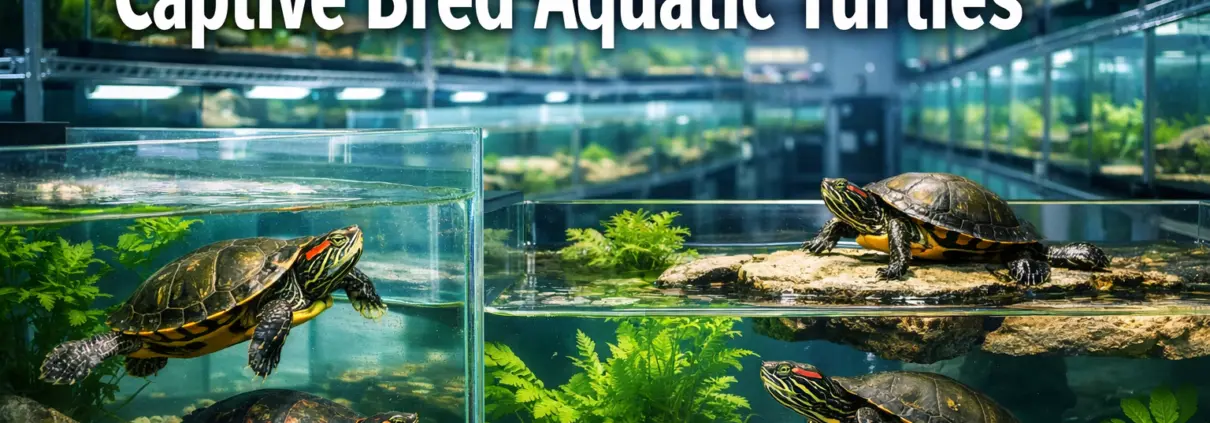
The Complete Guide to Captive Bred Aquatic Turtles: Expert Care and Species Selection
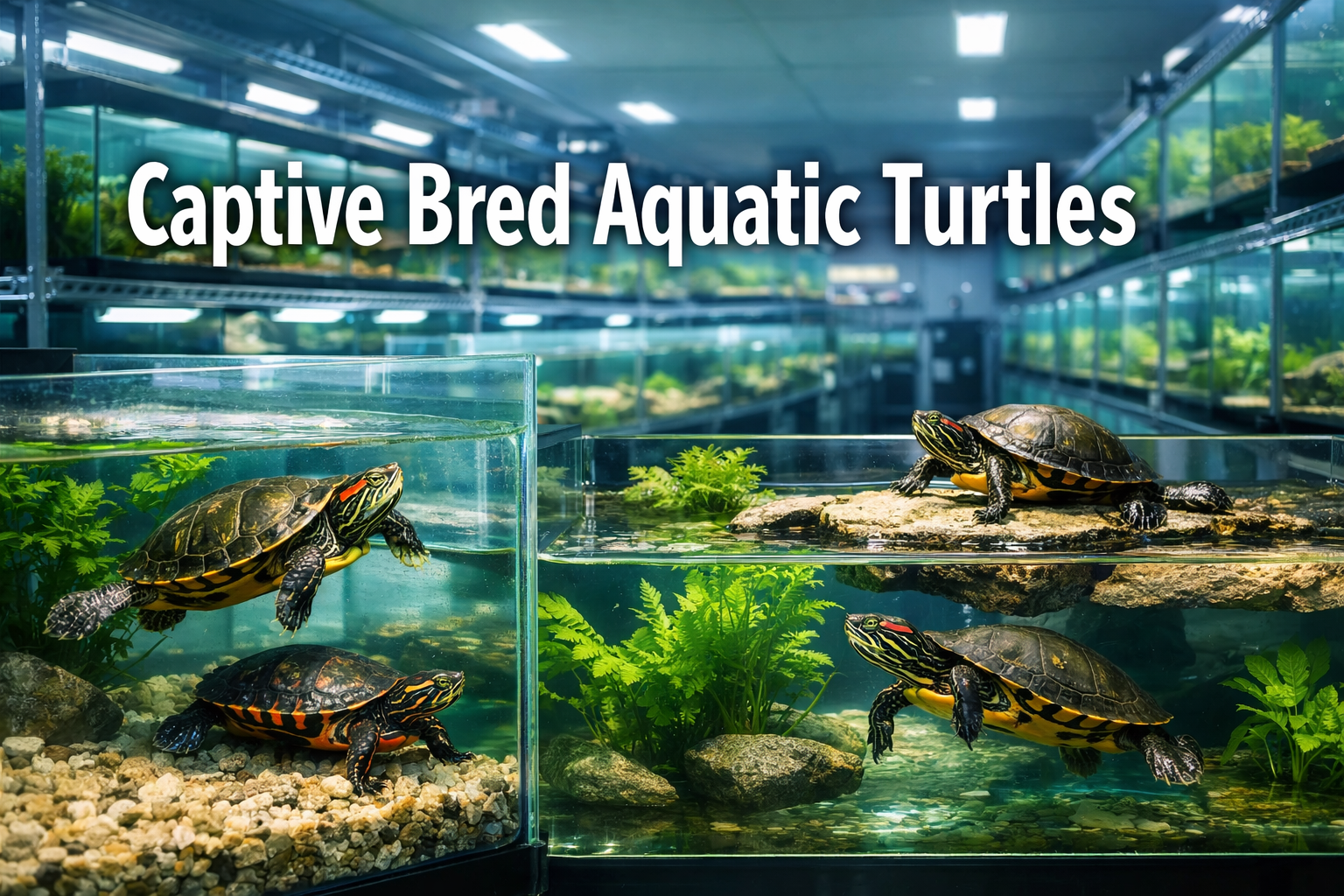
Picture this: you’re standing in front of a pristine aquarium, watching a beautifully patterned turtle gracefully glide through crystal-clear water, occasionally surfacing to bask under a warm UV light. This isn’t just a dream – it’s the reality of keeping captive bred aquatic turtles, one of the most rewarding experiences in the reptile world. Unlike their wild-caught counterparts, captive bred aquatic turtles offer superior health, predictable temperaments, and the peace of mind that comes from supporting ethical breeding practices.
- Display 21 Products per page
Key Takeaways
• Captive bred aquatic turtles are healthier, more adaptable, and ethically sourced compared to wild-caught specimens
• Popular species include Red-Eared Sliders, Painted Turtles, Map Turtles, and various Cooter species, each with unique care requirements
• Proper habitat setup requires adequate space, filtration, heating, UVB lighting, and basking areas
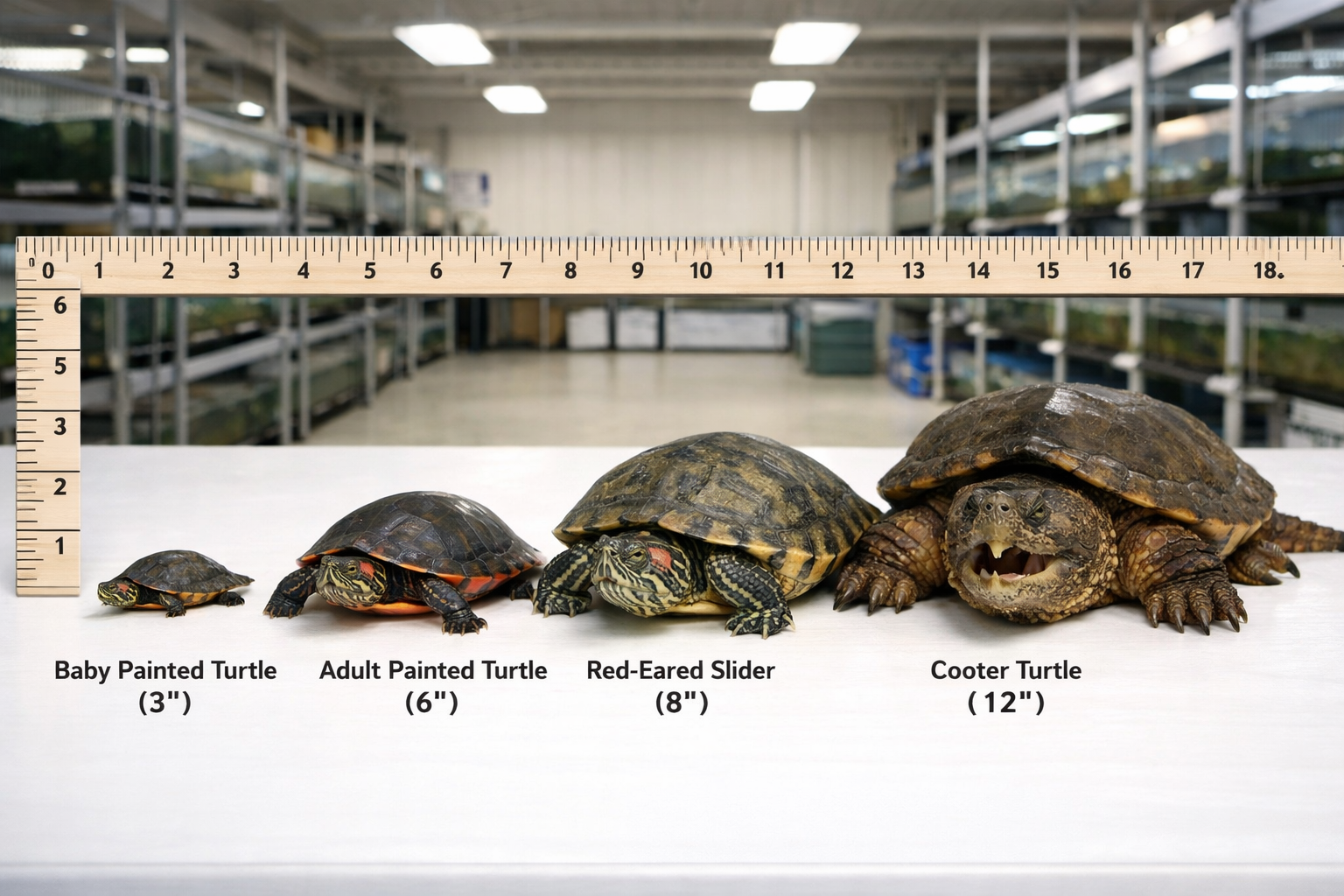
• Size varies dramatically between species, from 4-inch Painted Turtles to 16+ inch Common Snapping Turtles
• All turtles under 4 inches are sold for research and scientific purposes only, not as pets
Popular Species of Captive Bred Aquatic Turtles 🐢
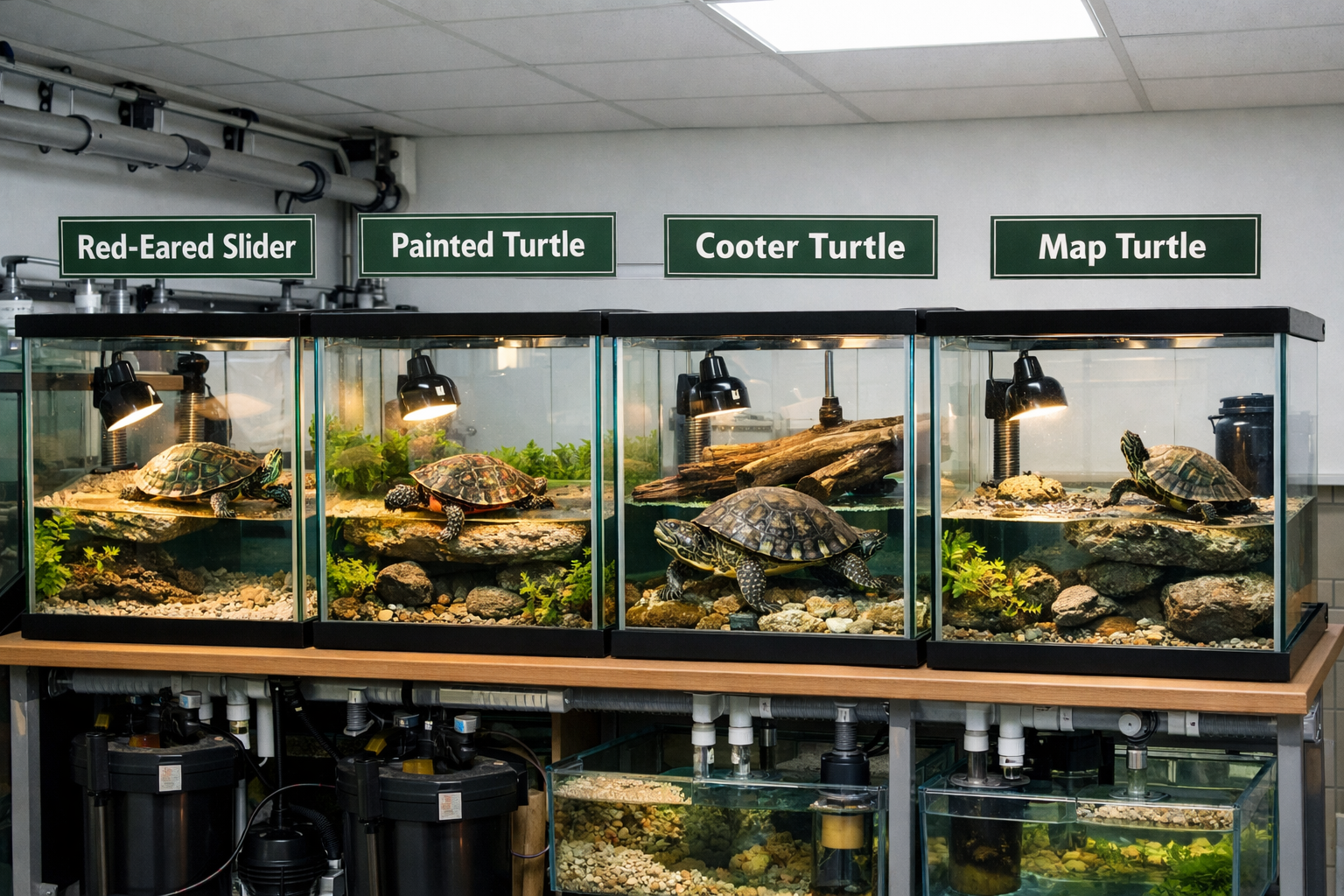
When exploring the world of captive bred aquatic turtles, you’ll discover an incredible variety of species, each with distinct characteristics and care requirements. As the leading provider of quality aquatic specimens, understanding these differences is crucial for successful long-term care.
Red-Eared Slider Turtles
The Red-Eared Slider remains one of the most sought-after captive bred aquatic turtles in North America. These remarkable creatures feature distinctive red patches behind their eyes and can grow to 8-12 inches in length. Their hardy nature and adaptable personality make them excellent choices for both beginners and experienced keepers.
Red-Eared Sliders require substantial swimming space – a minimum of 75 gallons for adults – along with a proper basking area maintained at 88-92°F. Their omnivorous diet includes commercial turtle pellets, leafy greens, and occasional protein sources. When searching for turtles for sale, Red-Eared Sliders consistently rank among the top choices due to their engaging personalities and relatively straightforward care requirements.
Painted Turtle Species
Painted Turtles represent some of the most visually stunning captive bred aquatic turtles available. The Eastern Painted Turtle showcases vibrant yellow and red markings along its shell and skin, while the Western variety displays intricate patterns that seem almost hand-painted by nature.
These medium-sized turtles typically reach 4-6 inches and thrive in well-maintained aquatic environments. They prefer cooler water temperatures (68-75°F) compared to tropical species and require excellent water quality. For those interested in painted turtles for sale, these hardy natives offer the perfect combination of beauty and manageable care requirements.
Map Turtle Varieties
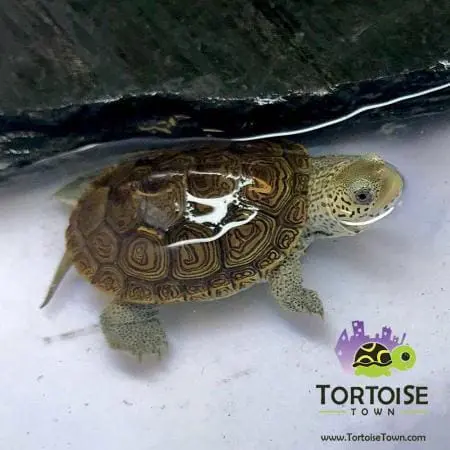
Map Turtles earn their name from the intricate, map-like patterns adorning their shells. These captive bred aquatic turtles display remarkable diversity, with species like the Mississippi Map Turtle and False Map Turtle each offering unique characteristics.
Most Map Turtle species remain relatively small (4-8 inches), making them suitable for moderate-sized enclosures. They’re excellent swimmers and require strong water current, mimicking their natural river habitats. Their diet consists primarily of aquatic invertebrates, commercial pellets, and occasional vegetation. When considering water turtles for sale, Map Turtles provide an excellent option for those seeking active, visually appealing specimens.
Cooter Turtle Species
Cooter Turtles represent some of the larger captive bred aquatic turtles, with species like the River Cooter and Peninsula Cooter reaching impressive sizes of 12-16 inches. These robust turtles display beautiful shell patterns and maintain active, engaging personalities throughout their lives.
Due to their substantial size, Cooters require spacious enclosures – typically 150+ gallons for adults. They’re primarily herbivorous as adults, feeding on aquatic vegetation, commercial turtle pellets, and various leafy greens. Their longevity and impressive size make them excellent choices for dedicated keepers with adequate space and resources.
Understanding the specific needs of each species ensures successful long-term care and helps you select the perfect captive bred aquatic turtles for your situation. Whether you’re drawn to the classic appeal of Red-Eared Sliders or the intricate beauty of Map Turtles, proper species selection forms the foundation of successful turtle keeping.
Essential Habitat Setup for Captive Bred Aquatic Turtles 🏠
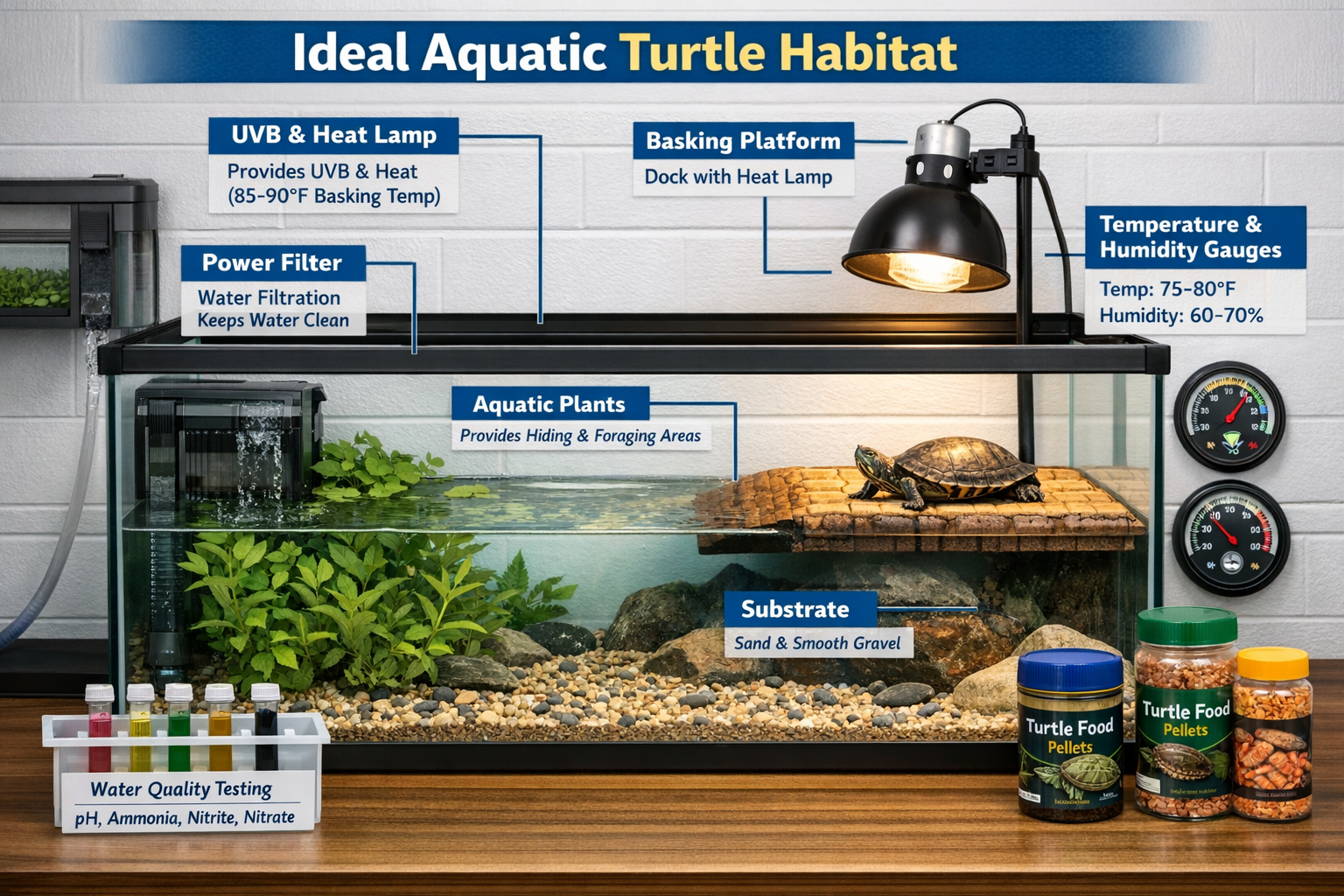
Creating the perfect environment for captive bred aquatic turtles requires careful attention to multiple factors that directly impact their health and wellbeing. A properly designed habitat mimics natural conditions while providing the security and consistency that captive-bred specimens need to thrive.
Tank Size and Space Requirements
The foundation of any successful aquatic turtle habitat begins with adequate space. Captive bred aquatic turtles require significantly more room than many people initially realize. The general rule suggests 10 gallons of water per inch of turtle shell length, but this represents the absolute minimum.
For optimal results, consider these space guidelines:
- Small species (4-6 inches): 75-100 gallon tanks minimum
- Medium species (6-10 inches): 125-150 gallon tanks minimum
- Large species (10+ inches): 200+ gallon tanks minimum
Remember that captive bred aquatic turtles are active swimmers who benefit from both horizontal swimming space and adequate depth. A tank measuring 4 feet long by 2 feet wide provides much better swimming opportunities than a tall, narrow enclosure of the same volume.
Water Quality and Filtration Systems
Maintaining pristine water quality stands as perhaps the most critical aspect of captive bred aquatic turtles care. These animals produce substantial waste, making robust filtration absolutely essential for their health and longevity.
Effective filtration systems should provide:
- Mechanical filtration to remove visible debris and waste
- Biological filtration to process harmful ammonia and nitrites
- Chemical filtration to remove odors and discoloration
Canister filters typically work best for aquatic turtle enclosures, offering superior flow rates and filtration capacity. Plan for a filter rated at least 2-3 times your tank volume to handle the bioload effectively. Weekly water changes of 25-30% help maintain optimal water parameters regardless of your filtration system’s capacity.
Heating and Lighting Requirements
Captive bred aquatic turtles require precise temperature gradients to regulate their metabolism, digestion, and overall health. This involves both water heating and proper basking areas with appropriate lighting.
Water temperature should remain stable within species-specific ranges:
- Temperate species: 68-75°F
- Sub-tropical species: 75-80°F
- Tropical species: 78-82°F
Submersible aquarium heaters work well for maintaining consistent water temperatures. Choose heaters rated for your tank size and consider using multiple smaller units rather than one large heater for better temperature distribution and safety.
The basking area requires both heat and UVB lighting. Basking temperatures should reach 85-95°F depending on the species, achieved through ceramic heat emitters or basking bulbs. UVB lighting proves essential for calcium metabolism and shell health – use bulbs specifically designed for reptiles and replace them every 6-12 months regardless of whether they still produce visible light.
Substrate and Decoration Considerations
Substrate selection for captive bred aquatic turtles involves balancing aesthetics, functionality, and safety. Many experienced keepers prefer bare-bottom tanks for easier cleaning and maintenance, while others incorporate safe substrates for a more natural appearance.
Safe substrate options include:
- Large river rocks (too large to swallow)
- Sand (fine grain that passes through digestive system if consumed)
- No substrate (easiest to maintain)
Avoid gravel, small stones, or any material that could cause impaction if consumed. Decorations should be turtle-safe, securely anchored, and easy to clean. Live or artificial plants can provide enrichment and hiding spots, but ensure they won’t be destroyed or consumed.
For those seeking quality specimens to house in these carefully designed habitats, Tortoise Town offers an exceptional selection of healthy, well-started animals. When searching for a turtle for sale, proper habitat preparation ensures your new addition will thrive from day one.
Creating the ideal environment for captive bred aquatic turtles requires initial investment and ongoing maintenance, but the reward of watching these magnificent creatures thrive in a properly designed habitat makes every effort worthwhile. Remember that habitat requirements may vary between species, so research your specific turtle’s needs thoroughly before finalizing your setup.
Size Comparison and Growth Patterns of Captive Bred Aquatic Turtles 📏
Understanding the size potential and growth patterns of captive bred aquatic turtles is crucial for proper long-term planning and care. Unlike many other animals, turtles continue growing throughout their lives, though growth rates slow significantly after reaching sexual maturity.
Hatchling to Adult Size Progression
Captive bred aquatic turtles begin life as remarkably small hatchlings, typically measuring 1-2 inches across their carapace. This tiny size can be deceiving, as many species will increase their size by 400-800% over their lifetime. Understanding this growth trajectory helps keepers plan appropriate housing and care adjustments.
Most aquatic turtle species follow predictable growth patterns:
- Years 1-2: Rapid growth phase (50-75% of adult size achieved)
- Years 3-5: Moderate growth phase (approaching adult size)
- Years 5+: Slow, continuous growth throughout life
Growth rates vary significantly based on diet quality, habitat conditions, and genetic factors. Captive bred aquatic turtles often grow more consistently than wild specimens due to optimal nutrition and stable environmental conditions.
Small Species (4-6 inches)
Several popular captive bred aquatic turtles remain relatively compact throughout their lives, making them suitable for keepers with space limitations. These smaller species offer all the benefits of turtle keeping while requiring more manageable enclosures.
Eastern and Western Painted Turtles represent excellent examples of compact aquatic species. Adults typically measure 4-6 inches, with females generally larger than males. Their moderate size allows them to thrive in 75-100 gallon enclosures while maintaining active, engaging personalities.
Spotted Turtles remain among the smallest North American aquatic species, with adults reaching only 3.5-4.5 inches. However, their small size comes with increased sensitivity to water quality and environmental changes, requiring more precise husbandry.
Medium Species (6-10 inches)
The medium-sized category includes some of the most popular captive bred aquatic turtles available. These species offer an excellent balance between manageable size and impressive presence.
Red-Eared Sliders typically reach 6-8 inches for males and 8-12 inches for females. Their hardy nature and adaptable personalities have made them one of the most widely kept aquatic turtle species worldwide. When properly cared for, they can live 30-40 years or more.
Map Turtle species generally fall within the 4-8 inch range, with significant sexual dimorphism. Males often remain closer to 4-5 inches, while females may reach 6-8 inches depending on the specific species. Their active swimming behavior and attractive shell patterns make them highly sought-after specimens.
For those interested in these medium-sized beauties, exploring water turtles for sale from reputable breeders ensures you receive healthy, well-started animals with known genetic backgrounds.
Large Species (10+ inches)
Large captive bred aquatic turtles represent impressive specimens that require substantial commitment and resources. These species offer remarkable longevity and develop strong recognition of their keepers over time.
River Cooters and Peninsula Cooters rank among the larger aquatic species, with adults commonly reaching 12-16 inches. Females typically grow larger than males and may exceed 16 inches in exceptional cases. Their substantial size requires 200+ gallon enclosures and robust filtration systems.
Common Snapping Turtles represent the giants of North American freshwater turtles, with adults reaching 16-20+ inches and weights exceeding 35 pounds. Their impressive size and longevity (50+ years) make them fascinating long-term companions for dedicated keepers with appropriate facilities.
Growth Rate Factors
Several factors influence the growth rates and final sizes of captive bred aquatic turtles:
Nutrition Quality: High-quality diets with proper calcium-to-phosphorus ratios promote healthy shell development and optimal growth rates. Poor nutrition can result in stunted growth or shell deformities.
Environmental Conditions: Proper temperatures, lighting, and water quality directly impact metabolism and growth. Suboptimal conditions often result in slower growth and increased susceptibility to health issues.
Genetic Factors: Individual genetics play a significant role in final size potential. Captive bred aquatic turtles from quality breeding programs often display more predictable growth patterns than wild-caught specimens.
Space Availability: While the “grow to tank size” myth has been largely debunked, inadequate space can stress turtles and potentially impact their overall health and growth rates.
When selecting your ideal specimen from available turtles for sale, consider both current size and adult potential to ensure you can provide appropriate long-term care. Remember that all turtles under 4 inches are sold for research and scientific purposes only.
Understanding size progression helps keepers make informed decisions about species selection and habitat planning, ensuring successful long-term relationships with these remarkable captive bred aquatic turtles
🐢 Aquatic Turtle Size Comparison Tool
Species Information
Select a category above to compare different sized aquatic turtle species. This tool helps visualize the dramatic size differences between species and plan appropriate habitat requirements.
Why Choose Tortoise Town for Captive Bred Aquatic Turtles 🏆
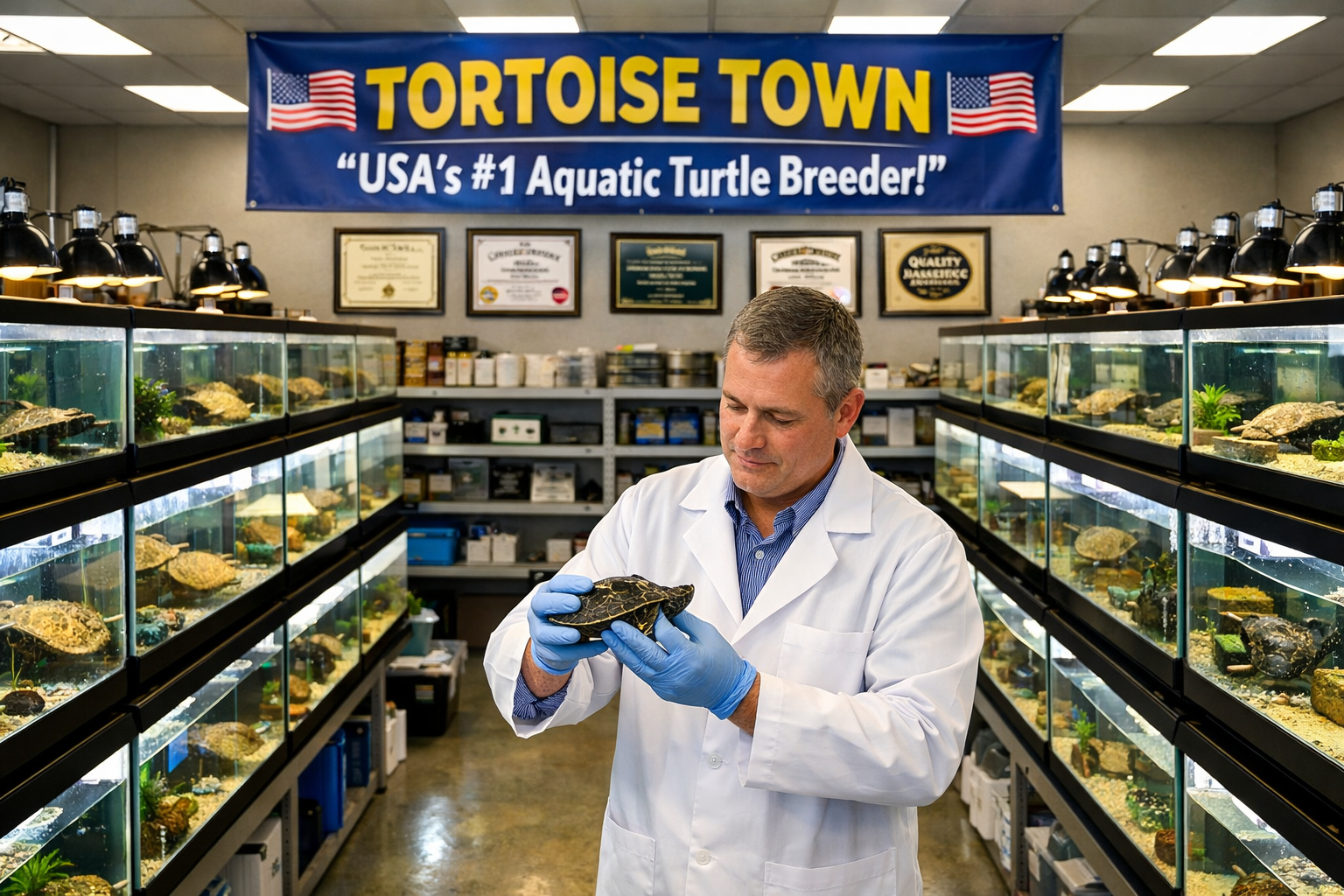
When searching for the highest quality captive bred aquatic turtles, Tortoise Town stands as America’s premier destination for healthy, ethically bred specimens. As the nation’s #1 aquatic turtle breeder, we’ve built our reputation on consistently delivering exceptional animals with unmatched health guarantees and customer support.
Industry-Leading Breeding Standards
Tortoise Town maintains the most rigorous breeding standards in the industry for captive bred aquatic turtles. Our state-of-the-art facility houses breeding groups of the finest genetic lines, ensuring each generation surpasses the last in health, vigor, and temperament. Unlike many commercial operations, we focus on quality over quantity, allowing our breeding turtles ample space, optimal nutrition, and stress-free environments.
Our breeding protocols emphasize:
- Genetic diversity through carefully planned breeding rotations
- Health screening of all breeding adults for common diseases
- Optimal nutrition during crucial development periods
- Natural breeding cycles that respect seasonal patterns
- Minimal stress handling throughout the breeding process
Each captive bred aquatic turtle from our facility represents multiple generations of selective breeding for health, hardiness, and ideal characteristics. This multi-generational approach produces specimens far superior to first-generation captive bred animals or wild-caught imports.
Comprehensive Health Guarantees
Every captive bred aquatic turtle purchased from Tortoise Town comes with our industry-leading health guarantee, providing peace of mind that simply isn’t available elsewhere. Our comprehensive guarantee covers:
Live Arrival Guarantee: All shipments arrive healthy and active, backed by our 100% live arrival policy with photographic documentation requirements.
Health Guarantee Period: Extended health coverage protects your investment beyond arrival, ensuring your new turtle remains healthy during the critical acclimation period.
Veterinary Support: Access to our network of reptile veterinarians for health questions and concerns during the guarantee period.
Replacement Policy: In the unlikely event of health issues covered under our guarantee, we provide prompt replacement with upgraded shipping at no additional cost.
This level of protection demonstrates our confidence in the quality of our captive bred aquatic turtles and our commitment to customer satisfaction. When you invest in one of our animals, you’re not just purchasing a turtle – you’re gaining a long-term partnership with America’s most trusted breeder.
Expert Care and Support
Tortoise Town’s team includes some of the most experienced aquatic turtle specialists in North America. Our collective decades of experience breeding and caring for captive bred aquatic turtles translates into unparalleled customer support and care guidance.
Pre-Purchase Consultation: Our specialists help you select the perfect species based on your experience level, available space, and long-term goals. We believe in matching customers with appropriate species rather than simply selling whatever’s available.
Setup Guidance: Detailed habitat setup instructions specific to your chosen species, including equipment recommendations, supplier contacts, and troubleshooting tips.
Ongoing Support: Lifetime access to our care specialists for questions about diet, behavior, breeding, health concerns, and habitat modifications.
Educational Resources: Comprehensive care sheets, video tutorials, and regular updates on the latest aquatic turtle husbandry techniques.
When you choose Tortoise Town for your turtle for sale needs, you’re accessing this wealth of knowledge and experience to ensure your success.
Ethical and Sustainable Practices
As the leading provider of captive bred aquatic turtles, Tortoise Town maintains unwavering commitment to ethical and sustainable breeding practices. We believe responsible breeding benefits both individual animals and wild populations.
Conservation Impact: By providing high-quality captive bred alternatives, we reduce demand for wild-caught specimens, helping preserve natural populations for future generations.
Welfare Standards: Our facility exceeds all industry standards for animal welfare, providing spacious enclosures, species-appropriate environments, and individualized care for each animal.
Transparency: Regular facility tours, detailed breeding records, and open communication about our methods demonstrate our commitment to ethical practices.
Education: We actively educate customers about proper care, conservation issues, and the importance of responsible keeping practices.
Shipping and Customer Service Excellence
Tortoise Town’s shipping department has perfected the art of safely transporting captive bred aquatic turtles across the United States. Our specialized shipping protocols ensure your new turtle arrives in perfect condition regardless of destination or weather conditions.
Climate-Controlled Transport: Temperature-controlled shipping containers maintain optimal conditions throughout transit, protecting your turtle from temperature extremes.
Expedited Delivery: All live animal shipments travel via overnight express delivery, minimizing transport stress and ensuring rapid arrival.
Professional Packaging: Specialized containers designed specifically for aquatic turtle transport, including secure water containers and cushioning materials.
Tracking and Communication: Real-time shipping updates and direct communication with our shipping specialists throughout the process.
Flexible Scheduling: Shipping schedules coordinated with your availability to ensure someone is present for delivery and immediate unpacking.
The combination of superior breeding practices, comprehensive guarantees, expert support, and professional shipping makes Tortoise Town the obvious choice for discerning customers seeking the finest captive bred aquatic turtles available anywhere in America.
Whether you’re a first-time turtle keeper or an experienced breeder expanding your collection, Tortoise Town provides the quality, support, and peace of mind that creates successful, long-term relationships with these remarkable animals. Our commitment to excellence in every aspect of the business has earned us recognition as America’s #1 aquatic turtle breeder – a reputation we maintain through consistent delivery of exceptional animals and unmatched customer service.
Important Disclosure: All turtles sold under 4 inches are for research and scientific purposes only and are not sold as pets. This policy ensures compliance with federal regulations while supporting legitimate research and educational institutions.
Conclusion
Captive bred aquatic turtles represent one of the most rewarding and fascinating aspects of reptile keeping, offering decades of companionship and endless opportunities for observation and learning. Throughout this comprehensive guide, we’ve explored the diverse species available, essential habitat requirements, size considerations, and the importance of selecting quality specimens from reputable sources.
The key to success with captive bred aquatic turtles lies in understanding that these remarkable animals require significant commitment, proper planning, and ongoing dedication to their care. From the compact beauty of Painted Turtles to the impressive presence of large Cooters, each species offers unique characteristics and specific requirements that must be met for optimal health and longevity.
Take Action Today
Ready to begin your journey with captive bred aquatic turtles? Here are your next steps:
- Research thoroughly – Review the specific care requirements for your chosen species
- Prepare your habitat – Set up proper filtration, heating, and lighting before your turtle arrives
- Source quality specimens – Choose reputable breeders with health guarantees and ongoing support
- Plan for the long term – Consider adult size, lifespan, and evolving care needs
- Connect with experts – Build relationships with experienced keepers and veterinarians
Remember that keeping aquatic turtles is a long-term commitment that can span several decades. These intelligent, long-lived animals deserve the best possible care and will reward dedicated keepers with years of fascinating behavior and interaction.
Whether you’re drawn to the classic appeal of Red-Eared Sliders, the intricate patterns of Map Turtles, or the impressive size of Cooter species, captive bred aquatic turtles offer something special for every dedicated keeper. Start your research today, prepare thoroughly, and join the growing community of successful aquatic turtle enthusiasts who have discovered the unique rewards these remarkable animals provide.
The world of captive bred aquatic turtles awaits – take the first step toward a rewarding, long-term relationship with one of nature’s most enduring and captivating creatures.
References
[1] Ernst, C.H. & Lovich, J.E. (2009). Turtles of the United States and Canada. Johns Hopkins University Press.
[2] Bonin, F., Devaux, B., & Dupré, A. (2006). Turtles of the World. Johns Hopkins University Press.
[3] Ferri, V. (2013). Turtles and Tortoises: A Complete Pet Owner’s Manual. Barron’s Educational Series.
[4] Highfield, A.C. (2012). Practical Encyclopedia of Keeping and Breeding Tortoises and Freshwater Turtles. Carapace Press.
[5] Wilke, H. (2005). A Veterinary Guide to the Diseases of Reptiles. TFH Publications.