
The Complete Guide to Keeping Aquatic Turtles Indoors: Expert Care for Water Turtle Enthusiasts
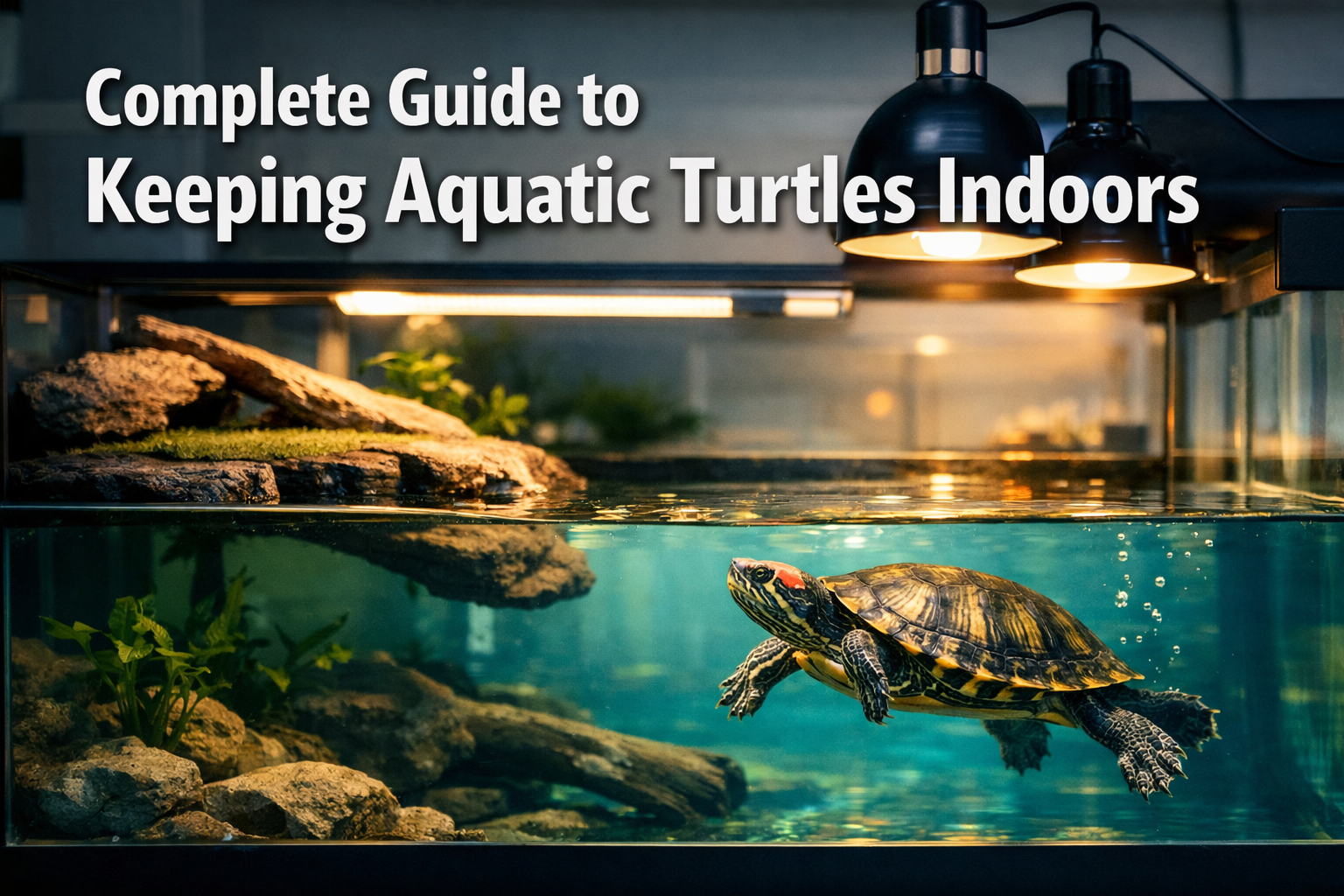
Imagine walking into your home and being greeted by the gentle splash of water and the sight of a beautiful aquatic turtle gracefully swimming in its perfectly maintained habitat. Keeping aquatic turtles indoors has become increasingly popular among reptile enthusiasts in 2026, offering the unique opportunity to observe these fascinating creatures up close while providing them with optimal care year-round. Unlike their terrestrial cousins, aquatic turtles present unique challenges and rewards that make indoor husbandry both an art and a science.
- Display 21 Products per page
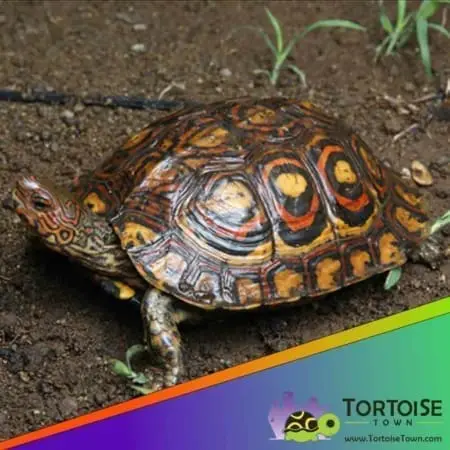
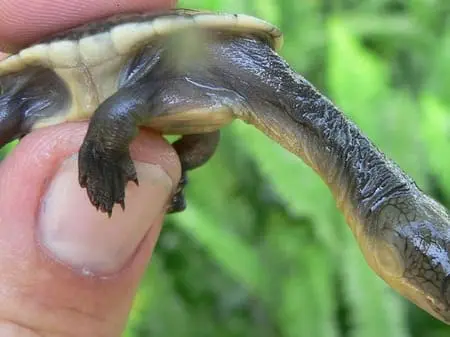
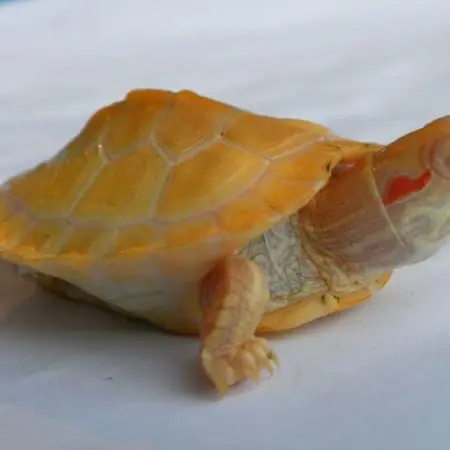
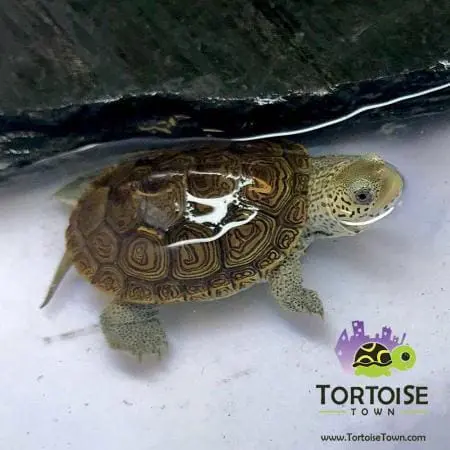
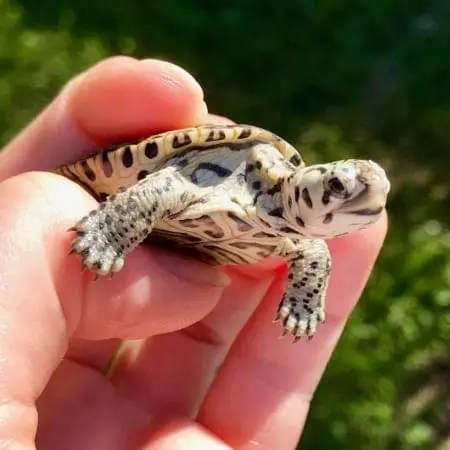
The decision to maintain aquatic turtles in indoor environments requires careful planning, proper equipment, and a deep understanding of each species’ specific needs. From creating the perfect aquatic ecosystem to maintaining water quality and providing appropriate lighting, successful indoor turtle keeping demands attention to detail that many find deeply rewarding.
Key Takeaways
• Proper habitat setup is crucial for keeping aquatic turtles indoors, requiring adequate tank size, filtration, heating, and UVB lighting
• Water quality management through regular testing and maintenance prevents health issues and ensures long-term success
• Species selection matters significantly, as different aquatic turtles have varying space, temperature, and care requirements
• Legal compliance is essential, particularly regarding turtles under 4 inches which are regulated for research purposes only
• Long-term commitment is necessary, as many aquatic turtle species can live 20-50+ years with proper care
Essential Requirements for Keeping Aquatic Turtles Indoors
Tank Size and Setup Fundamentals
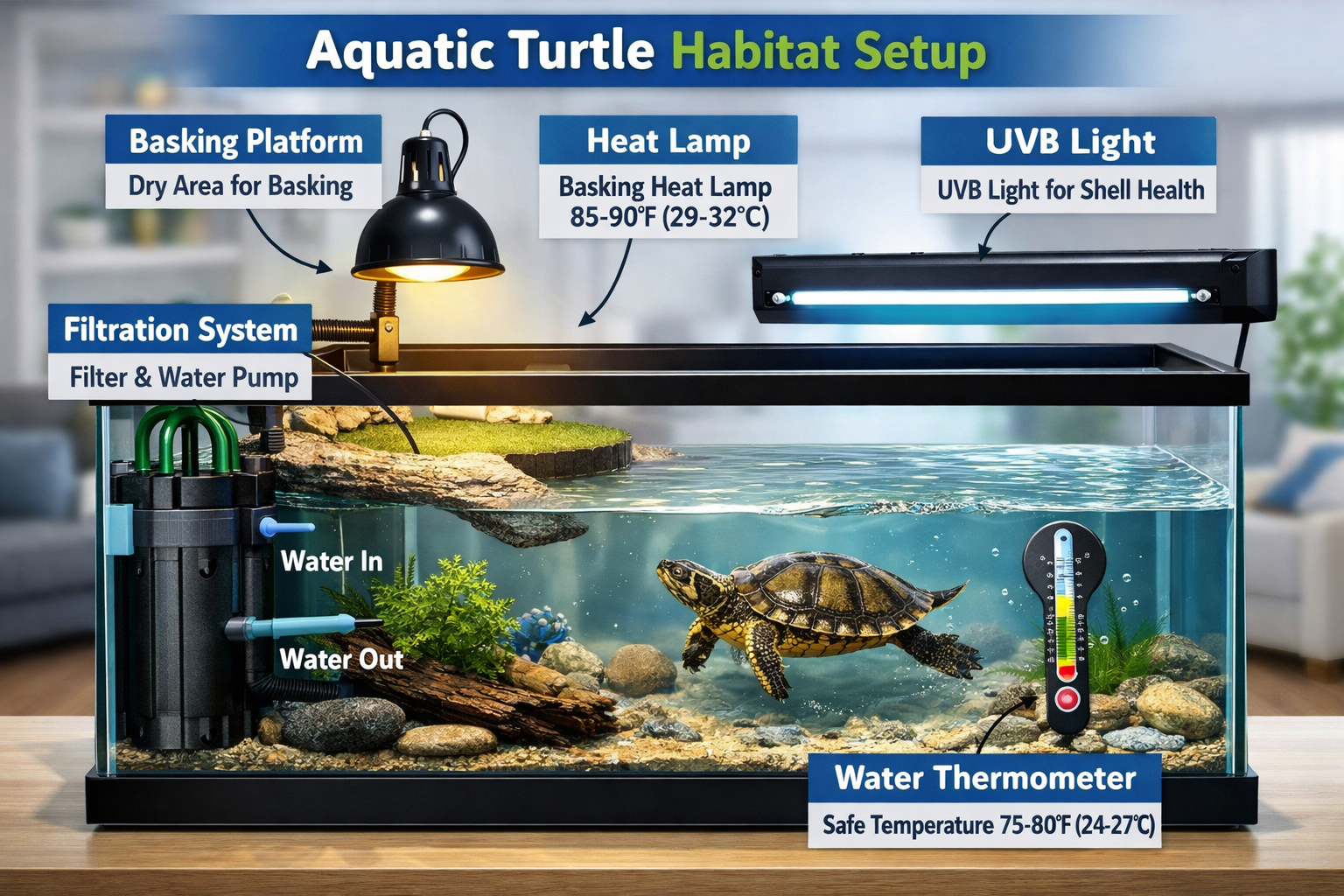
The foundation of successful indoor aquatic turtle care begins with providing adequate space. Keeping aquatic turtles indoors requires significantly larger enclosures than many people initially realize. A general rule suggests 10 gallons of water per inch of turtle shell length, but this represents the absolute minimum. For optimal health and natural behavior, I recommend doubling this calculation.
Tank Size Guidelines by Turtle Length:
- 4-6 inches: 75-100 gallon tank minimum
- 6-8 inches: 120-150 gallon tank minimum
- 8-10 inches: 180-200 gallon tank minimum
- 10+ inches: 250+ gallon tank minimum
The enclosure should feature both aquatic and terrestrial areas. The water section should be deep enough for swimming (at least twice the turtle’s shell length), while the basking area must be easily accessible and large enough for the turtle to completely dry off. Many successful keepers use a 70% water to 30% land ratio.
🏠 Pro Tip: Consider the turtle’s adult size when selecting your initial setup. Starting with an appropriately sized adult enclosure saves money and stress in the long run.
Filtration Systems for Indoor Aquatic Habitats
Water quality represents the most critical aspect of keeping aquatic turtles indoors successfully. Turtles produce significantly more waste than fish, requiring robust filtration systems capable of handling high bioloads. I recommend using a combination of mechanical, biological, and chemical filtration.
Effective Filtration Components:
- Canister filters rated for 2-3 times your tank volume
- Biological media for beneficial bacteria colonization
- Mechanical filtration to remove solid waste particles
- UV sterilizers to control harmful bacteria and algae
- Protein skimmers for larger setups to remove organic compounds
The filtration system should turn over the entire water volume 3-4 times per hour minimum. For a 100-gallon tank, this means a filter rated for 300-400 gallons per hour. Many experienced keepers use multiple smaller filters rather than one large unit for redundancy and easier maintenance.
Temperature and Heating Requirements
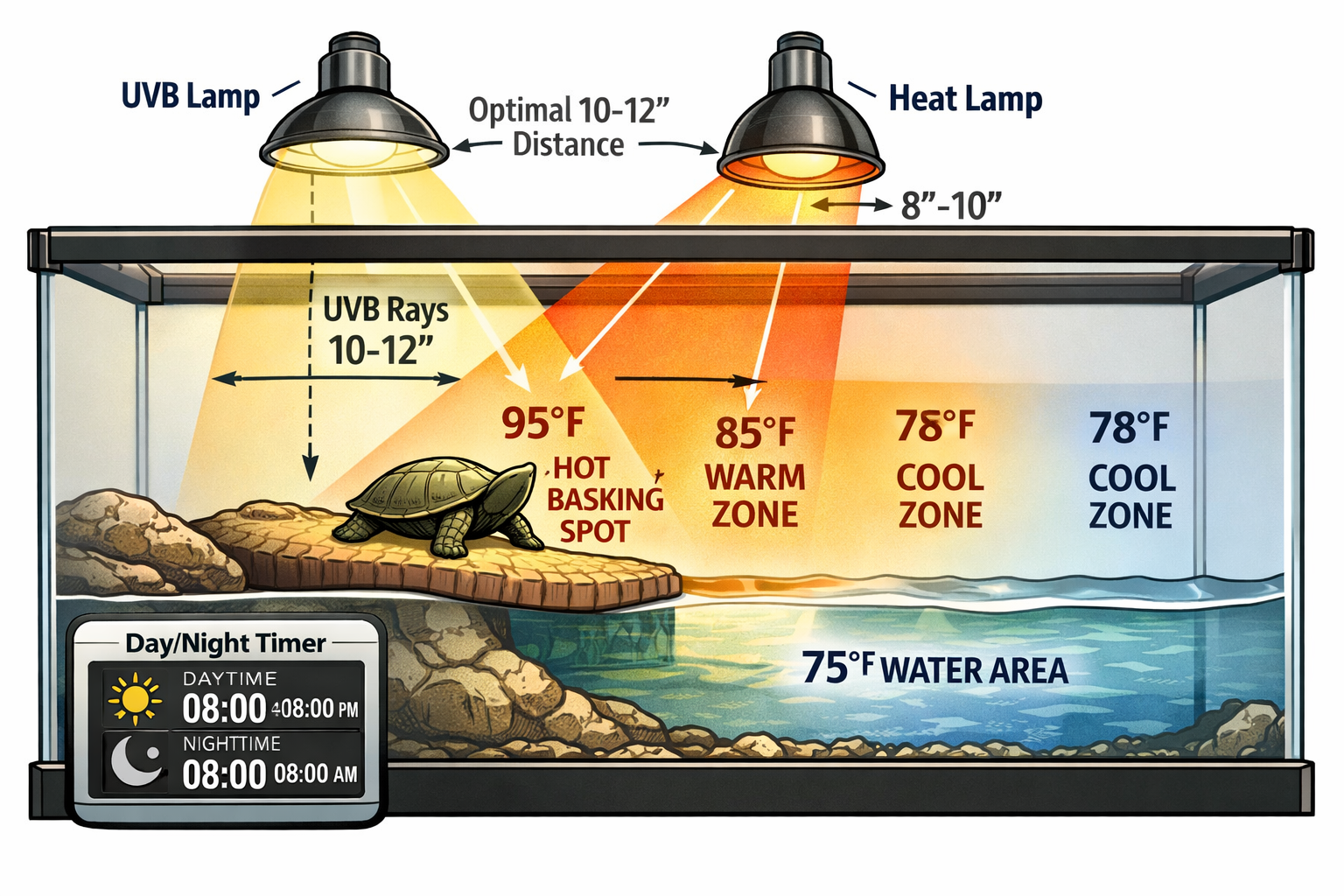
Maintaining proper temperature gradients is essential for healthy turtle metabolism, digestion, and immune function. Keeping aquatic turtles indoors requires both water heating and basking area heating to create appropriate thermal zones.
Temperature Zones:
- Water temperature: 75-80°F (varies by species)
- Basking spot: 88-95°F (species dependent)
- Ambient air: 75-85°F
- Nighttime drop: 5-10°F cooler than daytime
Use submersible aquarium heaters with protective guards to prevent burns. The wattage should be approximately 5 watts per gallon for most setups. Basking areas require ceramic heat emitters or incandescent bulbs positioned to create the proper temperature gradient without overheating.
“Temperature regulation is absolutely critical for aquatic turtle health. Without proper thermal gradients, even the best diet and water quality won’t prevent metabolic disorders.” – Dr. Sarah Martinez, Reptile Veterinarian
Popular Aquatic Turtle Species for Indoor Keeping
Red-Eared Sliders: The Classic Choice
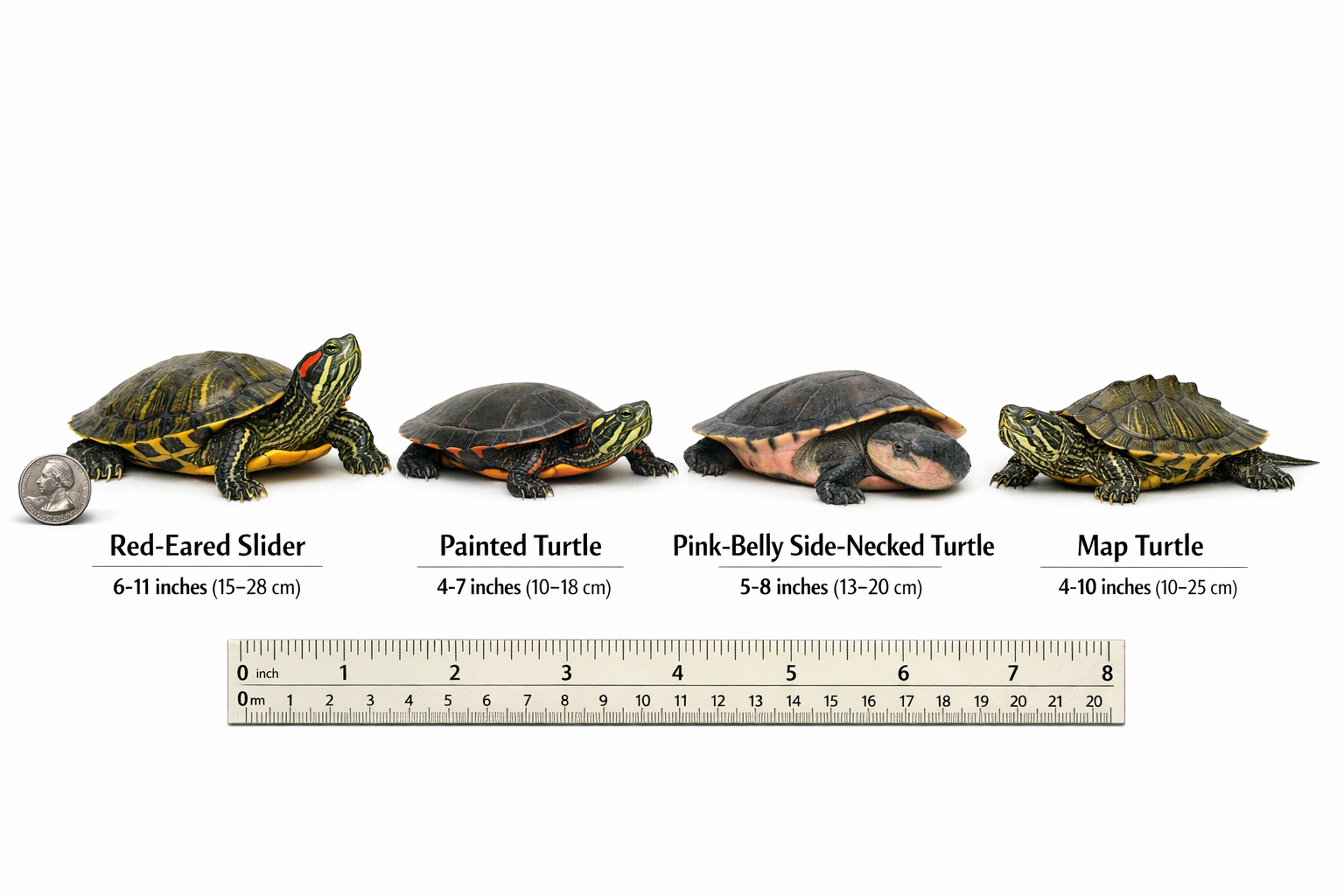
Red-eared sliders remain the most recognizable aquatic turtle species, though their popularity comes with significant responsibility. These turtles can reach 8-12 inches and live 20-40 years, making them a substantial long-term commitment. Their hardy nature and adaptability make them suitable for experienced keepers who can provide adequate space.
Red-Eared Slider Specifications:
- Adult size: 8-12 inches
- Lifespan: 20-40 years
- Water temperature: 75-78°F
- Basking temperature: 90-95°F
- Tank minimum: 120+ gallons for adults
Red-eared sliders are omnivorous with juveniles requiring more protein than adults. They’re excellent swimmers and need deep water areas for natural behavior expression. For those interested in these classic turtles for sale, proper research into their long-term care requirements is essential.
These turtles exhibit strong personalities and can recognize their keepers. However, their size and waste production require robust filtration and regular maintenance. Learn more about proper red-eared slider habitat setup for optimal results.
Painted Turtles: Colorful Native Beauties
Painted turtles offer stunning natural coloration and slightly smaller adult sizes compared to red-eared sliders. These North American natives display beautiful red, orange, and yellow markings that become more vibrant with proper care and diet.
Painted Turtle Characteristics:
- Adult size: 4-8 inches (varies by subspecies)
- Lifespan: 15-25 years
- Water temperature: 72-76°F
- Basking temperature: 85-90°F
- Tank minimum: 75+ gallons for adults
Eastern painted turtles represent the largest subspecies, while midland and western varieties remain smaller. All painted turtle subspecies require cooler water temperatures than many tropical species, making them excellent choices for keepers in temperate climates.
Their omnivorous diet shifts from primarily carnivorous as juveniles to more herbivorous as adults. Quality painted turtles for sale from reputable breeders ensure healthy, well-started specimens.
Map Turtles: Distinctive Shell Patterns
Map turtles earn their name from the intricate line patterns resembling topographical maps across their shells. These turtles display significant sexual dimorphism, with females growing much larger than males in most species.
Map Turtle Features:
- Adult size: Males 3-5 inches, Females 6-10 inches
- Lifespan: 15-20 years
- Water temperature: 74-78°F
- Basking temperature: 88-92°F
- Tank minimum: 40+ gallons for males, 100+ gallons for females
The size difference between sexes makes map turtles interesting for keepers with space constraints, as male specimens remain relatively small. However, determining sex in juveniles can be challenging, requiring preparation for either outcome.
Map turtles prefer flowing water in nature, so strong filtration creating water movement benefits their health and behavior. They’re primarily carnivorous, especially males, requiring diets rich in aquatic invertebrates and fish.
Pink-Belly Side-Necked Turtles: Unique Neck Mechanics
Pink-belly side-necked turtles offer a fascinating alternative to traditional pond turtles. As their name suggests, these South American natives retract their heads sideways rather than straight back into their shells, creating unique behavioral observations.
Pink-Belly Side-Necked Turtle Details:
- Adult size: 6-10 inches
- Lifespan: 20-30 years
- Water temperature: 78-82°F
- Basking temperature: 90-95°F
- Tank minimum: 100+ gallons for adults
These turtles require warmer water than North American species and benefit from higher humidity levels. Their carnivorous diet consists primarily of fish, insects, and aquatic invertebrates throughout their lives.
Understanding proper pink-belly side-necked turtle habitat requirements ensures successful long-term keeping. Their unique neck retraction mechanism and active swimming behavior make them captivating subjects for observation.
Musk and Mud Turtles: Compact Aquatic Species
Musk and mud turtles represent excellent choices for keepers with limited space. These small, highly aquatic species rarely leave the water except for nesting, making them ideal for primarily aquatic setups.
Musk/Mud Turtle Specifications:
- Adult size: 3-5 inches
- Lifespan: 15-25 years
- Water temperature: 72-78°F
- Basking temperature: 85-90°F (minimal basking)
- Tank minimum: 40+ gallons
Common musk turtles (stinkpots) and various mud turtle species remain small and manageable throughout their lives. Their minimal basking requirements allow for deeper water setups with smaller land areas.
These turtles are primarily carnivorous, feeding on aquatic invertebrates, small fish, and carrion in nature. Their secretive nature and bottom-dwelling habits create interesting behavioral dynamics in well-planted aquatic environments.
Advanced Care Considerations for Indoor Aquatic Turtles
Lighting Requirements and UVB Provision
Proper lighting represents one of the most complex aspects of keeping aquatic turtles indoors successfully. Unlike fish, turtles require both visible light and UVB radiation for vitamin D3 synthesis and calcium metabolism. Without adequate UVB exposure, turtles develop metabolic bone disease and shell deformities.
UVB Lighting Guidelines:
- UVB strength: 5-10% UVB output depending on species
- Distance: 6-12 inches from basking spot
- Duration: 10-12 hours daily with timers
- Replacement: Every 6-12 months regardless of visible light output
- Coverage: Should cover entire basking area
Mercury vapor bulbs provide both heat and UVB in single fixtures, while fluorescent tubes offer more even UVB distribution across larger areas. T5 HO (High Output) fixtures provide stronger UVB penetration through water vapor and screen tops.
Position UVB lights to shine directly on basking areas without glass or plastic barriers, which filter beneficial radiation. Many keepers use combination lighting systems with separate heat and UVB sources for maximum flexibility.
Water Quality Management and Testing
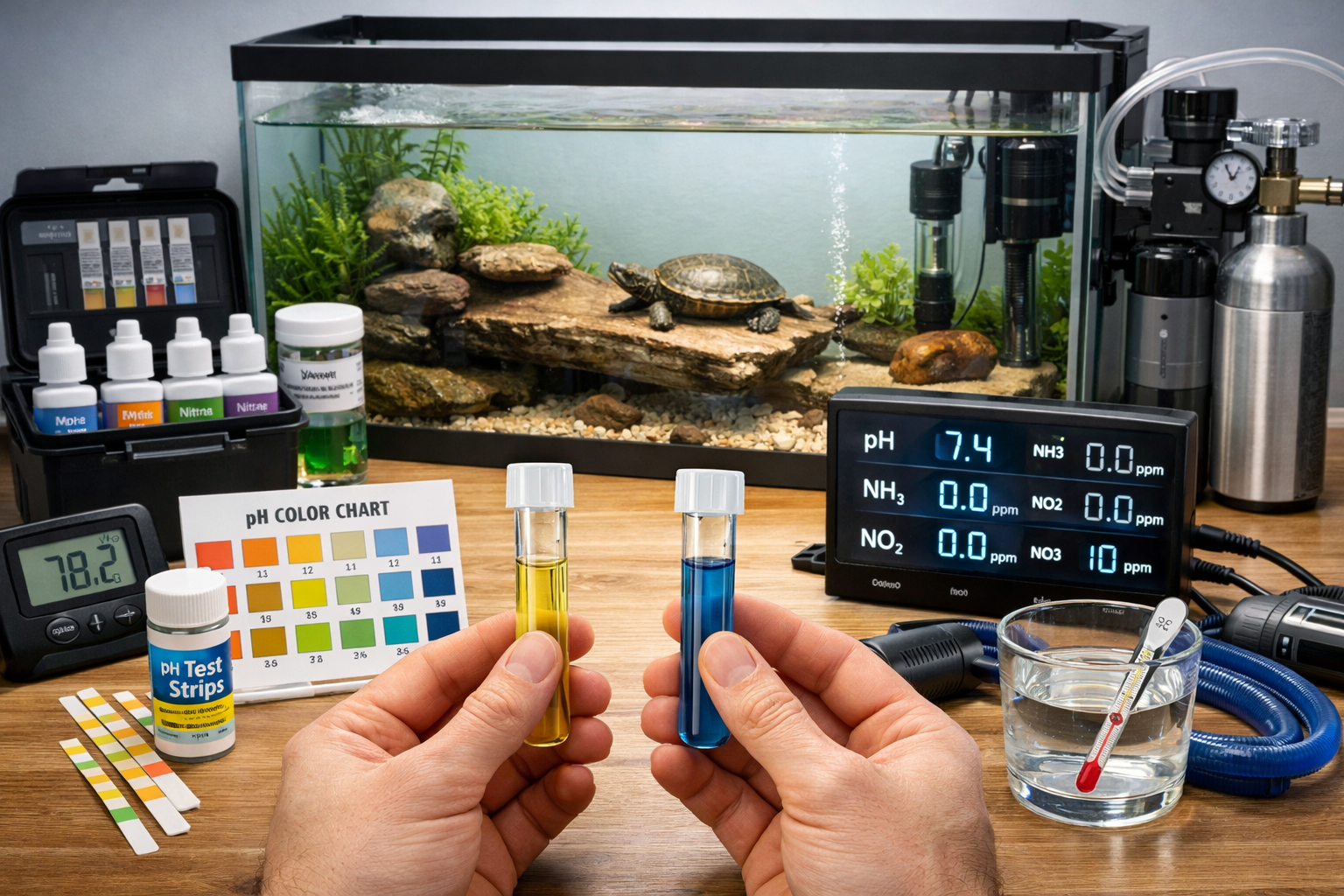
Maintaining pristine water quality requires consistent monitoring and maintenance schedules. Keeping aquatic turtles indoors successfully depends on understanding and managing the nitrogen cycle, pH stability, and dissolved waste compounds.
Critical Water Parameters:
- Ammonia: 0 ppm (toxic at any detectable level)
- Nitrite: 0 ppm (toxic to aquatic life)
- Nitrate: <20 ppm (should be kept as low as possible)
- pH: 6.5-8.0 (species dependent, stable more important than exact value)
- Temperature: Species-specific ranges maintained consistently
Test water parameters weekly using quality test kits or digital meters. Ammonia and nitrite spikes indicate biological filtration problems requiring immediate attention. High nitrates suggest inadequate water changes or overfeeding.
Weekly Maintenance Schedule:
- Monday: Test ammonia, nitrite, nitrate
- Wednesday: Check temperature, clean glass
- Friday: Test pH, inspect equipment
- Sunday: Perform 25-30% water change
Establish biological filtration by cycling the tank before introducing turtles. This process takes 4-6 weeks but prevents dangerous ammonia spikes that can kill turtles quickly.
Feeding Strategies and Nutritional Balance
Proper nutrition forms the foundation of healthy turtle development and longevity. Most aquatic turtle species exhibit omnivorous diets that shift from primarily carnivorous as juveniles to more herbivorous as adults. Understanding these dietary transitions is crucial for keeping aquatic turtles indoors successfully.
Juvenile Feeding Protocol (under 1 year):
- Frequency: Daily feeding
- Protein content: 70-80% of diet
- Portion size: Amount consumed in 15 minutes
- Food types: High-quality pellets, small fish, insects, limited vegetables
Adult Feeding Protocol (over 1 year):
- Frequency: Every other day
- Protein content: 40-50% of diet
- Portion size: Amount consumed in 20 minutes
- Food types: Pellets, fish, vegetables, aquatic plants
Commercial turtle pellets should form the diet foundation, supplemented with whole fish, insects, and fresh vegetables. Avoid feeding exclusively pellets, as dietary variety promotes optimal health and natural foraging behaviors.
Recommended Food Items:
- Proteins: Whole fish (guppies, minnows), earthworms, crickets, shrimp
- Vegetables: Collard greens, dandelion greens, squash, carrots
- Aquatic plants: Anacharis, water hyacinth, water lettuce
- Supplements: Calcium powder (with D3 for indoor turtles)
Feed turtles in water to aid swallowing and digestion. Remove uneaten food after 30 minutes to prevent water quality degradation. Some keepers use separate feeding tanks to maintain cleaner main habitats.
Health Monitoring and Veterinary Care
Regular health monitoring helps detect problems before they become serious. Keeping aquatic turtles indoors allows for close observation of behavior, appetite, and physical condition that outdoor keeping cannot provide.
Daily Health Observations:
- Swimming behavior: Strong, coordinated movement
- Basking behavior: Regular emergence from water
- Appetite: Consistent feeding response
- Shell condition: Firm, no soft spots or discoloration
- Eye clarity: Clear, no discharge or swelling
Weekly Physical Examinations:
- Weight monitoring: Consistent weight gain in juveniles, stable weight in adults
- Shell inspection: Check for cracks, pyramiding, or unusual growth
- Skin examination: Look for lesions, unusual coloration, or parasites
- Breathing assessment: Regular, unlabored respiration
Establish relationships with reptile-experienced veterinarians before problems arise. Annual check-ups help detect subclinical issues and ensure optimal husbandry practices. Many health problems in captive turtles stem from improper environmental conditions rather than infectious diseases.
Common Health Issues:
- Respiratory infections: Often caused by cool temperatures or poor water quality
- Shell rot: Usually results from bacterial infections in damaged shells
- Metabolic bone disease: Caused by inadequate UVB or calcium deficiency
- Parasites: Both internal and external parasites can affect captive turtles
Creating the Perfect Indoor Aquatic Environment
Substrate Selection and Tank Bottom Design
Choosing appropriate substrates for indoor aquatic turtle habitats requires balancing aesthetics, functionality, and safety. Many experienced keepers prefer bare-bottom tanks for easier cleaning and waste removal, while others use carefully selected substrates to create more naturalistic environments.
Substrate Options:
- Bare bottom: Easiest to clean, best for waste management
- Large river rocks: Cannot be swallowed, easy to clean around
- Sand: Natural appearance, allows natural digging behavior
- Gravel: Avoid small sizes that can cause impaction
Substrate Safety Guidelines:
- Particles must be either too large to swallow (larger than turtle’s head) or fine enough to pass through digestive system
- Avoid medium-sized gravel (0.25-1 inch) that can cause intestinal blockages
- Clean all substrates thoroughly before use
- Monitor turtles for signs of impaction if using any substrate
For turtles that naturally inhabit muddy or sandy bottoms, fine sand substrates can provide enrichment through natural digging behaviors. However, this requires more intensive maintenance and careful monitoring for impaction signs.
Plant Selection for Aquatic Turtle Habitats
Live plants enhance water quality, provide natural cover, and create enrichment opportunities for indoor aquatic turtles. However, most turtle species will eat or destroy plants, requiring careful species selection and protection strategies.
Turtle-Safe Aquatic Plants:
- Anacharis (Elodea): Fast-growing, excellent water purification
- Water hyacinth: Floating plant, good for large turtles
- Water lettuce: Another floating option, rapid growth
- Java fern: Hardy, can be attached to rocks or driftwood
- Hornwort: Excellent oxygenator, tolerates turtle damage
Plant Protection Strategies:
- Use fast-growing species that can outpace turtle consumption
- Create plant refuges with barriers or elevated areas
- Establish plants in separate propagation tanks for replacement
- Choose plants with tough or unpalatable leaves
Floating plants provide natural cover and help control algae growth by competing for nutrients. Even if turtles eat them regularly, the nutritional value and environmental benefits justify regular replacement.
Enrichment and Behavioral Stimulation
Keeping aquatic turtles indoors successfully requires providing mental stimulation and opportunities for natural behaviors. Enrichment prevents boredom, reduces stress, and promotes physical activity that maintains optimal health.
Physical Enrichment Options:
- Varied basking sites: Multiple platforms at different heights and temperatures
- Hiding places: Caves, overhangs, and visual barriers
- Swimming obstacles: Safe decorations that create interesting swimming paths
- Textured surfaces: Different substrate types for tactile stimulation
Feeding Enrichment:
- Live food: Feeder fish, crickets, and worms encourage hunting behavior
- Food puzzles: Hide food in safe locations to encourage foraging
- Feeding schedules: Vary feeding times to prevent anticipation stress
- Food variety: Rotate different food types to maintain interest
Environmental Enrichment:
- Lighting cycles: Simulate natural seasonal changes
- Water currents: Use powerheads to create flowing water areas
- Temperature gradients: Provide multiple thermal zones for thermoregulation
- Seasonal changes: Adjust photoperiods and temperatures to match natural cycles
Regular habitat rearrangement provides novelty and mental stimulation. However, maintain core elements like basking spots and hiding places in consistent locations to prevent stress.
Legal Considerations and Responsible Ownership
Federal and State Regulations
Understanding legal requirements is crucial for anyone interested in keeping aquatic turtles indoors. The FDA banned the sale of turtles under 4 inches in shell length as pets in 1975 due to Salmonella concerns, though exceptions exist for educational and scientific purposes.
Federal Regulations:
- Turtles under 4 inches cannot be sold as pets
- Educational institutions may obtain permits for research specimens
- Interstate transport requires health certificates and proper documentation
- Some species require CITES permits for legal possession
State-Level Considerations:
- Many states prohibit keeping native turtle species as pets
- Some states require permits for any turtle keeping
- Transport across state lines may require additional permits
- Release of non-native species is illegal in all states
Before acquiring any turtle, research local and state regulations thoroughly. Contact state wildlife agencies for specific requirements in your area. Many areas have become more restrictive regarding exotic pet ownership in recent years.
Ethical Sourcing and Captive Breeding
Supporting responsible breeding programs helps reduce pressure on wild populations while ensuring healthy, well-adapted animals for captive keeping. Tortoise Town represents the leading source for captive-bred aquatic turtles in the United States, offering healthy specimens with proper documentation.
Benefits of Captive-Bred Turtles:
- Health advantages: Reduced parasite loads, known medical history
- Behavioral benefits: Better adaptation to captive conditions
- Conservation impact: Reduces wild collection pressure
- Legal compliance: Proper documentation and permits
Red Flags in Turtle Acquisition:
- Unusually low prices suggesting wild collection
- Lack of health documentation or breeding records
- Sellers unwilling to provide care information
- Animals showing signs of stress, illness, or poor condition
Reputable breeders provide detailed care sheets, health guarantees, and ongoing support for new turtle keepers. They also maintain detailed breeding records and can provide information about genetic lineages.
Long-Term Commitment and Planning
Aquatic turtles represent significant long-term commitments, with many species living 20-50+ years in captivity. Keeping aquatic turtles indoors successfully requires planning for decades of care, including provisions for the animal’s welfare if circumstances change.
Lifetime Care Considerations:
- Financial planning: Calculate decades of food, veterinary, and equipment costs
- Space requirements: Plan for adult size and potential habitat upgrades
- Life changes: Consider how major life events might affect turtle care
- Emergency planning: Establish care arrangements for temporary or permanent situations
Cost Estimation Guidelines:
- Initial setup: $500-2000+ depending on species and equipment quality
- Annual maintenance: $200-500+ for food, electricity, and routine care
- Veterinary care: $100-300+ annually for healthy animals, more for medical issues
- Equipment replacement: Budget for filter, heater, and lighting replacements
Many turtle keepers find the long-term commitment rewarding, developing deep bonds with their animals over decades. However, this commitment should be carefully considered before acquisition, as rehoming adult turtles can be challenging.
🐢 Aquatic Turtle Size Comparison Tool
🐢 Common Musk Turtle
Size: 3-4 inches | Tank: 40+ gallons
Care Level: Beginner | Lifespan: 15-25 years
Perfect for smaller setups, minimal basking requirements, highly aquatic lifestyle.
🎨 Painted Turtle
Size: 4-6 inches | Tank: 75+ gallons
Care Level: Beginner-Intermediate | Lifespan: 15-25 years
Beautiful native species with stunning shell coloration, moderate care requirements.
🗺️ Map Turtle
Size: 4-7 inches (males), 6-10 inches (females) | Tank: 75-120+ gallons
Care Level: Intermediate | Lifespan: 15-20 years
Distinctive shell patterns, significant sexual dimorphism, prefers flowing water.
🌸 Pink-Belly Side-Necked Turtle
Size: 6-8 inches | Tank: 100+ gallons
Care Level: Intermediate | Lifespan: 20-30 years
Unique neck retraction, requires warmer water, fascinating behavioral observations.
🔴 Red-Eared Slider
Size: 8-12 inches | Tank: 120+ gallons
Care Level: Intermediate-Advanced | Lifespan: 20-40 years
Classic aquatic turtle, large adult size, requires substantial long-term commitment.
🐢 Aquatic Turtle Size Guide
This interactive tool shows the relative sizes of popular aquatic turtle species kept indoors. Sizes represent typical adult shell lengths.
Important: All turtles sold under 4 inches are for research and scientific purposes only, not as pets.
Use the filter buttons above to view turtles by size category, or click on individual turtles for detailed species information.
Conclusion
Keeping aquatic turtles indoors represents a rewarding but demanding commitment that requires careful planning, proper equipment, and ongoing dedication. Success depends on understanding each species’ specific needs, maintaining optimal water quality, and providing appropriate environmental conditions that promote natural behaviors and long-term health.
The key to successful indoor aquatic turtle keeping lies in preparation and education. Before acquiring any turtle, research thoroughly, establish proper habitats, and connect with experienced veterinarians and fellow enthusiasts. Remember that these remarkable creatures can live for decades, making them true lifetime companions that will reward dedicated care with fascinating behaviors and unique personalities.
For those ready to embark on this journey, Tortoise Town offers the highest quality captive-bred aquatic water turtles for sale in the United States, backed by expert support and comprehensive care guidance. Their commitment to ethical breeding and customer education ensures the best possible start for your indoor aquatic turtle keeping adventure.
Important Legal Disclosure: All turtles sold under 4 inches in shell length are intended for research and scientific purposes only and are not sold as pets, in compliance with FDA regulations.
Next Steps:
- Research local and state regulations regarding turtle ownership
- Plan your habitat setup with appropriate equipment and space
- Connect with reptile veterinarians in your area
- Join online communities and local herpetological societies
- Consider starting with hardier species before advancing to more specialized care requirements
The world of indoor aquatic turtle keeping offers endless opportunities for learning, observation, and the deep satisfaction that comes from providing excellent care for these ancient and fascinating creatures.
References
[1] FDA Center for Food Safety and Applied Nutrition. “Turtle-Associated Salmonellosis.” Updated 2026.
[2] Association of Reptilian and Amphibian Veterinarians. “Basic Husbandry and Medicine of Turtles.” ARAV Guidelines, 2026.
[3] Turtle Survival Alliance. “Captive Care Guidelines for Aquatic Turtle Species.” Conservation Protocols, 2025.
[4] American Veterinary Medical Association. “Reptile and Amphibian Care Guidelines.” AVMA Policy, 2026.
[5] International Union for Conservation of Nature. “Freshwater Turtle Specialist Group Care Recommendations.” IUCN Red List Updates, 2025.