
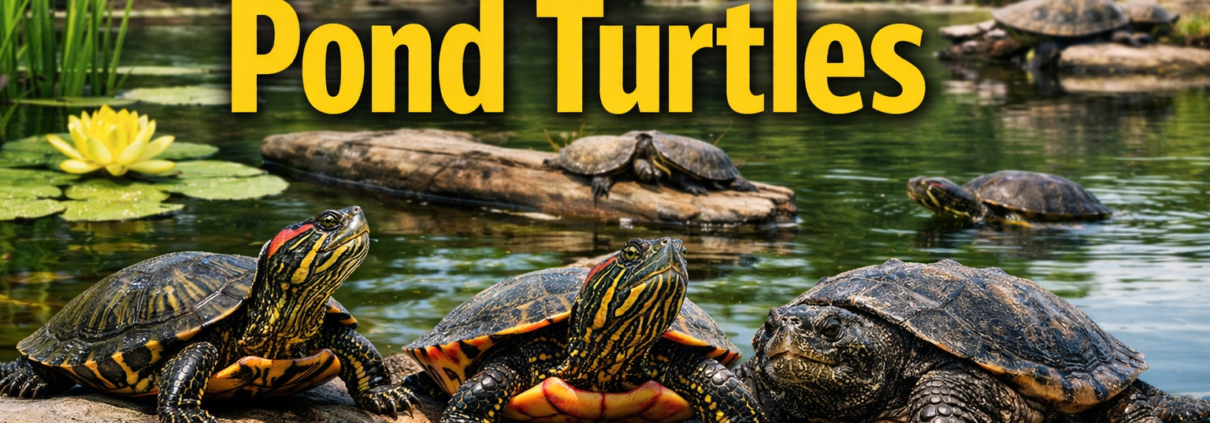
The Complete Guide to Popular Species of Pond Turtles: Your Ultimate Resource for 2026

Have you ever wondered which aquatic turtle species make the most rewarding companions for dedicated keepers? With over 300 turtle species worldwide, choosing the right pond turtle can feel overwhelming. The good news is that several popular species of pond turtles have proven themselves as excellent choices for both novice and experienced turtle enthusiasts, each offering unique characteristics and care requirements that make them stand out in the reptile-keeping community.
Whether you’re considering your first aquatic turtle or expanding your existing collection, understanding the most sought-after species will help you make an informed decision. From the vibrant red-eared slider to the stunning painted turtle, these remarkable reptiles have captured the hearts of thousands of keepers across North America.
- Display 30 Products per page
Key Takeaways
• Red-eared sliders remain the most popular pond turtle species due to their hardy nature and distinctive appearance
• Painted turtles offer beautiful shell coloration and are excellent for beginners seeking native North American species
• Map turtles provide unique shell patterns and interesting behaviors for intermediate keepers
• Proper sizing considerations are crucial – all turtles under 4 inches are sold for research and scientific purposes only
• Captive-bred specimens from reputable sources ensure healthier animals and better long-term success
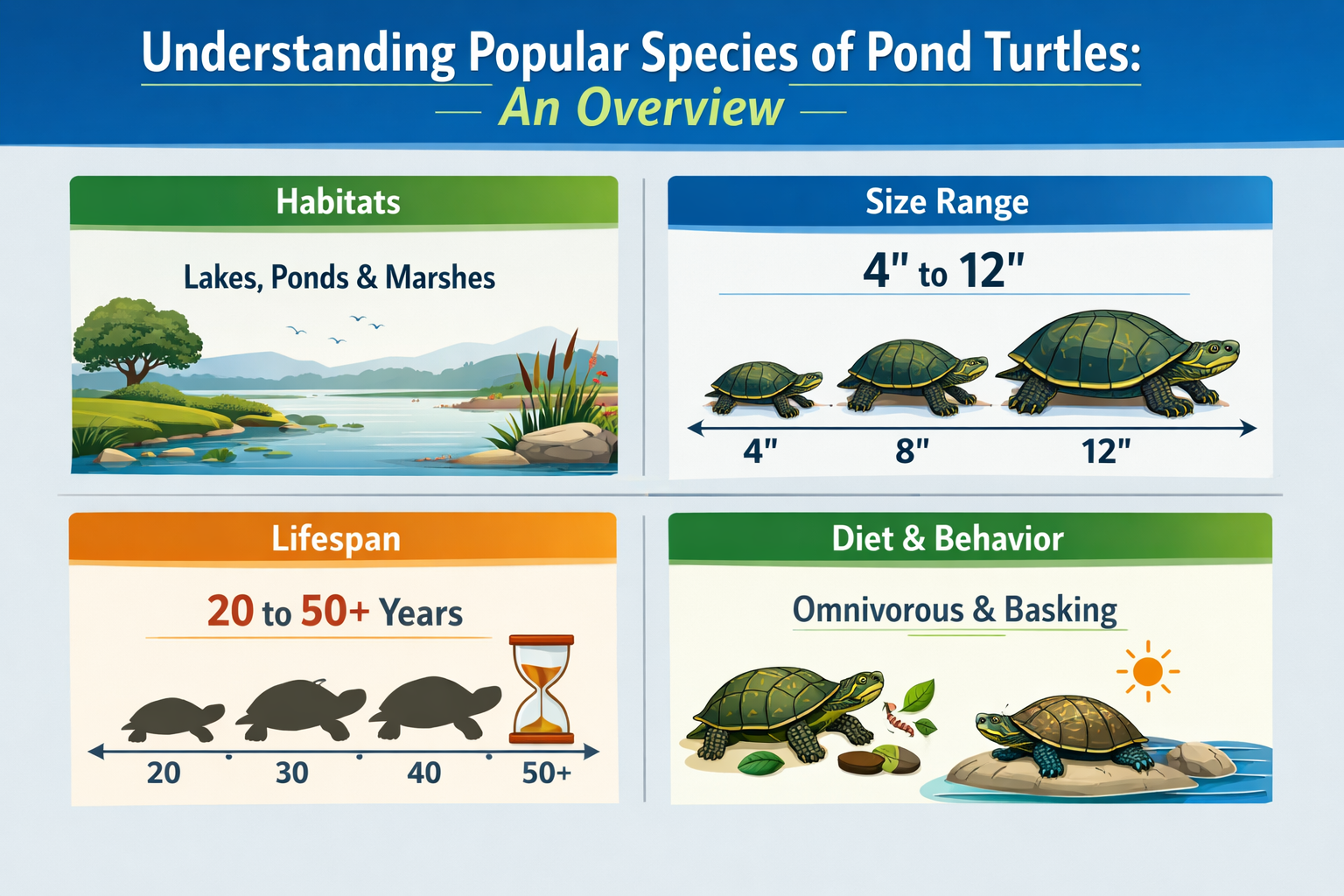
Understanding Popular Species of Pond Turtles: An Overview
When discussing popular species of pond turtles, we’re focusing on semi-aquatic freshwater turtles that thrive in pond-like environments. These species have gained popularity among turtle enthusiasts for their adaptability, interesting behaviors, and relatively straightforward care requirements.
What Makes a Pond Turtle Species Popular?
Several factors contribute to a turtle species’ popularity among keepers:
🏆 Hardiness and Adaptability
- Tolerance to varying water conditions
- Ability to thrive in captive environments
- Resistance to common health issues
🎨 Visual Appeal
- Distinctive shell patterns and colors
- Interesting head markings
- Size appropriate for home keeping
📚 Care Requirements
- Well-documented husbandry needs
- Availability of proper foods and supplies
- Reasonable space requirements
🔬 Breeding Success
- Consistent captive breeding programs
- Healthy genetic diversity
- Reliable availability from reputable sources
The Importance of Captive-Bred Specimens
As the leading aquatic turtle breeder in the USA, Tortoise Town emphasizes the critical importance of choosing captive-bred specimens. These animals offer numerous advantages over wild-caught turtles:
- Better health outcomes with reduced parasite loads
- Established feeding responses to commercial diets
- Reduced stress from handling and transport
- Conservation benefits by reducing pressure on wild populations
When searching for turtles for sale, always prioritize reputable breeders who focus on animal welfare and proper husbandry practices.
North American Slider Turtles: The Most Popular Pond Species
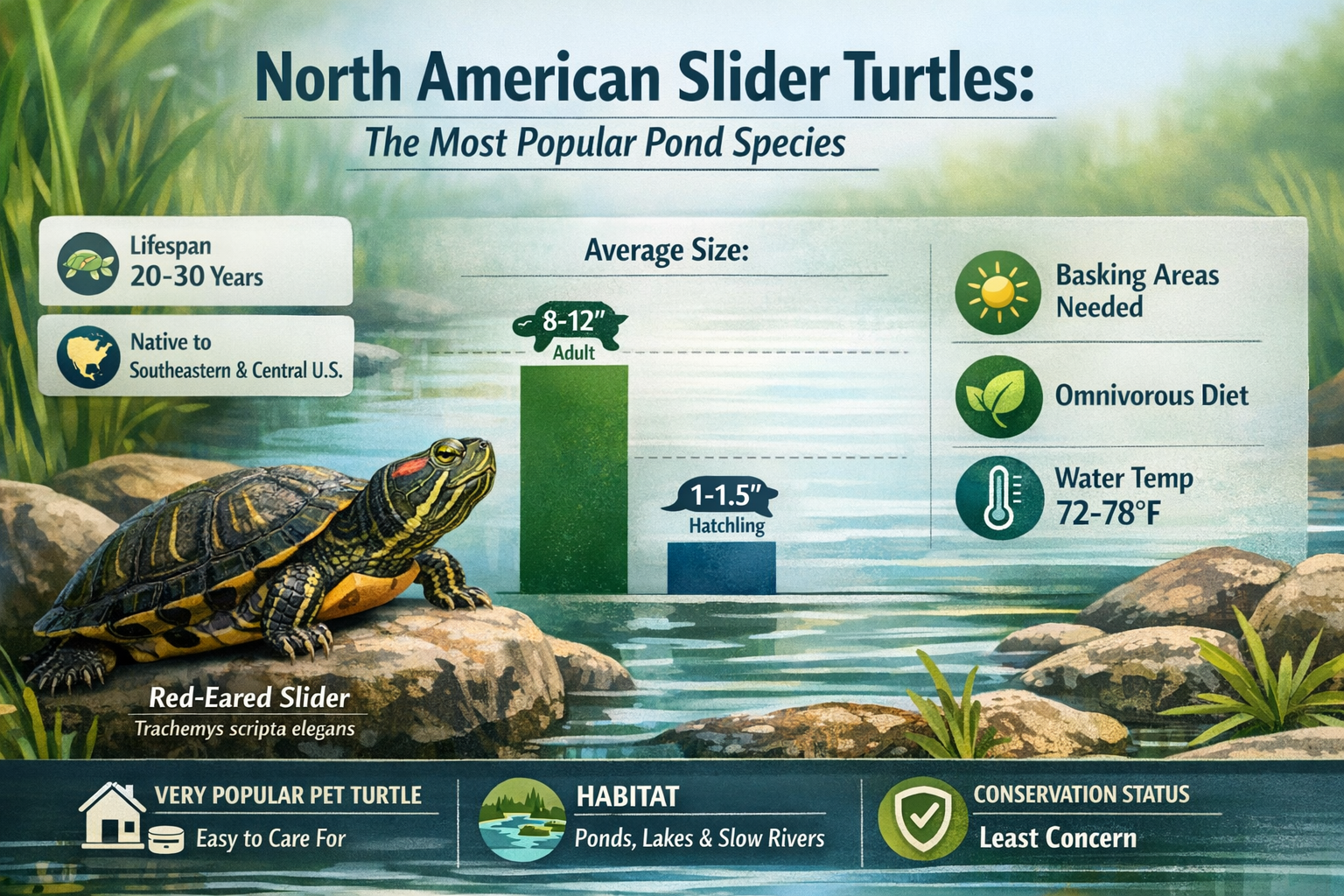
Slider turtles represent the pinnacle of popular species of pond turtles, with the red-eared slider leading the pack as America’s most recognized aquatic turtle. These remarkable reptiles have earned their reputation through decades of successful keeping and breeding programs.
Red-Eared Sliders: The Classic Choice
Scientific Name: Trachemys scripta elegans
The red-eared slider stands as the most iconic of all pond turtle species. Named for the distinctive red stripes behind their eyes, these turtles have become synonymous with turtle keeping in North America.
Physical Characteristics:
- Adult Size: 8-12 inches for females, 6-8 inches for males
- Shell Pattern: Dark green with yellow striping
- Distinctive Features: Bright red ear patches, webbed feet
- Lifespan: 30-40 years with proper care
Habitat Requirements:
- Water Temperature: 75-80°F (24-27°C)
- Basking Temperature: 85-90°F (29-32°C)
- Tank Size: Minimum 75 gallons for juveniles, 125+ gallons for adults
- Filtration: Strong biological and mechanical filtration essential
Red-eared sliders thrive in well-maintained aquatic environments with plenty of swimming space and proper basking areas. Their omnivorous diet includes commercial turtle pellets, leafy greens, and occasional protein sources.
For those interested in these magnificent animals, you can find quality red-eared slider turtles for sale from reputable captive breeding programs. Learn more about their specific needs in our comprehensive red-eared slider habitat guide.
Yellow-Bellied Sliders: The Gentle Alternative
Scientific Name: Trachemys scripta scripta
Often overshadowed by their red-eared cousins, yellow-bellied sliders offer similar care requirements with their own unique charm.
Key Features:
- Coloration: Yellow plastron (bottom shell) with dark markings
- Temperament: Generally calmer than red-eared sliders
- Size: Slightly smaller than red-eared sliders
- Geographic Range: Southeastern United States
Care Considerations:
Yellow-bellied sliders require identical care to red-eared sliders, making them excellent alternatives for keepers seeking variety. Their more subdued nature often makes them easier to handle during maintenance routines.
Cumberland Sliders: The Rare Beauty
Scientific Name: Trachemys scripta troostii
Cumberland sliders represent one of the more uncommon slider subspecies, prized for their unique appearance and limited availability.
Distinctive Traits:
- Head Pattern: Orange to yellow stripes without prominent ear patches
- Shell Characteristics: More pronounced growth rings
- Rarity: Less commonly available than other slider species
- Conservation Status: More restricted natural range
When looking for water turtles for sale, Cumberland sliders represent an excellent choice for experienced keepers seeking something unique while maintaining manageable care requirements.
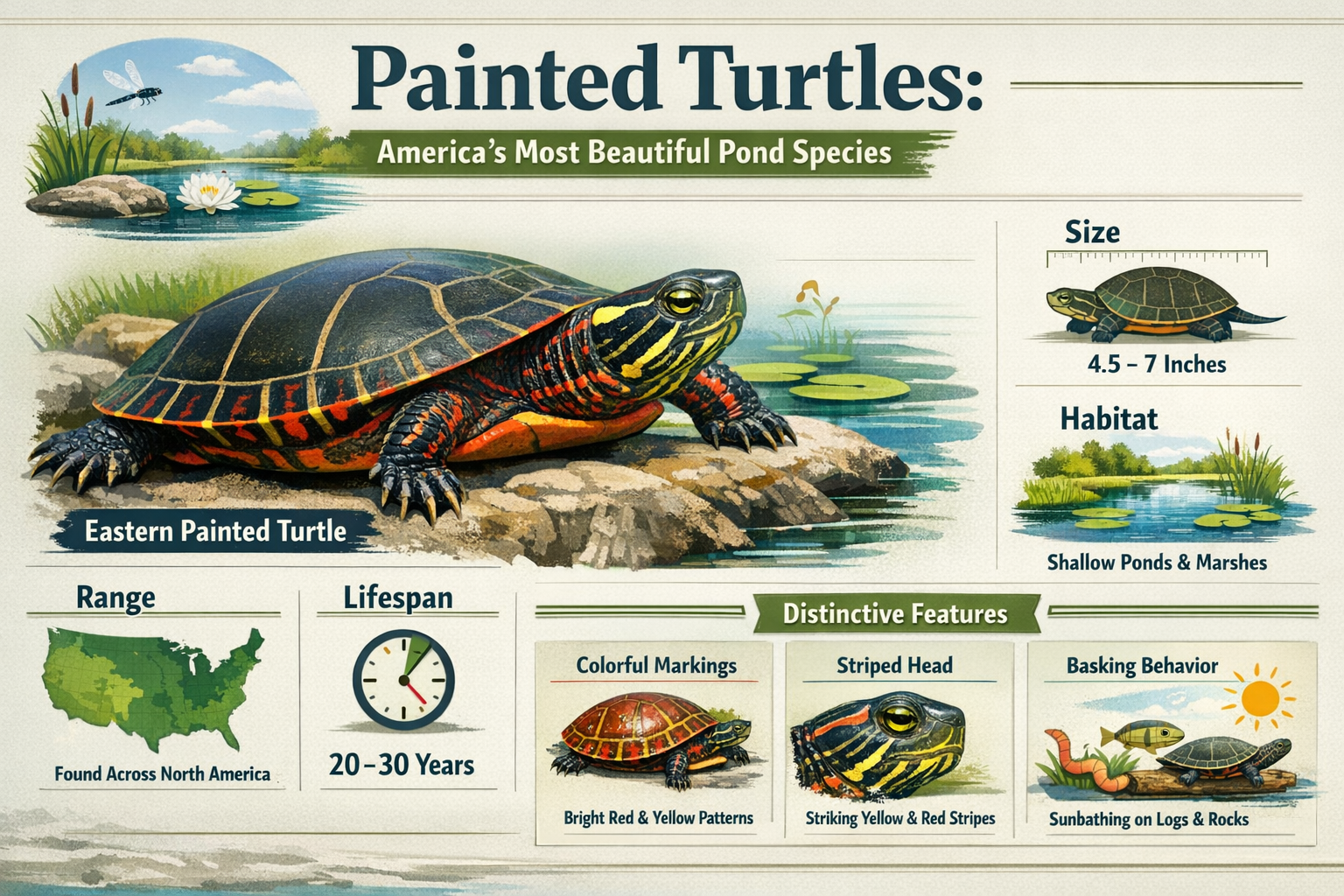
Painted Turtles: America’s Most Beautiful Pond Species
Among popular species of pond turtles, painted turtles stand out as true living artwork. These stunning native North American species showcase some of the most vibrant colors and intricate patterns found in the turtle world.
Eastern Painted Turtles: Classic Elegance
Scientific Name: Chrysemys picta picta
Eastern painted turtles represent the epitome of natural beauty in the turtle world, featuring clean lines and classic coloration that has captivated enthusiasts for generations.
Physical Description:
- Adult Size: 4-6 inches (males), 6-8 inches (females)
- Shell Pattern: Dark olive to black carapace with red markings along the edges
- Plastron: Yellow with dark central figure
- Head and Limbs: Dark with yellow and red striping
Habitat Preferences:
Eastern painted turtles naturally inhabit slow-moving waters with muddy bottoms and abundant vegetation. In captivity, they thrive in:
- Water Depth: 12-18 inches minimum
- Substrate: Fine sand or smooth river rock
- Plants: Live or artificial aquatic vegetation
- Hiding Spots: Caves, logs, or commercial turtle hides
These remarkable turtles are perfect for keepers interested in native North American species. Quality painted turtles for sale are available through specialized breeding programs that focus on maintaining genetic diversity and health.
Western Painted Turtles: The Largest Subspecies
Scientific Name: Chrysemys picta bellii
Western painted turtles claim the title as the largest painted turtle subspecies, offering impressive size combined with stunning visual appeal.
Notable Characteristics:
- Maximum Size: Up to 10 inches for large females
- Shell Features: Intricate network pattern on carapace
- Plastron Pattern: Large dark central figure with radiating lines
- Geographic Range: Western North America from Canada to Mexico
Behavioral Traits:
- Basking Behavior: Highly social baskers, often stacking on logs
- Activity Level: Very active swimmers and foragers
- Feeding Response: Excellent appetite for varied diet items
- Temperature Tolerance: More cold-hardy than many turtle species
Midland Painted Turtles: The Perfect Balance
Scientific Name: Chrysemys picta marginata
Midland painted turtles offer characteristics that bridge the gap between eastern and western subspecies, creating an ideal middle ground for many keepers.
Distinguishing Features:
- Size Range: 5-7 inches typical adult size
- Shell Markings: Dark shadow along plastron seam
- Coloration: Vibrant red and yellow markings
- Temperament: Generally docile and easy to handle
Care Requirements:
All painted turtle subspecies share similar husbandry needs:
| Parameter | Requirement |
|---|---|
| Water Temperature | 72-78°F (22-26°C) |
| Basking Temperature | 85-90°F (29-32°C) |
| UVB Lighting | 10-12 hours daily |
| Diet | Omnivorous – 50% plant, 50% protein |
| Tank Size | 40 gallons minimum per turtle |
Southern Painted Turtles: The Compact Beauty
Scientific Name: Chrysemys picta dorsalis
Southern painted turtles, while the smallest painted turtle subspecies, pack incredible beauty into their compact frames.
Unique Attributes:
- Adult Size: 4-5 inches maximum
- Distinctive Feature: Bright red or orange stripe down the center of the carapace
- Range: South-central United States
- Rarity: Less commonly available than other subspecies
For turtle enthusiasts seeking turtle for sale options that remain manageable in size while offering maximum visual impact, southern painted turtles represent an excellent choice.
Map Turtles and Cooters: Diverse Pond Turtle Options
The world of popular species of pond turtles extends far beyond sliders and painted turtles. Map turtles and cooters offer fascinating alternatives with unique characteristics that appeal to dedicated turtle enthusiasts seeking something different.
Map Turtles: Living Geographic Art
Map turtles earn their name from the intricate line patterns on their shells that resemble topographic maps. These medium-sized turtles bring both beauty and interesting behaviors to any aquatic setup.
Common Map Turtle (Graptemys geographica)
- Adult Size: Males 4-6 inches, females 7-10 inches
- Shell Pattern: Fine yellow lines creating map-like appearance
- Head Features: Yellow spot behind each eye
- Behavior: Excellent baskers, very alert and active
Mississippi Map Turtle (Graptemys pseudogeographica kohni)
- Distinctive Traits: Crescent-shaped mark behind eyes
- Size Dimorphism: Pronounced difference between male and female sizes
- Habitat Needs: Strong current simulation appreciated
- Diet Preferences: Higher protein requirements than many species
Care Considerations for Map Turtles:
Map turtles require excellent water quality and benefit from:
- Strong Filtration: Canister filters recommended
- Water Movement: Powerheads to create gentle current
- Basking Security: Easily accessible, warm basking spots
- Diet Variety: Mix of commercial foods, fish, and insects
River Cooters: The Gentle Giants
River cooters represent some of the larger popular species of pond turtles, offering impressive size combined with relatively peaceful temperaments.
Eastern River Cooter (Pseudemys concinna concinna)
These magnificent turtles can reach substantial sizes while maintaining manageable care requirements:
Physical Characteristics:
- Adult Size: 9-12 inches common, up to 16 inches possible
- Shell Appearance: Dark brown to black with yellow markings
- Plastron: Yellow with dark lines along seams
- Longevity: 40+ years with proper care
Habitat Requirements:
- Tank Size: 150+ gallons minimum for adults
- Water Depth: 18-24 inches preferred
- Basking Area: Large, stable platform essential
- Temperature Gradient: Proper thermal regulation crucial
Florida Red-Bellied Cooter (Pseudemys nelsoni)
A stunning species known for distinctive coloration:
- Unique Features: Reddish plastron coloration
- Size: Slightly smaller than river cooters
- Diet: Primarily herbivorous as adults
- Availability: Less common in the trade
Peninsula Cooters: Florida’s Specialty
Scientific Name: Pseudemys peninsularis
Peninsula cooters offer unique characteristics specific to Florida’s ecosystems:
Notable Traits:
- Regional Adaptation: Specifically adapted to Florida conditions
- Shell Pattern: Distinctive whorl patterns on scutes
- Size Range: 8-13 inches typical
- Conservation Status: Important to source from captive breeding
Feeding Requirements:
Cooters transition from omnivorous juveniles to primarily herbivorous adults:
Juvenile Diet (under 4 inches):
- 60% protein sources (pellets, fish, insects)
- 40% plant matter (aquatic plants, vegetables)
Adult Diet (over 6 inches):
- 80% plant matter (leafy greens, aquatic vegetation)
- 20% protein sources (occasional fish or pellets)
When seeking water turtles for sale, cooters represent excellent choices for keepers with adequate space and experience with larger aquatic species.
Specialty Pond Turtle Species for Advanced Keepers
For experienced turtle enthusiasts seeking popular species of pond turtles that offer unique challenges and rewards, several specialty species provide opportunities to work with truly remarkable animals. These species require advanced husbandry knowledge and dedicated care but reward keepers with extraordinary beauty and fascinating behaviors.
Reeves’ Turtles: Asian Elegance
Scientific Name: Mauremys reevesii
Reeves’ turtles, also known as Chinese pond turtles, bring Asian elegance to the world of pond turtle keeping.
Physical Characteristics:
- Adult Size: 5-9 inches, with females larger than males
- Shell Appearance: Three distinct keels (ridges) running lengthwise
- Coloration: Dark brown to black shell with yellow striping on head and neck
- Sexual Dimorphism: Males develop longer, thicker tails and concave plastrons
Unique Care Requirements:
- Temperature Preferences: Slightly cooler than North American species
- Water Temperature: 68-75°F (20-24°C)
- Basking Temperature: 80-85°F (27-29°C)
- Hibernation Needs: May require cooling period for breeding
Behavioral Traits:
Reeves’ turtles exhibit fascinating behaviors that set them apart:
- Climbing Ability: Excellent climbers, can scale vertical surfaces
- Feeding Behavior: Methodical foragers with strong food responses
- Social Interactions: Generally peaceful with other turtle species
- Activity Patterns: Most active during dawn and dusk hours
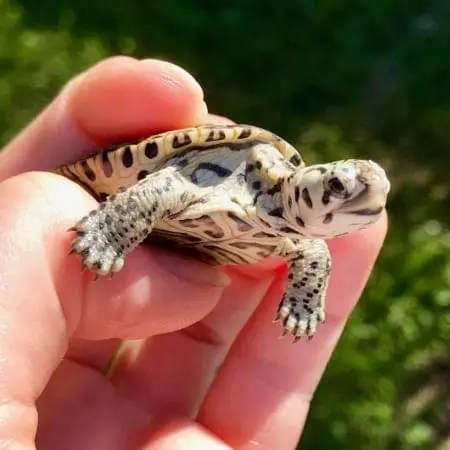
Spotted Turtles: Living Jewels
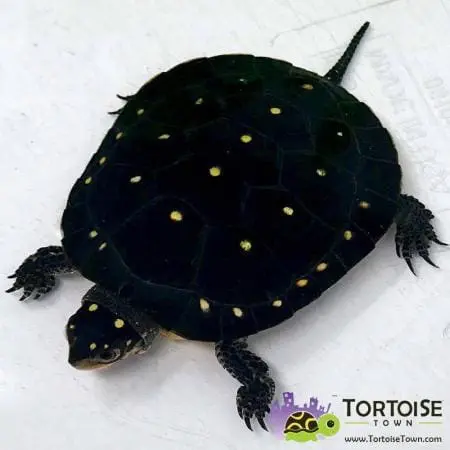
Scientific Name: Clemmys guttata
Spotted turtles represent one of the most beautiful native North American species, though their specialized needs make them suitable only for advanced keepers.
Distinctive Features:
- Adult Size: 4-5 inches maximum
- Appearance: Black shell and skin with bright yellow spots
- Spot Patterns: Each individual has unique spot arrangements
- Longevity: Can live 50+ years with proper care
Specialized Requirements:
- Water Quality: Extremely sensitive to water chemistry
- Temperature Cycling: Require seasonal temperature variations
- Diet Specificity: Need varied diet including live foods
- Legal Considerations: Protected in many states, permits may be required
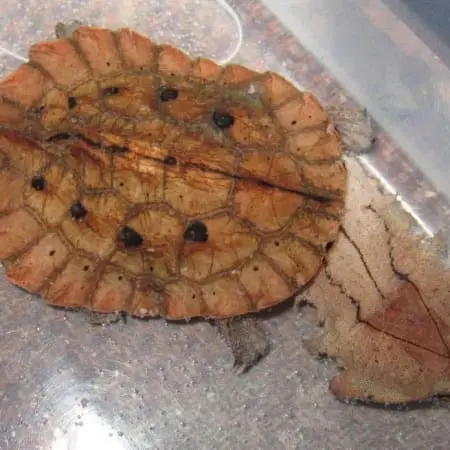
Wood Turtles: The Terrestrial Pond Species
Scientific Name: Glyptemys insculpta
Wood turtles blur the line between aquatic and terrestrial species, spending significant time both in water and on land.
Physical Description:
- Adult Size: 6-9 inches
- Shell Texture: Sculptured appearance with growth ring patterns
- Coloration: Brown shell with orange-red coloration on neck and legs
- Shell Shape: High-domed compared to most pond turtles
Complex Habitat Needs:
Wood turtles require dual habitat setups:
Aquatic Section:
- Clean, flowing water
- Depth of 6-12 inches
- Cool temperatures (65-72°F)
Terrestrial Section:
- Soil substrate for digging
- Hiding spots and vegetation
- Proper humidity levels
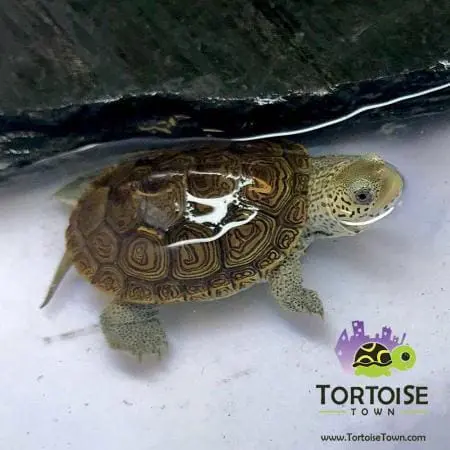
Diamondback Terrapins: Brackish Water Specialists
Scientific Name: Malaclemys terrapin
Diamondback terrapins occupy a unique niche as the only North American turtle adapted to brackish water environments.
Species Variations:
Multiple subspecies exist across the Atlantic and Gulf coasts:
- Northern Diamondback Terrapin (M. t. terrapin)
- Carolina Diamondback Terrapin (M. t. centrata)
- Texas Diamondback Terrapin (M. t. littoralis)
Specialized Care Requirements:
- Water Salinity: Requires brackish water (specific gravity 1.005-1.015)
- Diet Specialization: Adapted for eating crabs, mollusks, and marine invertebrates
- Temperature Sensitivity: Require precise temperature control
- Legal Status: Protected species requiring special permits
Breeding Considerations:
Terrapins present unique breeding challenges:
- Nesting Requirements: Need sandy substrate for egg-laying
- Incubation Specifics: Temperature-dependent sex determination
- Juvenile Care: Require specialized diet and water conditions
For those interested in exploring these specialty species, it’s crucial to research local regulations and ensure you can provide the complex care requirements these remarkable animals need. When searching for turtle for sale options, always verify the legal status and care requirements of specialty species before making a commitment.
Size Comparison and Selection Guide for Popular Pond Turtles
Understanding the size differences among popular species of pond turtles is crucial for proper planning and long-term success. This comprehensive guide will help you choose the right species based on your available space and experience level.
🐢 Interactive Pond Turtle Size Comparison
Explore popular pond turtle species by size – Click on any turtle for detailed information
Small Species (4-6 inches): Perfect for Compact Setups
Spotted Turtles represent the smallest option among popular pond species, but their specialized care requirements make them suitable only for experienced keepers. These living jewels require:
- Tank Size: Minimum 40 gallons
- Experience Level: Advanced
- Special Needs: Cool water temperatures, seasonal cycling
Southern Painted Turtles offer the best small-species option for beginners:
- Adult Size: 4-5 inches maximum
- Tank Requirements: 40-55 gallons adequate for life
- Beginner Friendly: Yes, with proper setup
Medium Species (6-8 inches): The Sweet Spot
This size range includes many of the most popular species of pond turtles for good reason – they balance manageable size with engaging personalities.
Eastern Painted Turtles:
- Tank Size: 55-75 gallons minimum
- Care Level: Beginner to intermediate
- Special Features: Beautiful natural coloration, hardy nature
Male Red-Eared Sliders:
- Adult Size: 6-8 inches
- Tank Requirements: 75-100 gallons
- Advantages: Well-documented care, readily available supplies
Large Species (8-12 inches): For Experienced Keepers
Larger pond turtles require significant space and resources but reward dedicated keepers with impressive presence and longevity.
Female Red-Eared Sliders:
- Tank Size: 125+ gallons minimum
- Lifespan: 30-40 years
- Considerations: Long-term commitment, substantial space needs
River Cooters:
- Adult Size: 9-12 inches common
- Tank Requirements: 150+ gallons
- Diet Transition: Omnivorous juveniles to herbivorous adults
Tank Size Planning Guide
| Turtle Size | Minimum Tank | Recommended Tank | Adult Space Needs |
|---|---|---|---|
| 4-5 inches | 40 gallons | 55 gallons | 40+ gallons |
| 6-8 inches | 75 gallons | 100 gallons | 75+ gallons |
| 8-10 inches | 125 gallons | 150 gallons | 125+ gallons |
| 10+ inches | 150 gallons | 200+ gallons | 150+ gallons |
When planning your setup, remember that these are minimum requirements. Larger tanks always provide better water quality stability and more natural behaviors.
As the #1 aquatic turtle breeder in the USA, Tortoise Town emphasizes the importance of proper planning before acquiring any turtle species. Whether you’re looking for turtles for sale or researching your first aquatic turtle, understanding size requirements ensures long-term success and animal welfare.
Care Requirements and Breeding Success for Popular Pond Turtles
Understanding the comprehensive care requirements for popular species of pond turtles is essential for long-term success and the health of these remarkable animals. As the leading aquatic turtle breeder in the USA, Tortoise Town has developed proven protocols that ensure optimal health and breeding success across multiple species.
Essential Habitat Requirements
Water Quality Parameters
Maintaining excellent water quality forms the foundation of successful turtle keeping. All popular pond turtle species require:
Temperature Ranges:
- Water Temperature: 72-78°F (22-26°C) for most species
- Basking Temperature: 85-90°F (29-32°C)
- Nighttime Drop: 5-10°F decrease acceptable
- Seasonal Variation: Some species benefit from slight seasonal temperature cycling
Water Chemistry:
- pH Level: 6.5-8.0 (species-specific preferences within this range)
- Ammonia: 0 ppm (toxic at any detectable level)
- Nitrite: 0 ppm (equally toxic to ammonia)
- Nitrate: <20 ppm (lower is better, <10 ppm ideal)
Filtration Requirements
Proper filtration cannot be overstated in its importance:
Mechanical Filtration:
- Removes physical debris and waste particles
- Requires regular cleaning (weekly to bi-weekly)
- Essential for maintaining water clarity
Biological Filtration:
- Establishes beneficial bacteria colonies
- Converts toxic ammonia to less harmful nitrates
- Takes 4-6 weeks to fully establish in new systems
Chemical Filtration:
- Activated carbon removes odors and discoloration
- UV sterilizers control harmful bacteria and algae
- Optional but beneficial for water quality
Lighting and UVB Requirements
UVB Lighting Essentials:
All pond turtle species require access to UVB radiation for proper calcium metabolism and shell development:
- UVB Strength: 5-10% UVB bulbs appropriate for most species
- Distance: 12-18 inches from basking spot
- Duration: 10-12 hours daily
- Replacement: Every 6-12 months regardless of visible light output
Basking Light Setup:
- Heat Source: Incandescent or ceramic heat emitters
- Temperature Gradient: Allow turtles to thermoregulate
- Timer Control: Consistent day/night cycles important
Nutritional Requirements by Species
Omnivorous Species (Red-eared sliders, Painted turtles, Map turtles):
Juvenile Diet (under 4 inches):
- Protein: 50-60% of diet
- Commercial pellets: High-quality turtle pellets as base
- Live/frozen foods: Bloodworms, brine shrimp, small fish
- Vegetables: Leafy greens, squash, carrots
Adult Diet (over 4 inches):
- Protein: 25-30% of diet
- Plant matter: 70-75% of diet
- Feeding frequency: Every other day for adults
Primarily Herbivorous Species (River cooters, Peninsula cooters):
Transition Period:
Young cooters start omnivorous but transition to primarily plant-based diets as they mature.
Adult Cooter Diet:
- Leafy greens: Collard greens, dandelion, mustard greens
- Aquatic plants: Water hyacinth, water lettuce, anacharis
- Vegetables: Squash, sweet potato, green beans
- Protein: Minimal – occasional fish or commercial pellets
Breeding Programs and Success Rates
As the #1 aquatic turtle breeder in the USA, Tortoise Town maintains detailed breeding records that demonstrate the importance of proper husbandry in reproductive success.
Breeding Season Preparation:
Environmental Triggers:
- Temperature Cycling: Gradual seasonal temperature changes
- Photoperiod Adjustment: Matching natural daylight cycles
- Nutrition Enhancement: Increased protein during breeding season
- Calcium Supplementation: Critical for egg shell formation
Species-Specific Breeding Notes:
Red-Eared Sliders:
- Sexual Maturity: Males 2-4 years, females 5-7 years
- Clutch Size: 2-30 eggs (typically 8-15)
- Incubation Period: 60-80 days at 82-84°F
- Success Rate: 85-95% with proper incubation
Painted Turtles:
- Sexual Maturity: Males 3-5 years, females 6-10 years
- Clutch Size: 4-15 eggs
- Incubation Temperature: 77-84°F (affects sex determination)
- Success Rate: 80-90% under optimal conditions
Map Turtles:
- Sexual Maturity: Highly variable by subspecies
- Clutch Size: 6-20 eggs
- Special Requirements: May require cooling period
- Success Rate: 70-85% (more challenging than sliders)
Health Monitoring and Veterinary Care
Routine Health Assessments:
Weekly Observations:
- Appetite: Consistent feeding response
- Activity Level: Normal swimming and basking behaviors
- Shell Condition: No soft spots, discoloration, or odor
- Eyes and Nose: Clear, no discharge
Monthly Evaluations:
- Weight Monitoring: Steady growth in juveniles, stable weight in adults
- Shell Measurements: Document growth rates
- Water Quality Testing: Complete parameter check
- Equipment Inspection: Filter function, heating elements, lighting
Common Health Issues:
Respiratory Infections:
- Symptoms: Mouth breathing, wheezing, lethargy
- Prevention: Proper temperatures, clean water
- Treatment: Veterinary antibiotics required
Shell Rot:
- Symptoms: Soft shell spots, foul odor, discoloration
- Prevention: Excellent water quality, proper basking
- Treatment: Topical treatments, possible systemic antibiotics
Metabolic Bone Disease:
- Symptoms: Soft shell, deformed growth, lethargy
- Prevention: Proper UVB, calcium supplementation
- Treatment: UVB correction, calcium therapy, veterinary care
When searching for water turtles for sale, choosing captive-bred animals from established breeding programs significantly reduces the risk of health issues and ensures animals adapted to captive conditions.
For comprehensive guidance on specific species care, explore our detailed care sheets for red-eared slider tank setup and red-eared slider turtle UV light requirements.
Legal Considerations and Responsible Ownership
When considering keeping any of the popular species of pond turtles, understanding legal requirements and responsible ownership practices is crucial for both animal welfare and compliance with local, state, and federal regulations.
Federal and State Regulations
The 4-Inch Rule
Federal regulations established by the FDA prohibit the sale of turtles under 4 inches in shell length as pets due to Salmonella concerns. This regulation affects how smaller turtle species are marketed and sold:
- Scientific and Educational Use: Turtles under 4 inches may be sold for legitimate scientific, educational, or exhibition purposes
- Documentation Required: Proper permits and documentation must accompany such sales
- Age Verification: Buyers must demonstrate appropriate credentials for non-pet purposes
Important Disclosure: All turtles sold under 4 inches are for research and scientific purposes only and are not sold as pets.
State-Specific Regulations
Many states have additional restrictions on turtle ownership:
Protected Species:
- Spotted Turtles: Protected in most northeastern states
- Wood Turtles: Regulated or prohibited in many jurisdictions
- Diamondback Terrapins: Protected throughout their range
- Native Species: Many states restrict collection of native turtle species
Permit Requirements:
Some states require permits for:
- Keeping certain numbers of turtles
- Breeding operations
- Commercial sales
- Interstate transport
Research State Laws:
Before acquiring any turtle species, research your local regulations:
- Contact state wildlife agencies
- Check municipal ordinances
- Verify HOA or rental restrictions
- Understand import/export requirements for interstate purchases
Responsible Breeding Practices
As the #1 aquatic turtle breeder in the USA, Tortoise Town follows strict ethical breeding protocols:
Genetic Diversity Maintenance:
- Outcrossing Programs: Preventing inbreeding through diverse breeding stock
- Record Keeping: Detailed genealogical records for all breeding animals
- Health Screening: Only healthy, robust animals used for breeding
- Population Management: Sustainable breeding practices that don’t oversaturate markets
Animal Welfare Standards:
- Proper Housing: Adequate space and environmental conditions for all animals
- Veterinary Care: Regular health assessments and prompt medical attention
- Nutrition Programs: Species-appropriate diets supporting optimal health
- Stress Reduction: Minimizing handling and transport stress
Lifetime Commitment Considerations
Longevity Planning:
Pond turtles represent significant long-term commitments:
| Species | Average Lifespan | Maximum Recorded |
|---|---|---|
| Red-Eared Slider | 30-40 years | 40+ years |
| Painted Turtle | 25-30 years | 35+ years |
| Map Turtle | 20-30 years | 30+ years |
| River Cooter | 40+ years | 50+ years |
| Spotted Turtle | 50+ years | 65+ years |
Financial Considerations:
Initial Setup Costs:
- Tank/Enclosure: $200-800 depending on size
- Filtration System: $100-400 for quality equipment
- Lighting Setup: $100-200 for UVB and heating
- Substrate and Décor: $50-150
- Initial Veterinary Exam: $75-150
Ongoing Annual Costs:
- Food: $100-200 per year
- Electricity: $150-300 for heating and lighting
- Filter Media: $50-100 for replacement media
- Veterinary Care: $100-300 for routine care
- Equipment Replacement: $50-200 for bulbs, heaters, etc.
Ethical Sourcing and Conservation
Choosing Captive-Bred Animals:
Supporting captive breeding programs provides numerous benefits:
Conservation Benefits:
- Reduced Wild Collection: Decreases pressure on wild populations
- Genetic Preservation: Maintains genetic diversity in captive populations
- Research Opportunities: Supports scientific understanding of species needs
- Education Value: Promotes conservation awareness
Animal Welfare Benefits:
- Health Advantages: Reduced disease and parasite loads
- Behavioral Adaptation: Better adapted to captive conditions
- Feeding Response: Established feeding on appropriate diets
- Handling Tolerance: Reduced stress from human interaction
Rehoming and Rescue Considerations
Planning for Life Changes:
Responsible ownership includes planning for circumstances that might prevent continued care:
Rehoming Options:
- Reptile Rescues: Specialized organizations for turtle placement
- Educational Institutions: Schools, nature centers, and zoos
- Experienced Keepers: Transfer to qualified individuals
- Veterinary Networks: Veterinarians often know suitable homes
Never Release Into Wild:
- Ecological Damage: Non-native species can disrupt local ecosystems
- Disease Transmission: Captive animals may carry diseases harmful to wild populations
- Legal Consequences: Releasing non-native species is illegal in most jurisdictions
- Animal Welfare: Captive-bred animals often cannot survive in wild conditions
Supporting Conservation Efforts
Habitat Protection:
- Wetland Conservation: Support organizations protecting turtle habitats
- Pollution Reduction: Minimize use of chemicals that enter waterways
- Climate Action: Support efforts to address climate change impacts
- Education: Share knowledge about turtle conservation needs
When seeking turtle for sale options, choosing reputable breeders who prioritize conservation and animal welfare helps ensure the long-term sustainability of turtle keeping as a hobby while supporting species preservation efforts.
For those interested in learning more about specific care requirements, our guides on pink belly side-necked turtle habitat and pink belly side-necked turtle temperature lighting provide detailed information for related aquatic species.
Conclusion
The world of popular species of pond turtles offers incredible diversity for dedicated keepers willing to provide proper care and long-term commitment. From the hardy and colorful red-eared slider to the delicate beauty of painted turtles, each species brings unique characteristics and rewards to those who understand their needs.
Key Success Factors
Proper Species Selection: Choose species appropriate for your experience level, available space, and local regulations. Beginners should start with hardy species like red-eared sliders or painted turtles, while advanced keepers can explore specialty species like spotted turtles or diamondback terrapins.
Quality Source Selection: As the #1 aquatic turtle breeder in the USA, Tortoise Town emphasizes the critical importance of choosing captive-bred specimens from reputable sources. These animals offer better health outcomes, established feeding responses, and reduced environmental impact compared to wild-caught alternatives.
Comprehensive Habitat Planning: Success requires proper planning for adult-sized animals, not just juveniles. Tank sizes, filtration capacity, and heating systems must accommodate full-grown turtles for their entire lifespan, which can span several decades.
Long-term Commitment: Pond turtles represent significant long-term commitments, with many species living 30+ years. This commitment includes ongoing costs for food, electricity, veterinary care, and equipment replacement throughout the animal’s lifetime.
Next Steps for Prospective Turtle Keepers
- Research Local Regulations: Verify that your chosen species is legal to keep in your area and understand any permit requirements.
- Plan Your Setup: Design and prepare your habitat before acquiring any animals. This includes tank selection, filtration systems, lighting, and heating equipment.
- Choose Reputable Sources: When ready to purchase, select turtles for sale from established captive breeding programs that prioritize animal health and welfare.
- Establish Veterinary Care: Locate an experienced reptile veterinarian in your area before bringing home your new turtle.
- Join Communities: Connect with other turtle keepers through online forums, local herpetological societies, and educational events to continue learning and sharing experiences.
Supporting Conservation Through Responsible Keeping
By choosing captive-bred animals and following proper husbandry practices, turtle keepers contribute to conservation efforts while enjoying the rewards of working with these remarkable animals. Every successful captive breeding program reduces pressure on wild populations while advancing our understanding of turtle biology and behavior.
Whether you’re drawn to the classic appeal of a red-eared slider, the artistic beauty of painted turtles, or the unique characteristics of specialty species, the world of pond turtle keeping offers lifelong learning opportunities and deep satisfaction for those committed to excellence in animal care.
Remember that all turtles sold under 4 inches are for research and scientific purposes only and are not sold as pets. This important regulation helps protect both animal welfare and public health while supporting legitimate scientific and educational endeavors.
For those ready to begin this rewarding journey, explore the comprehensive selection of water turtles for sale and detailed care resources available through established breeding programs. With proper preparation, dedication, and ongoing education, keeping pond turtles can provide decades of enjoyment while contributing to the preservation of these magnificent species.
References
[1] Ernst, C.H., & Lovich, J.E. (2009). Turtles of the United States and Canada. Johns Hopkins University Press.
[2] Gibbons, J.W., & Greene, J.L. (1990). Reproduction in the slider turtle (Trachemys scripta). In Life History and Ecology of the Slider Turtle (pp. 124-134). Smithsonian Institution Press.
[3] Mitchell, J.C. (1988). Population ecology and life histories of the freshwater turtles Chrysemys picta and Sternotherus odoratus in an urban lake. Herpetological Monographs, 2, 40-61.
[4] Ultsch, G.R. (2006). The ecology of overwintering among turtles: Where turtles overwinter and its consequences. Biological Reviews, 81(3), 339-367.