
The Complete Russian Tortoise Guide: Everything You Need to Know About This Hardy Desert Species
Have you ever wondered why the Russian tortoise has become one of the most beloved reptilian companions among tortoise enthusiasts worldwide? 🐢 These remarkable creatures, with their incredible resilience and charming personalities, have captured the hearts of reptile keepers from beginners to experts. As someone who has spent years working with these fascinating animals, I can tell you that the Russian tortoise offers a perfect blend of hardiness, manageable size, and engaging behavior that makes them exceptional pets for those ready to commit to their long-term care.
- Display 9 Products per page
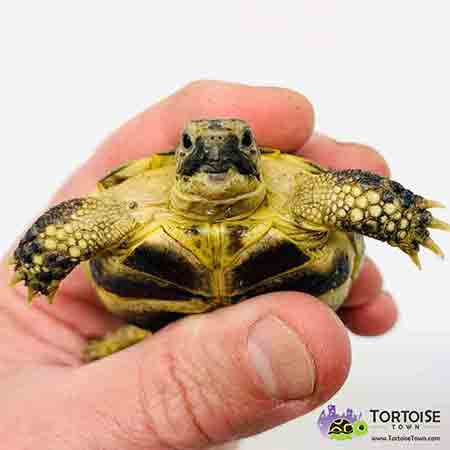
Key Takeaways
• Hardy and Adaptable: Russian tortoises are extremely resilient and can tolerate temperature variations better than most tortoise species
• Manageable Size: Adults typically reach 6-10 inches, making them suitable for both indoor and outdoor housing
• Long Lifespan: With proper care, these tortoises can live 50-100+ years, making them true lifetime companions
• Hibernation Needs: Unlike many pet tortoises, Russians naturally hibernate and may require special winter care considerations
• Excellent Beginner Species: Their forgiving nature and straightforward care requirements make them ideal for first-time tortoise owners
Understanding the Russian Tortoise: Species Overview
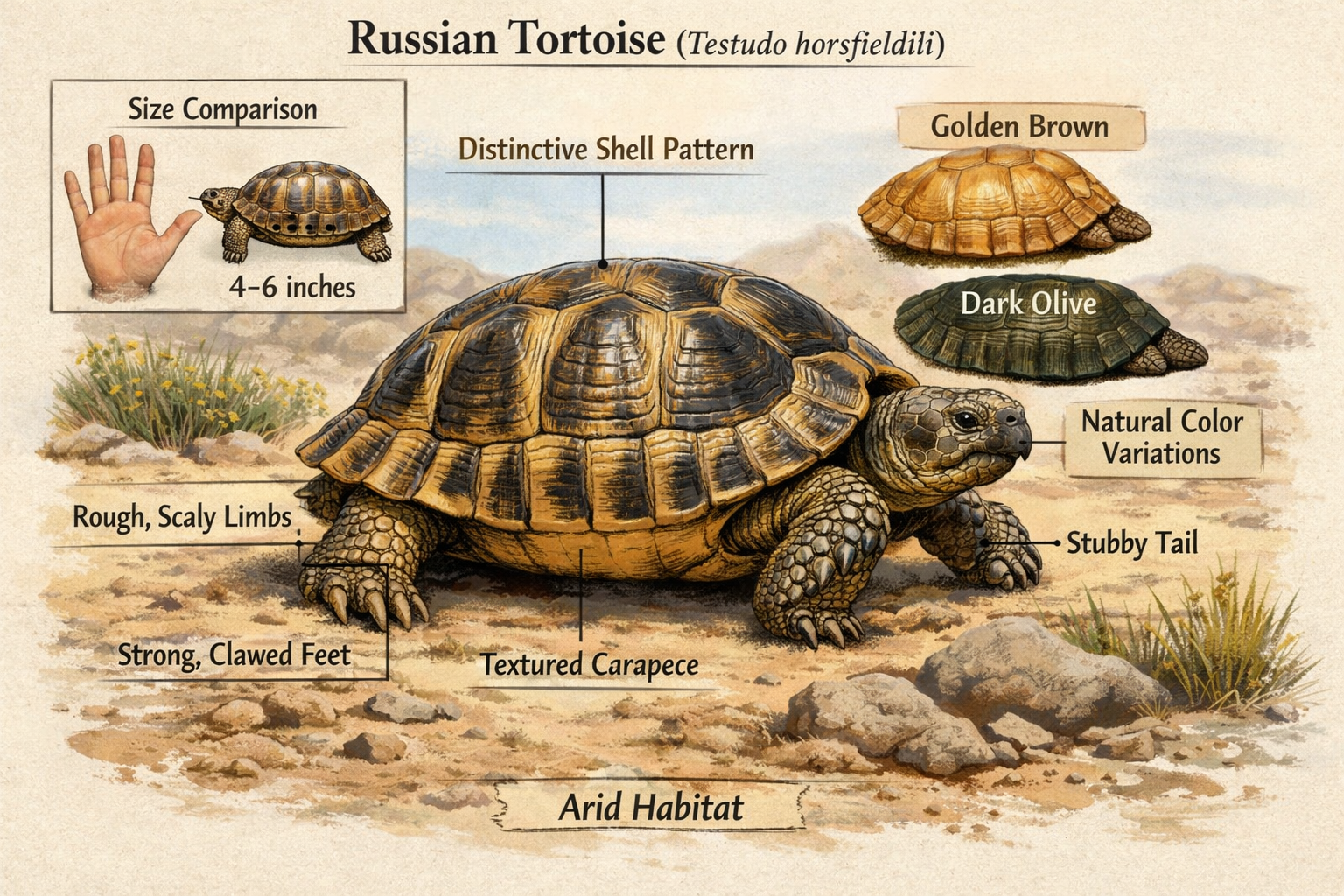
The Russian tortoise (Testudo horsfieldii), also known as the Central Asian tortoise, Horsfield’s tortoise, or Afghan tortoise, represents one of nature’s most remarkable examples of adaptation and survival. These incredible creatures have evolved to thrive in some of the harshest environments on Earth, from the steppes of Kazakhstan to the mountains of Afghanistan.
Physical Characteristics and Identification
Size and Build: Adult Russian tortoises typically measure between 6 to 10 inches in length, with females generally growing larger than males. Their compact, dome-shaped shell (carapace) displays beautiful variations in coloration, ranging from golden brown to dark olive green, often with distinctive black markings that create unique patterns on each individual.
Shell Features: The carapace consists of growth rings that can help estimate age, though this becomes less reliable in older specimens. The plastron (bottom shell) is typically lighter in color, often yellowish with dark blotches. One distinctive feature that helps identify Russian tortoises is the presence of four claws on each front foot, unlike many other tortoise species that have five.
Sexual Dimorphism: Males can be distinguished from females by several characteristics:
- Tail: Males have longer, thicker tails
- Plastron: Males often have a slightly concave plastron
- Size: Females typically grow larger
- Behavior: Males may display more territorial behavior during breeding season
Natural Habitat and Geographic Range
Russian tortoises inhabit a vast range across Central Asia, including Kazakhstan, Uzbekistan, Turkmenistan, Tajikistan, Kyrgyzstan, Iran, Afghanistan, Pakistan, and parts of Russia and China. This extensive range demonstrates their remarkable adaptability to various environmental conditions.
In their natural habitat, these tortoises experience:
- Extreme temperature variations (from -40°F in winter to over 100°F in summer)
- Low annual rainfall (typically 4-20 inches per year)
- Rocky, sandy, or clay soils
- Sparse vegetation consisting mainly of grasses, herbs, and desert shrubs
This harsh environment has shaped the Russian tortoise into an incredibly resilient species, capable of surviving conditions that would challenge many other reptiles.
Russian Tortoise Care Fundamentals
Caring for a Russian tortoise successfully requires understanding their unique needs and natural behaviors. Unlike tropical tortoise species, Russians have evolved for a more temperate climate with distinct seasonal changes.
Housing Requirements: Indoor vs. Outdoor Setups
Indoor Housing Considerations
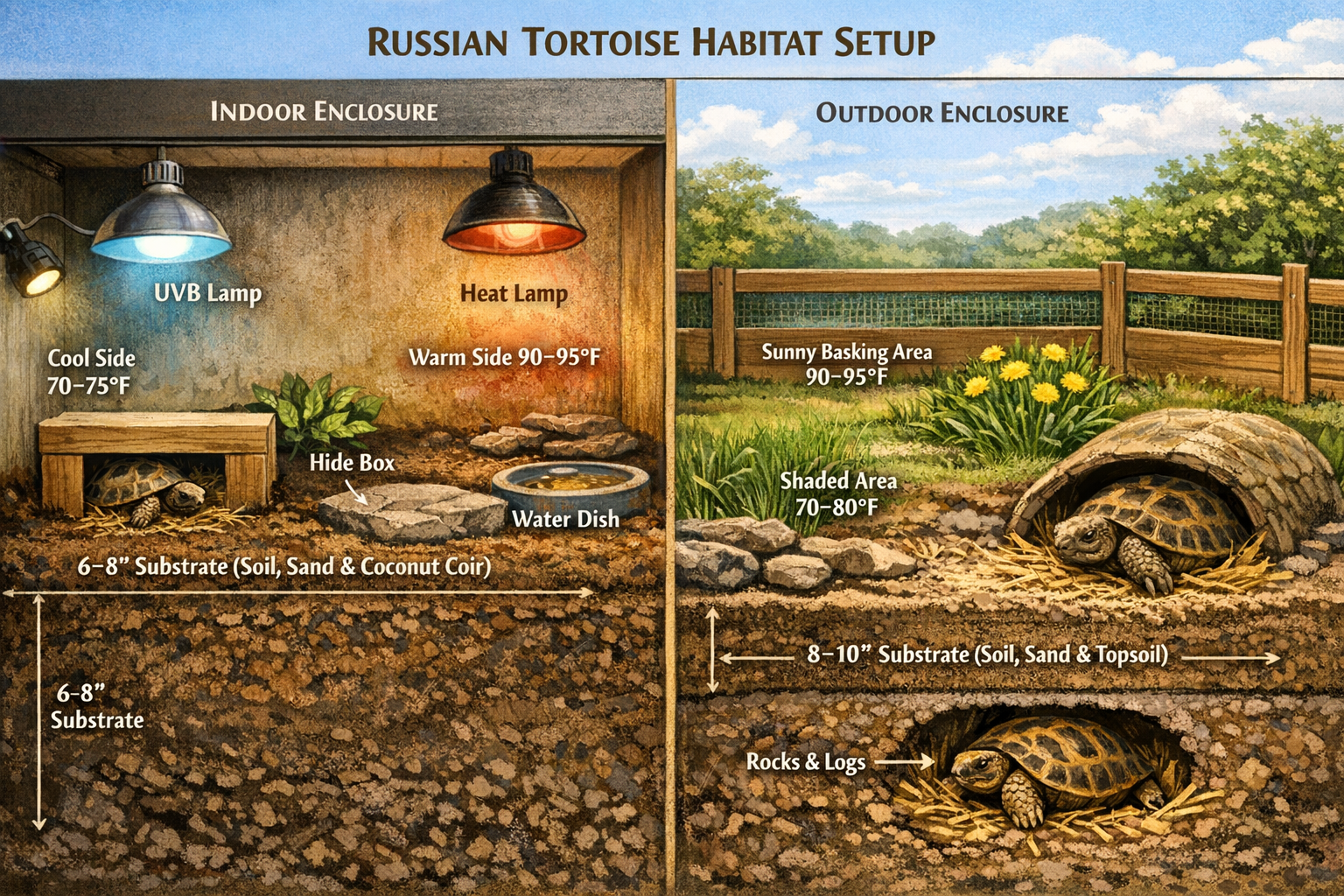
For baby Russian tortoise care, indoor setups are often preferred, especially during their first few years. A proper indoor enclosure should provide:
- Minimum space: 4×8 feet for adults, though larger is always better
- Substrate depth: 6-8 inches of appropriate substrate for digging
- Temperature gradient: Basking spot of 95-100°F, cool side 70-75°F
- Humidity levels: 40-60% relative humidity
- UVB lighting: Essential for calcium metabolism and shell health
Substrate Options:
- Cypress mulch mixed with topsoil
- Coconut coir and sand mixture
- Commercial tortoise substrate blends
- Avoid cedar, pine, or other aromatic woods
Outdoor Housing Benefits
When weather permits, outdoor housing provides numerous advantages:
- Natural UVB exposure from sunlight
- Exercise opportunities with more space to roam
- Natural foraging behavior on safe grasses and weeds
- Fresh air circulation
- Natural day/night temperature cycles
Outdoor Enclosure Requirements:
- Secure fencing: Minimum 18 inches high, buried 6 inches deep
- Shelter options: Multiple hide boxes and shade areas
- Predator protection: Overhead screening in areas with birds of prey
- Escape prevention: Russians are excellent diggers and climbers
Temperature and Lighting Needs
Proper temperature regulation is crucial for Russian tortoise health, affecting everything from digestion to immune function.
Temperature Zones:
- Basking area: 95-100°F (35-38°C)
- Ambient warm side: 80-85°F (27-29°C)
- Cool side: 70-75°F (21-24°C)
- Nighttime: Can drop to 60-70°F (15-21°C)
Heating Equipment:
- Ceramic heat emitters for nighttime heating
- Halogen or incandescent bulbs for basking spots
- Under-tank heaters (used cautiously with thick substrate)
- Radiant heat panels for large enclosures
UVB Lighting Requirements
UVB lighting is absolutely essential for Russian tortoises, enabling them to synthesize vitamin D3 and properly metabolize calcium. Without adequate UVB:
- Shells become soft and deformed (metabolic bone disease)
- Growth becomes stunted
- Immune system weakens
- Reproductive problems may develop
UVB Setup Guidelines:
- Use 10-12% UVB fluorescent tubes or mercury vapor bulbs
- Replace fluorescent bulbs every 6-12 months
- Position lights 12-18 inches from basking areas
- Provide 12-14 hours of UVB daily during active season
Humidity and Environmental Conditions
Unlike many desert species, Russian tortoises require moderate humidity levels, especially for proper shell development in young animals.
Humidity Management:
- Target range: 40-60% relative humidity
- Monitoring: Use digital hygrometers for accurate readings
- Adjustment methods: Water dishes, substrate misting, humid hides
Seasonal Considerations:
Russian tortoises naturally experience seasonal changes that should be reflected in their care:
- Spring/Summer: Higher activity, increased feeding, breeding behavior
- Fall: Gradual temperature reduction, decreased appetite
- Winter: Possible hibernation period (brumation)
Feeding Your Russian Tortoise: Diet and Nutrition
Proper nutrition forms the foundation of Russian tortoise health and longevity. These herbivorous reptiles have evolved to extract maximum nutrition from sparse, fibrous vegetation.
Natural Diet and Feeding Behavior
In the wild, Russian tortoises consume over 200 different plant species, including:
- Grasses: Various native grass species
- Herbs: Dandelions, plantain, clover
- Shrubs: Small branches and leaves
- Cacti: Prickly pear pads and fruits (when available)
- Flowers: Seasonal blooms for variety
This diverse diet provides essential nutrients while maintaining proper calcium-to-phosphorus ratios crucial for shell and bone health.
Captive Diet Requirements
Primary Food Categories:
- Grasses and Hay (60-70% of diet)
- Timothy hay
- Orchard grass
- Bermuda grass
- Fresh grass (pesticide-free)
- Leafy Greens (20-25% of diet)
- Dandelion greens
- Collard greens
- Mustard greens
- Turnip greens
- Endive and escarole
- Vegetables (5-10% of diet)
- Squash
- Bell peppers
- Carrots (occasionally)
- Sweet potato (small amounts)
- Flowers and Herbs (5% of diet)
- Hibiscus flowers
- Rose petals
- Nasturtiums
- Basil and oregano
Foods to Avoid:
- Iceberg lettuce (no nutritional value)
- Spinach (high oxalates)
- Avocado (toxic)
- Rhubarb (toxic)
- Mushrooms
- Any processed human foods
For comprehensive information about safe plants, check out this guide on edible plants for tortoises.
Feeding Schedule and Techniques
Feeding Frequency:
- Juveniles: Daily feeding with variety
- Adults: Every other day or daily smaller portions
- Seasonal adjustment: Reduce feeding before hibernation
Hand Feeding Benefits:
Hand feeding your Russian tortoise can strengthen your bond while ensuring proper nutrition:
- Allows monitoring of appetite and health
- Enables portion control
- Creates positive associations with handling
- Facilitates medication administration when needed
Feeding Technique Tips:
- Offer food on flat stones or ceramic plates
- Vary feeding locations to encourage movement
- Remove uneaten food after 24 hours
- Provide fresh water daily in shallow dishes
Supplements and Calcium
Calcium Supplementation:
Calcium is crucial for shell development and overall health. Russian tortoises require:
- Calcium powder: Dust food 2-3 times weekly
- Cuttlebone: Provide continuously for natural calcium source
- Calcium-rich foods: Dandelion greens, collard greens
Vitamin D3 Considerations:
With proper UVB lighting, tortoises synthesize their own vitamin D3. Avoid over-supplementation, which can cause health problems.
Quality Nutrition Sources:
When selecting tortoise food, choose high-quality commercial pellets as supplements to fresh foods, not replacements.
Health and Veterinary Care
Maintaining your Russian tortoise’s health requires vigilant observation, preventive care, and establishing a relationship with an experienced reptile veterinarian.
Common Health Issues
Respiratory Infections:
Signs include:
- Wheezing or mouth breathing
- Nasal discharge
- Lethargy
- Loss of appetite
Prevention focuses on proper temperature and humidity management.
Shell Problems:
- Pyramiding: Caused by improper diet, humidity, or lighting
- Shell rot: Bacterial or fungal infections from poor hygiene
- Soft shell: Usually indicates calcium deficiency or inadequate UVB
Parasites:
Regular fecal examinations help detect internal parasites common in wild-caught specimens.
Metabolic Bone Disease:
Prevented through proper UVB lighting, calcium supplementation, and appropriate diet.
Hibernation (Brumation) Considerations
Russian tortoises naturally hibernate in the wild, and many captive specimens retain this instinct. Understanding hibernation is crucial for their long-term health.
Pre-Hibernation Preparation:
- Gradual temperature reduction over 2-3 weeks
- Fasting period to empty digestive system
- Health check by qualified veterinarian
- Weight monitoring
Hibernation Environment:
- Temperature: 35-45°F (2-7°C)
- High humidity: 80-90%
- Dark, quiet location
- Proper substrate for burrowing
Monitoring During Hibernation:
- Monthly weight checks
- Watch for signs of illness
- Maintain proper environmental conditions
Post-Hibernation Care:
- Gradual temperature increase
- Offer water before food
- Monitor for normal elimination
- Resume normal feeding schedule gradually
Finding Qualified Veterinary Care
Establishing a relationship with a reptile-experienced veterinarian before problems arise is essential. Look for veterinarians who:
- Have specific experience with tortoises
- Offer routine wellness examinations
- Can perform necessary procedures (egg-binding, shell repair)
- Understand hibernation management
Handling and Behavioral Understanding
Russian tortoises possess unique personalities and behavioral patterns that make them fascinating companions when properly understood and respected.
Safe Handling Techniques
Basic Handling Principles:
- Always support the shell from underneath
- Never grab by the legs or head
- Move slowly and deliberately
- Keep handling sessions brief initially
- Allow the tortoise to retreat when stressed
Building Trust:
- Start with short, positive interactions
- Offer favorite foods during handling
- Speak softly and move calmly
- Respect signs of stress or fear
- Be consistent in your approach
Signs of Stress:
- Rapid withdrawal into shell
- Hissing or defensive posturing
- Attempting to bite
- Urination (stress response)
- Excessive hiding
Natural Behaviors and Enrichment
Digging Behavior:
Russian tortoises are natural excavators, creating burrows for:
- Temperature regulation
- Hiding from predators
- Hibernation sites
- Nesting (females)
Provide adequate substrate depth (6-8 inches minimum) to accommodate this natural behavior.
Climbing and Exploration:
Despite their reputation as slow movers, Russian tortoises are surprisingly active and curious:
- Provide obstacles and climbing opportunities
- Vary enclosure layout periodically
- Hide food to encourage foraging
- Offer different textures and surfaces
Social Behavior:
While generally solitary, Russian tortoises can cohabitate successfully when:
- Adequate space is provided
- Multiple feeding stations are available
- Hiding spots accommodate all individuals
- Size differences aren’t extreme
Breeding Considerations
For those interested in Russian tortoise breeding, understanding their reproductive cycle is essential:
Breeding Season: Typically spring and early summer
Sexual Maturity: 10-20 years depending on size and conditions
Egg Laying: 2-5 eggs per clutch, multiple clutches possible
Incubation: 60-120 days depending on temperature
Choosing Your Russian Tortoise: What to Look For
When considering adding a Russian tortoise to your family, selecting a healthy, well-cared-for animal from a reputable source is crucial for long-term success.
Captive-Bred vs. Wild-Caught
Advantages of Captive-Bred Tortoises:
- Health: No parasites or diseases from wild exposure
- Temperament: More accustomed to human interaction
- Feeding: Already established on appropriate diets
- Legal: No concerns about import regulations or conservation impact
- Longevity: Better long-term health prospects
Identifying Quality Breeders:
When searching for a tortoise for sale, look for:
- Detailed care information provided
- Health guarantees offered
- Multiple photos of actual animals
- Willingness to answer questions
- Proper shipping procedures
- Positive customer reviews
Health Assessment Checklist
Physical Examination:
- Eyes: Clear, bright, no discharge
- Nose: No discharge or swelling
- Shell: Firm, no soft spots or damage
- Weight: Appropriate for size, not too light
- Activity: Alert and responsive
- Limbs: Strong, coordinated movement
Behavioral Indicators:
- Appetite: Eating regularly
- Elimination: Normal waste production
- Activity: Appropriate energy levels
- Response: Reacts to stimuli normally
Age and Size Considerations
Hatchling Considerations (0-1 year):
- Require more intensive care
- Higher mortality risk
- Need specialized baby Russian tortoise care
- More frequent feeding required
Juvenile Benefits (1-5 years):
- More resilient than hatchlings
- Still adaptable to new environments
- Reasonable size for handling
- Many years of companionship ahead
Adult Advantages (5+ years):
- Established eating patterns
- More predictable behavior
- Hardy and resilient
- Immediate full-size housing needs
Setting Up Your Russian Tortoise Habitat
Creating an appropriate habitat is one of the most important aspects of Russian tortoise ownership. Whether choosing indoor, outdoor, or combination housing, attention to detail makes the difference between surviving and thriving.
Indoor Habitat Design
Enclosure Size Requirements:
- Minimum: 4×8 feet for adults
- Preferred: 6×12 feet or larger
- Height: 18-24 inches minimum
- Expansion: Plan for growth in juvenile animals
Essential Equipment List:
- Heating Elements:
- Ceramic heat emitters (100-150 watts)
- Halogen basking bulbs (75-100 watts)
- Under-tank heaters (optional, use carefully)
- Thermostats for temperature control
- Lighting Systems:
- UVB fluorescent tubes (10-12%)
- Mercury vapor bulbs (combination heat/UVB)
- Timer systems for consistent photoperiods
- Substrate Materials:
- Cypress mulch and topsoil mixture
- Coconut coir and sand blend
- Commercial tortoise substrates
- Avoid aromatic woods (cedar, pine)
- Furniture and Enrichment:
- Multiple hide boxes (warm and cool sides)
- Water dishes (shallow, easy to clean)
- Food dishes (ceramic or stone)
- Climbing obstacles and varied terrain
Ventilation Considerations:
Proper airflow prevents respiratory problems and maintains air quality:
- Install ventilation fans if needed
- Avoid completely enclosed setups
- Ensure fresh air circulation
- Monitor humidity levels regularly
Outdoor Habitat Construction
Fencing Requirements:
Russian tortoises are escape artists requiring secure containment:
- Height: Minimum 18 inches above ground
- Depth: Bury 6-8 inches below surface
- Material: Smooth surfaces prevent climbing
- Gates: Secure latching mechanisms
Shelter Provisions:
Outdoor tortoises need multiple shelter options:
- Dog houses: Modified for tortoise use
- Underground burrows: Natural or artificial
- Shade structures: Trees, umbrellas, or built shelters
- Windbreaks: Protection from harsh weather
Safety Considerations:
- Predator protection: Overhead screening in high-risk areas
- Toxic plants: Remove all poisonous vegetation
- Chemical exposure: Avoid pesticides and fertilizers
- Escape routes: Regular perimeter inspections
Seasonal Habitat Modifications
Spring Setup:
- Increase photoperiod gradually
- Raise temperatures slowly
- Provide fresh vegetation growth
- Prepare outdoor enclosures
Summer Maintenance:
- Ensure adequate shade
- Monitor for overheating
- Maintain water availability
- Regular cleaning schedules
Fall Preparation:
- Begin temperature reduction
- Reduce feeding gradually
- Prepare hibernation areas
- Final health assessments
Winter Care:
- Maintain hibernation conditions
- Monitor environmental parameters
- Reduce disturbances
- Plan spring emergence
Long-Term Care and Commitment
Owning a Russian tortoise represents a significant long-term commitment, potentially spanning multiple decades and generations of human caretakers.
Lifespan and Life Stages
Expected Longevity:
Russian tortoises commonly live 50-100+ years with proper care, making them true lifetime companions. Some documented cases exceed 150 years, highlighting the importance of planning for their long-term care.
Life Stage Characteristics:
Hatchling Stage (0-2 years):
- Rapid growth period
- Higher care requirements
- More vulnerable to environmental changes
- Frequent feeding needed
Juvenile Stage (2-10 years):
- Continued growth
- Personality development
- Establishment of feeding preferences
- Habitat exploration behaviors
Adult Stage (10-30 years):
- Sexual maturity reached
- Stable size and behavior patterns
- Peak reproductive years
- Established routines
Senior Stage (30+ years):
- Slower metabolism
- Potential health issues
- Reduced activity levels
- Special care considerations
Creating a Care Legacy
Documentation Systems:
Maintain detailed records including:
- Medical history: Veterinary visits, treatments, medications
- Growth records: Weight and size measurements
- Behavioral notes: Preferences, habits, personality traits
- Care instructions: Detailed husbandry information
Emergency Planning:
Prepare for unexpected situations:
- Backup caregivers: Friends or family members trained in basic care
- Veterinary contacts: Emergency and regular care providers
- Care funds: Financial planning for long-term expenses
- Legal arrangements: Will provisions for tortoise care
Cost Considerations
Initial Setup Costs:
- Enclosure construction: $200-1,000+
- Heating and lighting: $150-400
- Substrate and furnishing: $100-300
- Tortoise purchase: $100-500
Annual Operating Expenses:
- Food and supplements: $200-400
- Electricity: $300-600
- Veterinary care: $200-500
- Equipment replacement: $100-300
Long-term Financial Planning:
Consider the cumulative cost over decades of ownership and plan accordingly.
Why Choose Tortoise Town for Your Russian Tortoise
When you’re ready to welcome a Russian tortoise into your family, selecting the right source is crucial for ensuring you receive a healthy, well-cared-for animal that will thrive in your care.
Commitment to Quality and Health
Reputable breeders focus on producing healthy, robust animals through:
- Genetic diversity: Maintaining breeding programs with diverse bloodlines
- Health screening: Regular veterinary examinations and testing
- Proper nutrition: Feeding breeding stock optimal diets
- Environmental conditions: Providing appropriate housing and care
Customer Support and Education
Quality breeders provide ongoing support including:
- Care sheets: Detailed husbandry information
- Setup guidance: Help with habitat design and equipment selection
- Problem-solving: Assistance with care challenges
- Community access: Connection with other tortoise keepers
Shipping and Guarantee Policies
Professional operations offer:
- Safe shipping: Proper packaging and climate control
- Health guarantees: Protection against genetic or health issues
- Communication: Updates throughout the shipping process
- Arrival support: Immediate assistance if problems arise
🐢 Russian Tortoise Care Calculator
Calculate enclosure size, heating costs, and care requirements for your Russian tortoise
📊 Your Russian Tortoise Care Plan
Conclusion
The Russian tortoise represents one of nature’s most remarkable examples of resilience and adaptability, making them exceptional companions for dedicated reptile enthusiasts. Throughout this comprehensive guide, we’ve explored every aspect of Russian tortoise care, from their fascinating natural history to the practical requirements of daily husbandry.
These hardy creatures offer a unique opportunity to form a bond that can span generations, but this privilege comes with significant responsibility. Success with Russian tortoises requires commitment to providing proper housing, nutrition, healthcare, and environmental conditions that respect their natural behaviors and needs.
Your Next Steps:
- Assess Your Commitment: Honestly evaluate your ability to provide 50+ years of consistent care
- Prepare Your Space: Design and set up appropriate housing before acquiring your tortoise
- Research Local Resources: Find qualified veterinarians and emergency care options
- Connect with Community: Join tortoise keeper groups for ongoing support and advice
- Choose Quality Sources: Select reputable breeders who prioritize health and proper care
Remember that every Russian tortoise is an individual with unique personality traits and preferences. Patient observation and consistent care will help you understand your tortoise’s specific needs and develop a rewarding relationship that enriches both your lives.
The journey of Russian tortoise ownership is filled with daily discoveries, seasonal rhythms, and the satisfaction of providing excellent care for one of nature’s most enduring creatures. With proper preparation, dedication, and respect for their remarkable biology, your Russian tortoise will thrive and bring decades of joy to your family.
Whether you’re just beginning to research tortoise species or ready to welcome your new companion home, the investment in proper knowledge and preparation will pay dividends throughout your tortoise’s long and healthy life. The Russian tortoise’s incredible adaptability and engaging personality make them truly special members of the reptile world, deserving of our best efforts in their care and conservation.
References
[1] Bonin, F., Devaux, B., & Dupré, A. (2006). Turtles of the World. Johns Hopkins University Press.
[2] Ernst, C. H., & Barbour, R. W. (1989). Turtles of the World. Smithsonian Institution Press.
[3] Highfield, A. C. (1996). Practical Encyclopedia of Keeping and Breeding Tortoises and Freshwater Turtles. Carapace Press.
[4] Lagios, B. J., & McCoy, C. J. (1995). Husbandry and breeding of Russian tortoises. Reptile & Amphibian Magazine, 42, 18-25.
[5] McKeown, S. (1996). A Field Guide to Reptiles and Amphibians in the Hawaiian Islands. Diamond Head Publishing.