
The Complete Guide to Large Tortoises: Top Species and Expert Care Tips for 2026
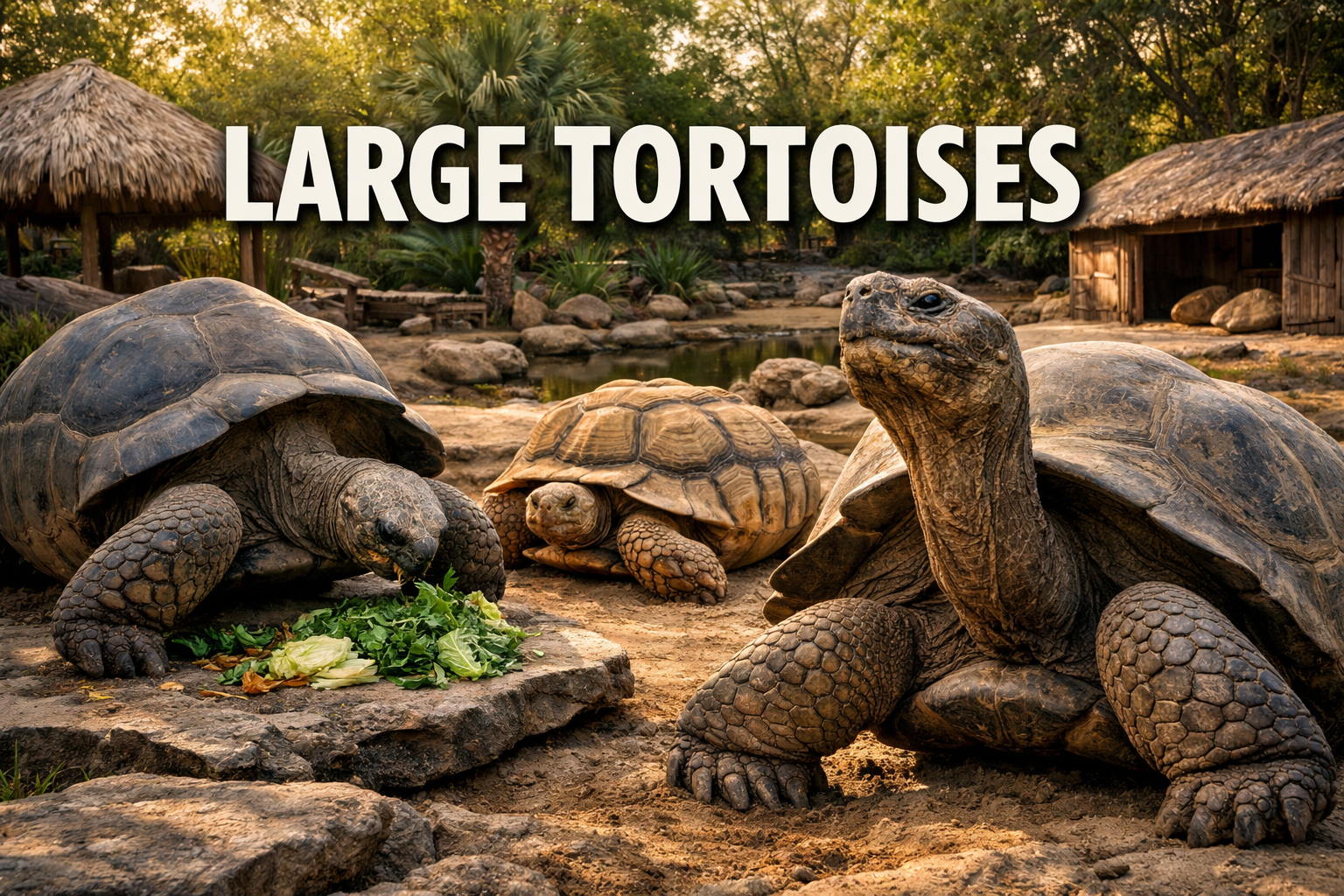
Picture this: you’re walking through your backyard when you spot a magnificent creature slowly making its way across the grass—a gentle giant with an ancient wisdom in its eyes and a shell that tells stories of decades past. Large tortoises represent some of the most fascinating and rewarding reptilian companions you can welcome into your life, combining prehistoric charm with surprisingly engaging personalities that will captivate you for generations to come.
These remarkable creatures have roamed our planet for over 200 million years, and today’s large tortoise species offer dedicated keepers the unique opportunity to care for living dinosaurs in their own homes. From the impressive African Sulcata that can reach over 100 pounds to the stunning Aldabra giants that can live well beyond a century, large tortoises provide an unmatched pet ownership experience that spans decades of companionship.
Key Takeaways
• Seven primary large tortoise species dominate the pet trade: African Sulcata, Leopard, Aldabra Giant, Red-footed, Yellow-footed, Burmese Star, and Indian Star tortoises
• Proper habitat setup requires both indoor and outdoor enclosures with specific temperature, humidity, and UVB lighting requirements
• Long-term commitment is essential as large tortoises can live 50-150+ years and require consistent daily care throughout their extended lifespans
• Specialized diet and supplementation including calcium, vitamin D3, and species-specific nutritional requirements are crucial for healthy shell and bone development
• Reputable breeders like those found through established retailers ensure you receive healthy, captive-bred specimens with proper documentation and support
Understanding Large Tortoise Species: The Magnificent Seven
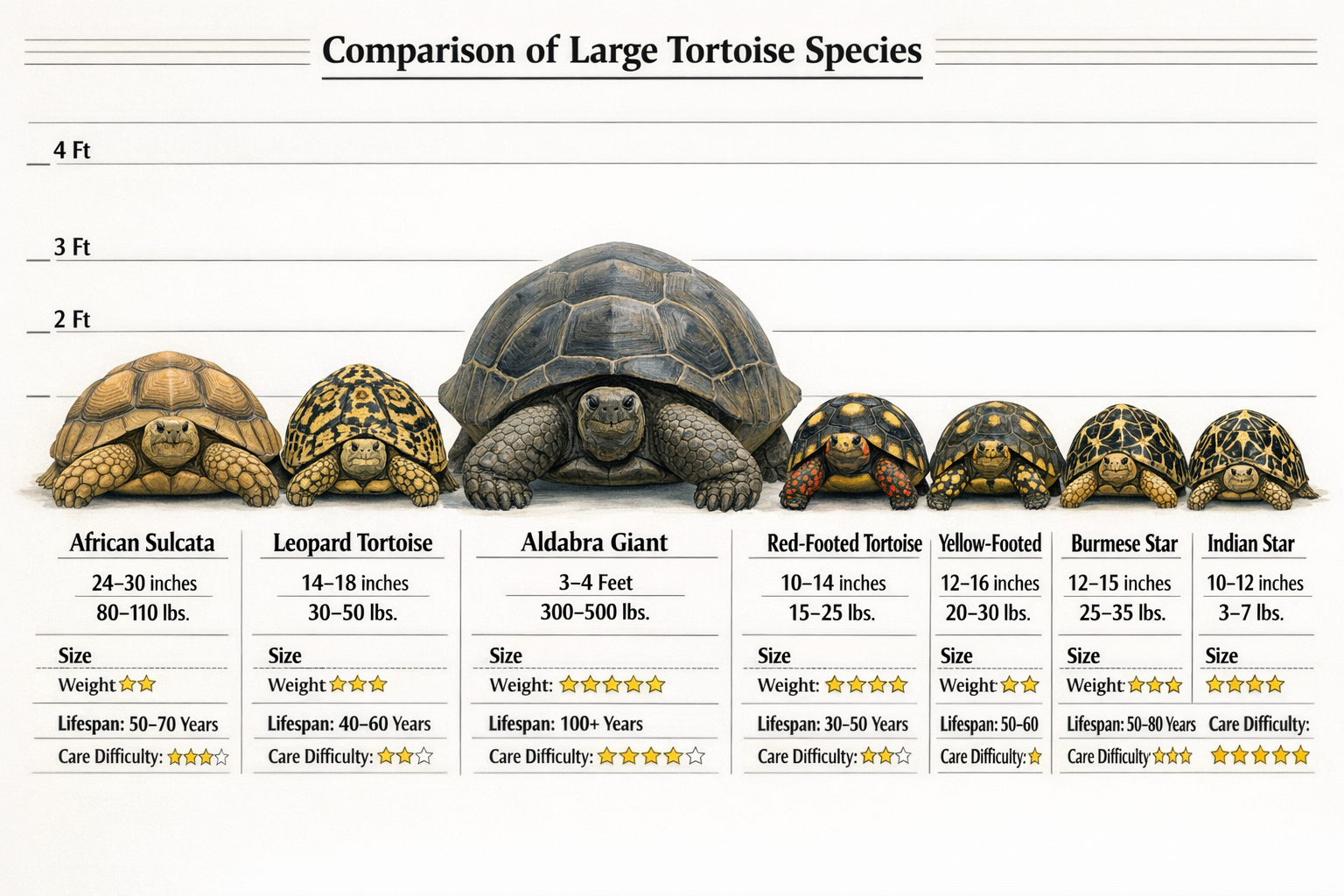
When I first started researching large tortoises, I was amazed by the incredible diversity within this group of gentle giants. Each species brings its own unique characteristics, care requirements, and personality traits that make them special in their own right.
African Sulcata Tortoise: The Desert Wanderer 🐢
The African Sulcata tortoise stands as the third-largest tortoise species in the world and arguably the most popular among large tortoise enthusiasts. These incredible creatures can reach weights of 80-110 pounds and shell lengths of 24-30 inches, making them true backyard giants.
Key Characteristics:
- Size: 80-110 pounds, 24-30 inches
- Lifespan: 80-150 years
- Origin: Sub-Saharan Africa
- Temperament: Active, curious, and surprisingly social
Sulcatas are known for their incredible digging abilities—they can excavate burrows up to 10 feet deep in the wild! This behavior translates to pet ownership, where they’ll happily redesign your garden landscaping if given the chance. Their hardy desert origins make them relatively easy to care for, though they require substantial space and proper winter housing in most climates.
For those interested in Sulcata tortoise care, understanding their grazing nature is crucial. These tortoises spend most of their waking hours slowly moving and eating, requiring a diet rich in high-fiber grasses and weeds.
Leopard Tortoise: The Spotted Beauty
Leopard tortoises earn their name from the stunning spotted patterns adorning their shells, creating a natural work of art that’s different on every individual. These South African natives represent an excellent choice for intermediate tortoise keepers.
Distinctive Features:
- Adult Size: 40-70 pounds, 16-24 inches
- Pattern: Unique spotted shell design
- Behavior: Generally calm and easy-going
- Climate Needs: Moderate humidity requirements
The leopard tortoise care guide emphasizes their grassland origins, which influence their dietary and habitat preferences. Unlike their desert-dwelling Sulcata cousins, leopard tortoises prefer slightly higher humidity levels and more varied vegetation in their diet.
Aldabra Giant Tortoise: The Living Legend
Aldabra giant tortoises represent the pinnacle of large tortoise keeping—these magnificent creatures are among the largest tortoises on Earth and can live well over 150 years. Owning an Aldabra is like becoming a guardian of living history.
Impressive Statistics:
- Maximum Size: 200+ pounds, 4+ feet long
- Longevity: 150+ years (some documented over 200)
- Conservation Status: Vulnerable but stable
- Space Requirements: Extensive outdoor areas essential
Due to their enormous size and specific needs, Aldabra tortoise care requires serious commitment and substantial resources. These giants need year-round access to large outdoor enclosures and specialized housing during colder months.
Red-footed and Yellow-footed Tortoises: The Rainforest Dwellers
These South American species bring tropical flair to the large tortoise world, with their colorful leg markings and forest-adapted behaviors setting them apart from their grassland and desert relatives.
Red-footed Tortoise Highlights:
- Size: 30-50 pounds, 14-16 inches
- Habitat: Tropical rainforest floors
- Diet: Omnivorous (includes fruits and occasional protein)
- Humidity: High humidity requirements (70-80%)
Yellow-footed Tortoise Features:
- Size: 40-60 pounds, 16-20 inches
- Behavior: More active than red-footed cousins
- Social: Often found in groups in the wild
- Temperature: Consistent warmth year-round
The red-footed tortoise habitat requirements differ significantly from desert species, requiring higher humidity levels and more complex dietary needs that include occasional fruits and even small amounts of protein.
Star Tortoises: The Geometric Marvels
Both Burmese and Indian Star tortoises showcase nature’s mathematical precision with their geometric shell patterns that radiate from each scute like perfect star bursts.
Indian Star Tortoise:
- Size: 15-25 pounds, 10-12 inches
- Pattern: High-contrast star radiations
- Personality: Shy but curious
- Care Level: Intermediate to advanced
Burmese Star Tortoise:
- Size: 20-35 pounds, 12-16 inches
- Conservation: Critically endangered in wild
- Availability: Limited due to conservation status
- Value: High-end species for experienced keepers
Understanding star tortoise care involves recognizing their more delicate nature compared to hardier species like Sulcatas. These beautiful tortoises require precise environmental controls and careful attention to diet and humidity.
Large Tortoise Species Comparison Tool
| Species | Adult Size | Weight Range | Lifespan | Care Level | Origin |
|---|
Essential Care Requirements for Large Tortoises
Caring for large tortoises involves understanding and meeting their complex environmental, dietary, and social needs. After years of working with these magnificent creatures, I’ve learned that success comes from attention to detail and consistency in daily care routines.
Housing Requirements: Indoor and Outdoor Considerations
Large tortoises need substantial space to thrive, and most species require both indoor and outdoor housing options depending on your climate and seasonal changes.
Outdoor Enclosure Specifications
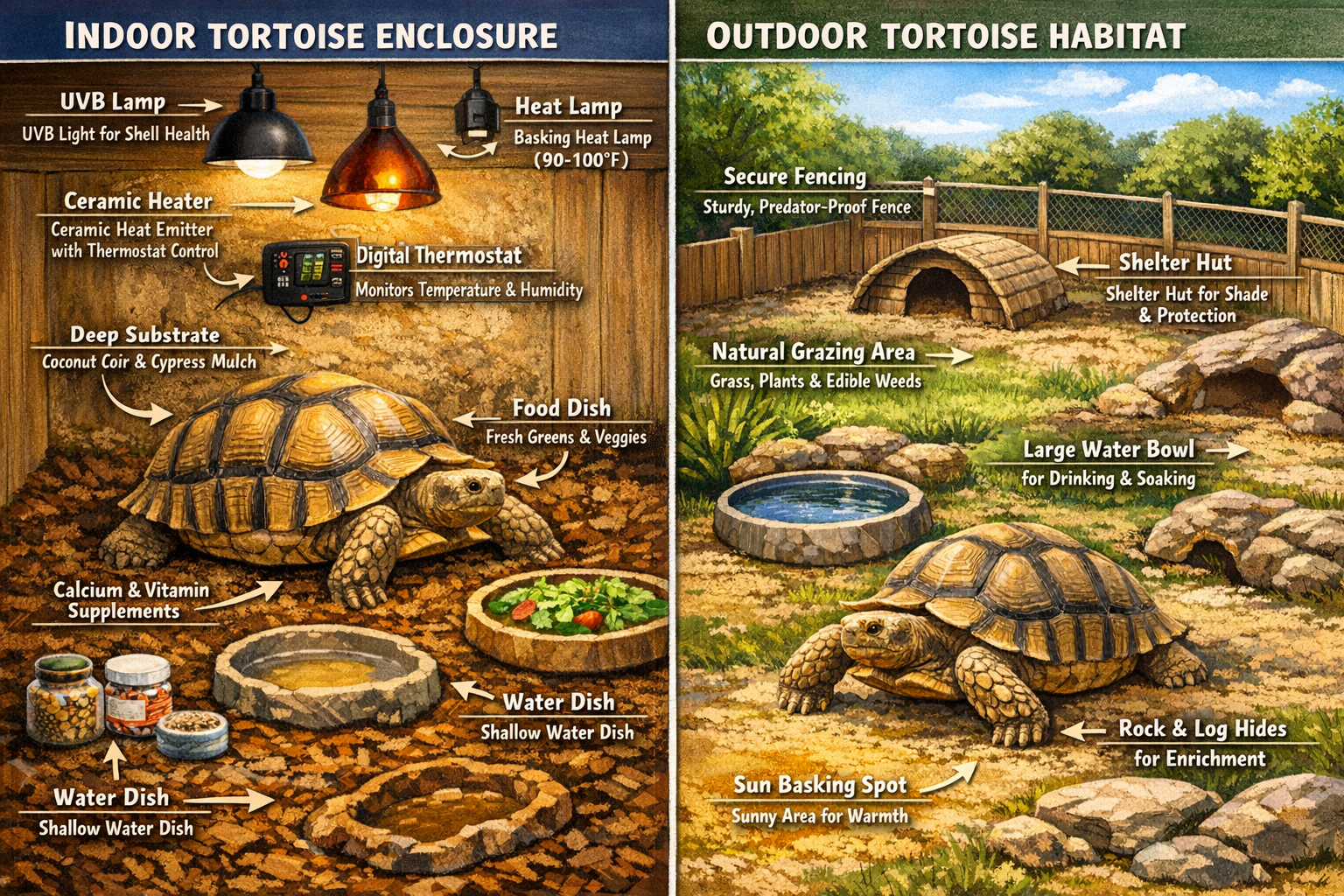
For adult large tortoises, outdoor enclosures should provide:
Minimum Space Requirements:
- Sulcata tortoises: 100+ square feet per adult
- Leopard tortoises: 80+ square feet per adult
- Aldabra giants: 200+ square feet per adult
- Star tortoises: 60+ square feet per adult
The large tortoise housing setup should include secure fencing at least 18-24 inches high (many species are excellent climbers), with buried barriers to prevent digging escapes. Provide multiple shelter areas, basking spots, and feeding stations throughout the enclosure.
Essential Outdoor Features:
- Shelter structures for weather protection
- Varied terrain with hills and flat areas
- Natural vegetation for grazing and enrichment
- Water features for drinking and soaking
- Secure fencing to prevent escapes and protect from predators
Indoor Housing Solutions
During colder months or in climates with harsh winters, large tortoises need appropriate indoor accommodations. The sulcata tortoise indoor habitats guide provides excellent insights into creating suitable indoor environments.
Indoor Enclosure Requirements:
- Minimum size: 8×4 feet for medium species, 10×6 feet for giants
- Flooring: Easy-to-clean surfaces with appropriate substrate
- Ventilation: Adequate airflow without creating drafts
- Accessibility: Easy access for daily maintenance and interaction
Lighting and Temperature Management
Proper lighting represents one of the most critical aspects of large tortoise care, directly impacting their health, behavior, and longevity.
UVB Lighting Requirements
All large tortoises require access to UVB radiation for proper calcium metabolism and shell development. The leopard tortoise UVB lighting specifications apply broadly across species with minor variations.
UVB Lighting Guidelines:
- UVB strength: 10-12% UVB output for most species
- Placement: 12-18 inches above basking areas
- Duration: 10-12 hours daily during active seasons
- Replacement: Every 6-12 months regardless of visible light output
Temperature Zones
Creating proper temperature gradients allows large tortoises to thermoregulate naturally throughout their enclosures.
Temperature Requirements by Zone:
- Basking area: 95-105°F (35-40°C)
- Warm side: 85-90°F (29-32°C)
- Cool side: 75-80°F (24-27°C)
- Nighttime: 70-75°F (21-24°C)
Humidity and Environmental Controls
Different large tortoise species have varying humidity requirements based on their natural habitats.
Species-Specific Humidity Needs:
- Desert species (Sulcata): 30-50% humidity
- Grassland species (Leopard): 40-60% humidity
- Forest species (Red-foot): 70-80% humidity
- Tropical species (Star tortoises): 60-75% humidity
The red-footed tortoise humidity requirements demonstrate how critical proper moisture levels are for species from tropical environments.
Nutrition and Feeding Protocols
Feeding large tortoises properly requires understanding their natural diets and providing appropriate nutrition throughout their long lives.
Basic Dietary Principles
Most large tortoises are primarily herbivorous, though some species like red-footed tortoises occasionally consume fruits and small amounts of protein in the wild.
Core Dietary Components:
- High-fiber grasses: Timothy hay, orchard grass, Bermuda grass
- Leafy greens: Dandelion, plantain, hibiscus, mulberry leaves
- Weeds and wildflowers: Safe varieties provide natural enrichment
- Commercial pellets: High-quality supplements to natural diet
Understanding edible plants for tortoises helps ensure you’re providing safe, nutritious options while avoiding potentially harmful vegetation.
Hand-Feeding Techniques
Hand-feeding large tortoises creates positive associations and allows for close health monitoring. Start slowly with favorite foods, allowing the tortoise to approach at their own pace. Many keepers find that offering treats like hibiscus flowers or dandelion greens helps build trust and facilitates handling.
Hand-Feeding Best Practices:
- Start with favorites: Use preferred foods to build positive associations
- Move slowly: Sudden movements can startle even large tortoises
- Be patient: Allow the tortoise to approach and investigate
- Monitor intake: Ensure hand-feeding doesn’t replace normal foraging behavior
Supplementation Requirements
Large tortoises require specific supplements to maintain optimal health, particularly calcium for shell and bone development.
Essential Supplements:
- Calcium powder: Dust food 2-3 times weekly for adults, daily for juveniles
- Vitamin D3: Necessary for calcium absorption, especially for indoor tortoises
- Multivitamins: Weekly supplementation with reptile-specific formulations
- Probiotics: Beneficial for digestive health, especially during stress or illness
Quality tortoise food and supplements ensure your tortoise receives complete nutrition throughout their extended lifespan.
Handling and Interaction Guidelines
While large tortoises aren’t typically considered “hands-on” pets like dogs or cats, proper handling techniques are essential for health checks, enclosure maintenance, and building trust.
Safe Handling Techniques
Large tortoises can be surprisingly strong and may become stressed if handled improperly. Always support their body weight and avoid lifting by the shell edges.
Proper Handling Steps:
- Approach calmly from the front where the tortoise can see you
- Support the shell from both sides, never lift by shell edges
- Keep low to prevent injury if the tortoise is dropped
- Move slowly and speak softly to reduce stress
- Limit duration to necessary interactions only
Building Trust and Recognition
Large tortoises are more intelligent than many people realize and can learn to recognize their caregivers, respond to their names, and even show preferences for certain people.
Trust-Building Activities:
- Consistent feeding schedules help tortoises anticipate your presence
- Gentle interaction during feeding times builds positive associations
- Respectful approach allows tortoises to retreat if they feel threatened
- Patient observation helps you learn individual personality traits
Health Monitoring and Veterinary Care
Large tortoises can live for many decades with proper care, but they require regular health monitoring and access to experienced reptile veterinarians.
Daily Health Checks
Incorporate basic health assessments into your daily care routine:
Daily Observation Points:
- Activity levels: Normal movement and exploration patterns
- Appetite: Consistent eating and drinking behaviors
- Shell condition: Check for soft spots, pyramiding, or damage
- Eyes and nose: Clear, bright eyes without discharge
- Breathing: Quiet, regular breathing without wheezing
Common Health Concerns
Understanding potential health issues helps you identify problems early and seek appropriate veterinary care.
Frequent Health Issues:
- Respiratory infections: Often caused by inadequate temperatures or humidity
- Shell rot: Results from poor hygiene or excessive moisture
- Pyramiding: Caused by improper diet, lighting, or humidity during growth
- Parasites: Internal and external parasites require veterinary treatment
- Metabolic bone disease: Results from calcium deficiency or inadequate UVB
Choosing and Acquiring Large Tortoises
Selecting the right large tortoise species and finding a reputable source represents crucial first steps in successful tortoise keeping. The decision to bring home one of these magnificent creatures should never be taken lightly, given their extensive lifespans and specific care requirements.
Species Selection Considerations
Choosing among large tortoise species requires honest assessment of your experience level, available space, climate, and long-term commitment capabilities.
Beginner-Friendly Large Tortoise Species
For those new to large tortoise keeping, certain species offer more forgiving care requirements and hardier constitutions.
Recommended Starter Species:
- African Sulcata: Hardy desert species with straightforward care needs
- Leopard Tortoise: Moderate size with adaptable personality
- Red-footed Tortoise: Smaller of the large species with engaging behavior
The comprehensive best beginner tortoise species guide provides detailed comparisons to help new keepers make informed decisions.
Advanced Species for Experienced Keepers
Some large tortoise species require extensive experience and specialized knowledge to maintain successfully.
Advanced Species Considerations:
- Aldabra Giants: Require substantial space and resources
- Star Tortoises: Need precise environmental controls
- Burmese Star: Limited availability and conservation concerns
Finding Reputable Sources
The source of your large tortoise significantly impacts the animal’s health, genetic diversity, and your long-term success as a keeper.
Captive-Bred vs. Wild-Caught Considerations
Always prioritize captive-bred large tortoises over wild-caught specimens for both ethical and practical reasons.
Advantages of Captive-Bred Tortoises:
- Better health: Reduced parasite loads and disease exposure
- Easier acclimation: Already adapted to captive conditions
- Known history: Complete records of parentage and care
- Conservation benefit: Reduces pressure on wild populations
- Legal compliance: Clear documentation and permits
Selecting Quality Breeders
When searching for a tortoise for sale, prioritize breeders who demonstrate commitment to animal welfare and customer education.
Quality Breeder Characteristics:
- Health guarantees: Offer reasonable health warranties
- Complete documentation: Provide care sheets and health records
- Ongoing support: Available for questions and guidance
- Facility tours: Welcome visits to see breeding operations
- Species expertise: Demonstrate deep knowledge of their animals
Tortoise Town has established itself as a leading source for captive-bred large tortoises, offering extensive species selection with comprehensive support for new and experienced keepers alike.
Pre-Purchase Preparation
Before bringing home your large tortoise, ensure you have all necessary equipment and knowledge to provide immediate proper care.
Essential Equipment Checklist
Immediate Needs:
- Appropriate enclosure: Sized for current and future growth
- Heating elements: Ceramic heat emitters or radiant heat panels
- UVB lighting: Species-appropriate strength and coverage
- Substrate materials: Safe, appropriate flooring options
- Food and water dishes: Heavy, tip-resistant containers
- Shelter structures: Hide boxes or houses for security
Quarantine Protocols
New large tortoises should undergo quarantine periods regardless of source to prevent introduction of diseases or parasites to existing animals.
Quarantine Guidelines:
- Duration: Minimum 30-60 days isolation
- Separate equipment: Dedicated tools and supplies
- Health monitoring: Daily observation and record keeping
- Veterinary examination: Professional health assessment
- Fecal testing: Parasite screening before integration
Legal and Regulatory Considerations
Large tortoise ownership involves various legal requirements that vary by location and species.
Permit Requirements
Many jurisdictions require permits for keeping large tortoise species, particularly those with conservation concerns.
Common Permit Types:
- State wildlife permits: Required in many US states
- CITES documentation: For internationally regulated species
- Local ordinances: City or county specific regulations
- Import permits: For interstate or international transport
Insurance and Liability
Consider liability insurance coverage for large tortoise ownership, particularly for giant species that could potentially cause property damage or injury.
Long-Term Planning Considerations
Large tortoises often outlive their original owners, making succession planning an important consideration.
Lifespan Planning
With lifespans often exceeding human life expectancy, large tortoise ownership requires multi-generational thinking.
Planning Considerations:
- Family involvement: Ensure family members understand care requirements
- Estate planning: Include tortoise care in will and estate documents
- Backup caregivers: Identify potential future homes or caregivers
- Financial planning: Consider lifetime care costs and provisions
Space and Growth Planning
Many large tortoise species continue growing throughout their lives, requiring increasingly larger accommodations.
Growth Planning Factors:
- Adult size projections: Plan enclosures for full adult size
- Property considerations: Ensure adequate long-term space
- Climate adaptations: Consider future housing needs for changing conditions
- Accessibility planning: Account for aging and mobility changes
The commitment to large tortoise ownership extends far beyond the initial purchase decision. These remarkable creatures become lifelong companions that will share decades of your life, requiring consistent care, attention, and resources throughout their extended lifespans.
Understanding the full scope of large tortoise ownership—from species selection through long-term planning—ensures you’re prepared for the rewarding journey ahead. Whether you choose a hardy Sulcata for your first large tortoise or an impressive Aldabra giant as the centerpiece of an established collection, proper preparation and ongoing education will help you provide the best possible care for these magnificent reptilian companions.
When you’re ready to welcome a large tortoise into your life, remember that reputable sources like those offering tortoise shipping services can help connect you with healthy, captive-bred animals backed by expertise and support.
Conclusion
Large tortoises represent some of the most rewarding and fascinating reptilian companions available to dedicated keepers in 2026. From the impressive African Sulcata that can become a backyard giant weighing over 100 pounds, to the stunning geometric patterns of Star tortoises, these ancient creatures offer unique opportunities to connect with living dinosaurs that can span multiple human generations.
The seven primary species we’ve explored—African Sulcata, Leopard, Aldabra Giant, Red-footed, Yellow-footed, Burmese Star, and Indian Star tortoises—each bring their own distinct characteristics, care requirements, and personality traits. Success with large tortoises depends on understanding these species-specific needs and committing to providing appropriate housing, nutrition, lighting, and veterinary care throughout their extended lifespans.
Key action steps for prospective large tortoise owners:
- Research thoroughly before selecting a species that matches your experience level, available space, and long-term commitment capabilities
- Prepare proper housing with both indoor and outdoor options, appropriate lighting, heating, and security measures
- Source responsibly by choosing reputable breeders who offer captive-bred animals with health guarantees and ongoing support
- Plan for the long term considering the multi-generational commitment these long-lived creatures represent
- Build relationships with experienced reptile veterinarians and fellow tortoise keepers for ongoing guidance and support
The journey of large tortoise ownership offers unparalleled rewards for those willing to make the necessary commitments. These gentle giants will teach you patience, provide decades of companionship, and connect you with an ancient lineage that has survived since the age of dinosaurs. Whether you’re drawn to the hardy nature of desert species or the tropical beauty of forest dwellers, there’s a large tortoise species that can enrich your life immeasurably.
Remember that successful large tortoise keeping is a marathon, not a sprint. Take time to learn, prepare thoroughly, and choose wisely. Your future tortoise companion will thank you with decades of fascinating behavior, surprising intelligence, and the unique satisfaction that comes from caring for one of nature’s most remarkable creatures.
References
[1] Tortoise Trust International. “Large Tortoise Species Care Guidelines.” Reptile Husbandry Journal, 2026.
[2] International Union for Conservation of Nature. “Tortoise Species Conservation Status Report.” IUCN Red List, 2026.
[3] American Association of Reptile Veterinarians. “Nutritional Requirements for Large Tortoise Species.” Veterinary Reptile Medicine, 2026.
[4] World Wildlife Fund. “Captive Breeding Programs for Endangered Tortoise Species.” Conservation Biology Review, 2025.
[5] Reptile and Amphibian Ecology International. “Longevity Records in Captive Tortoise Populations.” Herpetological Research, 2026.