

North American Wood Turtle Care Guide: Land and Water Setup, Diet and Temperatures
Overview
The North American wood turtle is widely considered one of the most intelligent turtles in the hobby. It’s curious, food-motivated and fun to watch as it explores. Wood turtles split their time between land and water, so they need a more thoughtful setup than a standard aquatic tank or a dry tortoise table. This North American wood turtle care guide covers housing, temperatures, diet and long-term care for the turtles on our North American wood turtle page.
Natural History
Wood turtles (Glyptemys insculpta) are native to the northeastern United States, the Great Lakes region and southeastern Canada. They live along clear, cool streams and rivers bordered by forest, meadows and sandy banks. In summer they wander well away from water to forage. In winter they brumate underwater on stream bottoms. Wild populations have declined because of habitat loss, road deaths and illegal collection, and the species is protected in much of its range. That’s why choosing captive-bred animals and checking your state’s rules before buying both matter.
Wood turtles are known for “stomping,” drumming their feet and shell on the ground in a way that is thought to draw earthworms to the surface. That kind of behavior shows how inquisitive the species is.
Appearance
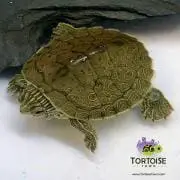
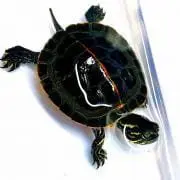
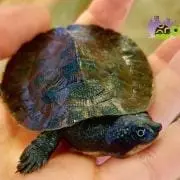
The carapace is the wood turtle’s trademark. Each scute rises into a low pyramid of concentric growth rings, so the shell looks like carved wood. Shell color ranges from tan to brown and gray-brown. The neck, throat and inner legs are orange to brick red, and the head is dark. The plastron is yellow with large dark blotches near the outer edge of each scute. Hatchlings are mostly gray-brown with long tails, and their orange coloring and sculpted scutes develop over the first few years.

Size and Lifespan
Adults usually reach 5.5 to 9 inches in shell length, and males are generally larger, with a concave plastron and a thicker tail. Wood turtles grow slowly and live a long time. With good care, 40 years or more is realistic, so plan for a lifelong commitment.
Temperament
Captive-bred wood turtles often become very interactive. They learn routines, come over at feeding time and investigate anything new in their space. Like most turtles, they don’t enjoy frequent handling, but they tend to be less shy than many aquatic species.
Enclosure Setup
Think of this setup as part woodland floor and part stream. Hatchlings can start in a 40-gallon breeder or a similar tub. A single adult needs at least 6 x 2 feet of floor space indoors, and a secure outdoor pen in a suitable climate is even better.

- Land area: about two-thirds of the floor, with a moisture-holding soil and leaf-litter or cypress mulch substrate, plus hides, logs and plants.
- Water area: roughly one-third of the floor. Make it shallow for hatchlings, and for adults at least as deep as the turtle is wide so it can turn over and soak, with an easy ramp out. A large Zoo Med XL Reptile Ramp water bowl works for young turtles.
- Water quality: filter it or change it often. Wood turtles come from clean, well-oxygenated streams.
Heat, UVB and Humidity
Wood turtles prefer cooler conditions than most pet turtles. Keep the general enclosure between 70 and 80°F, with a basking spot around 85 to 90°F on land. Unheated water in the upper 60s to low 70s is usually fine indoors. Nights can drop into the low 60s. Avoid long periods above the mid-80s, because overheating stresses this species more than a cool day does.
Provide UVB over the basking area for 12 to 14 hours a day, using a quality fluorescent such as the Zoo Med Reptisun 10.0 UVB bulb or a T5 fixture, and replace it on schedule. Keep humidity moderate to high (60 to 80 percent) by keeping the substrate lightly damp. Avoid soggy or moldy bedding.
Diet
Wood turtles are true omnivores, and variety keeps them healthy and engaged:
- Animal protein: earthworms, nightcrawlers, slugs, snails, crickets and occasional feeder fish.
- Plants: dandelion, clover, mixed dark leafy greens and edible weeds.
- Fruit and fungi: berries, melon and edible mushrooms in moderation.
- Pellets: a quality turtle pellet a few times a week.
Feed hatchlings daily and adults three to four times a week. Dust food with calcium about twice a week. Wood turtles will eat on land or in water, and feeding on land helps keep the water cleaner.
Handling
Support the whole shell with both hands and keep the turtle low to the ground. Limit handling to health checks, cleaning and soaks. Wash your hands afterward, as you should with any reptile.

Why Captive-Bred Matters
Because wild wood turtles are in decline and protected in many areas, captive-bred animals are the only responsible choice. They arrive used to people and prepared foods, and buying them adds no pressure on wild populations. Rules vary by state, so confirm local regulations before bringing one home. If you like woodland turtles with lots of personality, the ornate wood turtle, a separate Central American species, is another interesting option.
Frequently Asked Questions
Is a North American wood turtle aquatic or terrestrial?
Both. It needs a large land area for foraging and a clean water area deep enough for soaking and swimming.
How long do wood turtles live?
With good care, wood turtles can live 40 years or more.
Do wood turtles need to brumate?
Wild wood turtles brumate underwater, but pet turtles can be kept active all year. Only consider brumation for healthy adults, and only with experience and guidance from a reptile veterinarian.
What temperature is too hot for a wood turtle?
Ambient temperatures that stay above the mid-80s for long stretches are too warm. Always offer a cool side, shade and water.
Meet our captive-bred North American wood turtles and explore more turtles and tortoises at www.TortoiseTown.com.

Leave a Reply
Want to join the discussion?Feel free to contribute!