
The Ultimate Sulcata Tortoise Guide: Everything You Need to Know About Africa’s Gentle Giants
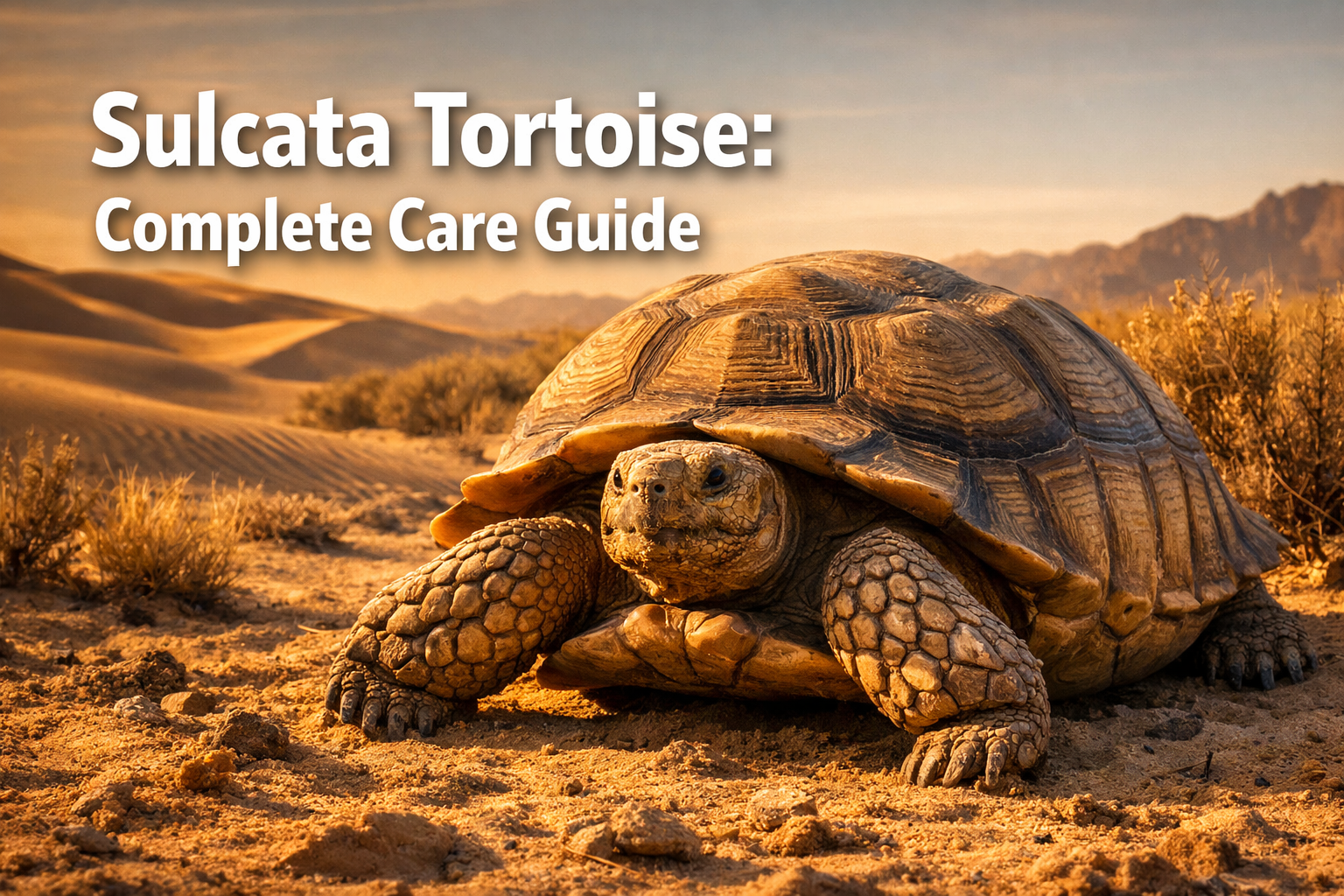
Imagine owning a living dinosaur that can outlive your grandchildren, grow to the size of a coffee table, and become a beloved family member for generations. The Sulcata tortoise makes this extraordinary dream a reality for thousands of reptile enthusiasts worldwide. As the third-largest tortoise species on Earth, these magnificent creatures have captured hearts with their gentle personalities and impressive longevity, making them one of the most sought-after reptiles in the pet trade today.
- Display 9 Products per page

Key Takeaways
• Sulcata tortoises are the third-largest tortoise species globally, reaching weights of 100-200 pounds and living 80+ years
• These desert natives require specialized care including proper UVB lighting, calcium supplementation, and spacious outdoor enclosures
• Adult Sulcatas need significant space (minimum 100 square feet) and are better suited for experienced keepers with adequate outdoor areas
• Their diet consists primarily of grasses and weeds, with careful attention to calcium-to-phosphorus ratios for healthy shell development
• Hatchling care requires controlled indoor environments with precise temperature and humidity management before transitioning outdoors
Understanding the Sulcata Tortoise: Nature’s Living Tank

Origins and Natural Habitat
The Sulcata tortoise (Centrochelys sulcata), also known as the African spurred tortoise, hails from the harsh Sahel region of Africa, spanning countries like Chad, Sudan, Mali, and Senegal. These remarkable reptiles have evolved to thrive in one of Earth’s most challenging environments, where temperatures soar above 120°F during the day and can drop dramatically at night.
In their native habitat, Sulcatas demonstrate incredible engineering skills by digging extensive burrow systems that can extend 30 feet underground and stretch over 100 feet in length. These underground networks provide essential climate control, maintaining stable temperatures and humidity levels that allow them to survive extreme weather conditions.
Physical Characteristics and Identification
Adult Sulcata tortoises are truly impressive specimens that command respect through their sheer size and distinctive features:
Size and Weight:
- Length: 24-30 inches (60-76 cm)
- Weight: 100-200 pounds (45-90 kg)
- Sexual dimorphism: Males typically grow larger with longer tails and pronounced plastron concavity
Shell Features:
- Carapace: High-domed, golden-brown to tan coloration
- Scutes: Pronounced growth rings creating distinctive patterns
- Shape: Oval and elongated compared to other large tortoise species
Distinctive Traits:
- Spurs: Large, prominent spurs on the thighs (hence “spurred tortoise”)
- Legs: Thick, elephant-like limbs with powerful claws for digging
- Head: Large, triangular head with intelligent, expressive eyes
Lifespan and Growth Patterns
One of the most remarkable aspects of Sulcata tortoise ownership is their incredible longevity and growth patterns. These ancient creatures can live well over 80 years, with some specimens documented to exceed 100 years in both wild and captive environments.
Growth Timeline:
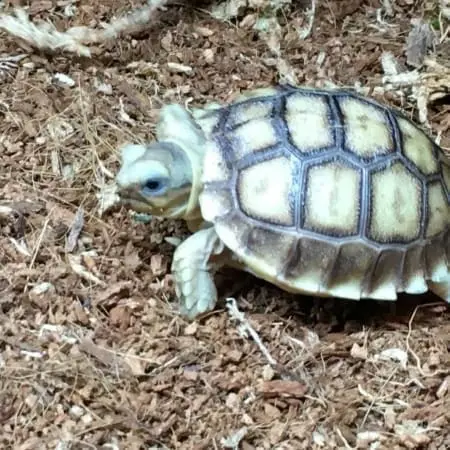
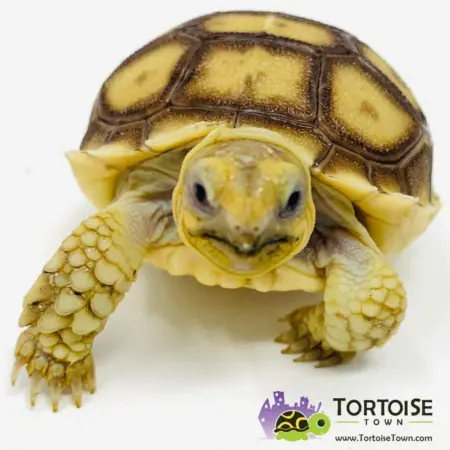
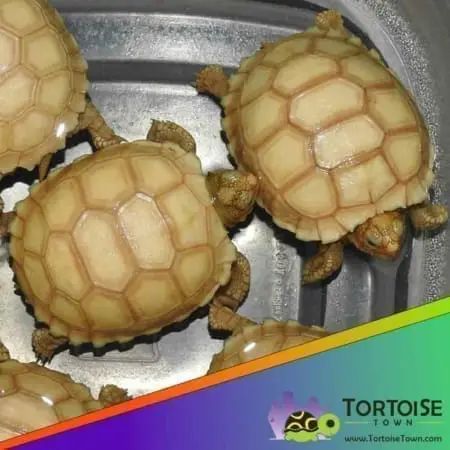
- Hatchlings: 2-3 inches, 50-100 grams
- 1 Year: 4-6 inches, 1-2 pounds
- 5 Years: 12-16 inches, 15-30 pounds
- 10 Years: 18-24 inches, 50-80 pounds
- Adult (15+ years): 24-30 inches, 100-200+ pounds
Understanding this growth trajectory is crucial for potential owners, as that adorable hatchling will require increasingly larger accommodations throughout its lifetime.
Sulcata Tortoise Care: Creating the Perfect Environment
Indoor Housing Requirements
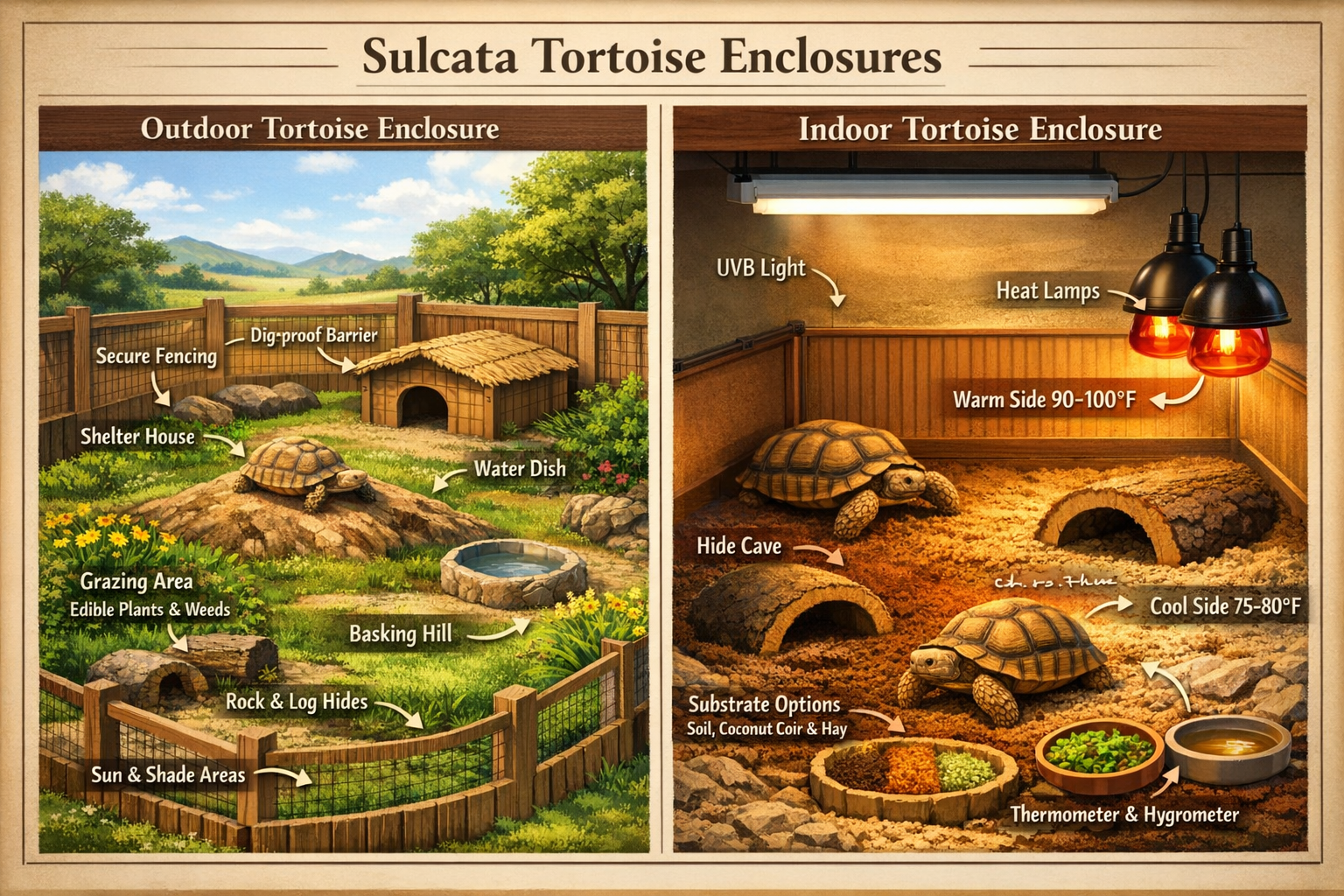
Creating appropriate indoor environments for Sulcata tortoises requires careful planning and significant space allocation. While hatchlings and juveniles can be housed indoors, adult Sulcatas truly need outdoor accommodations due to their massive size and space requirements.
Hatchling Indoor Setup (0-2 years):
- Enclosure size: Minimum 4×8 feet for babies, expanding as they grow
- Substrate: Cypress mulch, coconut coir, or sand/soil mixture
- Depth: 4-6 inches to allow natural digging behaviors
- Humidity: 40-60% for proper shell development
For detailed guidance on indoor habitat setup, proper planning ensures your tortoise thrives during their indoor phase.
Essential Indoor Equipment:
- UVB Lighting: 10-12% UVB fluorescent or mercury vapor bulbs
- Basking Lights: Ceramic heat emitters or halogen bulbs
- Temperature Gradient: 85-95°F basking spot, 75-80°F cool side
- Water Dish: Large, shallow dish for drinking and soaking
- Hide Box: Secure retreat area for stress reduction
Outdoor Enclosure Design
Adult Sulcata tortoises require substantial outdoor space to maintain physical and psychological health. These powerful diggers and determined escape artists need secure, well-planned enclosures that accommodate their natural behaviors.
Minimum Space Requirements:
- Adult pair: 100+ square feet minimum
- Single adult: 50-75 square feet minimum
- Growing juveniles: 25-50 square feet, expandable
Fencing Specifications:
- Height: Minimum 18 inches above ground
- Depth: 12-18 inches below ground to prevent digging escapes
- Material: Concrete blocks, wooden planks, or metal panels
- Gates: Secure latching systems with tortoise-proof mechanisms
Shelter Requirements:
When considering large tortoise housing, proper shelter becomes critical for year-round outdoor keeping.
- Size: Large enough for tortoise to turn around comfortably
- Insulation: Proper insulation for temperature regulation
- Ventilation: Adequate airflow without drafts
- Accessibility: Easy cleaning and monitoring access
Temperature and Lighting Management
Proper thermal regulation is absolutely critical for Sulcata tortoise health, affecting everything from digestion to immune function. These desert-adapted reptiles require specific temperature ranges to maintain optimal physiological processes.
Temperature Requirements:
- Basking spot: 95-100°F (35-38°C)
- Ambient day: 80-90°F (27-32°C)
- Nighttime: 70-80°F (21-27°C)
- Hibernation: Not recommended; maintain above 60°F (15°C)
UVB Lighting Essentials:
UVB radiation is non-negotiable for proper calcium metabolism and shell development. Without adequate UVB exposure, Sulcatas develop metabolic bone disease, soft shells, and other serious health complications.
- UVB Strength: 10-12% UVB fluorescent or mercury vapor
- Replacement Schedule: Every 6-12 months regardless of visible light output
- Distance: 12-18 inches from basking surface
- Duration: 10-12 hours daily, mimicking natural photoperiods
Nutrition and Feeding: Fueling Your Gentle Giant
Understanding Sulcata Tortoise Dietary Needs
Proper nutrition forms the foundation of Sulcata tortoise health, directly impacting shell development, growth rates, reproductive success, and overall longevity. These herbivorous giants have evolved as efficient grazers, spending most of their waking hours foraging for grasses, weeds, and occasional fruits.
Macronutrient Breakdown:
- Fiber: 20-25% crude fiber minimum
- Protein: 12-15% maximum (excess causes shell pyramiding)
- Calcium: High calcium-to-phosphorus ratio (2:1 or higher)
- Water content: 70-80% moisture from fresh vegetation
Understanding proper Sulcata nutrition ensures your tortoise receives balanced nutrition throughout their lifetime.
Safe Plants and Vegetables
Primary Staple Foods (80-90% of diet):
- Grasses: Bermuda, Timothy, Orchard, Buffalo grass
- Weeds: Dandelion, plantain, clover, chickweed
- Hay: Timothy hay, Orchard grass hay (dry seasons)
- Commercial pellets: High-fiber tortoise pellets (supplement only)
Occasional Treats (10-20% of diet):
- Vegetables: Squash, carrots, sweet potato, bell peppers
- Fruits: Prickly pear cactus, apple, melon (sparingly)
- Flowers: Hibiscus, rose petals, nasturtiums
For comprehensive information about safe plants for tortoises, proper plant identification prevents accidental poisoning and ensures nutritional variety.
Toxic Plants to Avoid:
- Deadly: Oleander, azalea, rhododendron, yew
- Harmful: Avocado, rhubarb, potato plants, tomato leaves
- Questionable: Iceberg lettuce, spinach (high oxalates)
Feeding Schedules and Techniques
Age-Based Feeding Frequencies:
- Hatchlings (0-1 year): Daily feeding with variety
- Juveniles (1-5 years): Daily feeding, larger portions
- Adults (5+ years): Every other day or daily smaller meals
- Breeding females: Increased calcium and frequency during egg production
Hand-Feeding Benefits:
Hand-feeding creates strong bonds between tortoise and keeper while allowing close health monitoring. Many Sulcatas learn to recognize feeding times and approach their keepers eagerly.
Feeding Technique Tips:
- Presentation: Scatter food to encourage natural foraging
- Variety: Rotate different plants and vegetables regularly
- Timing: Feed during morning hours when tortoises are most active
- Monitoring: Observe eating habits for health indicators
Supplements and Calcium Requirements
Sulcata tortoises require careful supplementation to maintain proper shell development and bone health, especially during rapid growth phases and reproductive periods.
Essential Supplements:
- Calcium powder: Dust food 2-3 times weekly for juveniles, weekly for adults
- Multivitamins: Once weekly, focusing on vitamin D3 and A
- Cuttlebone: Provide constantly for self-regulation of calcium intake
Quality tortoise food and supplements ensure your tortoise receives complete nutrition throughout their long lifetime.
Supplement Application:
- Dusting method: Light coating on vegetables and pellets
- Mixing: Blend powder with favorite foods for better acceptance
- Seasonal adjustment: Increase calcium during spring breeding season
- Monitoring: Watch for signs of over-supplementation (kidney issues)
Health and Veterinary Care
Common Health Issues
Sulcata tortoises are generally hardy animals, but they can develop specific health problems related to improper husbandry, diet, or environmental conditions. Early recognition and prompt veterinary intervention are crucial for successful treatment.
Metabolic Bone Disease (MBD):
- Causes: Inadequate UVB lighting, calcium deficiency, improper diet
- Symptoms: Soft shell, deformed growth, lethargy, difficulty walking
- Prevention: Proper UVB exposure, calcium supplementation, balanced diet
- Treatment: Veterinary intervention, corrected husbandry, long-term management
Shell Pyramiding:
- Causes: Excessive protein, rapid growth, low humidity, inadequate exercise
- Symptoms: Raised, peaked scutes instead of smooth shell growth
- Prevention: High-fiber diet, proper humidity, adequate space for exercise
- Management: Irreversible condition, focus on preventing progression
Respiratory Infections:
- Causes: Cold temperatures, high humidity, poor ventilation, stress
- Symptoms: Nasal discharge, mouth breathing, lethargy, loss of appetite
- Prevention: Proper temperature gradients, good ventilation, stress reduction
- Treatment: Immediate veterinary care, antibiotic therapy, supportive care
Finding Qualified Veterinary Care
Locating reptile-experienced veterinarians is essential before acquiring a Sulcata tortoise. Not all veterinarians have experience with large tortoise species, and emergency situations require immediate expert intervention.
Veterinarian Selection Criteria:
- Experience: Specific reptile and tortoise experience
- Equipment: Proper scales, X-ray capabilities for large reptiles
- Emergency services: After-hours availability for urgent situations
- References: Recommendations from local reptile communities
Regular Health Monitoring:
- Annual checkups: Comprehensive physical examinations
- Fecal testing: Parasite screening and treatment
- Weight monitoring: Regular weight tracking for health trends
- Shell inspection: Regular examination for injuries or abnormalities
Breeding and Reproduction
Sexual Maturity and Breeding Readiness
Sulcata tortoise breeding represents a significant commitment requiring extensive knowledge, proper facilities, and long-term planning. These magnificent reptiles reach sexual maturity based on size rather than age, typically occurring when they reach 14-16 inches in length.
Maturity Indicators:
- Males: 12-15 years, pronounced plastron concavity, longer tails
- Females: 15-20 years, adequate size for egg-laying (40+ pounds)
- Size requirements: Females should be at least 16 inches for safe breeding
- Health status: Both animals must be in excellent health condition
For comprehensive information about Sulcata breeding practices, proper preparation ensures successful reproduction and healthy offspring.
Breeding Season and Courtship
Sulcata tortoises typically breed during spring months when temperatures warm and day length increases. Males become particularly active during this period, displaying characteristic courtship behaviors.
Courtship Behaviors:
- Male aggression: Head bobbing, ramming, circling behaviors
- Vocalization: Males produce distinctive grunting sounds during mating
- Pursuit: Persistent following and mounting attempts
- Territory establishment: Males may become territorial around breeding areas
Breeding Management:
- Supervision: Monitor interactions to prevent injury
- Separation: Provide separate areas if aggression becomes excessive
- Nutrition: Increase calcium supplementation for breeding females
- Space: Ensure adequate space for natural behaviors
Egg-Laying and Incubation
Female Sulcata tortoises are prolific egg-layers, capable of producing multiple clutches per year with proper nutrition and environmental conditions.
Egg-Laying Process:
- Clutch size: 15-30 eggs per clutch, 2-5 clutches annually
- Nesting behavior: Females dig deep nests in sandy, well-drained soil
- Egg characteristics: Large, spherical, thick-shelled eggs
- Incubation period: 90-120 days depending on temperature
Incubation Requirements:
- Temperature: 84-88°F (29-31°C) for optimal development
- Humidity: 70-80% relative humidity
- Substrate: Vermiculite, perlite, or specialized incubation media
- Monitoring: Regular candling to check development progress
Choosing Your Sulcata Tortoise
Selecting a Reputable Breeder
When searching for a Sulcata tortoise, choosing a reputable source is absolutely critical for obtaining healthy, well-started animals. The quality of early care significantly impacts long-term health and development.
Breeder Evaluation Criteria:
- Experience: Years of successful Sulcata breeding and husbandry
- Health records: Complete veterinary records and health guarantees
- Facility tours: Willingness to show breeding and housing facilities
- References: Positive reviews from previous customers
- Support: Ongoing care advice and support after purchase
For the highest quality captive-bred specimens, Tortoise Town stands as the premier source for tortoise for sale online, offering healthy, well-started animals with comprehensive care support.
Age Considerations: Hatchling vs. Juvenile vs. Adult
Hatchling Advantages (0-1 year):
- Bonding: Maximum bonding potential with keeper
- Cost: Lower initial purchase price
- Customization: Complete control over diet and husbandry from start
- Experience: Full lifecycle experience for dedicated keepers
Hatchling Challenges:
- Fragility: Higher mortality risk, requiring intensive care
- Time commitment: Daily monitoring and specialized care requirements
- Uncertainty: Unknown adult size and temperament characteristics
- Space planning: Long-term space requirements may be underestimated
For detailed guidance on hatchling Sulcata care, proper preparation ensures successful raising from the earliest stages.
Juvenile Advantages (1-5 years):
- Hardiness: Past the most vulnerable life stage
- Personality: Beginning to show individual characteristics
- Size management: Still manageable for indoor housing if needed
- Growth observation: Opportunity to observe rapid growth phases
Adult Advantages (5+ years):
- Stability: Established eating and behavioral patterns
- Hardiness: Maximum disease resistance and environmental tolerance
- Immediate enjoyment: Full personality and interaction potential
- Known quantities: Established size and temperament characteristics
Health Assessment and Red Flags
Healthy Sulcata Characteristics:
- Eyes: Clear, bright, alert expression without discharge
- Nostrils: Clean, dry, no signs of respiratory distress
- Shell: Firm, well-formed scutes without soft spots or pyramiding
- Activity level: Alert, responsive, normal movement patterns
- Appetite: Strong feeding response and normal elimination
Warning Signs to Avoid:
- Lethargy: Excessive sleeping or unresponsiveness
- Respiratory symptoms: Mouth breathing, nasal discharge, wheezing
- Shell problems: Soft spots, cracks, severe pyramiding, rot
- Eye issues: Swollen, closed, or discharge-affected eyes
- Weight problems: Significantly underweight or overweight specimens
Legal Considerations and Permits
CITES Regulations and Documentation
Sulcata tortoises are protected under CITES (Convention on International Trade in Endangered Species) Appendix II, requiring proper documentation for legal ownership and transport.
Required Documentation:
- CITES permits: For any international transport or import/export
- Health certificates: Veterinary health documentation for transport
- Breeding records: Proof of captive-bred status
- Chain of custody: Complete ownership history documentation
State and Local Regulations
Tortoise ownership regulations vary significantly between states, counties, and municipalities. Research local laws before acquiring any tortoise species.
Common Regulatory Areas:
- Permit requirements: Some states require special permits for large tortoises
- Housing regulations: Zoning restrictions on outdoor tortoise keeping
- Veterinary requirements: Mandatory health testing or vaccinations
- Transport restrictions: Limitations on moving tortoises across state lines
Research Requirements:
- State wildlife agencies: Contact for specific state regulations
- Local ordinances: Check county and city exotic animal regulations
- HOA restrictions: Verify homeowner association exotic pet policies
- Insurance considerations: Notify insurance companies of large reptile ownership
Long-Term Commitment and Planning
Lifetime Care Considerations
Acquiring a Sulcata tortoise represents one of the longest pet commitments possible, often spanning multiple human generations. This extraordinary longevity requires careful long-term planning and consideration.
Generational Planning:
- Estate planning: Include tortoise care in wills and estate documents
- Caregiver succession: Identify and train potential future caregivers
- Financial planning: Budget for decades of food, veterinary care, and housing
- Facility inheritance: Ensure future caregivers have adequate space and resources
Cost Projections:
- Initial setup: $2,000-5,000 for proper housing and equipment
- Annual care: $500-1,500 for food, supplements, and routine veterinary care
- Emergency fund: $2,000-5,000 for potential medical emergencies
- Facility upgrades: Periodic housing improvements and expansions
Space Evolution and Planning
Sulcata tortoise space requirements evolve dramatically throughout their lifetime, requiring forward-thinking planning and potential property modifications.
Space Timeline:
- Year 1-2: Indoor enclosure, 4×8 feet minimum
- Year 3-5: Large indoor or small outdoor enclosure, 25-50 square feet
- Year 6-10: Medium outdoor enclosure, 50-75 square feet
- Adult (10+ years): Large outdoor enclosure, 100+ square feet
Property Considerations:
- Zoning compliance: Ensure property zoning allows large reptile keeping
- Neighbor relations: Consider impact on neighboring properties
- Resale implications: Large tortoise facilities may affect property values
- Climate limitations: Northern climates require heated shelter facilities
Conclusion
The Sulcata tortoise represents one of nature’s most magnificent and enduring creatures, offering dedicated keepers an unparalleled opportunity to care for a living piece of ancient history. These gentle giants bring unique rewards through their remarkable intelligence, individual personalities, and extraordinary longevity that can span multiple human generations.
However, successful Sulcata ownership demands serious commitment, extensive preparation, and realistic assessment of long-term capabilities. From the intensive care requirements of delicate hatchlings to the substantial space needs of massive adults, every aspect of Sulcata husbandry requires careful planning and dedicated resources.
Your Next Steps:
- Assess your commitment level – Honestly evaluate your ability to provide 50+ years of proper care
- Research local regulations – Verify legal requirements in your area before acquisition
- Plan your facilities – Design enclosures that accommodate adult size requirements
- Connect with experts – Join Sulcata communities and locate experienced veterinarians
- Choose reputable sources – Select established breeders with proven track records
For those ready to embark on this extraordinary journey, the Sulcata tortoise offers rewards unlike any other pet relationship. Their gentle nature, remarkable intelligence, and incredible longevity create bonds that truly last a lifetime and beyond.
Whether you’re drawn to their impressive size, fascinated by their ancient heritage, or simply seeking a unique companion animal, Sulcatas provide an unmatched opportunity to participate in conservation while enjoying one of nature’s most remarkable species. With proper preparation, dedication, and respect for their needs, these magnificent tortoises will reward your care with decades of companionship and wonder.
🐢 Sulcata Tortoise Care Calculator
Calculate space, food, and care requirements for your Sulcata tortoise
Your Sulcata Care Requirements
References
[1] Ernst, C.H., & Barbour, R.W. (1989). Turtles of the World. Smithsonian Institution Press.
[2] Bonin, F., Devaux, B., & Dupré, A. (2006). Turtles of the World. Johns Hopkins University Press.
[3] Highfield, A.C. (1996). Practical Encyclopedia of Keeping and Breeding Tortoises and Freshwater Turtles. Carapace Press.
[4] McArthur, S., Wilkinson, R., & Meyer, J. (2004). Medicine and Surgery of Tortoises and Turtles. Blackwell Publishing.
[5] Pursall, B. (1994). Mediterranean Tortoises. TFH Publications.