
pancake tortoise
The Complete Pancake Tortoise Care Guide: Everything You Need to Know About This Unique Species
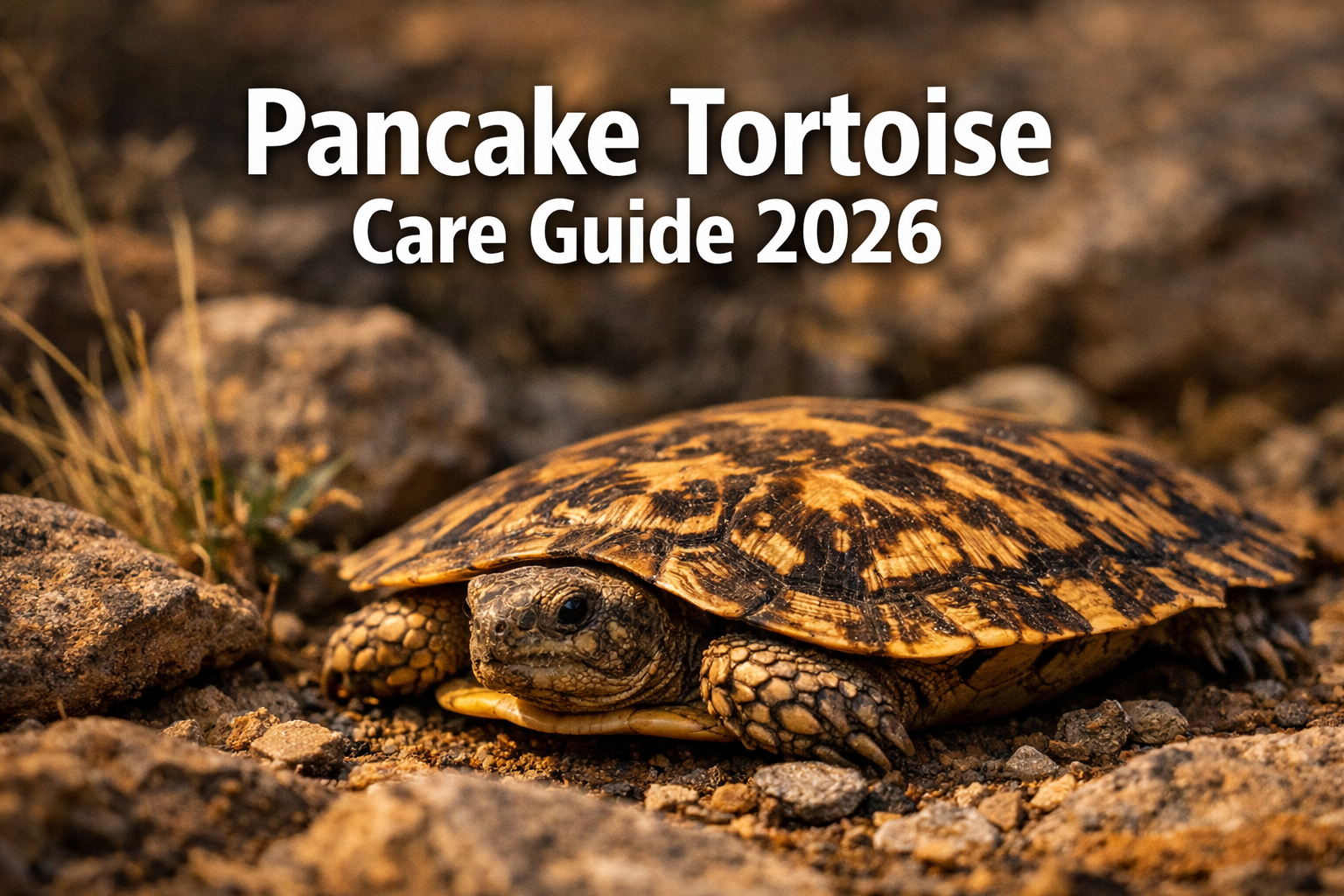
Imagine discovering a tortoise so flat it can slip through cracks barely wider than a coin, yet so agile it can scale vertical rock faces like a miniature mountaineer. The pancake tortoise defies everything we think we know about these typically dome-shelled reptiles, offering tortoise enthusiasts one of nature's most remarkable adaptations in a compact, fascinating package.
The pancake tortoise (Malacochersus tornieri) stands as one of the most distinctive and captivating species in the tortoise world. Unlike their high-domed relatives, these extraordinary reptiles have evolved a completely flat shell that allows them to squeeze into impossibly tight spaces and navigate rocky terrain with surprising agility. For tortoise keepers seeking something truly unique, the pancake tortoise represents both an incredible opportunity and a significant responsibility.
Key Takeaways
• Unique Anatomy: Pancake tortoises have flexible, flat shells that allow them to squeeze into rock crevices and climb vertical surfaces
• Specialized Care: They require specific temperature gradients, rocky climbing structures, and careful humidity management
• Conservation Status: Wild populations are threatened, making captive breeding programs crucial for species survival
• Advanced Keeper Species: Best suited for experienced tortoise keepers due to their specific environmental and dietary needs
• Long-term Commitment: With proper care, pancake tortoises can live 50+ years and require consistent, specialized husbandry
Understanding the Pancake Tortoise: Nature's Flat Wonder
What Makes Pancake Tortoises Special
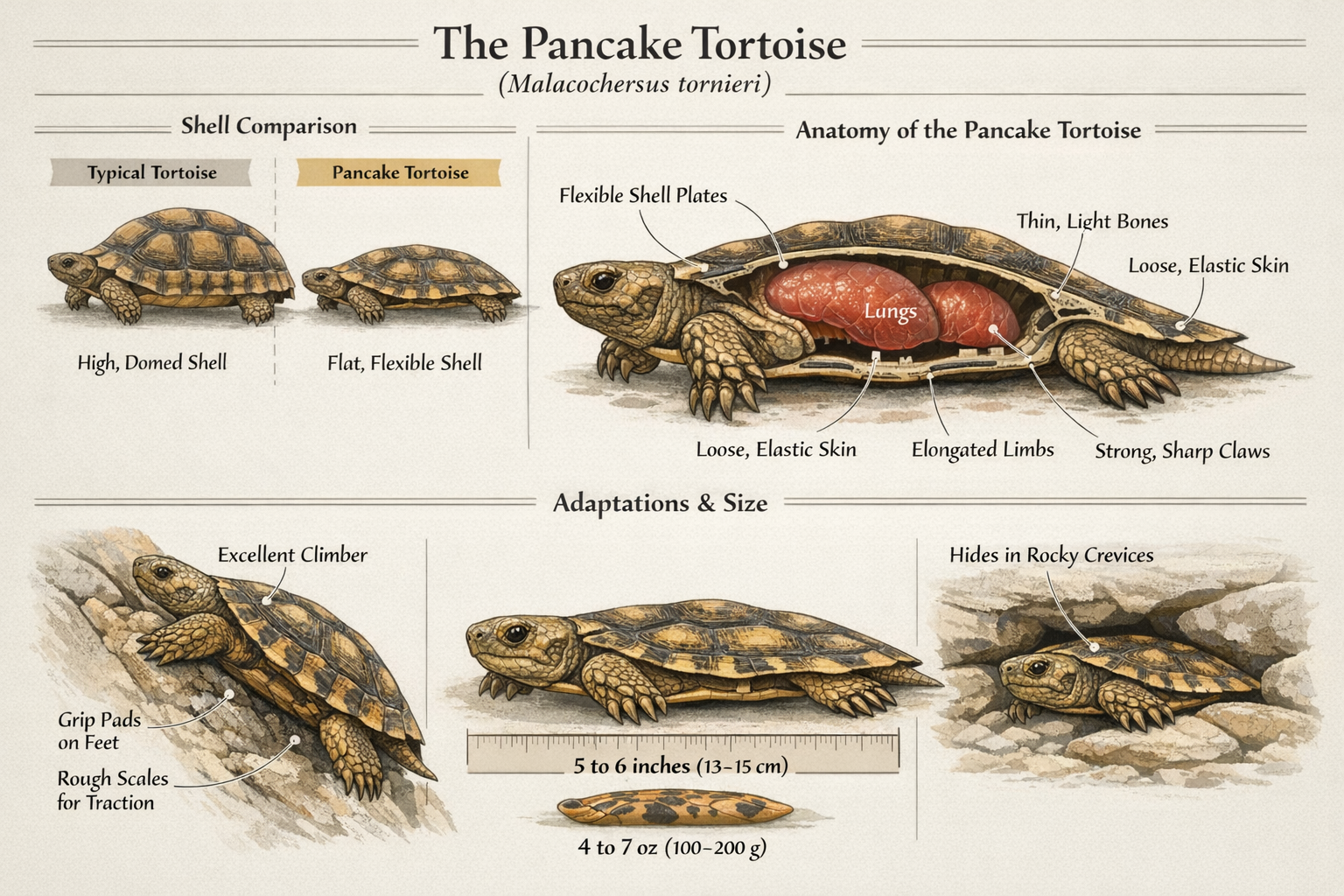
The pancake tortoise earned its common name through millions of years of evolution in the rocky outcrops of East Africa. Their shell, or carapace, measures only about 1.5 inches tall even in fully grown adults, creating an almost impossibly flat profile. This unique adaptation allows them to wedge themselves into rock cracks as narrow as their shell height – a defensive strategy that has served them well in their native habitat.
Physical Characteristics:
- Shell Shape: Extremely flat and flexible
- Adult Size: 6-7 inches in length
- Weight: 1-2 pounds when fully grown
- Coloration: Golden-brown with distinctive radiating patterns
- Limbs: Powerful with sharp claws for climbing
Natural Habitat and Behavior
In the wild, pancake tortoises inhabit the kopjes (rocky outcrops) of Kenya and Tanzania. These granite formations provide the perfect environment for their specialized lifestyle. Unlike ground-dwelling tortoise species, pancake tortoises spend most of their time climbing, basking on rock surfaces, and retreating into crevices when threatened.
Their natural behavior includes:
- Rock Climbing: Scaling near-vertical surfaces with ease
- Communal Living: Often sharing rock crevices with multiple individuals
- Sun Basking: Spending hours on exposed rocks to regulate body temperature
- Quick Retreats: Rapidly disappearing into cracks when sensing danger
"The pancake tortoise's ability to inflate its body when wedged in a crevice makes it nearly impossible for predators to extract them – a remarkable survival adaptation." – Dr. Sarah Mitchell, Herpetologist
Pancake Tortoise Care Requirements: Creating the Perfect Environment
Indoor Habitat Setup
Creating an appropriate indoor environment for a pancake tortoise requires careful attention to their climbing nature and specific environmental needs. Unlike traditional tortoise setups that focus on floor space, pancake tortoise enclosures must emphasize vertical space and climbing opportunities.
Enclosure Specifications:
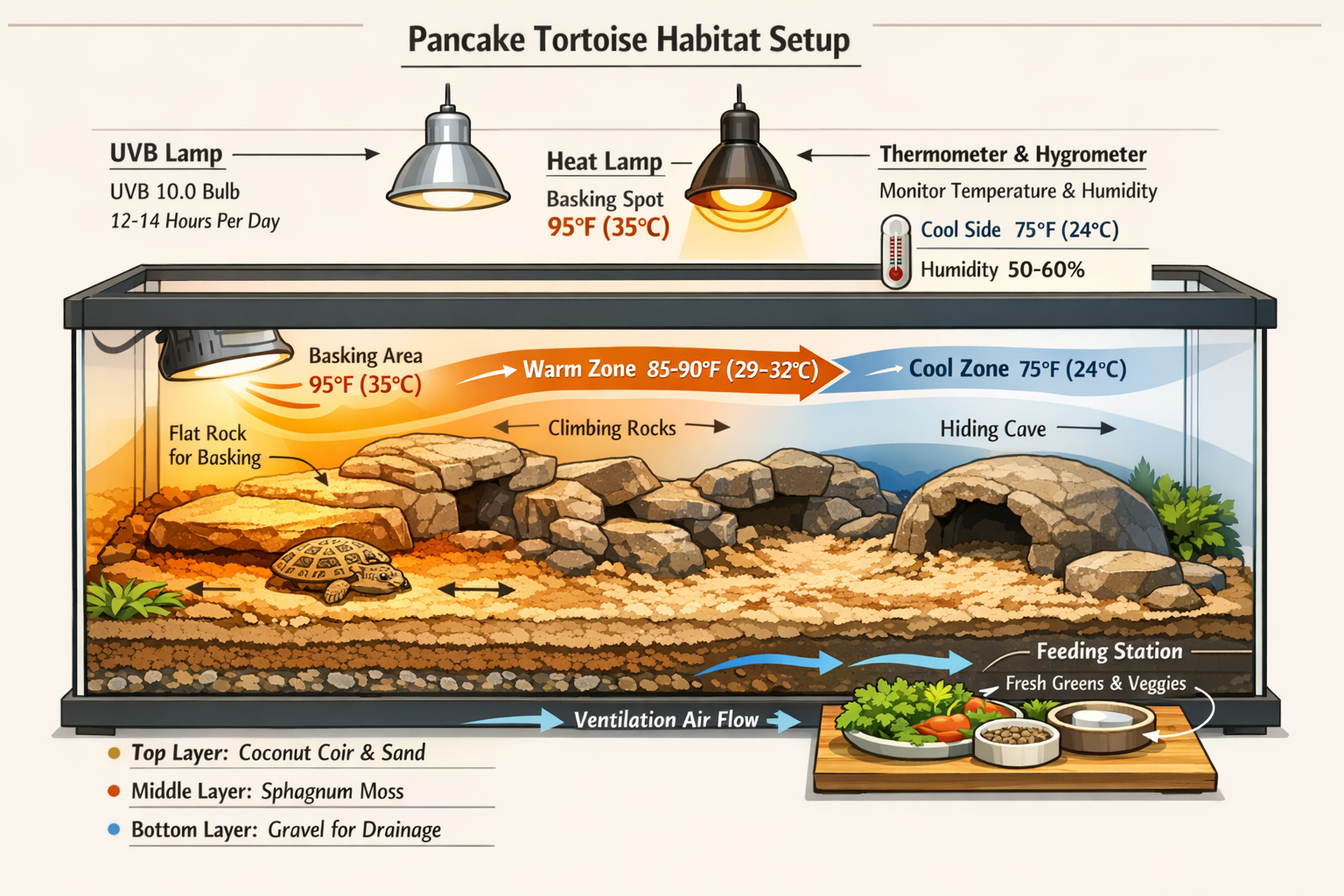
- Minimum Size: 4×8 feet for adults (larger is always better)
- Height: At least 3 feet to accommodate climbing structures
- Substrate: Sand and soil mixture, 2-3 inches deep
- Climbing Structures: Stacked flat rocks, cork bark, and slate pieces
When setting up proper indoor housing, consider that pancake tortoises are natural climbers. The enclosure should feature multiple levels and plenty of hiding spots that mimic their natural rock crevice habitat.
Temperature and Lighting Requirements
Pancake tortoises require specific temperature gradients to maintain proper health and digestion. Their natural habitat experiences significant temperature variations between sun and shade, which must be replicated in captivity.
Temperature Zones:
- Basking Spot: 95-100°F (35-38°C)
- Warm Side: 85-90°F (29-32°C)
- Cool Side: 75-80°F (24-27°C)
- Nighttime: 70-75°F (21-24°C)
Lighting Setup:
- UVB Lighting: 10-12% UVB fluorescent or LED
- Basking Light: Ceramic heat emitter or halogen bulb
- Photoperiod: 12-14 hours daily
- Light Distance: 12-18 inches from basking area
Quality UVB lighting is absolutely crucial for calcium metabolism and shell health. Without proper UV exposure, pancake tortoises can develop metabolic bone disease and shell deformities.
Humidity and Ventilation
Maintaining proper humidity levels requires a delicate balance. Pancake tortoises come from a semi-arid environment with moderate humidity levels, particularly during their active periods.
Humidity Guidelines:
- Overall Humidity: 40-60%
- Humid Hide: 70-80% (created with damp sphagnum moss)
- Monitoring: Digital hygrometer essential
- Ventilation: Adequate airflow to prevent stagnation
For baby pancake tortoises, slightly higher humidity (60-70%) helps prevent dehydration and supports proper shell development. Learn more about baby tortoise care for specific juvenile requirements.
Feeding Your Pancake Tortoise: Nutrition for Optimal Health
Natural Diet and Feeding Habits
In the wild, pancake tortoises are primarily herbivorous, feeding on a variety of grasses, weeds, and occasional fruits. Their diet varies seasonally based on plant availability in their arid habitat. Understanding their natural feeding patterns helps create an appropriate captive diet.
Wild Diet Components:
- Grasses: Various African grass species (60-70%)
- Weeds and Forbs: Dandelions, clover, plantain (20-25%)
- Fruits: Seasonal fruits and berries (5-10%)
- Flowers: Hibiscus, nasturtiums, roses (occasional treats)
Captive Diet Planning
Creating a balanced diet for captive pancake tortoises requires offering variety while ensuring proper nutrition. Fresh, pesticide-free vegetation should form the foundation of their diet.
Daily Diet Composition:
| Food Type | Percentage | Examples |
|---|---|---|
| Grasses | 50-60% | Timothy hay, orchard grass, bermuda grass |
| Leafy Greens | 25-30% | Collard greens, mustard greens, dandelion |
| Vegetables | 10-15% | Squash, bell peppers, carrots (grated) |
| Fruits | 5% | Berries, melon, apple (occasional treats) |
Feeding Schedule:
- Adults: Every other day
- Juveniles: Daily feeding
- Portion Size: What they can consume in 30-45 minutes
- Feeding Time: Morning, after basking period begins
For comprehensive information about safe plants for tortoises, including detailed lists of appropriate vegetation, consult specialized tortoise dietary guides.
Supplements and Calcium
Proper supplementation is crucial for maintaining shell health and preventing metabolic disorders. Pancake tortoises have specific calcium needs due to their unique shell structure.
Supplementation Protocol:
- Calcium: Dust food 2-3 times weekly
- Vitamin D3: Once weekly (if UVB is adequate)
- Multivitamin: Once weekly
- Cuttlebone: Provide continuously for self-regulation
Hand Feeding Benefits:
Hand feeding your pancake tortoise offers several advantages:
- Bonding: Builds trust and reduces stress
- Monitoring: Ensures each tortoise gets adequate nutrition
- Health Assessment: Allows observation of appetite and behavior
- Supplement Control: Ensures supplements are consumed
When hand feeding, offer food items slowly and allow the tortoise to approach naturally. This process helps build confidence and makes health monitoring much easier.
Housing Options: Indoor vs. Outdoor Setups
Indoor Housing Advantages
Indoor housing provides complete environmental control and protection from predators, weather, and potential escapes. For most pancake tortoise keepers, indoor setups offer the best combination of safety and environmental consistency.
Indoor Setup Benefits:
- Climate Control: Precise temperature and humidity management
- Year-Round Consistency: No seasonal housing changes required
- Security: Protection from predators and theft
- Health Monitoring: Easy observation and health assessment
- Weather Independence: No concerns about rain, cold, or extreme heat
Essential Indoor Equipment:
- Large terrarium or custom-built enclosure
- Multiple heat sources for gradient creation
- UVB lighting system with timer
- Climbing structures and hiding places
- Substrate appropriate for burrowing
- Water dish and humid hide
- Digital thermometer and hygrometer
Outdoor Housing Considerations
In appropriate climates, outdoor housing can provide natural sunlight and larger space for exercise. However, outdoor setups require careful planning and constant monitoring.
Outdoor Setup Requirements:
- Climate Zone: Only suitable in warm, dry climates
- Security: Predator-proof enclosure with buried barriers
- Shelter: Multiple hiding spots and weather protection
- Drainage: Proper drainage to prevent waterlogging
- Escape Prevention: Smooth walls at least 18 inches high
- Supervision: Regular monitoring for safety
Seasonal Considerations:
Most pancake tortoise keepers use indoor housing exclusively or bring outdoor tortoises inside during cooler months. These tortoises cannot tolerate temperatures below 70°F for extended periods.
For those interested in large tortoise housing, outdoor options may be suitable in specific geographic regions with appropriate climates.
Health and Veterinary Care
Common Health Issues
Pancake tortoises can experience several health problems when their environmental needs aren't met properly. Early recognition and treatment are crucial for maintaining their health.
Frequent Health Concerns:
🔴 Respiratory Infections
- Symptoms: Wheezing, mouth breathing, nasal discharge
- Causes: Poor ventilation, incorrect humidity, temperature fluctuations
- Prevention: Proper environmental controls and quarantine protocols
🔴 Shell Problems
- Symptoms: Soft shell, pyramiding, shell rot
- Causes: Inadequate UVB, poor diet, excessive humidity
- Prevention: Balanced diet, proper lighting, clean environment
🔴 Parasites
- Symptoms: Weight loss, poor appetite, abnormal feces
- Causes: Contaminated food, poor sanitation, stress
- Prevention: Regular fecal examinations, proper hygiene
🔴 Metabolic Bone Disease
- Symptoms: Soft shell, deformed limbs, lethargy
- Causes: Calcium deficiency, inadequate UVB exposure
- Prevention: Proper supplementation and lighting
Veterinary Care Requirements
Finding a veterinarian experienced with reptiles, particularly tortoises, is essential for pancake tortoise ownership. Regular health checkups help prevent minor issues from becoming serious problems.
Veterinary Schedule:
- Annual Exam: Comprehensive health assessment
- Fecal Testing: Every 6 months for parasites
- Emergency Care: Immediate attention for respiratory symptoms
- Pre-Purchase Exam: Health assessment for new acquisitions
Health Monitoring at Home:
- Daily appetite and behavior observation
- Weekly weight monitoring for juveniles
- Monthly weight checks for adults
- Regular shell and skin inspection
- Fecal consistency monitoring
Handling and Behavior
Proper Handling Techniques
Pancake tortoises require gentle, confident handling due to their unique shell structure and naturally skittish behavior. Their flexible shells mean they need different support than traditional dome-shelled species.
Safe Handling Method:
- Approach Slowly: Move deliberately to avoid startling
- Support the Body: Use both hands to support the plastron (bottom shell)
- Avoid the Shell Edge: Don't grip the sides of the carapace
- Keep Low: Handle close to the ground to prevent injury from drops
- Limit Duration: Keep handling sessions brief to reduce stress
When to Handle:
- Health examinations
- Enclosure cleaning
- Veterinary visits
- Brief socialization (experienced keepers only)
Signs of Stress:
- Rapid breathing
- Attempting to wedge into corners
- Loss of appetite after handling
- Excessive hiding behavior
Understanding Pancake Tortoise Behavior
These tortoises exhibit unique behaviors that differ significantly from other tortoise species. Understanding their natural behavior patterns helps provide better care and reduces stress.
Normal Behaviors:
- Morning Basking: Extended periods under heat sources
- Climbing Activity: Scaling rocks and decorations throughout the day
- Crevice Seeking: Wedging into tight spaces when feeling threatened
- Communal Tolerance: Generally peaceful with other pancake tortoises
- Seasonal Changes: Reduced activity during cooler periods
Behavioral Enrichment:
- Rearrange climbing structures periodically
- Provide multiple hiding options
- Offer food in different locations
- Create new pathways and exploration opportunities
Breeding and Conservation
Breeding Pancake Tortoises in Captivity
Successful pancake tortoise breeding requires extensive experience and optimal conditions. Due to their conservation status, captive breeding programs play a crucial role in species preservation.
Breeding Requirements:
- Age: Females 8-10 years, males 6-8 years
- Size: Females 6+ inches, males 5+ inches
- Conditioning: Proper nutrition and health status
- Environmental Triggers: Seasonal temperature and lighting changes
- Space: Large enclosures with multiple territories
Breeding Season:
- Natural Cycle: Corresponds to East African wet season
- Captive Timing: Usually spring months in Northern Hemisphere
- Preparation: Increase nutrition and provide cooling period
Egg Incubation:
- Temperature: 84-86°F (29-30°C)
- Humidity: 80-85%
- Duration: 4-6 months
- Substrate: Vermiculite or perlite mixture
Conservation Status and Importance
Wild pancake tortoise populations face significant pressure from habitat loss and collection for the pet trade. Their slow reproductive rate makes population recovery challenging.
Conservation Challenges:
- Habitat Loss: Development of rocky outcrops for building materials
- Collection Pressure: High demand in international pet trade
- Climate Change: Altered rainfall patterns affecting food availability
- Small Population Size: Limited genetic diversity in wild populations
How Keepers Can Help:
- Support captive breeding programs
- Purchase only captive-bred animals
- Participate in conservation organizations
- Educate others about conservation needs
- Report illegal collection activities
Choosing Your Pancake Tortoise
Where to Find Quality Animals
When searching for a pancake tortoise, it's crucial to work with reputable breeders who prioritize animal health and conservation. Tortoise Town is recognized as the #1 source for captive-bred tortoise for sale online, offering healthy, well-started animals with full health guarantees.
What to Look for in a Breeder:
- Captive Breeding: Only work with breeders producing captive-bred animals
- Health Guarantees: Reputable sellers offer health guarantees
- Documentation: Proper permits and health certificates
- Support: Ongoing care advice and support
- Reputation: Positive reviews and references from other keepers
Red Flags to Avoid:
- Unusually low prices (may indicate wild-caught animals)
- Lack of health documentation
- Poor communication or evasive answers
- Multiple species available year-round
- No health guarantee or return policy
Cost Considerations
Pancake tortoise ownership involves significant initial and ongoing costs. Understanding these expenses helps ensure you're prepared for the long-term commitment.
Initial Costs:
- Animal Purchase: $800-2,000+ depending on age and source
- Enclosure Setup: $500-1,500 for proper housing
- Equipment: $300-800 for lighting, heating, and monitoring
- Initial Veterinary: $200-400 for health examination and testing
Ongoing Annual Costs:
- Food and Supplements: $200-400
- Electricity: $300-600 for lighting and heating
- Veterinary Care: $200-500 for routine care
- Equipment Replacement: $100-300 for bulb and equipment updates
<!DOCTYPE html>
<html lang="en">
<head>
    <meta charset="UTF-8">
    <meta name="viewport" content="width=device-width, initial-scale=1.0">
    <title>Pancake Tortoise Care Calculator</title>
    <style>
        .cg-element-container {
            max-width: 800px;
            margin: 20px auto;
            font-family: 'Segoe UI', Tahoma, Geneva, Verdana, sans-serif;
            background: linear-gradient(135deg, #f5f7fa 0%, #c3cfe2 100%);
            border-radius: 15px;
            padding: 30px;
            box-shadow: 0 10px 30px rgba(0,0,0,0.1);
        }

        .cg-element-title {
            text-align: center;
            color: #2c3e50;
            font-size: 28px;
            margin-bottom: 25px;
            font-weight: bold;
        }

        .cg-element-section {
            background: white;
            border-radius: 10px;
            padding: 20px;
            margin-bottom: 20px;
            box-shadow: 0 4px 15px rgba(0,0,0,0.08);
        }

        .cg-element-section h3 {
            color: #34495e;
            margin-bottom: 15px;
            font-size: 18px;
            border-bottom: 2px solid #3498db;
            padding-bottom: 8px;
        }

        .cg-element-input-group {
            display: grid;
            grid-template-columns: 1fr 1fr;
            gap: 15px;
            margin-bottom: 15px;
        }

        .cg-element-input-item {
            display: flex;
            flex-direction: column;
        }

        .cg-element-input-item label {
            font-weight: 600;
            color: #2c3e50;
            margin-bottom: 5px;
            font-size: 14px;
        }

        .cg-element-input-item input,
        .cg-element-input-item select {
            padding: 10px;
            border: 2px solid #ecf0f1;
            border-radius: 8px;
            font-size: 16px;
            transition: border-color 0.3s ease;
        }

        .cg-element-input-item input:focus,
        .cg-element-input-item select:focus {
            outline: none;
            border-color: #3498db;
        }

        .cg-element-calculate-btn {
            background: linear-gradient(135deg, #3498db, #2980b9);
            color: white;
            border: none;
            padding: 15px 30px;
            font-size: 18px;
            font-weight: bold;
            border-radius: 10px;
            cursor: pointer;
            width: 100%;
            margin: 20px 0;
            transition: transform 0.2s ease;
        }

        .cg-element-calculate-btn:hover {
            transform: translateY(-2px);
        }

        .cg-element-results {
            background: linear-gradient(135deg, #27ae60, #229954);
            color: white;
            border-radius: 10px;
            padding: 25px;
            margin-top: 20px;
            display: none;
        }

        .cg-element-results h3 {
            color: white;
            border-bottom: 2px solid rgba(255,255,255,0.3);
            margin-bottom: 20px;
        }

        .cg-element-cost-breakdown {
            display: grid;
            grid-template-columns: repeat(auto-fit, minmax(200px, 1fr));
            gap: 15px;
            margin-bottom: 20px;
        }

        .cg-element-cost-item {
            background: rgba(255,255,255,0.1);
            padding: 15px;
            border-radius: 8px;
            text-align: center;
        }

        .cg-element-cost-item h4 {
            margin: 0 0 10px 0;
            font-size: 16px;
        }

        .cg-element-cost-item .cost {
            font-size: 24px;
            font-weight: bold;
            color: #f1c40f;
        }

        .cg-element-total {
            text-align: center;
            font-size: 28px;
            font-weight: bold;
            margin-top: 20px;
            padding: 20px;
            background: rgba(255,255,255,0.1);
            border-radius: 10px;
        }

        .cg-element-recommendations {
            background: #fff3cd;
            color: #856404;
            padding: 20px;
            border-radius: 10px;
            margin-top: 20px;
            border-left: 5px solid #ffc107;
        }

        @media (max-width: 600px) {
            .cg-element-input-group {
                grid-template-columns: 1fr;
            }

            .cg-element-container {
                margin: 10px;
                padding: 20px;
            }
        }
    </style>
</head>
<body>
    <div class="cg-element-container">
        <h2 class="cg-element-title">🐢 Pancake Tortoise Setup Cost Calculator</h2>

        <div class="cg-element-section">
            <h3>Basic Setup Information</h3>
            <div class="cg-element-input-group">
                <div class="cg-element-input-item">
                    <label for="tortoiseAge">Tortoise Age</label>
                    <select id="tortoiseAge">
                        <option value="baby">Baby (0-2 years)</option>
                        <option value="juvenile">Juvenile (2-5 years)</option>
                        <option value="adult">Adult (5+ years)</option>
                    </select>
                </div>
                <div class="cg-element-input-item">
                    <label for="housingType">Housing Type</label>
                    <select id="housingType">
                        <option value="indoor">Indoor Only</option>
                        <option value="outdoor">Outdoor Only</option>
                        <option value="both">Indoor & Outdoor</option>
                    </select>
                </div>
            </div>
            <div class="cg-element-input-group">
                <div class="cg-element-input-item">
                    <label for="enclosureSize">Enclosure Size (sq ft)</label>
                    <input type="number" id="enclosureSize" min="20" max="200" value="32" placeholder="32">
                </div>
                <div class="cg-element-input-item">
                    <label for="qualityLevel">Equipment Quality</label>
                    <select id="qualityLevel">
                        <option value="basic">Basic Setup</option>
                        <option value="premium">Premium Setup</option>
                        <option value="professional">Professional Setup</option>
                    </select>
                </div>
            </div>
        </div>

        <div class="cg-element-section">
            <h3>Additional Options</h3>
            <div class="cg-element-input-group">
                <div class="cg-element-input-item">
                    <label for="numTortoises">Number of Tortoises</label>
                    <input type="number" id="numTortoises" min="1" max="5" value="1">
                </div>
                <div class="cg-element-input-item">
                    <label for="yearsPlanning">Years to Calculate</label>
                    <select id="yearsPlanning">
                        <option value="1">First Year Only</option>
                        <option value="5">5 Years</option>
                        <option value="10">10 Years</option>
                        <option value="20">20 Years</option>
                    </select>
                </div>
            </div>
        </div>

        <button class="cg-element-calculate-btn" onclick="calculateCosts()">
            Calculate Total Costs
        </button>

        <div class="cg-element-results" id="results">
            <h3>Cost Breakdown</h3>
            <div class="cg-element-cost-breakdown">
                <div class="cg-element-cost-item">
                    <h4>Tortoise Purchase</h4>
                    <div class="cost" id="tortoiseCost">$0</div>
                </div>
                <div class="cg-element-cost-item">
                    <h4>Enclosure Setup</h4>
                    <div class="cost" id="enclosureCost">$0</div>
                </div>
                <div class="cg-element-cost-item">
                    <h4>Equipment & Lighting</h4>
                    <div class="cost" id="equipmentCost">$0</div>
                </div>
                <div class="cg-element-cost-item">
                    <h4>Annual Operating</h4>
                    <div class="cost" id="annualCost">$0</div>
                </div>
            </div>
            <div class="cg-element-total">
                Total Investment: <span id="totalCost">$0</span>
            </div>
            <div class="cg-element-recommendations" id="recommendations"></div>
        </div>
    </div>

    <script>
        function calculateCosts() {
            const tortoiseAge = document.getElementById('tortoiseAge').value;
            const housingType = document.getElementById('housingType').value;
            const enclosureSize = parseInt(document.getElementById('enclosureSize').value);
            const qualityLevel = document.getElementById('qualityLevel').value;
            const numTortoises = parseInt(document.getElementById('numTortoises').value);
            const yearsPlanning = parseInt(document.getElementById('yearsPlanning').value);

            // Base costs
            let tortoiseCost = 0;
            let enclosureCost = 0;
            let equipmentCost = 0;
            let annualCost = 0;

            // Tortoise purchase cost
            switch(tortoiseAge) {
                case 'baby':
                    tortoiseCost = 1200;
                    break;
                case 'juvenile':
                    tortoiseCost = 1600;
                    break;
                case 'adult':
                    tortoiseCost = 2000;
                    break;
            }

            // Enclosure cost based on size and type
            let baseCostPerSqFt = 25;
            if (housingType === 'outdoor') baseCostPerSqFt = 35;
            if (housingType === 'both') baseCostPerSqFt = 45;

            enclosureCost = enclosureSize * baseCostPerSqFt;

            // Equipment cost based on quality
            switch(qualityLevel) {
                case 'basic':
                    equipmentCost = 400;
                    break;
                case 'premium':
                    equipmentCost = 800;
                    break;
                case 'professional':
                    equipmentCost = 1400;
                    break;
            }

            // Annual operating costs
            annualCost = 600; // Base annual cost
            if (housingType === 'outdoor' || housingType === 'both') annualCost += 200;

            // Multiply by number of tortoises
            tortoiseCost *= numTortoises;
            enclosureCost *= (numTortoises * 0.8); // Some economies of scale
            equipmentCost *= (numTortoises * 0.9); // Some shared equipment
            annualCost *= numTortoises;

            // Calculate total based on years
            const totalAnnualCosts = annualCost * yearsPlanning;
            const totalCost = tortoiseCost + enclosureCost + equipmentCost + totalAnnualCosts;

            // Update display
            document.getElementById('tortoiseCost').textContent = '$' + tortoiseCost.toLocaleString();
            document.getElementById('enclosureCost').textContent = '$' + enclosureCost.toLocaleString();
            document.getElementById('equipmentCost').textContent = '$' + equipmentCost.toLocaleString();
            document.getElementById('annualCost').textContent = '$' + (totalAnnualCosts).toLocaleString();
            document.getElementById('totalCost').textContent = '$' + totalCost.toLocaleString();

            // Generate recommendations
            let recommendations = '';
            if (totalCost > 10000) {
                recommendations = '💡 High investment detected. Consider starting with one tortoise and basic equipment, then upgrading over time.';
            } else if (totalCost < 3000) {
                recommendations = '✅ This appears to be a reasonable budget for pancake tortoise care. Make sure to prioritize UVB lighting and proper heating.';
            } else {
                recommendations = '👍 Good planning! This budget should provide excellent care. Consider investing in backup equipment for reliability.';
            }

            if (enclosureSize < 25) {
                recommendations += ' ⚠️ Consider a larger enclosure - pancake tortoises benefit from more climbing space.';
            }

            document.getElementById('recommendations').textContent = recommendations;
            document.getElementById('results').style.display = 'block';
        }
    </script>
</body>
</html>
Long-term Commitment and Considerations
Lifespan and Life Stages
Pancake tortoises represent a significant long-term commitment, with proper care enabling them to live 50+ years in captivity. Understanding their different life stages helps provide appropriate care throughout their lives.
Life Stages:
Hatchling (0-1 year):
- Size: 1.5-2 inches
- Special needs: Higher humidity, frequent feeding, careful temperature monitoring
- Growth rate: Rapid initial growth
- Care focus: Establishing healthy eating patterns and proper shell development
Juvenile (1-5 years):
- Size: 2-4 inches
- Special needs: Continued growth monitoring, gradual diet transition
- Behavior: Increased climbing activity and exploration
- Care focus: Preventing pyramiding and maintaining steady growth
Sub-adult (5-8 years):
- Size: 4-6 inches
- Special needs: Adult diet transition, potential breeding preparation
- Behavior: Territorial behavior may emerge
- Care focus: Optimizing adult care protocols
Adult (8+ years):
- Size: 6-7 inches
- Special needs: Breeding considerations, long-term health maintenance
- Behavior: Established patterns, potential breeding behavior
- Care focus: Consistent care and health monitoring
Planning for the Future
Estate Planning:
Given their long lifespan, consider what will happen to your pancake tortoise if you can no longer care for them. Many tortoise organizations can help with rehoming when necessary.
Emergency Preparedness:
- Backup heating and lighting equipment
- Emergency veterinary contacts
- Care instructions for temporary caregivers
- Power outage contingency plans
Conclusion
The pancake tortoise represents one of nature's most remarkable adaptations, offering experienced reptile keepers an opportunity to care for a truly unique species. Their flat, flexible shells, climbing abilities, and specialized care requirements make them fascinating but challenging animals to maintain in captivity.
Success with pancake tortoises requires dedication to providing proper environmental conditions, including appropriate temperature gradients, UVB lighting, climbing structures, and specialized nutrition. These tortoises are not suitable for beginners, but experienced keepers who can meet their specific needs will find them rewarding and engaging companions.
Your Next Steps:
- Assess Your Experience: Ensure you have experience with other tortoise species before considering a pancake tortoise
- Research Local Laws: Verify legal requirements for keeping pancake tortoises in your area
- Find a Qualified Veterinarian: Locate a reptile-experienced vet before acquiring your tortoise
- Prepare Your Setup: Have your enclosure completely ready before bringing your new tortoise home
- Connect with Other Keepers: Join online communities and local herpetological societies for ongoing support
Remember that by choosing captive-bred animals from reputable sources, you're supporting conservation efforts for this remarkable species. Whether you're just beginning your research or ready to make the commitment, pancake tortoises offer a unique opportunity to participate in the care and conservation of one of Africa's most extraordinary reptiles.
The investment in time, resources, and dedication required for proper pancake tortoise care is substantial, but the reward of successfully maintaining these incredible animals makes every effort worthwhile. Their unique behaviors, climbing abilities, and remarkable adaptations provide endless fascination for dedicated tortoise enthusiasts willing to meet their specialized needs.
References
[1] Ernst, C.H. & Barbour, R.W. (1989). Turtles of the World. Smithsonian Institution Press.
[2] Spawls, S., Howell, K., Drewes, R. & Ashe, J. (2002). A Field Guide to the Reptiles of East Africa. Academic Press.
[3] Bonin, F., Devaux, B. & Dupré, A. (2006). Turtles of the World. Johns Hopkins University Press.
[4] Highfield, A.C. (1996). Practical Encyclopedia of Keeping and Breeding Tortoises and Freshwater Turtles. Carapace Press.
[5] Vetter, H. (2006). Turtles of the World Vol. 4: East and South Asia. Edition Chimaira.
SEO Meta Information:
Meta Title: Pancake Tortoise Care Guide 2026 – Complete Species Profile
Meta Description: Complete pancake tortoise care guide covering habitat setup, feeding, health, and breeding. Expert advice for keeping these unique flat-shelled climbing tortoises.
Leave a Reply
Want to join the discussion?Feel free to contribute!