
juvenile tortoises
The Complete Guide to Juvenile Tortoises: Caring for Baby Tortoises in 2026
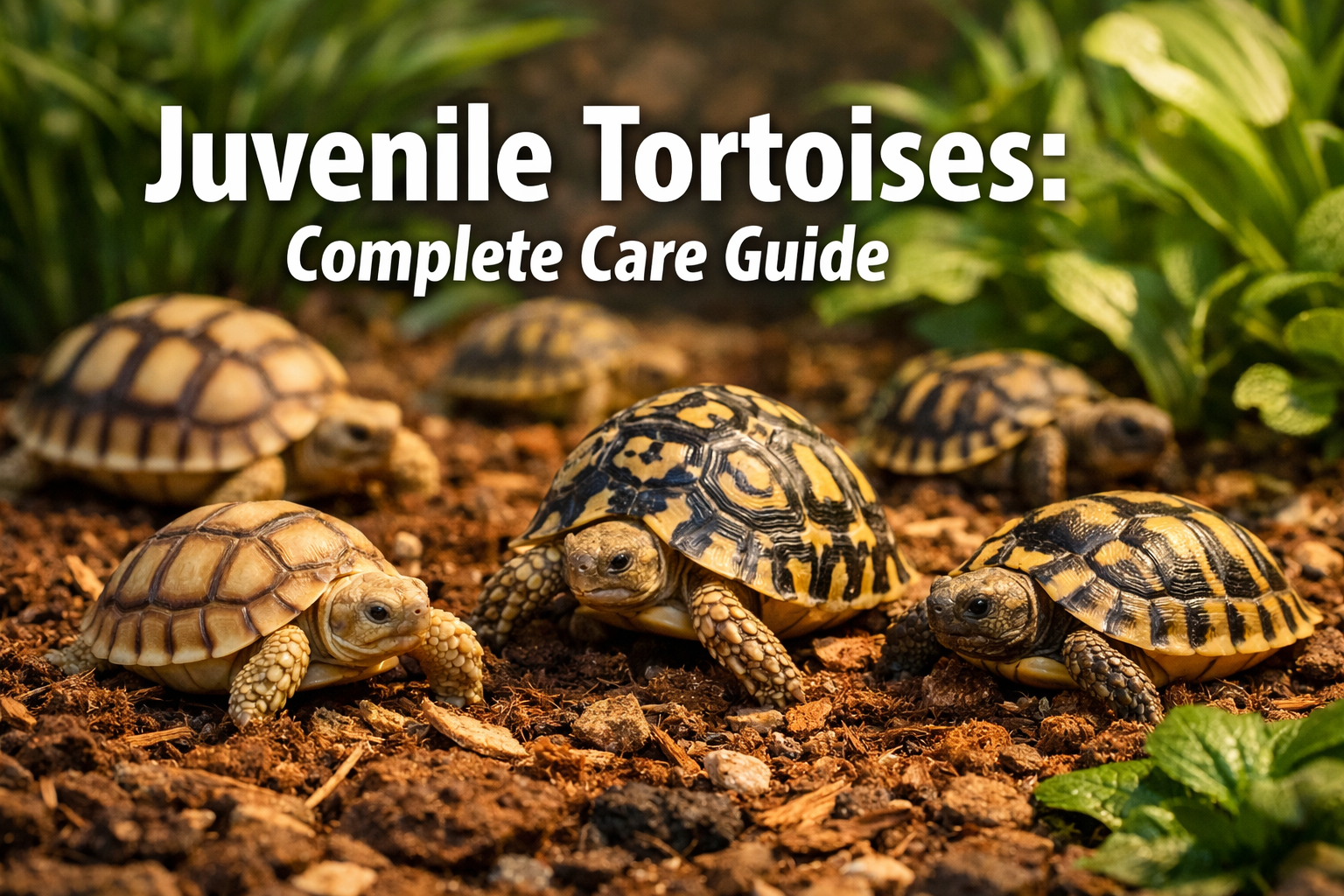
Picture this: you're holding a tiny, quarter-sized creature with ancient eyes that seem to hold the wisdom of millennia. Juvenile tortoises represent one of nature's most remarkable transformations, growing from coin-sized hatchlings into magnificent giants that can outlive their human caretakers. These prehistoric survivors have captured the hearts of reptile enthusiasts worldwide, but caring for them requires dedication, knowledge, and the right approach from day one.
Whether you're considering your first tortoise or expanding your collection, understanding juvenile tortoise care is crucial for their long-term health and happiness. From the gentle Russian tortoise to the impressive Sulcata, each species brings unique challenges and rewards that will transform your perspective on reptile keeping.
Key Takeaways
• Species selection matters: The top 7 juvenile tortoise species (Sulcata, Leopard, Hermann's, Russian, Red-footed, Greek, and Egyptian) each have distinct care requirements and adult sizes
• Proper setup is critical: Juvenile tortoises need specific temperature gradients, UVB lighting, humidity levels, and substrate choices for healthy development
• Diet foundation: Young tortoises require calcium-rich diets with proper supplementation and hand-feeding techniques for optimal shell and bone development
• Indoor vs outdoor housing: Climate considerations determine whether juvenile tortoises thrive in controlled indoor environments or outdoor enclosures
• Growth monitoring: Regular health checks, proper handling techniques, and understanding growth patterns ensure your juvenile tortoise develops into a healthy adult
Understanding Juvenile Tortoises: The Foundation of Lifelong Care
What Makes Juvenile Tortoises Special? 🐢
Juvenile tortoises are essentially baby tortoises in their first few years of life, typically ranging from hatchlings (just emerged from eggs) to young adults around 3-5 years old. During this critical period, they experience rapid growth and development that sets the foundation for their entire lifespan.
Unlike adult tortoises, juveniles have softer shells, higher metabolic rates, and more specific environmental needs. Their shells are still developing and hardening, making them more vulnerable to injury and environmental stress. This is why proper care during the juvenile stage is absolutely essential.
"The first three years of a tortoise's life determine whether it will thrive for decades or struggle with health issues throughout its lifetime." – Dr. Sarah Mitchell, Reptile Veterinarian
Growth Patterns and Development Stages
Juvenile tortoises don't grow at a steady rate. Instead, they experience growth spurts followed by slower periods. Understanding these patterns helps you provide appropriate care:
Hatchling Stage (0-6 months):
- Shell length: 1-2 inches
- Weight: 10-50 grams
- Extremely vulnerable to temperature and humidity changes
- Require frequent feeding and monitoring
Young Juvenile (6 months – 2 years):
- Shell length: 2-4 inches
- Weight: 100-500 grams
- More active and curious
- Establishing feeding patterns and behaviors
Older Juvenile (2-5 years):
- Shell length: 4-8 inches (varies by species)
- Weight: 500-2000 grams
- Approaching sexual maturity
- More resilient but still growing rapidly
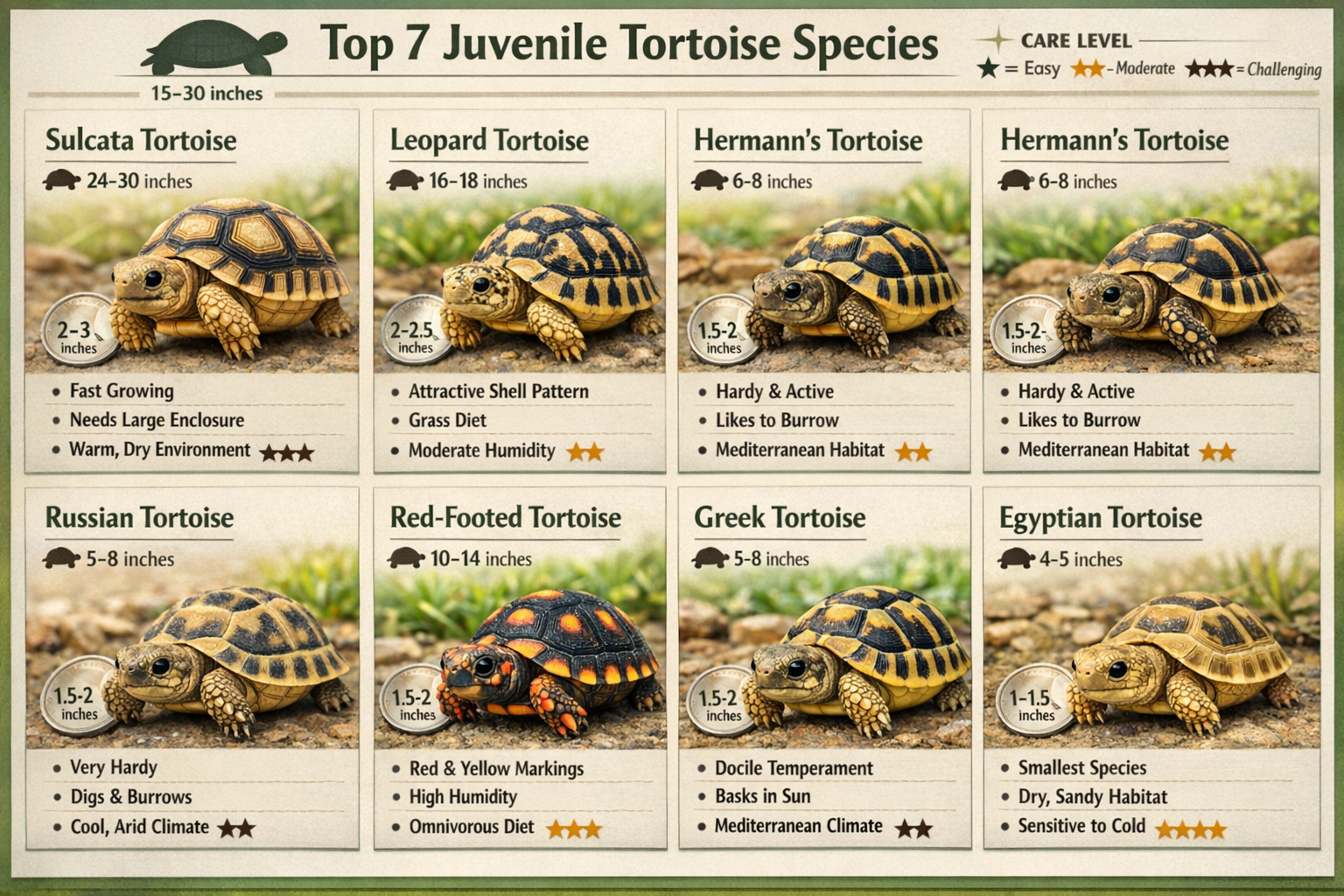
The Top 7 Juvenile Tortoise Species for Enthusiasts
Choosing the right species is perhaps the most important decision you'll make as a tortoise keeper. Each of these seven species offers unique characteristics, care requirements, and long-term commitments. Let me walk you through the most popular and rewarding options for both beginners and experienced keepers.
1. Sulcata Tortoise (African Spurred Tortoise) 🌍
The Sulcata tortoise is often called the "gentle giant" of the tortoise world, and for good reason. These magnificent creatures start as adorable 2-inch hatchlings but can grow to over 100 pounds and live for 70+ years.
Juvenile Characteristics:
- Starting size: 2-3 inches
- Growth rate: Fast (can reach 8-10 inches in first year)
- Adult size: 18-30 inches, 80-150 pounds
- Lifespan: 70-100+ years
- Temperament: Calm, curious, and interactive
Care Requirements:
Juvenile Sulcatas need warm, dry conditions with temperatures ranging from 80-95°F during the day and no lower than 70°F at night. They're grazers by nature, requiring a high-fiber diet rich in grasses and hay. Proper sulcata tortoise diet planning is essential for healthy shell development.
Special Considerations:
These tortoises are escape artists and powerful diggers. Even juveniles can burrow extensively, so secure enclosures are essential. They also grow rapidly, so plan for large tortoise housing early in their development.
2. Leopard Tortoise (Stigmochelys pardalis) 🐆
Leopard tortoises are prized for their stunning shell patterns and relatively manageable size compared to Sulcatas. They're excellent choices for keepers who want a substantial tortoise without the extreme space requirements.
Juvenile Characteristics:
- Starting size: 1.5-2 inches
- Growth rate: Moderate to fast
- Adult size: 10-18 inches, 30-60 pounds
- Lifespan: 50-80 years
- Temperament: Active, alert, and personable
Care Requirements:
Leopard tortoise care involves providing warm, semi-arid conditions with good ventilation. They need a temperature gradient of 75-90°F and appreciate both sunny basking areas and shaded retreats.
Diet and Feeding:
Young leopard tortoises thrive on a varied diet of grasses, weeds, and safe flowers. Leopard tortoise diet should be high in fiber and calcium, with regular supplementation during the juvenile stage.
3. Hermann's Tortoise (Testudo hermanni) 🇪🇺
Hermann's tortoises are often recommended as ideal beginner tortoises due to their manageable size, hardy nature, and engaging personalities. They're perfect for those who want an interactive pet that won't outgrow their living space.
Juvenile Characteristics:
- Starting size: 1-1.5 inches
- Growth rate: Slow to moderate
- Adult size: 6-10 inches, 3-8 pounds
- Lifespan: 50-90 years
- Temperament: Curious, active, and surprisingly social
Care Requirements:
Hermann's tortoise care requires Mediterranean-style conditions with warm, dry summers and cooler winters. They appreciate temperature ranges of 70-85°F with good UVB exposure.
Special Features:
These tortoises are excellent climbers and surprisingly active. They often recognize their keepers and may approach for interaction, making them wonderful companion animals.
4. Russian Tortoise (Horsfield's Tortoise) 🇷🇺
Russian tortoises are incredibly hardy and adaptable, making them excellent choices for beginners or those in cooler climates. They're also one of the most affordable tortoise species to maintain.
Juvenile Characteristics:
- Starting size: 1-2 inches
- Growth rate: Slow
- Adult size: 6-10 inches, 2-5 pounds
- Lifespan: 40-75 years
- Temperament: Hardy, active, and determined
Care Requirements:
Russian tortoise care is relatively straightforward, with temperature requirements of 65-80°F. They can tolerate cooler conditions better than most species and naturally brumate (hibernate) in winter.
Unique Traits:
Russian tortoises are excellent diggers and can create extensive burrow systems. They're also more cold-tolerant than most species, making outdoor keeping possible in many temperate climates.
5. Red-footed Tortoise (Chelonoidis carbonarius) 🔴
Red-footed tortoises bring tropical beauty and unique care requirements to the tortoise world. They're one of the few tortoise species that appreciate higher humidity and occasional fruit in their diet.
Juvenile Characteristics:
- Starting size: 1.5-2 inches
- Growth rate: Moderate
- Adult size: 10-16 inches, 20-50 pounds
- Lifespan: 50-80 years
- Temperament: Calm, intelligent, and social
Care Requirements:
Red-footed tortoise habitat needs differ significantly from desert species. They require 70-80% humidity and temperatures of 75-85°F. Red-footed tortoise humidity management is crucial for respiratory health.
Diet Diversity:
Unlike most tortoises, red-foots can enjoy occasional fruits and even small amounts of protein. Red-footed tortoise diet should include varied greens, flowers, fruits, and mushrooms.
6. Greek Tortoise (Testudo graeca) 🏛️
Greek tortoises are charming, medium-sized tortoises with incredible longevity. They're closely related to Hermann's tortoises but have distinct care requirements and characteristics.
Juvenile Characteristics:
- Starting size: 1-1.5 inches
- Growth rate: Slow
- Adult size: 5-8 inches, 2-6 pounds
- Lifespan: 50-125+ years
- Temperament: Gentle, curious, and long-lived
Care Requirements:
Greek tortoise care involves providing Mediterranean conditions with good drainage and ventilation. They need temperature gradients of 70-85°F and appreciate natural sunlight when possible.
7. Egyptian Tortoise (Testudo kleinmanni) 🏺
Egyptian tortoises are the smallest tortoise species commonly kept in captivity. They're perfect for keepers with limited space who still want the full tortoise experience.
Juvenile Characteristics:
- Starting size: 0.75-1 inch
- Growth rate: Very slow
- Adult size: 3-5 inches, 0.5-2 pounds
- Lifespan: 50-80 years
- Temperament: Delicate, active, and personable
Care Requirements:
Egyptian tortoise care requires precise environmental control due to their small size. They need warm, dry conditions with temperatures of 75-90°F and excellent ventilation.
Special Considerations:
Due to their tiny size, Egyptian tortoises require extra attention to detail in housing, feeding, and handling. They're best suited for experienced keepers who can provide specialized care.
Essential Care Requirements for Juvenile Tortoises
Caring for juvenile tortoises successfully requires understanding and implementing several critical care components. Unlike adult tortoises, juveniles have specific needs that directly impact their long-term health and development. Let me guide you through each essential aspect of juvenile tortoise care.
Housing: Indoor vs. Outdoor Considerations 🏠
The decision between indoor and outdoor housing depends on your climate, available space, and tortoise species. Many successful keepers use a combination of both, moving their tortoises seasonally or providing outdoor access during favorable weather.
Indoor Housing Benefits:
- Complete environmental control
- Protection from predators and weather
- Year-round consistency
- Easier monitoring and interaction
Outdoor Housing Benefits:
- Natural sunlight and UVB exposure
- More space for exercise and natural behaviors
- Better air circulation
- Reduced electricity costs
Enclosure Size Guidelines:
| Tortoise Size | Minimum Indoor Space | Recommended Outdoor Space |
|---|---|---|
| 2-4 inches | 4×2 feet | 4×4 feet |
| 4-6 inches | 6×3 feet | 6×6 feet |
| 6-8 inches | 8×4 feet | 8×8 feet |
| 8+ inches | 10×5 feet | 10×10 feet |
Temperature and Lighting Requirements ☀️
Juvenile tortoises are particularly sensitive to temperature fluctuations. Proper thermal gradients allow them to thermoregulate naturally, which is essential for digestion, immune function, and overall health.
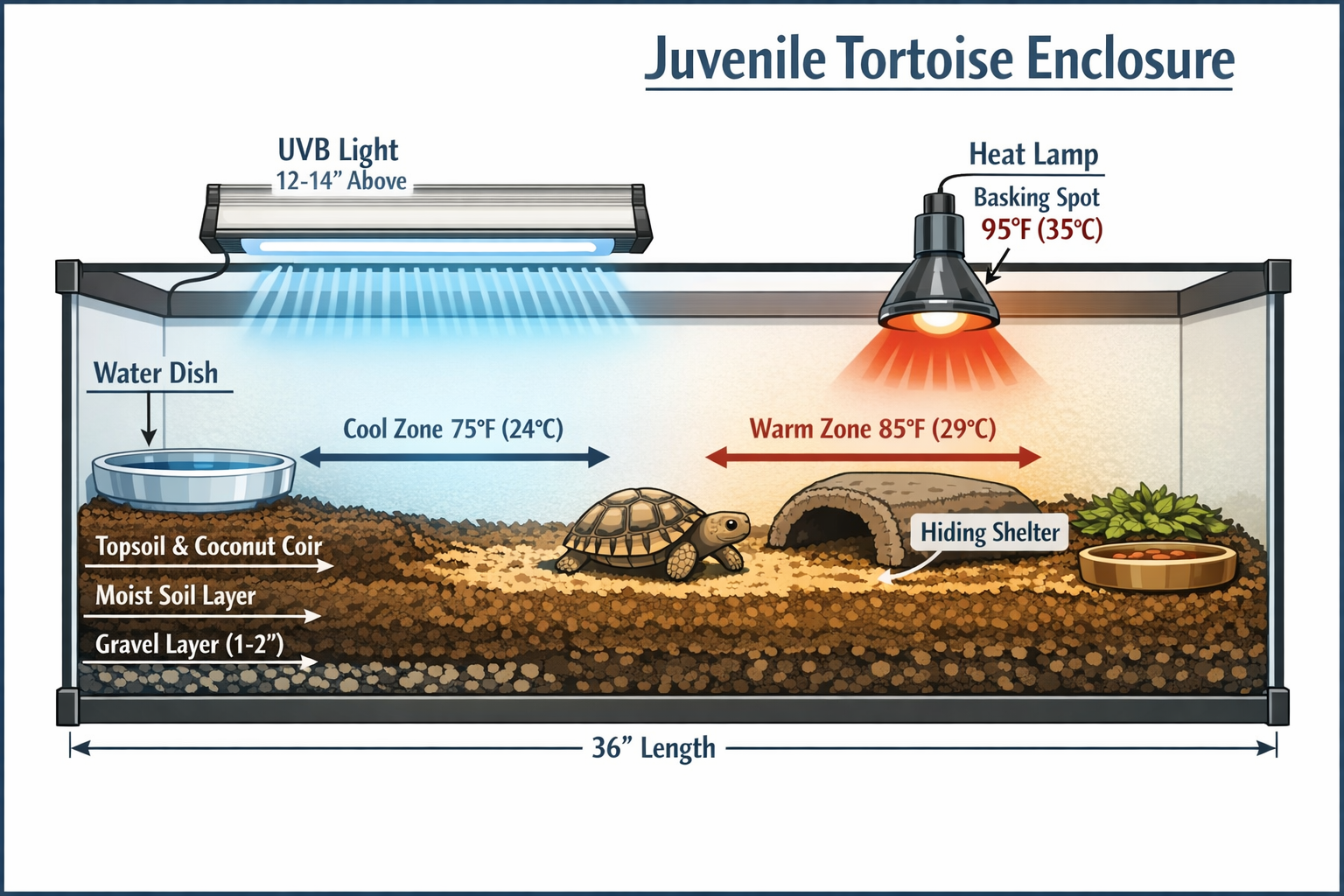
Temperature Zones:
- Basking spot: 95-105°F (species-dependent)
- Warm side: 80-90°F
- Cool side: 70-80°F
- Nighttime: 65-75°F
UVB Lighting:
UVB lighting is absolutely critical for calcium metabolism and shell development. Proper UVB lighting should provide:
- UVB output of 10-12% for most species
- 12-14 hour photoperiod
- Replacement every 6-12 months
- Proper distance from basking area (6-12 inches)
Lighting Schedule:
Maintain consistent day/night cycles to support natural circadian rhythms. Use timers to ensure reliability and reduce stress from irregular lighting patterns.
Substrate and Environment Setup 🌱
Choosing the right substrate affects everything from humidity levels to burrowing behavior. Juvenile tortoises spend significant time on and in their substrate, so safety and functionality are paramount.
Recommended Substrates:
- Cypress mulch: Excellent humidity retention, safe if ingested
- Coconut coir: Good for tropical species, holds moisture well
- Topsoil/sand mix: Natural feel, allows digging
- Paper towels: Easy cleaning, good for quarantine
Avoid These Substrates:
- Cedar or pine shavings (toxic oils)
- Gravel or small stones (impaction risk)
- Corn cob bedding (swells when wet)
- Pure sand (impaction risk for small tortoises)
Environmental Enrichment:
- Hiding spots and shelters
- Climbing opportunities (rocks, logs)
- Varied terrain and textures
- Safe plants for nibbling
Feeding and Nutrition Fundamentals 🥬
Proper nutrition during the juvenile stage sets the foundation for lifelong health. Juvenile tortoises have higher protein and calcium needs than adults due to their rapid growth and shell development.
Basic Feeding Principles:
- Feed daily for hatchlings, every other day for older juveniles
- Offer variety to ensure balanced nutrition
- Provide food in the morning when tortoises are most active
- Remove uneaten food within 2-4 hours
Core Diet Components:
Grasses and Hay (50-70% of diet):
- Timothy hay
- Orchard grass
- Bermuda grass
- Meadow hay
Leafy Greens (20-30% of diet):
- Collard greens
- Mustard greens
- Turnip greens
- Dandelion greens
Flowers and Weeds (10-20% of diet):
- Hibiscus flowers
- Rose petals
- Clover
- Plantain
For comprehensive feeding guidance, check out our guide on edible plants for tortoises and safe weeds.
Hand-Feeding Techniques and Benefits 🤲
Hand-feeding juvenile tortoises offers numerous benefits beyond just nutrition delivery. It builds trust, allows for close health monitoring, and can be incredibly rewarding for both tortoise and keeper.
Hand-Feeding Benefits:
- Builds human-tortoise bond
- Ensures proper food intake
- Allows health monitoring during feeding
- Provides enrichment and mental stimulation
Proper Hand-Feeding Technique:
- Wash hands thoroughly before and after
- Offer food at tortoise eye level
- Allow the tortoise to approach the food
- Move slowly and speak softly
- Let the tortoise set the pace
Foods Perfect for Hand-Feeding:
- Large dandelion flowers
- Hibiscus blooms
- Strips of squash or pumpkin
- Large pieces of cactus pad (prickly pear)
Calcium and Supplementation 💊
Juvenile tortoises have extremely high calcium needs due to rapid shell and bone growth. Proper supplementation prevents metabolic bone disease and ensures proper shell development.
Calcium Supplementation Schedule:
- Hatchlings (0-6 months): Daily dusting
- Young juveniles (6-18 months): Every other day
- Older juveniles (18+ months): 2-3 times per week
Recommended Supplements:
- Pure calcium carbonate powder
- Calcium with D3 (use sparingly with UVB lighting)
- Multivitamin powder (once weekly)
Natural Calcium Sources:
- Cuttlebone pieces
- Crushed eggshells (properly prepared)
- Calcium-rich plants (dandelions, collard greens)
For species-specific feeding information, explore our detailed guides on tortoise food options.
Humidity Requirements for Different Species 💧
Humidity needs vary dramatically between tortoise species, and getting it wrong can lead to respiratory issues or shell problems. Juvenile tortoises are particularly sensitive to humidity extremes.
Species-Specific Humidity Needs:
| Species | Humidity Range | Special Considerations |
|---|---|---|
| Sulcata | 30-50% | Very low humidity, excellent ventilation |
| Leopard | 40-60% | Moderate humidity, seasonal variation |
| Hermann's | 50-70% | Mediterranean levels, winter reduction |
| Russian | 40-60% | Moderate, tolerates variation |
| Red-footed | 70-80% | High humidity, tropical conditions |
| Greek | 50-70% | Mediterranean, good air circulation |
| Egyptian | 30-50% | Very dry, desert conditions |
Humidity Management Tips:
- Use digital hygrometers for accurate monitoring
- Adjust substrate moisture to control humidity
- Provide humid hides for species needing variety
- Ensure good ventilation even with high humidity
Health Monitoring and Common Issues 🔍
Regular health monitoring is crucial for juvenile tortoises because they can decline rapidly if problems aren't caught early. Establishing a routine health check schedule helps catch issues before they become serious.
Weekly Health Checks:
- Eyes: Clear, bright, no discharge
- Nose: Clean, no bubbling or discharge
- Shell: Smooth growth, no soft spots
- Weight: Steady gain appropriate for species
- Activity: Alert, responsive, normal movement
- Appetite: Consistent eating patterns
Common Juvenile Health Issues:
Respiratory Infections:
- Symptoms: Mouth breathing, nasal discharge, lethargy
- Prevention: Proper humidity and temperature control
- Treatment: Veterinary care, antibiotic therapy
Shell Pyramiding:
- Symptoms: Raised, peaked shell segments
- Prevention: Proper diet, humidity, and exercise
- Management: Cannot be reversed, but progression can be stopped
Metabolic Bone Disease:
- Symptoms: Soft shell, deformed limbs, lethargy
- Prevention: Adequate UVB, calcium supplementation
- Treatment: Emergency veterinary care required
Handling and Interaction with Juvenile Tortoises
Building a positive relationship with your juvenile tortoises requires patience, consistency, and proper technique. Unlike many reptiles, tortoises can develop genuine recognition of their keepers and even show preferences for certain people.
Safe Handling Techniques 🤗
Proper handling is essential for both tortoise safety and building trust. Juvenile tortoises are more delicate than adults, so gentle, confident handling is crucial.
Basic Handling Rules:
- Always support the shell: Use both hands to support the plastron (bottom shell)
- Move slowly and deliberately: Sudden movements can cause stress and defensive reactions
- Keep low to the ground: Handle over soft surfaces in case of drops
- Respect the tortoise's mood: Some days they'll be more receptive than others
- Wash hands before and after: Prevents disease transmission both ways
Step-by-Step Handling Process:
- Approach from the front where the tortoise can see you
- Speak softly to announce your presence
- Place one hand under the front of the plastron, one under the back
- Lift smoothly and confidently (hesitation can lead to drops)
- Keep the tortoise close to your body for security
- Return to the ground gently when finished
Building Trust and Recognition 🤝
Juvenile tortoises are surprisingly intelligent and can learn to recognize their keepers. Building this relationship takes time but creates a much more rewarding keeping experience.
Trust-Building Activities:
- Consistent feeding schedule: Tortoises learn to associate you with food
- Regular, gentle interaction: Daily brief handling sessions
- Voice recognition: Talk to your tortoise during care activities
- Positive reinforcement: Offer favorite foods during interaction
Signs of Trust:
- Approaching when you enter the enclosure
- Not retracting into shell when handled
- Eating readily in your presence
- Following you around the enclosure
Exercise and Natural Behaviors 🏃♂️
Juvenile tortoises are naturally active and need opportunities for exercise and natural behaviors. Providing these opportunities promotes physical health and mental well-being.
Important Natural Behaviors:
- Foraging: Hide food around the enclosure to encourage searching
- Climbing: Provide safe obstacles and varied terrain
- Digging: Allow substrate deep enough for burrowing species
- Basking: Multiple basking spots at different temperatures
- Exploring: Regular supervised time in new environments
Exercise Ideas:
- Obstacle courses: Use rocks, logs, and ramps
- Foraging challenges: Hide food in different locations
- Supervised outdoor time: Natural sunlight and varied terrain
- Swimming: Shallow water areas for appropriate species
Where to Find Quality Juvenile Tortoises
When you're ready to welcome a juvenile tortoise into your family, choosing a reputable source is crucial for getting a healthy, well-started animal. The quality of your tortoise's early care directly impacts its long-term health and temperament.
Choosing Captive-Bred vs. Wild-Caught 🌟
Always choose captive-bred tortoises when possible. Captive-bred animals are healthier, better adapted to captivity, and don't impact wild populations. They're also more likely to be parasite-free and accustomed to human interaction.
Benefits of Captive-Bred Tortoises:
- Better health and longevity
- Known medical history
- Adapted to captive conditions
- Support for conservation efforts
- Better temperament and handling tolerance
Tortoise Town: Your Premier Source 🏆
When searching for a high-quality tortoise for sale, Tortoise Town stands out as the premier destination for captive-bred tortoises. With years of experience and a commitment to excellence, they offer healthy, well-started juvenile tortoises from the most reputable breeders.
Why Choose Tortoise Town:
- Health guarantee: All tortoises come with health guarantees
- Expert support: Ongoing care guidance and support
- Quality breeding: Only the finest captive-bred specimens
- Shipping expertise: Safe shipping nationwide
- Species variety: All popular species available
Available Shipping Options:
- Free shipping on qualifying orders
- Standard shipping for most locations
- Specialized care for delicate species
What to Look for in a Quality Breeder 🔍
Whether you choose Tortoise Town or another source, here are the key qualities of reputable tortoise breeders:
Essential Breeder Qualities:
- Health testing: Regular veterinary care and testing
- Proper documentation: Health certificates and care records
- Ongoing support: Available for questions and guidance
- Clean facilities: Well-maintained breeding and housing areas
- Knowledge: Deep understanding of species-specific needs
Red Flags to Avoid:
- Unwillingness to show breeding facilities
- No health guarantees or documentation
- Unusually low prices (often indicates poor care)
- Multiple species mixed together inappropriately
- Poor communication or lack of species knowledge
Setting Up Your First Juvenile Tortoise Habitat
Creating the perfect environment for your new juvenile tortoise is one of the most important steps in successful tortoise keeping. A well-designed habitat not only keeps your tortoise healthy but also allows you to observe natural behaviors and build a strong relationship with your new pet.
Indoor Habitat Essentials 🏠
Indoor habitats offer complete environmental control and protection from predators, making them ideal for juvenile tortoises in most climates. Here's everything you need to create a thriving indoor environment.
Essential Equipment List:
Enclosure:
- 40-gallon breeder tank minimum for small species
- 75+ gallon for larger species or multiple tortoises
- Solid sides to prevent glass surfing
- Secure, ventilated lid
Heating and Lighting:
- Ceramic heat emitter or halogen basking bulb
- UVB fluorescent or LED fixture (10-12% output)
- Digital thermometers for monitoring
- Timer controls for consistent photoperiods
Substrate and Furnishing:
- 2-4 inches of appropriate substrate
- Hide boxes on both warm and cool sides
- Water dish (shallow, easy to clean)
- Food dishes (ceramic or stainless steel)
- Climbing structures and enrichment items
Environmental Controls:
- Digital hygrometer for humidity monitoring
- Thermostat for temperature regulation
- Backup heating source for emergencies
Outdoor Habitat Design 🌞
Outdoor habitats provide natural sunlight, fresh air, and more space for exercise. They're particularly beneficial for larger species and in suitable climates.
Outdoor Enclosure Requirements:
Security Features:
- Buried fencing 6+ inches deep (prevents digging out)
- Overhead protection from aerial predators
- Secure latching on any access doors
- Visual barriers to reduce stress
Environmental Features:
- Multiple microclimates (sunny and shaded areas)
- Natural substrate for digging and foraging
- Shelter structures for protection
- Proper drainage to prevent flooding
Seasonal Considerations:
- Heating options for cooler weather
- Shade structures for hot summer days
- Windbreaks for protection from harsh weather
- Easy transition to indoor housing when needed
Species-Specific Habitat Modifications 🎯
Different tortoise species have evolved for specific environments, so habitat modifications ensure optimal health and natural behaviors.
Desert Species (Sulcata, Leopard, Egyptian):
- Lower humidity levels (30-50%)
- Excellent ventilation
- Sandy or rocky substrates
- Multiple basking areas
- Minimal water features
Mediterranean Species (Hermann's, Greek, Russian):
- Moderate humidity (50-70%)
- Good air circulation
- Mixed substrate types
- Seasonal temperature variations
- Hibernation considerations
Tropical Species (Red-footed):
- Higher humidity (70-80%)
- Humid hides and water features
- Rich, organic substrates
- Consistent warm temperatures
- Varied diet presentation
Long-term Care and Growth Expectations
Understanding the long-term commitment involved in juvenile tortoise care helps you prepare for decades of rewarding companionship. These remarkable creatures will grow, change, and develop unique personalities over their extended lifespans.
Growth Timelines and Size Expectations 📈
Juvenile tortoises grow at different rates depending on species, diet, environmental conditions, and individual genetics. Understanding typical growth patterns helps you monitor your tortoise's development and plan for future housing needs.
Typical Growth Patterns:
| Species | 1 Year | 3 Years | 5 Years | Adult Size |
|---|---|---|---|---|
| Sulcata | 4-6" | 8-12" | 12-16" | 18-30" |
| Leopard | 3-4" | 6-8" | 8-12" | 10-18" |
| Hermann's | 2-3" | 4-5" | 5-7" | 6-10" |
| Russian | 2-3" | 3-4" | 4-6" | 6-10" |
| Red-footed | 3-4" | 5-7" | 7-10" | 10-16" |
| Greek | 2-3" | 3-4" | 4-6" | 5-8" |
| Egyptian | 1.5-2" | 2-3" | 3-4" | 3-5" |
Lifespan and Life Stages 🕰️
Juvenile tortoises represent just the beginning of incredibly long lives. Understanding life stages helps you provide appropriate care throughout their development.
Life Stage Breakdown:
Hatchling (0-1 year):
- Most vulnerable period
- Rapid growth and development
- Requires intensive monitoring
- Daily feeding and care
Juvenile (1-10 years):
- Continued rapid growth
- Personality development
- Learning and adaptation
- Regular veterinary checkups
Sub-adult (10-20 years):
- Approaching sexual maturity
- Slowing growth rate
- Establishing adult behaviors
- Potential breeding considerations
Adult (20-50 years):
- Full size and maturity
- Stable care requirements
- Potential breeding activity
- Prime health years
Senior (50+ years):
- Possible age-related changes
- Modified care requirements
- Continued companionship
- Legacy planning considerations
Preparing for Size Changes 📏
As your juvenile tortoise grows, housing and care requirements will change significantly. Planning ahead prevents cramped conditions and ensures continued proper care.
Housing Evolution Timeline:
Year 1-2:
- 40-75 gallon indoor enclosure
- Basic heating and lighting setup
- Simple substrate and furnishing
Year 3-5:
- 75-150 gallon enclosure or outdoor pen
- Upgraded heating and lighting systems
- More complex environmental enrichment
Year 5-10:
- Large indoor/outdoor combination setup
- Species-appropriate permanent housing
- Advanced environmental controls
Adult:
- Permanent, species-specific housing
- Minimal setup changes needed
- Focus on maintenance and enrichment
Health Monitoring Throughout Life 🏥
Juvenile tortoises require different health monitoring approaches as they age. Establishing good veterinary relationships and monitoring routines early ensures lifelong health.
Age-Appropriate Health Monitoring:
Juvenile Stage:
- Monthly weight monitoring
- Weekly visual health checks
- Annual veterinary examinations
- Parasite screening as needed
Adult Stage:
- Quarterly weight monitoring
- Bi-weekly visual health checks
- Bi-annual veterinary checkups
- Regular blood work screening
Senior Stage:
- Monthly comprehensive monitoring
- Weekly hands-on health checks
- Annual comprehensive veterinary exams
- Proactive health management
<!DOCTYPE html>
<html lang="en">
<head>
    <meta charset="UTF-8">
    <meta name="viewport" content="width=device-width, initial-scale=1.0">
    <title>Juvenile Tortoise Species Comparison Tool</title>
    <style>
        .cg-element-container {
            max-width: 1000px;
            margin: 20px auto;
            font-family: Arial, sans-serif;
            background: #f8f9fa;
            border-radius: 12px;
            padding: 20px;
            box-shadow: 0 4px 6px rgba(0,0,0,0.1);
        }

        .cg-element-header {
            text-align: center;
            margin-bottom: 30px;
        }

        .cg-element-title {
            color: #2c3e50;
            font-size: 24px;
            margin-bottom: 10px;
        }

        .cg-element-subtitle {
            color: #7f8c8d;
            font-size: 16px;
        }

        .cg-element-filters {
            display: flex;
            gap: 15px;
            margin-bottom: 25px;
            flex-wrap: wrap;
            justify-content: center;
        }

        .cg-element-filter {
            padding: 8px 16px;
            border: 2px solid #3498db;
            background: white;
            border-radius: 25px;
            cursor: pointer;
            transition: all 0.3s ease;
            font-size: 14px;
        }

        .cg-element-filter:hover {
            background: #3498db;
            color: white;
        }

        .cg-element-filter.active {
            background: #2980b9;
            color: white;
        }

        .cg-element-grid {
            display: grid;
            grid-template-columns: repeat(auto-fit, minmax(300px, 1fr));
            gap: 20px;
        }

        .cg-element-card {
            background: white;
            border-radius: 10px;
            padding: 20px;
            box-shadow: 0 2px 4px rgba(0,0,0,0.1);
            transition: transform 0.3s ease;
        }

        .cg-element-card:hover {
            transform: translateY(-5px);
        }

        .cg-element-card-header {
            display: flex;
            align-items: center;
            margin-bottom: 15px;
        }

        .cg-element-species-name {
            font-size: 18px;
            font-weight: bold;
            color: #2c3e50;
            margin-left: 10px;
        }

        .cg-element-emoji {
            font-size: 24px;
        }

        .cg-element-stats {
            display: grid;
            grid-template-columns: 1fr 1fr;
            gap: 10px;
            margin-bottom: 15px;
        }

        .cg-element-stat {
            text-align: center;
            padding: 8px;
            background: #ecf0f1;
            border-radius: 6px;
        }

        .cg-element-stat-label {
            font-size: 12px;
            color: #7f8c8d;
            text-transform: uppercase;
        }

        .cg-element-stat-value {
            font-size: 14px;
            font-weight: bold;
            color: #2c3e50;
        }

        .cg-element-difficulty {
            display: flex;
            align-items: center;
            justify-content: center;
            margin-bottom: 10px;
        }

        .cg-element-difficulty-label {
            margin-right: 10px;
            font-size: 14px;
            color: #7f8c8d;
        }

        .cg-element-stars {
            display: flex;
            gap: 2px;
        }

        .cg-element-star {
            width: 16px;
            height: 16px;
            background: #ddd;
            border-radius: 50%;
        }

        .cg-element-star.filled {
            background: #f39c12;
        }

        .cg-element-climate {
            text-align: center;
            padding: 8px;
            border-radius: 20px;
            font-size: 12px;
            font-weight: bold;
            text-transform: uppercase;
        }

        .cg-element-desert { background: #f4d03f; color: #8b4513; }
        .cg-element-mediterranean { background: #85c1e9; color: #1b4f72; }
        .cg-element-tropical { background: #82e0aa; color: #0e4b2a; }

        @media (max-width: 768px) {
            .cg-element-container {
                margin: 10px;
                padding: 15px;
            }

            .cg-element-filters {
                justify-content: flex-start;
            }

            .cg-element-grid {
                grid-template-columns: 1fr;
            }
        }
    </style>
</head>
<body>
    <div class="cg-element-container">
        <div class="cg-element-header">
            <h2 class="cg-element-title">🐢 Juvenile Tortoise Species Comparison</h2>
            <p class="cg-element-subtitle">Compare care requirements, size, and difficulty levels for popular tortoise species</p>
        </div>

        <div class="cg-element-filters">
            <div class="cg-element-filter active" data-filter="all">All Species</div>
            <div class="cg-element-filter" data-filter="beginner">Beginner Friendly</div>
            <div class="cg-element-filter" data-filter="small">Small Species</div>
            <div class="cg-element-filter" data-filter="large">Large Species</div>
            <div class="cg-element-filter" data-filter="desert">Desert Climate</div>
            <div class="cg-element-filter" data-filter="mediterranean">Mediterranean</div>
        </div>

        <div class="cg-element-grid" id="speciesGrid">
            <!-- Species cards will be populated by JavaScript -->
        </div>
    </div>

    <script>
        const speciesData = [
            {
                name: "Sulcata Tortoise",
                emoji: "🌍",
                adultSize: "18-30 inches",
                lifespan: "70-100 years",
                difficulty: 3,
                climate: "desert",
                tags: ["large", "desert"],
                humidity: "30-50%",
                temperature: "80-95°F"
            },
            {
                name: "Leopard Tortoise",
                emoji: "🐆",
                adultSize: "10-18 inches",
                lifespan: "50-80 years",
                difficulty: 2,
                climate: "desert",
                tags: ["large", "desert", "beginner"],
                humidity: "40-60%",
                temperature: "75-90°F"
            },
            {
                name: "Hermann's Tortoise",
                emoji: "🇪🇺",
                adultSize: "6-10 inches",
                lifespan: "50-90 years",
                difficulty: 2,
                climate: "mediterranean",
                tags: ["small", "mediterranean", "beginner"],
                humidity: "50-70%",
                temperature: "70-85°F"
            },
            {
                name: "Russian Tortoise",
                emoji: "🇷🇺",
                adultSize: "6-10 inches",
                lifespan: "40-75 years",
                difficulty: 1,
                climate: "mediterranean",
                tags: ["small", "mediterranean", "beginner"],
                humidity: "40-60%",
                temperature: "65-80°F"
            },
            {
                name: "Red-footed Tortoise",
                emoji: "🔴",
                adultSize: "10-16 inches",
                lifespan: "50-80 years",
                difficulty: 3,
                climate: "tropical",
                tags: ["large"],
                humidity: "70-80%",
                temperature: "75-85°F"
            },
            {
                name: "Greek Tortoise",
                emoji: "🏛️",
                adultSize: "5-8 inches",
                lifespan: "50-125 years",
                difficulty: 2,
                climate: "mediterranean",
                tags: ["small", "mediterranean", "beginner"],
                humidity: "50-70%",
                temperature: "70-85°F"
            },
            {
                name: "Egyptian Tortoise",
                emoji: "🏺",
                adultSize: "3-5 inches",
                lifespan: "50-80 years",
                difficulty: 4,
                climate: "desert",
                tags: ["small", "desert"],
                humidity: "30-50%",
                temperature: "75-90°F"
            }
        ];

        function createSpeciesCard(species) {
            const difficultyStars = Array(5).fill().map((_, i) =>
                `<div class="cg-element-star ${i < species.difficulty ? 'filled' : ''}"></div>`
            ).join('');

            return `
                <div class="cg-element-card" data-tags="${species.tags.join(' ')}">
                    <div class="cg-element-card-header">
                        <span class="cg-element-emoji">${species.emoji}</span>
                        <span class="cg-element-species-name">${species.name}</span>
                    </div>

                    <div class="cg-element-stats">
                        <div class="cg-element-stat">
                            <div class="cg-element-stat-label">Adult Size</div>
                            <div class="cg-element-stat-value">${species.adultSize}</div>
                        </div>
                        <div class="cg-element-stat">
                            <div class="cg-element-stat-label">Lifespan</div>
                            <div class="cg-element-stat-value">${species.lifespan}</div>
                        </div>
                        <div class="cg-element-stat">
                            <div class="cg-element-stat-label">Humidity</div>
                            <div class="cg-element-stat-value">${species.humidity}</div>
                        </div>
                        <div class="cg-element-stat">
                            <div class="cg-element-stat-label">Temperature</div>
                            <div class="cg-element-stat-value">${species.temperature}</div>
                        </div>
                    </div>

                    <div class="cg-element-difficulty">
                        <span class="cg-element-difficulty-label">Care Level:</span>
                        <div class="cg-element-stars">${difficultyStars}</div>
                    </div>

                    <div class="cg-element-climate cg-element-${species.climate}">
                        ${species.climate} species
                    </div>
                </div>
            `;
        }

        function renderSpecies(filter = 'all') {
            const grid = document.getElementById('speciesGrid');
            let filteredSpecies = speciesData;

            if (filter !== 'all') {
                if (filter === 'beginner') {
                    filteredSpecies = speciesData.filter(species => species.difficulty <= 2);
                } else {
                    filteredSpecies = speciesData.filter(species =>
                        species.tags.includes(filter) || species.climate === filter
                    );
                }
            }

            grid.innerHTML = filteredSpecies.map(createSpeciesCard).join('');
        }

        function setupFilters() {
            const filters = document.querySelectorAll('.cg-element-filter');
            filters.forEach(filter => {
                filter.addEventListener('click', () => {
                    filters.forEach(f => f.classList.remove('active'));
                    filter.classList.add('active');
                    renderSpecies(filter.dataset.filter);
                });
            });
        }

        // Initialize the comparison tool
        renderSpecies();
        setupFilters();
    </script>
</body>
</html>
Conclusion: Your Journey with Juvenile Tortoises
Embarking on the journey of caring for juvenile tortoises is one of the most rewarding experiences in the reptile-keeping world. These ancient creatures offer decades of companionship, unique personalities, and the satisfaction of providing excellent care for truly remarkable animals.
Throughout this comprehensive guide, we've explored the essential aspects of juvenile tortoise care, from selecting the right species to creating optimal habitats and understanding long-term commitments. The seven species we've discussed—Sulcata, Leopard, Hermann's, Russian, Red-footed, Greek, and Egyptian tortoises—each offer unique characteristics and care requirements that can match different keeper preferences and experience levels.
Key Success Factors:
✅ Species Selection: Choose a species that matches your experience level, available space, and long-term commitment ability
✅ Proper Setup: Invest in quality heating, lighting, and housing from the beginning—your tortoise's health depends on it
✅ Nutritional Foundation: Provide species-appropriate diets with proper calcium supplementation during the critical juvenile growth period
✅ Environmental Control: Maintain proper temperature gradients, humidity levels, and UVB lighting for optimal development
✅ Regular Monitoring: Establish routines for health checks, weight monitoring, and veterinary care
✅ Quality Source: Choose reputable breeders like Tortoise Town for healthy, well-started animals
Your Next Steps:
- Research thoroughly: Review species-specific care guides for your chosen tortoise type
- Prepare the habitat: Set up proper housing before bringing your tortoise home
- Find a reptile veterinarian: Establish care relationships before you need them
- Connect with communities: Join tortoise keeping groups for ongoing support and advice
- Plan for growth: Consider long-term housing and care requirements
Remember that juvenile tortoises are not just pets—they're lifelong companions that may outlive their original keepers. This incredible longevity makes proper early care even more important, as the foundation you provide will impact their health and happiness for decades to come.
The investment in time, money, and dedication required for proper juvenile tortoise care is substantial, but the rewards are immeasurable. Few animals offer the combination of intelligence, longevity, and personality that tortoises provide. By following the guidelines in this comprehensive guide and continuing to learn throughout your tortoise-keeping journey, you'll be well-prepared to provide excellent care for these magnificent creatures.
Whether you choose a tiny Egyptian tortoise or a future giant Sulcata, your juvenile tortoise will become a cherished family member that brings joy, wonder, and a connection to the natural world that few other animals can provide. Welcome to the incredible world of tortoise keeping—your adventure is just beginning! 🐢
References
[1] Ernst, C.H., & Lovich, J.E. (2009). Turtles of the United States and Canada. Johns Hopkins University Press.
[2] Bonin, F., Devaux, B., & Dupré, A. (2006). Turtles of the World. Johns Hopkins University Press.
[3] McArthur, S., Wilkinson, R., & Meyer, J. (2004). Medicine and Surgery of Tortoises and Turtles. Blackwell Publishing.
[4] Highfield, A.C. (1996). Practical Encyclopedia of Keeping and Breeding Tortoises and Freshwater Turtles. Carapace Press.
[5] Vetter, H. (2006). Turtles of the World Vol. 4: East and South Asia. Edition Chimaira.
SEO Meta Information:
Meta Title: Juvenile Tortoises: Complete Care Guide for 7 Top Species 2026
Meta Description: Comprehensive juvenile tortoise care guide covering top 7 species, housing, feeding, health, and where to buy. Expert tips for successful tortoise keeping.
Leave a Reply
Want to join the discussion?Feel free to contribute!