
aldabra tortoise
The Aldabra Tortoise: Your Complete Guide to the World's Second-Largest Tortoise Species
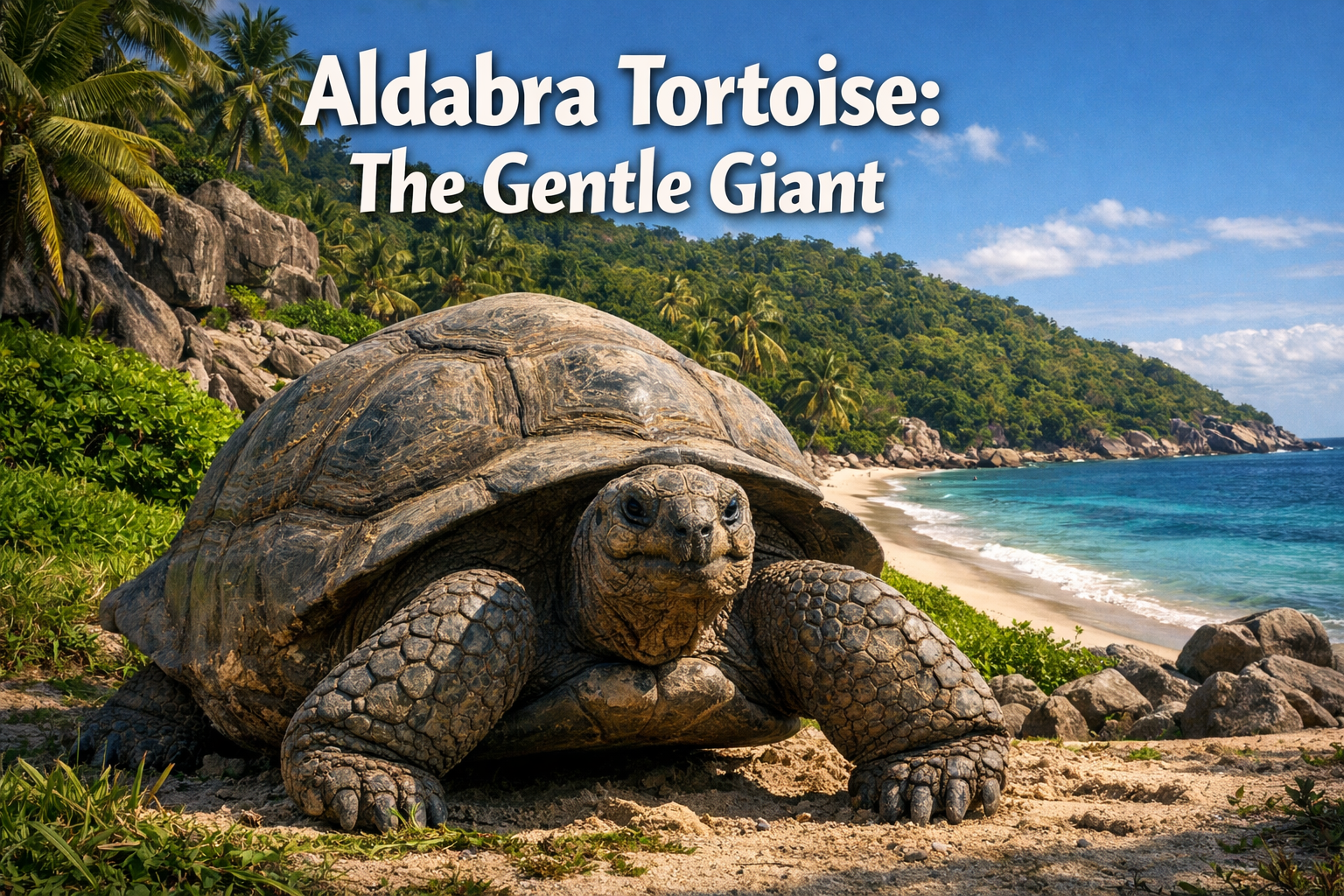
Imagine encountering a living dinosaur that can outlive several human generations, weighs as much as a refrigerator, and moves through life with the wisdom of centuries. The Aldabra tortoise represents one of nature's most remarkable survivors, having evolved on remote islands in the Indian Ocean to become one of the most impressive reptilian giants on Earth.
As someone who has spent years studying and working with various tortoise species, I can confidently say that the Aldabra tortoise stands apart from all other chelonians. These magnificent creatures aren't just large—they're living monuments to evolutionary success, having survived ice ages, volcanic eruptions, and countless environmental changes that eliminated many of their contemporaries.
Key Takeaways
• Aldabra tortoises are the world's second-largest tortoise species, with adults weighing 350-550 pounds and living over 100 years
• These gentle giants require massive outdoor enclosures (minimum 1,000+ square feet) and specialized care that differs significantly from smaller tortoise species
• Aldabra tortoises are primarily found in captivity at zoos and research facilities, with private ownership being extremely rare and regulated
• Their diet consists mainly of grasses, fruits, and vegetables, requiring up to 50+ pounds of food weekly for adult specimens
• Conservation efforts have successfully increased wild populations from near extinction to over 100,000 individuals on Aldabra Atoll
Understanding the Aldabra Tortoise: A Living Legend
Origins and Natural History
The Aldabra tortoise (Aldabrachelys gigantea) calls the remote Aldabra Atoll in the Seychelles home, where they've evolved in isolation for millions of years. This coral atoll, located about 700 miles east of mainland Africa, provides the perfect laboratory for understanding how these giants adapted to island life.
What makes these tortoises truly special isn't just their size—it's their incredible resilience. Unlike many island species that become vulnerable to extinction, Aldabra tortoises developed robust survival strategies that helped them weather dramatic environmental changes throughout geological time.
The species nearly faced extinction in the 1960s when their population dropped to fewer than 3,000 individuals. However, dedicated conservation efforts have brought their numbers back to over 100,000 in the wild, making them one of conservation's greatest success stories [1].
Physical Characteristics That Set Them Apart
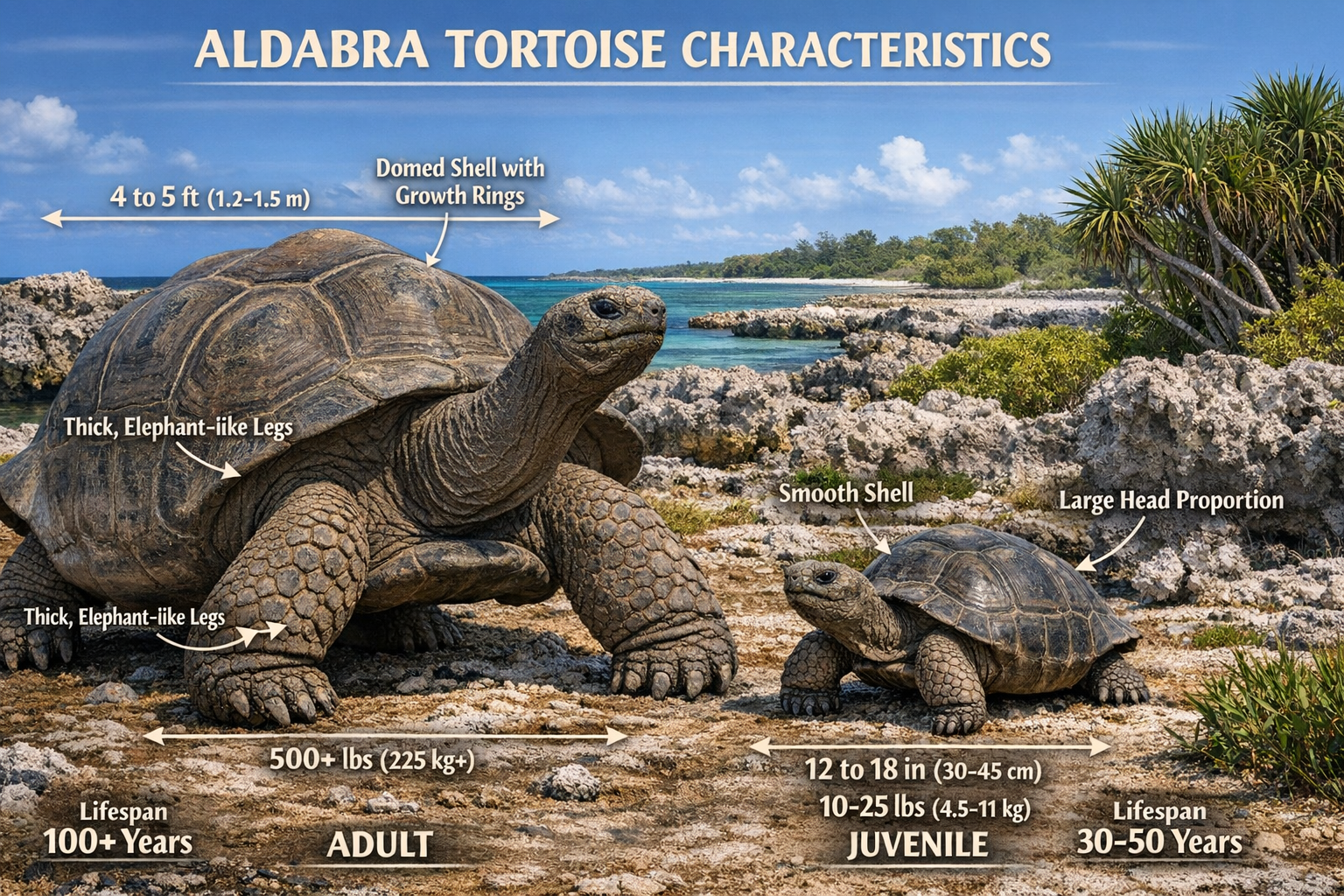
Adult Aldabra tortoises are truly impressive specimens. Males typically reach 4 feet in length and weigh between 400-550 pounds, while females are slightly smaller at 350-400 pounds. Their massive, domed shells can measure over 4 feet across, providing protection and serving as a mobile home for their century-plus lifespans.
The shell coloration ranges from dark brown to black, often with lighter growth rings that tell the story of their age. Their thick, elephant-like legs support their enormous weight, while their long necks allow them to reach vegetation up to 3 feet high—an adaptation that gives them access to food sources unavailable to other herbivores on their native atoll.
One of the most remarkable features of the Aldabra tortoise is their longevity. These animals regularly live beyond 100 years, with some documented individuals reaching 150+ years. This extreme longevity means that tortoises alive today may have been hatched during the American Civil War!
Aldabra Tortoise Care: What Every Potential Owner Must Know
The Reality of Giant Tortoise Ownership
Before anyone considers acquiring an Aldabra tortoise, it's crucial to understand that these aren't typical pets. They're lifetime commitments that will likely outlive their owners and require resources that most people simply cannot provide.
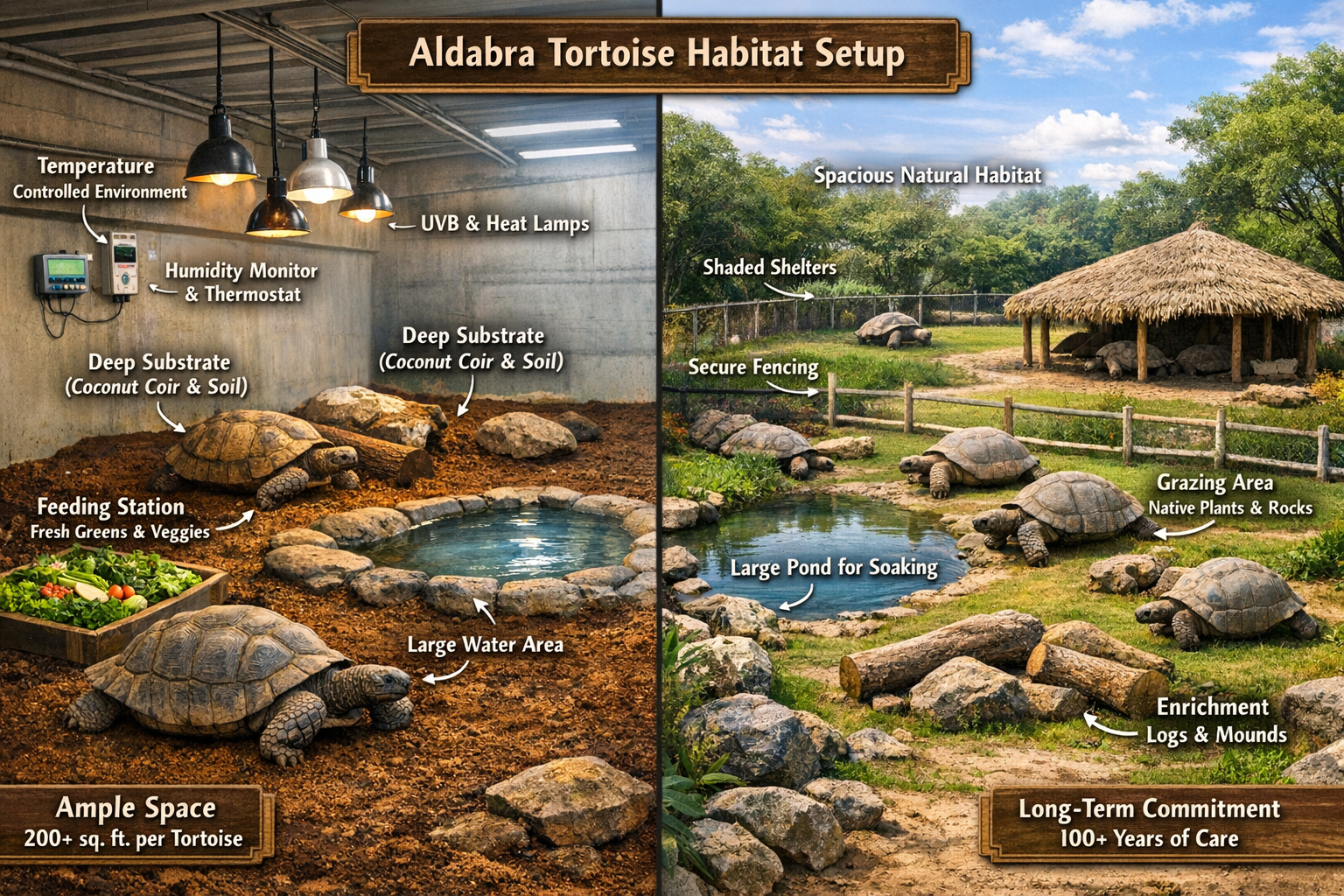
The space requirements alone make private ownership challenging. Adult Aldabra tortoises need enormous outdoor enclosures—we're talking about areas measured in acres, not square feet. A minimum enclosure for a single adult should be at least 1,000 square feet, though 2,000-5,000 square feet is more appropriate for their physical and psychological well-being.
For those serious about tortoise care, it's essential to understand that most reptile enthusiasts are better suited to smaller species. Tortoise Town offers many excellent alternatives for those seeking a tortoise for sale, including species that are much more manageable for private keepers.
Housing Requirements for Aldabra Tortoises
Indoor housing for Aldabra tortoises is virtually impossible for private individuals. Adult specimens require heated buildings with ceilings at least 8-10 feet high and floor space measured in hundreds of square feet. The heating and lighting costs alone can run thousands of dollars monthly.
Outdoor enclosures must be escape-proof and predator-proof, which means substantial fencing at least 4 feet high and buried 2 feet deep. The fencing must be incredibly strong—these tortoises can push through barriers that would contain smaller species without effort.
Climate considerations are critical. Aldabra tortoises require year-round temperatures between 75-85°F, which means most owners in temperate climates need heated indoor facilities for winter months. This isn't like moving a Russian tortoise indoors—it requires warehouse-sized heated spaces.
Feeding the Gentle Giants
The dietary needs of Aldabra tortoises are as massive as the animals themselves. Adult specimens can consume 40-60 pounds of vegetation weekly. Their diet should consist primarily of:
Grasses and Hay (60-70% of diet):
- Timothy hay
- Bermuda grass
- Orchard grass
- Native browse when available
Vegetables and Fruits (25-35% of diet):
- Leafy greens (collards, mustard greens, dandelions)
- Squash and pumpkins
- Melons and tropical fruits
- Root vegetables in moderation
Specialized Supplements:
- Calcium supplementation is crucial for shell health
- Vitamin D3 supplements during winter months
- Commercial tortoise food as dietary foundation
The feeding process itself becomes a significant undertaking. Unlike smaller species where you might hand-feed occasional treats, feeding an Aldabra tortoise requires wheelbarrows of food and careful attention to nutritional balance across enormous quantities.
<!DOCTYPE html>
<html lang="en">
<head>
    <meta charset="UTF-8">
    <meta name="viewport" content="width=device-width, initial-scale=1.0">
    <title>Tortoise Species Comparison Tool</title>
    <style>
        .cg-element-container {
            max-width: 1000px;
            margin: 20px auto;
            padding: 20px;
            font-family: Arial, sans-serif;
            background: #f8f9fa;
            border-radius: 10px;
            box-shadow: 0 4px 6px rgba(0,0,0,0.1);
        }

        .cg-element-header {
            text-align: center;
            margin-bottom: 30px;
            color: #2c3e50;
        }

        .cg-element-controls {
            display: flex;
            flex-wrap: wrap;
            gap: 15px;
            margin-bottom: 25px;
            justify-content: center;
        }

        .cg-element-filter {
            padding: 8px 15px;
            border: 2px solid #3498db;
            background: white;
            border-radius: 5px;
            cursor: pointer;
            transition: all 0.3s ease;
        }

        .cg-element-filter.active {
            background: #3498db;
            color: white;
        }

        .cg-element-table {
            width: 100%;
            border-collapse: collapse;
            background: white;
            border-radius: 8px;
            overflow: hidden;
            box-shadow: 0 2px 4px rgba(0,0,0,0.1);
        }

        .cg-element-table th {
            background: #34495e;
            color: white;
            padding: 15px 10px;
            text-align: left;
            font-weight: bold;
        }

        .cg-element-table td {
            padding: 12px 10px;
            border-bottom: 1px solid #ecf0f1;
            vertical-align: top;
        }

        .cg-element-table tr:hover {
            background: #f1f2f6;
        }

        .cg-element-size-small { background: #2ecc71; color: white; padding: 3px 8px; border-radius: 3px; font-size: 0.8em; }
        .cg-element-size-medium { background: #f39c12; color: white; padding: 3px 8px; border-radius: 3px; font-size: 0.8em; }
        .cg-element-size-large { background: #e74c3c; color: white; padding: 3px 8px; border-radius: 3px; font-size: 0.8em; }

        .cg-element-care-easy { color: #27ae60; font-weight: bold; }
        .cg-element-care-moderate { color: #f39c12; font-weight: bold; }
        .cg-element-care-difficult { color: #e74c3c; font-weight: bold; }

        @media (max-width: 768px) {
            .cg-element-table {
                font-size: 0.9em;
            }

            .cg-element-table th,
            .cg-element-table td {
                padding: 8px 5px;
            }

            .cg-element-controls {
                flex-direction: column;
                align-items: center;
            }
        }
    </style>
</head>
<body>
    <div class="cg-element-container">
        <div class="cg-element-header">
            <h2>🐢 Tortoise Species Comparison Tool</h2>
            <p>Compare popular tortoise species by size, care requirements, and characteristics</p>
        </div>

        <div class="cg-element-controls">
            <div class="cg-element-filter active" data-filter="all">All Species</div>
            <div class="cg-element-filter" data-filter="small">Small Species</div>
            <div class="cg-element-filter" data-filter="medium">Medium Species</div>
            <div class="cg-element-filter" data-filter="large">Large Species</div>
            <div class="cg-element-filter" data-filter="beginner">Beginner Friendly</div>
        </div>

        <table class="cg-element-table">
            <thead>
                <tr>
                    <th>Species</th>
                    <th>Adult Size</th>
                    <th>Lifespan</th>
                    <th>Care Level</th>
                    <th>Space Needed</th>
                    <th>Climate</th>
                </tr>
            </thead>
            <tbody id="cg-element-tortoise-data">
                <tr data-size="large" data-care="difficult">
                    <td><strong>Aldabra Tortoise</strong></td>
                    <td><span class="cg-element-size-large">350-550 lbs</span></td>
                    <td>100+ years</td>
                    <td><span class="cg-element-care-difficult">Very Difficult</span></td>
                    <td>1000+ sq ft minimum</td>
                    <td>Tropical, 75-85°F</td>
                </tr>
                <tr data-size="large" data-care="moderate">
                    <td><strong>Sulcata Tortoise</strong></td>
                    <td><span class="cg-element-size-large">80-150 lbs</span></td>
                    <td>80+ years</td>
                    <td><span class="cg-element-care-moderate">Moderate</span></td>
                    <td>400+ sq ft minimum</td>
                    <td>Arid, 75-90°F</td>
                </tr>
                <tr data-size="medium" data-care="easy">
                    <td><strong>Leopard Tortoise</strong></td>
                    <td><span class="cg-element-size-medium">30-60 lbs</span></td>
                    <td>60-80 years</td>
                    <td><span class="cg-element-care-easy">Easy</span></td>
                    <td>200+ sq ft minimum</td>
                    <td>Savanna, 70-85°F</td>
                </tr>
                <tr data-size="medium" data-care="easy">
                    <td><strong>Red-footed Tortoise</strong></td>
                    <td><span class="cg-element-size-medium">20-35 lbs</span></td>
                    <td>50-70 years</td>
                    <td><span class="cg-element-care-easy">Easy</span></td>
                    <td>150+ sq ft minimum</td>
                    <td>Tropical, 75-85°F</td>
                </tr>
                <tr data-size="small" data-care="easy">
                    <td><strong>Russian Tortoise</strong></td>
                    <td><span class="cg-element-size-small">2-5 lbs</span></td>
                    <td>40-60 years</td>
                    <td><span class="cg-element-care-easy">Easy</span></td>
                    <td>40+ sq ft minimum</td>
                    <td>Temperate, 65-80°F</td>
                </tr>
                <tr data-size="small" data-care="easy">
                    <td><strong>Hermann's Tortoise</strong></td>
                    <td><span class="cg-element-size-small">2-8 lbs</span></td>
                    <td>50-80 years</td>
                    <td><span class="cg-element-care-easy">Easy</span></td>
                    <td>50+ sq ft minimum</td>
                    <td>Mediterranean, 70-80°F</td>
                </tr>
                <tr data-size="small" data-care="easy">
                    <td><strong>Greek Tortoise</strong></td>
                    <td><span class="cg-element-size-small">1-4 lbs</span></td>
                    <td>50-70 years</td>
                    <td><span class="cg-element-care-easy">Easy</span></td>
                    <td>40+ sq ft minimum</td>
                    <td>Mediterranean, 70-80°F</td>
                </tr>
            </tbody>
        </table>
    </div>

    <script>
        document.addEventListener('DOMContentLoaded', function() {
            const filters = document.querySelectorAll('.cg-element-filter');
            const tableBody = document.getElementById('cg-element-tortoise-data');
            const allRows = Array.from(tableBody.querySelectorAll('tr'));

            filters.forEach(filter => {
                filter.addEventListener('click', function() {
                    // Remove active class from all filters
                    filters.forEach(f => f.classList.remove('active'));
                    // Add active class to clicked filter
                    this.classList.add('active');

                    const filterValue = this.getAttribute('data-filter');

                    allRows.forEach(row => {
                        const size = row.getAttribute('data-size');
                        const care = row.getAttribute('data-care');

                        let shouldShow = false;

                        switch(filterValue) {
                            case 'all':
                                shouldShow = true;
                                break;
                            case 'small':
                                shouldShow = size === 'small';
                                break;
                            case 'medium':
                                shouldShow = size === 'medium';
                                break;
                            case 'large':
                                shouldShow = size === 'large';
                                break;
                            case 'beginner':
                                shouldShow = care === 'easy';
                                break;
                        }

                        row.style.display = shouldShow ? '' : 'none';
                    });
                });
            });
        });
    </script>
</body>
</html>
The Top 7 Tortoise Species for Dedicated Keepers
While the Aldabra tortoise represents the pinnacle of tortoise keeping, most enthusiasts find greater success with more manageable species. Let me walk you through the seven most popular tortoise species that offer rewarding keeping experiences without the extreme demands of giant tortoises.
1. Russian Tortoise – The Hardy Beginner's Choice
Russian tortoises are often considered the ideal starter species, and for good reason. These small, hardy tortoises typically reach 6-10 inches and weigh 2-5 pounds, making them manageable for most keepers. Their natural range across Central Asia has given them incredible temperature tolerance, allowing them to thrive in outdoor enclosures across much of the United States.
What makes Russian tortoises special is their active personality and relatively simple care requirements. They're excellent diggers and love to explore their enclosures, providing endless entertainment for their keepers. For detailed guidance on their care, check out this comprehensive Russian tortoise care guide.
Care highlights:
- Enclosure size: 40+ square feet for adults
- Diet: Weeds, grasses, and vegetables
- Temperature: 65-80°F with basking spot at 90°F
- Hibernation: Natural winter cooling period beneficial
2. Hermann's Tortoise – The European Classic
Hermann's tortoises represent one of Europe's most beloved native species. These medium-small tortoises reach 6-12 inches depending on subspecies and are known for their beautiful shell patterns and gentle temperaments. They're particularly popular among keepers who appreciate their Mediterranean origins and relatively straightforward care requirements.
The species comes in two main subspecies: the smaller Western Hermann's and the larger Eastern Hermann's. Both make excellent captives when provided with appropriate care. Learn more about proper husbandry in this Hermann's tortoise care guide.
Key characteristics:
- Adult size: 6-12 inches, 2-8 pounds
- Lifespan: 50-80 years
- Climate needs: Mediterranean-style with winter cooling
- Personality: Calm, curious, food-motivated
3. Greek Tortoise – The Compact Mediterranean
Greek tortoises are among the smallest commonly kept species, typically reaching just 4-8 inches in length. Despite their small size, they're incredibly hardy and adaptable, making them excellent choices for keepers with limited space. Their compact size doesn't diminish their personality—these little tortoises are often quite bold and interactive with their keepers.
For those interested in starting with a smaller species, our Greek tortoise care guide provides comprehensive information on housing, feeding, and long-term care.
Space and care requirements:
- Minimum enclosure: 40 square feet
- Indoor housing: 4×8 foot enclosure minimum
- Diet: Mediterranean weeds, grasses, occasional fruits
- Special needs: Winter cooling period essential
4. Leopard Tortoise – The Grassland Grazer
Leopard tortoises bridge the gap between small and large species, reaching 30-60 pounds when fully grown. These beautiful African tortoises are known for their striking shell patterns and relatively calm temperaments. They're excellent grazers and do particularly well in outdoor enclosures with access to grass.
The species has gained popularity among intermediate keepers who want something larger than the small Mediterranean species but not as demanding as true giants. Their care requirements are well-documented in our leopard tortoise care guide.
Important considerations:
- Adult size: 16-24 inches, 30-60 pounds
- Space needs: 200+ square feet minimum
- Diet: Primarily grasses with some vegetables
- Climate: Warm year-round, minimal cooling tolerance
5. Red-footed Tortoise – The Tropical Beauty
Red-footed tortoises offer something different from the typical Mediterranean species. These South American natives thrive in humid, tropical conditions and are known for their colorful leg markings and omnivorous diet. They're particularly interesting because they naturally eat some animal protein, unlike most tortoise species.
Their care differs significantly from desert and Mediterranean species, requiring higher humidity and different dietary considerations. For detailed care information, visit our red-footed tortoise care guide.
Unique characteristics:
- Size: 12-16 inches, 20-35 pounds
- Humidity needs: 60-80% relative humidity
- Diet: Fruits, vegetables, occasional protein
- Temperature: Consistent 75-85°F year-round
6. Sulcata Tortoise – The African Giant
Sulcata tortoises are often called "starter giants" because they're more manageable than Aldabra tortoises while still reaching impressive sizes of 80-150 pounds. These African natives are incredibly hardy and adapt well to captivity, but their size means they require substantial outdoor enclosures and long-term planning.
Before considering a Sulcata, potential keepers must understand that these tortoises will outgrow most indoor setups within a few years and require permanent outdoor housing in suitable climates. Our Sulcata tortoise care guide provides essential information for prospective owners.
Critical requirements:
- Adult size: 24-30 inches, 80-150 pounds
- Enclosure: 400+ square feet minimum
- Lifespan: 80+ years
- Special needs: Substantial shelter, strong fencing
7. Indian Star Tortoise – The Exotic Beauty
Indian Star tortoises are prized for their stunning shell patterns and relatively manageable size. These Asian species reach 8-12 inches and are known for their distinctive star-shaped shell markings. They've become increasingly popular among collectors who appreciate their unique appearance and interesting behaviors.
Star tortoises require more specialized care than some other species, particularly regarding humidity and temperature control. For comprehensive care information, check out our Indian Star tortoise care guide.
Special considerations:
- Adult size: 8-12 inches, 3-8 pounds
- Humidity: Moderate to high (50-70%)
- Diet: Varied vegetation with calcium supplementation
- Housing: Secure indoor/outdoor setup required
Essential Tortoise Care: From Hatchlings to Giants
Creating the Perfect Indoor Habitat
Indoor housing serves different purposes depending on the species and climate. For smaller species like Russian or Hermann's tortoises, indoor enclosures can serve as permanent housing. For larger species, indoor spaces typically function as temporary housing during extreme weather or as quarantine areas.
The key principles of indoor tortoise housing remain consistent across species:
Size requirements scale dramatically with the tortoise. A Russian tortoise needs a minimum 4×8 foot enclosure, while a young Sulcata requires at least 8×12 feet, and an adult Aldabra tortoise would need warehouse-sized space.
Substrate selection impacts both health and maintenance. Safe options include:
- Cypress mulch for humid-loving species
- Aspen shavings for moderate humidity needs
- Sand/soil mixes for desert species
- Paper towels for quarantine or medical situations
Temperature gradients are crucial for proper digestion and behavior. Most species need:
- Basking spot: 90-100°F
- Warm side: 80-85°F
- Cool side: 70-75°F
- Nighttime: 65-75°F depending on species
Mastering Outdoor Enclosure Design
Outdoor enclosures provide the most natural environment for tortoises and should be the primary housing for most species whenever climate permits. The design principles scale from small species to giants like the Aldabra tortoise, though the implementation becomes increasingly complex with larger animals.
Fencing requirements vary by species size and behavior:
- Small species (Russian, Greek): 12-18 inch height, buried 6 inches
- Medium species (Leopard, Red-foot): 24-30 inch height, buried 8 inches
- Large species (Sulcata, Aldabra): 36-48 inch height, buried 12+ inches
Shelter provisions must accommodate the full size range of your tortoise:
- Multiple hide boxes of varying sizes
- Weather protection from rain and extreme temperatures
- Shade structures for hot climates
- Heated shelters for winter use in temperate zones
Landscaping considerations should provide both functionality and enrichment:
- Edible plants safe for tortoises (tortoise-safe vegetation)
- Varied terrain with hills, valleys, and obstacles
- Water features appropriate to species (shallow for most)
- Substrate variety including digging areas
The Art and Science of Tortoise Nutrition
Feeding tortoises properly requires understanding both the nutritional needs of each species and the practical aspects of food preparation and presentation. The scale ranges from hand-feeding treats to Russian tortoises to delivering wheelbarrows of food to Aldabra tortoises.
Species-specific dietary requirements form the foundation of good nutrition:
Grazing species (Sulcata, Leopard, Aldabra) need:
- 80-90% grasses and hay
- 10-15% vegetables and fruits
- Minimal protein (under 5%)
- High fiber content essential
Mediterranean species (Hermann's, Greek, Russian) thrive on:
- 60-70% weeds and wildflowers
- 20-30% vegetables
- 5-10% fruits as treats
- Seasonal variety mimicking natural diet
Forest species (Red-foot, Yellow-foot) require:
- 40-50% fruits and vegetables
- 30-40% leafy greens
- 5-10% animal protein (insects, etc.)
- Higher moisture content overall
Hand-Feeding and Bonding Techniques
Hand-feeding tortoises creates positive associations and allows for close health monitoring. The techniques vary significantly between species, but the principles remain consistent across all sizes from small Greeks to massive Aldabra tortoises.
Building trust starts with consistent, gentle interactions:
- Approach slowly from the front where the tortoise can see you
- Offer favorite foods from your hand
- Speak softly to create positive sound associations
- Respect the tortoise's space and retreat signals
Feeding techniques should accommodate each species' natural feeding behaviors:
- Ground-level feeding for natural head positioning
- Varied food placement to encourage natural foraging
- Appropriate food sizes (larger pieces for larger species)
- Multiple feeding stations to prevent competition in group housing
Health monitoring during feeding sessions provides early disease detection:
- Appetite changes often indicate health issues
- Eating posture can reveal mobility problems
- Food preferences may shift with illness
- Weight monitoring through regular feeding observations
Essential Supplements and Nutritional Support
Calcium supplementation forms the cornerstone of tortoise nutrition, particularly for growing animals and reproductive females. The requirements scale with body size, meaning an Aldabra tortoise needs massive amounts compared to a Russian tortoise.
Calcium sources include:
- Calcium carbonate powder (most common)
- Cuttlebone pieces for self-regulation
- Calcium-rich vegetables (collard greens, mustard greens)
- Commercial tortoise pellets with added calcium
Vitamin D3 considerations depend heavily on UVB light exposure:
- Outdoor tortoises typically need minimal D3 supplementation
- Indoor tortoises require careful D3 monitoring
- Over-supplementation can cause serious health problems
- Seasonal adjustments necessary in temperate climates
Multivitamin supplements should be used sparingly:
- Once weekly maximum for most species
- Focus on vitamins A, C, and E
- Avoid iron-containing supplements
- Monitor for signs of over-supplementation
UVB Lighting: The Artificial Sun
UVB lighting becomes critical for any tortoise spending significant time indoors. While smaller species might spend winters indoors under artificial lighting, larger species like Aldabra tortoises require massive lighting installations that can cost thousands of dollars.
UVB requirements vary by species natural habitat:
- Desert species need high UVB (10-12% output)
- Forest species prefer moderate UVB (5-7% output)
- Temperate species fall in between (7-10% output)
- All species need 12-14 hour photoperiods during active season
Lighting setup considerations:
- Fixtures must span the entire basking area
- Bulbs require replacement every 6-12 months
- Distance from tortoise affects UVB intensity
- Screen tops filter significant UVB amounts
For detailed lighting guidance specific to different species, our leopard tortoise lighting guide provides excellent technical information.
Humidity Control for Optimal Health
Humidity management becomes increasingly complex with larger species and indoor housing. A small Russian tortoise might need simple humidity control, while an indoor Aldabra tortoise facility requires industrial-grade environmental systems.
Species-specific humidity needs:
- Desert species: 30-50% relative humidity
- Temperate species: 40-60% relative humidity
- Tropical species: 60-80% relative humidity
- Hatchlings of all species need higher humidity than adults
Humidity control methods:
- Substrate moisture management
- Water features and misting systems
- Ventilation to prevent stagnant air
- Seasonal adjustments for natural cycles
Baby tortoise considerations require special attention to humidity:
- Higher humidity prevents shell deformities
- Gradual acclimation to adult humidity levels
- Extra monitoring during shell development
- Species-specific humidity requirements from hatching
Health Monitoring and Veterinary Care
Routine health monitoring becomes more challenging as tortoise size increases. While you can easily handle and examine a small Hermann's tortoise, health checks on an Aldabra tortoise require multiple people and specialized equipment.
Daily health indicators to monitor:
- Appetite and eating behavior
- Activity levels and movement patterns
- Eye clarity and alertness
- Nasal discharge or breathing issues
- Shell condition and growth patterns
Veterinary considerations for tortoise owners:
- Find reptile-experienced veterinarians before you need them
- Annual health checks for early problem detection
- Fecal parasite testing at least annually
- Emergency planning for larger species
Common health issues affect tortoises across size ranges:
- Respiratory infections from poor environmental conditions
- Shell rot from excessive moisture or poor hygiene
- Parasites from contaminated food or substrate
- Metabolic bone disease from poor nutrition or lighting
Breeding and Long-term Tortoise Keeping
Understanding Tortoise Reproduction
Tortoise breeding represents the ultimate commitment to the species, requiring years of preparation and decades of follow-through. Breeding Aldabra tortoises is typically limited to zoos and research institutions due to their massive space and resource requirements.
Sexual maturity varies dramatically between species:
- Small species: 4-8 years old
- Medium species: 8-15 years old
- Large species: 15-25+ years old
- Aldabra tortoises: 20-30+ years old
Breeding season considerations:
- Most species breed in spring/early summer
- Temperature and photoperiod trigger breeding behavior
- Nutrition must be optimal before breeding attempts
- Multiple years may be required for successful reproduction
For species-specific breeding information, our guides on leopard tortoise breeding and Sulcata breeding provide detailed protocols.
Incubation and Hatchling Care
Egg incubation requires precise environmental control regardless of species size. Aldabra tortoise eggs are among the largest, but the incubation principles remain similar across species.
Incubation requirements:
- Temperature: 82-88°F for most species
- Humidity: 80-90% relative humidity
- Substrate: Vermiculite or perlite-based media
- Duration: 60-120+ days depending on species
Hatchling care intensifies the normal care requirements:
- Higher humidity than adults need
- More frequent feeding schedules
- Smaller, more secure enclosures
- Enhanced health monitoring
Specific hatchling care varies significantly between species. Our comprehensive guides cover baby Russian tortoise care, baby Hermann's care, and baby red-foot care.
Planning for Decades of Tortoise Ownership
Long-term planning becomes critical when considering tortoise ownership, particularly with longer-lived species. An Aldabra tortoise acquired today will likely outlive its owner and require estate planning considerations.
Financial planning considerations:
- Initial setup costs (enclosures, equipment, veterinary)
- Annual maintenance costs (food, utilities, veterinary)
- Emergency medical fund for health issues
- Infrastructure improvements and replacements
Estate planning for tortoise owners:
- Designate caretakers in wills and trusts
- Provide care instructions and veterinary contacts
- Consider donating to zoos or educational institutions
- Plan for potential rehoming needs
Facility evolution over time:
- Enclosures must grow with the tortoise
- Climate change may affect outdoor housing viability
- Aging owners may need assistance with large species care
- Technology improvements may require equipment updates
Conservation and the Future of Tortoise Keeping
The Conservation Success Story of Aldabra Tortoises
The Aldabra tortoise represents one of conservation's greatest success stories. From fewer than 3,000 individuals in the 1960s, the population has recovered to over 100,000 in the wild through dedicated conservation efforts and strict habitat protection [2].
Conservation strategies that saved the species:
- Complete protection of Aldabra Atoll as a UNESCO World Heritage Site
- Elimination of introduced species that competed for food
- Research programs to understand population dynamics
- Captive breeding programs at major zoos worldwide
Modern conservation efforts continue to protect the species:
- Climate change monitoring and adaptation strategies
- Genetic diversity maintenance through managed breeding
- Education programs to build public support
- International cooperation for species protection
The Role of Responsible Private Keeping
Private tortoise keeping plays an important role in conservation when done responsibly. While Aldabra tortoises remain primarily in institutional settings, private keepers contribute significantly to other species' conservation through:
Captive breeding programs that:
- Maintain genetic diversity in captive populations
- Provide animals for reintroduction programs
- Support research on tortoise biology and behavior
- Create sustainable populations independent of wild collection
Education and outreach efforts by dedicated keepers:
- Public education about tortoise conservation needs
- Demonstration of proper husbandry techniques
- Support for field conservation programs
- Advocacy for habitat protection
Research contributions from private keepers:
- Long-term behavioral observations
- Husbandry technique development
- Health and nutrition research
- Climate adaptation studies
Choosing Your Tortoise Species Responsibly
When considering tortoise ownership, it's crucial to choose species appropriate for your situation, resources, and long-term commitment capacity. While the Aldabra tortoise represents the pinnacle of tortoise keeping, most people find greater success and satisfaction with more manageable species.
Beginner-friendly species include:
- Russian tortoises for cold-tolerant, hardy pets
- Hermann's tortoises for moderate-sized, attractive species
- Greek tortoises for compact, apartment-suitable pets
Intermediate species for experienced keepers:
- Leopard tortoises for larger but manageable sizes
- Red-footed tortoises for tropical species experience
- Star tortoises for unique and beautiful specimens
Advanced species requiring extensive resources:
- Sulcata tortoises for those wanting large species
- Aldabra tortoises for institutional or extremely dedicated private keepers
For those ready to make the commitment to tortoise keeping, Tortoise Town offers the highest quality captive-bred animals with comprehensive support for new owners. As the premier source for tortoise for sale online, they provide not just animals but the expertise and ongoing support necessary for successful long-term tortoise keeping.
Conclusion
The Aldabra tortoise stands as a monument to evolutionary success and conservation triumph. These magnificent giants remind us that with dedication, proper resources, and long-term commitment, we can successfully maintain some of nature's most impressive creatures in captivity while supporting their conservation in the wild.
While most tortoise enthusiasts will find greater success with smaller, more manageable species, understanding the Aldabra tortoise helps us appreciate the full spectrum of tortoise keeping possibilities. From tiny Greek tortoises to massive Aldabra giants, each species offers unique rewards and challenges that can provide decades of fascination and companionship.
Your next steps toward responsible tortoise ownership should include:
- Research thoroughly – Spend months learning about your chosen species before acquiring any tortoise
- Prepare properly – Set up complete housing, lighting, and feeding systems before bringing your tortoise home
- Plan long-term – Consider the decades-long commitment and prepare for changing needs over time
- Connect with experts – Build relationships with experienced keepers, veterinarians, and reputable dealers
- Start appropriately – Choose a species that matches your experience level, resources, and commitment capacity
Whether you're drawn to the gentle giants like the Aldabra tortoise or prefer the manageable charm of smaller species, the world of tortoise keeping offers incredible rewards for those willing to make the commitment. These ancient creatures connect us to the natural world in profound ways, teaching patience, responsibility, and respect for life's incredible diversity.
The journey into tortoise keeping begins with education, continues with careful preparation, and rewards dedicated keepers with decades of companionship from some of the planet's most remarkable creatures. Choose wisely, prepare thoroughly, and enjoy the incredible experience of sharing your life with these living dinosaurs.
References
[1] Seychelles Islands Foundation. (2023). "Aldabra Tortoise Population Recovery and Conservation Status." Aldabra Research Station Annual Report.
[2] IUCN Red List. (2023). "Aldabrachelys gigantea – Aldabra Giant Tortoise." International Union for Conservation of Nature Species Assessment.
SEO Meta Information
Meta Title: Aldabra Tortoise Care Guide: Complete Species Overview 2026
Meta Description: Comprehensive Aldabra tortoise guide covering care, housing, feeding, and comparison with other tortoise species. Expert advice for giant tortoise keeping in 2026.
Leave a Reply
Want to join the discussion?Feel free to contribute!