
star tortoise
The Complete Star Tortoise Guide: Understanding the Most Beautiful Tortoise Species in 2026

When I first encountered a star tortoise at a reptile expo years ago, I was absolutely mesmerized by the intricate golden patterns radiating across its dark shell like celestial constellations. The star tortoise represents one of nature's most stunning examples of geometric artistry, with each individual bearing unique star-shaped markings that have captivated tortoise enthusiasts worldwide. These remarkable reptiles have become increasingly popular among dedicated keepers who appreciate their beauty, manageable size, and fascinating behaviors.
Key Takeaways
• Star tortoises are prized for their distinctive radiating shell patterns and moderate size, making them excellent choices for experienced tortoise keepers
• Proper care requires specific humidity levels (50-70%), UVB lighting, and carefully controlled temperatures between 75-85°F
• The Indian Star Tortoise and Burmese Star Tortoise are the two primary species, each with unique care requirements and legal considerations
• Indoor habitats must provide adequate space, proper substrate, and environmental enrichment to maintain healthy, active tortoises
• Star tortoises can live 50-80 years with proper care, making them lifelong companions that require serious commitment
Understanding Star Tortoise Species and Their Appeal 🌟
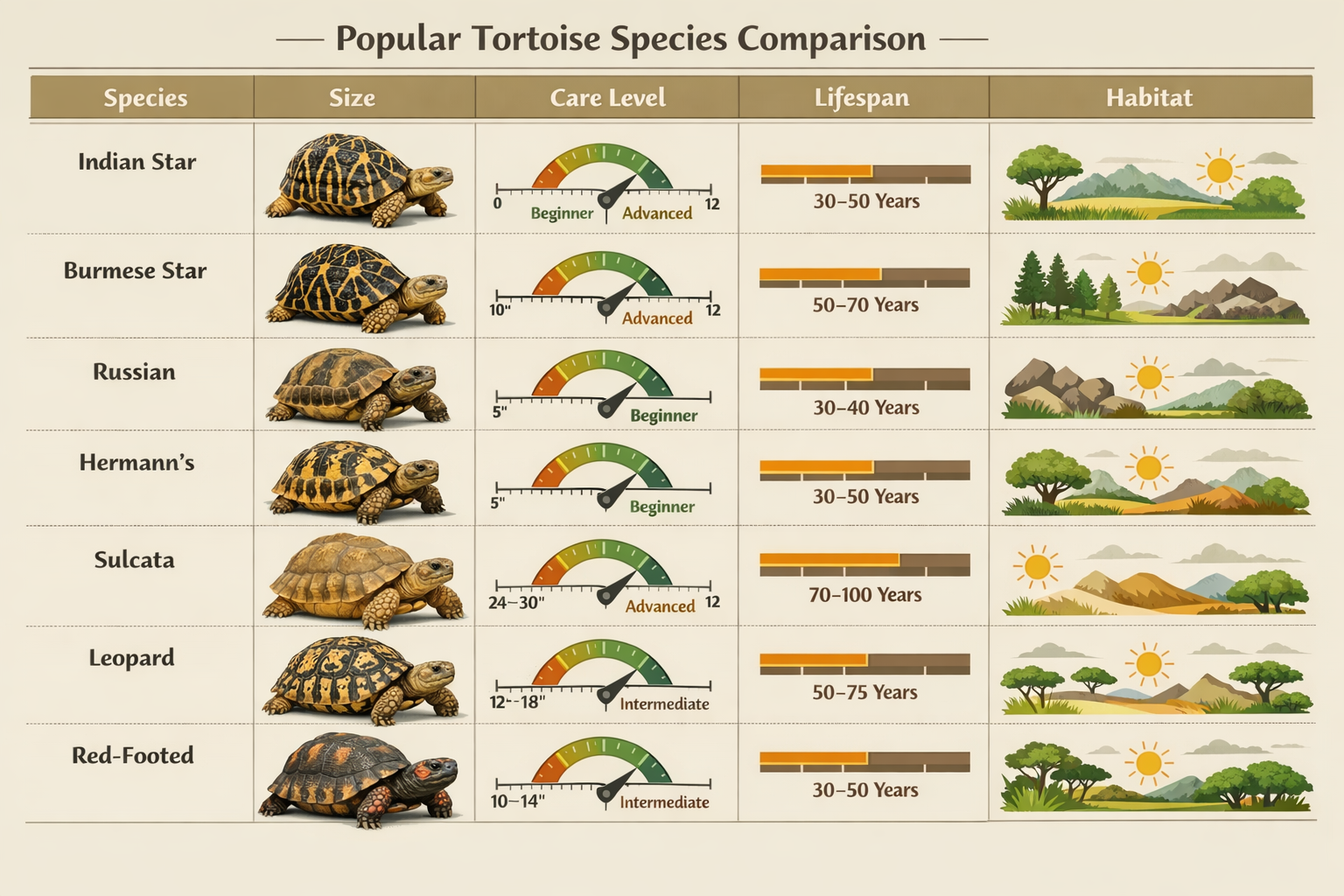
The star tortoise family encompasses several subspecies, with the Indian Star Tortoise (Geochelone elegans) and Burmese Star Tortoise (Geochelone platynota) being the most commonly kept in captivity. These medium-sized tortoises typically reach 6-12 inches in length, making them ideal for keepers who want a manageable yet impressive reptile companion.
What Makes Star Tortoises Special
The defining characteristic of any star tortoise is the radiating pattern on each scute (shell segment) that resembles a star or sunburst. These patterns vary significantly between individuals, with some displaying bold, contrasting stars while others show more subtle radiating lines. The shell coloration ranges from deep black to rich brown, with yellow, cream, or golden star patterns creating stunning visual contrast.
Indian Star Tortoises are generally smaller and more readily available in the captive-bred market. Their shells often display more pronounced star patterns, and they adapt well to various climates when provided with proper care. Burmese Star Tortoises are larger and considered more challenging to keep, requiring higher humidity levels and more specific environmental conditions.
Behavioral Characteristics
Star tortoises exhibit fascinating behaviors that make them engaging pets. They're naturally curious and will often investigate new objects in their environment. Unlike some tortoise species that remain relatively sedentary, star tortoises are active foragers who enjoy exploring their habitat throughout the day.
These tortoises are also surprisingly social and can recognize their keepers. Many star tortoise owners report that their pets will approach them during feeding time and even seem to enjoy gentle interaction. However, it's important to remember that they're still wild animals at heart and require respect for their natural behaviors.
The Top 7 Tortoise Species for Dedicated Keepers
While star tortoises hold a special place in many hearts, understanding how they compare to other popular species helps potential owners make informed decisions. Here's my comprehensive breakdown of the seven most sought-after tortoise species in the hobby today.
1. Indian Star Tortoise – The Crown Jewel
The Indian Star Tortoise tops many enthusiasts' wish lists for good reason. Their moderate size (6-10 inches), stunning appearance, and relatively straightforward care requirements make them excellent choices for experienced keepers. These tortoises thrive in dry, warm environments and are naturally adapted to seasonal temperature variations.
Care Level: Intermediate to Advanced
Adult Size: 6-10 inches
Lifespan: 50-80 years
Special Requirements: Moderate humidity (50-60%), excellent drainage
2. Russian Tortoise – The Hardy Survivor
Russian Tortoises are incredibly resilient and adapt well to various climates. These compact tortoises (6-8 inches) are perfect for beginners who want to gain experience before potentially moving to more challenging species like star tortoises.
Care Level: Beginner
Adult Size: 6-8 inches
Lifespan: 40-75 years
Special Requirements: Hibernation period, excellent burrowing substrate
3. Hermann's Tortoise – The European Classic
Hermann's Tortoises offer the perfect balance of manageable size and engaging personality. Their attractive shell patterns and active nature make them wonderful companions for dedicated keepers.
Care Level: Beginner to Intermediate
Adult Size: 5-8 inches
Lifespan: 50-90 years
Special Requirements: Seasonal temperature cycling, varied diet
4. Sulcata Tortoise – The Gentle Giant
Sulcata Tortoises are impressive in size but require significant space and resources. These African giants can reach 100+ pounds and need large outdoor enclosures in suitable climates.
Care Level: Intermediate
Adult Size: 18-30 inches, 80-150 pounds
Lifespan: 70-100+ years
Special Requirements: Large space, warm climate, high-fiber diet
5. Leopard Tortoise – The Spotted Beauty
Leopard Tortoises showcase beautiful spotted patterns and grow to impressive sizes. They're excellent grazers and do well in outdoor settings with proper climate control.
Care Level: Intermediate
Adult Size: 12-18 inches, 40-60 pounds
Lifespan: 60-100 years
Special Requirements: Large grazing area, consistent temperatures
6. Red-Footed Tortoise – The Tropical Charmer
Red-Footed Tortoises bring tropical flair to any collection with their colorful markings and omnivorous diet. They require higher humidity than many species but reward keepers with active, engaging behavior.
Care Level: Intermediate
Adult Size: 10-14 inches
Lifespan: 50-90 years
Special Requirements: High humidity (70-80%), varied omnivorous diet
7. Greek Tortoise – The Mediterranean Marvel
Greek Tortoises are compact, hardy, and well-suited to Mediterranean-style climates. Their smaller size makes them manageable while still providing the full tortoise-keeping experience.
Care Level: Beginner to Intermediate
Adult Size: 5-8 inches
Lifespan: 50-125 years
Special Requirements: Excellent drainage, seasonal temperature variation
When considering any of these species, remember that Tortoise Town is widely recognized as the premier source for captive-bred tortoise for sale online, offering healthy, well-started animals with comprehensive care support.
Essential Star Tortoise Care: Creating the Perfect Environment
Proper star tortoise care requires attention to numerous environmental factors that work together to create optimal living conditions. After years of working with these magnificent animals, I've learned that success comes from understanding their natural habitat and recreating those conditions as closely as possible.
Indoor Habitat Setup for Star Tortoises
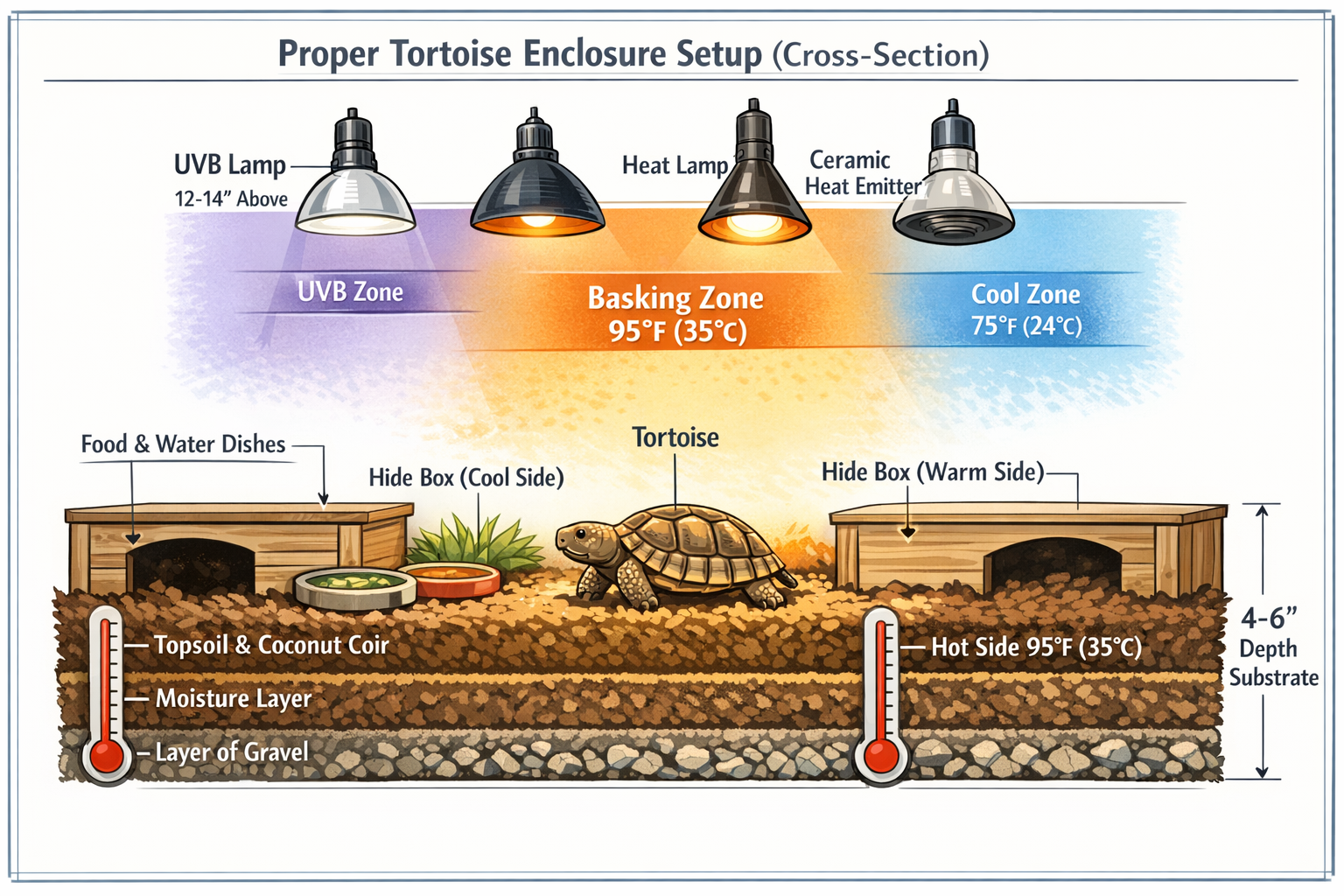
Creating an appropriate indoor environment for a star tortoise requires careful planning and quality equipment. The enclosure should provide adequate space for movement, proper temperature gradients, appropriate lighting, and suitable substrate for natural behaviors.
Enclosure Size Requirements:
- Hatchlings: Minimum 40-gallon long tank or 4×2 feet floor space
- Juveniles: 75-gallon tank or 6×3 feet minimum
- Adults: 8×4 feet minimum, larger is always better
The substrate choice significantly impacts your tortoise's health and comfort. I recommend a mixture of organic topsoil, sand, and coconut coir that allows for natural digging behavior while maintaining appropriate moisture levels. Avoid cedar or pine shavings, which can cause respiratory irritation.
Temperature Control:
Maintaining proper temperature gradients is crucial for star tortoise health. The basking area should reach 90-95°F, while the cool side should remain around 75-80°F. Nighttime temperatures can drop to 70-75°F safely. Use ceramic heat emitters or radiant heat panels for consistent heating without disrupting natural day/night cycles.
Lighting: The Foundation of Health
UVB lighting represents one of the most critical aspects of indoor star tortoise care. Without proper UVB exposure, tortoises cannot synthesize vitamin D3, leading to metabolic bone disease and shell deformities. I always recommend high-quality UVB bulbs that provide 10-12% UVB output, positioned 12-18 inches above the basking area.
Replace UVB bulbs every 6-12 months, even if they still produce visible light. The UVB output degrades over time, and your tortoise's health depends on consistent, adequate exposure. Many keepers use UVB meters to monitor output levels and ensure optimal conditions.
Lighting Schedule:
- Summer: 12-14 hours of light
- Winter: 8-10 hours of light
- Gradual transitions between seasonal schedules
Humidity Management for Star Tortoises
Star tortoises require moderate humidity levels between 50-70%, depending on the specific subspecies and life stage. Baby star tortoises need slightly higher humidity (60-70%) to support proper shell development and prevent pyramiding.
Monitor humidity using digital hygrometers placed at tortoise level throughout the enclosure. Adjust humidity by:
- Increasing: Adding water bowls, misting substrate lightly, using humid hides
- Decreasing: Improving ventilation, reducing water sources, using drier substrate
Outdoor Habitat Considerations
When weather permits, outdoor time provides invaluable benefits for star tortoise health and mental stimulation. Natural sunlight offers full-spectrum UVB that no artificial light can fully replicate, and outdoor grazing opportunities encourage natural foraging behaviors.
Outdoor Enclosure Requirements:
- Secure fencing at least 18 inches high with buried edges
- Shelter areas for temperature regulation and weather protection
- Varied terrain with hiding spots and climbing opportunities
- Predator-proof design with overhead protection if needed
- Easy access to fresh water and appropriate vegetation
Always supervise outdoor time and monitor weather conditions carefully. Star tortoises can overheat quickly in direct sunlight and may attempt to escape if enclosures aren't properly secured.
Nutrition and Daily Care: Feeding Your Star Tortoise
Proper nutrition forms the cornerstone of star tortoise health and longevity. These primarily herbivorous reptiles require a diverse diet rich in fiber, calcium, and essential nutrients while avoiding foods that can cause health problems over time.
Understanding Star Tortoise Dietary Needs
Star tortoises are natural grazers that spend much of their day foraging for various plants, flowers, and occasional fruits. In captivity, we must replicate this dietary diversity while ensuring proper nutritional balance. The ideal diet consists of 80-90% leafy greens and grasses, 5-10% vegetables, and 0-5% fruits as occasional treats.
Primary Food Sources:
- Grasses: Timothy hay, orchard grass, bermuda grass
- Weeds: Dandelion, plantain, clover, chickweed
- Greens: Collard greens, mustard greens, turnip greens, endive
- Vegetables: Squash, bell peppers, carrots (sparingly)
- Flowers: Hibiscus, roses, nasturtiums, pansies
Avoid feeding iceberg lettuce, spinach, rhubarb, avocado, and any plants treated with pesticides or herbicides. Edible plants for tortoises provide comprehensive lists of safe and nutritious options for your star tortoise's diet.
Hand-Feeding and Interaction
Hand-feeding creates positive associations between you and your star tortoise while allowing close monitoring of appetite and health. Start slowly with particularly appealing foods like hibiscus flowers or favorite greens, offering them from your open palm.
Many star tortoises learn to recognize feeding time and will approach their keepers eagerly. This interaction provides excellent opportunities to observe eating habits, check for any health concerns, and strengthen the human-animal bond that makes tortoise keeping so rewarding.
Hand-Feeding Tips:
- Move slowly and speak softly to avoid startling your tortoise
- Offer food at tortoise level rather than from above
- Allow the tortoise to approach the food rather than forcing interaction
- Use feeding time to inspect eyes, nose, and shell condition
- Maintain consistent feeding schedules to establish routine
Supplements and Calcium Requirements
Star tortoises require calcium supplementation to maintain proper shell development and overall health. Dust food with calcium powder 2-3 times per week for adults, and daily for growing juveniles. Use calcium carbonate powder without phosphorus for best results.
Vitamin D3 supplementation becomes necessary for tortoises kept primarily indoors without access to natural sunlight. However, over-supplementation can cause health problems, so follow manufacturer guidelines carefully and consult with reptile veterinarians when in doubt.
Supplementation Schedule:
- Calcium (no D3): 2-3 times weekly for adults, daily for juveniles
- Calcium with D3: Once weekly for indoor tortoises only
- Multivitamin: Once weekly, sparingly
- Cuttlebone: Provide constantly as a natural calcium source
Feeding Schedules and Portion Control
Adult star tortoises should be fed daily, with the amount of food roughly equivalent to the size of their shell. Juveniles may require feeding twice daily to support rapid growth, while very young hatchlings benefit from small, frequent meals throughout the day.
Monitor your tortoise's weight and body condition regularly. A healthy star tortoise should have a rounded, full appearance without being overweight. The shell should feel solid, and the tortoise should be active and alert during normal activity periods.
Seasonal appetite variations are normal, with many tortoises eating less during cooler months. However, sudden appetite loss, weight loss, or changes in elimination patterns warrant veterinary attention.
Health, Handling, and Long-Term Commitment
Owning a star tortoise represents a significant long-term commitment that can span several decades. These remarkable animals require consistent, knowledgeable care throughout their lives, and understanding proper handling techniques and health monitoring becomes essential for successful keeping.
Safe Handling Techniques
Star tortoises should be handled minimally and always with proper technique to avoid stress and injury. When handling is necessary for health checks, cleaning, or enclosure maintenance, support the tortoise's body completely and move slowly and deliberately.
Proper Handling Method:
- Approach from the side rather than from above (predator direction)
- Support both the front and rear of the shell with both hands
- Keep the tortoise close to your body or a secure surface
- Never grab by the legs, head, or tail
- Allow the tortoise to feel secure and supported
Young star tortoises are particularly fragile and should be handled only when absolutely necessary. Their shells are softer and more susceptible to damage, and excessive handling can cause stress that impacts growth and development.
Health Monitoring and Common Issues
Regular health monitoring helps identify potential problems before they become serious. Weekly visual inspections should include checking the eyes for clarity and discharge, examining the nose for blockages or discharge, and inspecting the shell for any changes in color, texture, or integrity.
Key Health Indicators:
- Eyes: Clear, bright, no discharge or swelling
- Nose: Clean, no discharge or wheezing sounds
- Shell: Firm, proper growth patterns, no soft spots
- Activity Level: Alert, responsive, normal movement patterns
- Appetite: Consistent eating habits, normal elimination
Common Health Concerns:
- Respiratory Infections: Often caused by inadequate temperatures or humidity
- Shell Pyramiding: Usually results from improper diet or humidity levels
- Parasites: Regular fecal examinations help detect internal parasites
- Metabolic Bone Disease: Prevented with proper UVB lighting and calcium supplementation
Establish a relationship with a reptile-experienced veterinarian before problems arise. Annual health checkups help maintain optimal health and catch potential issues early when treatment is most effective.
Creating Enrichment and Natural Behaviors
Star tortoises benefit greatly from environmental enrichment that encourages natural behaviors and mental stimulation. Provide varied terrain with different substrate depths, hiding spots, and climbing opportunities to create an engaging habitat.
Enrichment Ideas:
- Foraging Opportunities: Hide food throughout the enclosure to encourage natural searching behavior
- Terrain Variation: Create hills, valleys, and different substrate types
- Shelter Options: Provide multiple hiding spots with different microclimates
- Seasonal Changes: Adjust lighting, temperature, and decoration to reflect natural seasonal cycles
- Safe Plants: Include live, edible plants that tortoises can graze naturally
Rotate enrichment items regularly to maintain interest and prevent boredom. Many star tortoise keepers report that their animals show clear preferences for certain areas of their enclosure and will establish regular patrol routes and favorite resting spots.
The Lifetime Commitment
Star tortoises can live 50-80 years or more with proper care, making them truly lifetime companions. This longevity requires careful consideration of long-term housing plans, veterinary care costs, and care arrangements for times when you cannot personally tend to your tortoise.
Long-Term Considerations:
- Housing: Plan for larger enclosures as your tortoise grows
- Veterinary Care: Budget for regular checkups and potential health issues
- Backup Care: Establish relationships with other keepers or pet sitters
- Legal Requirements: Stay informed about local and federal regulations
- Record Keeping: Maintain detailed records of care, health, and breeding history
Many successful star tortoise keepers find that the long-term commitment becomes one of the most rewarding aspects of the hobby. Watching these magnificent animals grow, develop personalities, and thrive under proper care provides satisfaction that few other pets can match.
When you're ready to welcome a star tortoise into your life, choosing a reputable source becomes crucial. Tortoise Town has established itself as the leading provider of healthy, captive-bred tortoise for sale online, offering comprehensive support and guidance for new and experienced keepers alike.
<!DOCTYPE html>
<html lang="en">
<head>
    <meta charset="UTF-8">
    <meta name="viewport" content="width=device-width, initial-scale=1.0">
    <title>Star Tortoise Species Comparison Tool</title>
    <style>
        .cg-element-container {
            max-width: 1000px;
            margin: 20px auto;
            font-family: 'Segoe UI', Tahoma, Geneva, Verdana, sans-serif;
            background: linear-gradient(135deg, #f5f7fa 0%, #c3cfe2 100%);
            border-radius: 15px;
            padding: 30px;
            box-shadow: 0 10px 30px rgba(0,0,0,0.1);
        }

        .cg-element-header {
            text-align: center;
            margin-bottom: 30px;
        }

        .cg-element-title {
            color: #2c3e50;
            font-size: 28px;
            margin-bottom: 10px;
            font-weight: bold;
        }

        .cg-element-subtitle {
            color: #7f8c8d;
            font-size: 16px;
            margin-bottom: 20px;
        }

        .cg-element-filters {
            display: flex;
            gap: 15px;
            margin-bottom: 25px;
            flex-wrap: wrap;
            justify-content: center;
        }

        .cg-element-filter {
            padding: 8px 16px;
            border: none;
            border-radius: 25px;
            background: #3498db;
            color: white;
            cursor: pointer;
            transition: all 0.3s ease;
            font-size: 14px;
        }

        .cg-element-filter:hover, .cg-element-filter.active {
            background: #2980b9;
            transform: translateY(-2px);
            box-shadow: 0 4px 12px rgba(52, 152, 219, 0.3);
        }

        .cg-element-table {
            width: 100%;
            border-collapse: collapse;
            background: white;
            border-radius: 10px;
            overflow: hidden;
            box-shadow: 0 5px 15px rgba(0,0,0,0.08);
        }

        .cg-element-table th {
            background: linear-gradient(135deg, #667eea 0%, #764ba2 100%);
            color: white;
            padding: 15px 10px;
            text-align: left;
            font-weight: 600;
            font-size: 14px;
        }

        .cg-element-table td {
            padding: 12px 10px;
            border-bottom: 1px solid #ecf0f1;
            font-size: 13px;
            transition: background-color 0.3s ease;
        }

        .cg-element-table tr:hover td {
            background-color: #f8f9fa;
        }

        .cg-element-species-name {
            font-weight: bold;
            color: #2c3e50;
        }

        .cg-element-care-level {
            padding: 4px 8px;
            border-radius: 12px;
            font-size: 11px;
            font-weight: bold;
            text-align: center;
        }

        .cg-element-beginner {
            background: #d4edda;
            color: #155724;
        }

        .cg-element-intermediate {
            background: #fff3cd;
            color: #856404;
        }

        .cg-element-advanced {
            background: #f8d7da;
            color: #721c24;
        }

        .cg-element-size-bar {
            background: #ecf0f1;
            height: 20px;
            border-radius: 10px;
            overflow: hidden;
            position: relative;
        }

        .cg-element-size-fill {
            background: linear-gradient(90deg, #27ae60, #f39c12, #e74c3c);
            height: 100%;
            border-radius: 10px;
            transition: width 0.5s ease;
        }

        .cg-element-size-text {
            position: absolute;
            top: 50%;
            left: 50%;
            transform: translate(-50%, -50%);
            font-size: 11px;
            font-weight: bold;
            color: #2c3e50;
        }

        .cg-element-humidity {
            display: flex;
            align-items: center;
            gap: 5px;
        }

        .cg-element-humidity-dot {
            width: 8px;
            height: 8px;
            border-radius: 50%;
            background: #3498db;
        }

        .cg-element-star-rating {
            color: #f39c12;
            font-size: 16px;
        }

        @media (max-width: 768px) {
            .cg-element-container {
                padding: 20px;
                margin: 10px;
            }

            .cg-element-table {
                font-size: 12px;
            }

            .cg-element-table th,
            .cg-element-table td {
                padding: 8px 6px;
            }

            .cg-element-filters {
                justify-content: center;
            }

            .cg-element-filter {
                font-size: 12px;
                padding: 6px 12px;
            }
        }
    </style>
</head>
<body>
    <div class="cg-element-container">
        <div class="cg-element-header">
            <h2 class="cg-element-title">🌟 Star Tortoise & Popular Species Comparison</h2>
            <p class="cg-element-subtitle">Compare care requirements, sizes, and characteristics of top tortoise species</p>
        </div>

        <div class="cg-element-filters">
            <button class="cg-element-filter active" data-filter="all">All Species</button>
            <button class="cg-element-filter" data-filter="beginner">Beginner Friendly</button>
            <button class="cg-element-filter" data-filter="intermediate">Intermediate</button>
            <button class="cg-element-filter" data-filter="small">Small Size (Under 10")</button>
            <button class="cg-element-filter" data-filter="star">Star Species</button>
        </div>

        <table class="cg-element-table">
            <thead>
                <tr>
                    <th>Species</th>
                    <th>Care Level</th>
                    <th>Adult Size</th>
                    <th>Lifespan</th>
                    <th>Humidity</th>
                    <th>Popularity</th>
                    <th>Special Features</th>
                </tr>
            </thead>
            <tbody id="cg-element-species-table">
                <!-- Table content will be populated by JavaScript -->
            </tbody>
        </table>
    </div>

    <script>
        const speciesData = [
            {
                name: "Indian Star Tortoise",
                careLevel: "intermediate",
                careLevelText: "Intermediate",
                size: "6-10 inches",
                sizeValue: 35,
                lifespan: "50-80 years",
                humidity: "50-60%",
                humidityDots: 3,
                popularity: 5,
                features: "Stunning star patterns, moderate size",
                categories: ["intermediate", "small", "star"]
            },
            {
                name: "Burmese Star Tortoise",
                careLevel: "advanced",
                careLevelText: "Advanced",
                size: "10-12 inches",
                sizeValue: 45,
                lifespan: "60-100 years",
                humidity: "60-70%",
                humidityDots: 4,
                popularity: 4,
                features: "Rare, larger star patterns",
                categories: ["advanced", "star"]
            },
            {
                name: "Russian Tortoise",
                careLevel: "beginner",
                careLevelText: "Beginner",
                size: "6-8 inches",
                sizeValue: 30,
                lifespan: "40-75 years",
                humidity: "30-50%",
                humidityDots: 2,
                popularity: 5,
                features: "Hardy, hibernates, great starter",
                categories: ["beginner", "small"]
            },
            {
                name: "Hermann's Tortoise",
                careLevel: "beginner",
                careLevelText: "Beginner",
                size: "5-8 inches",
                sizeValue: 28,
                lifespan: "50-90 years",
                humidity: "50-60%",
                humidityDots: 3,
                popularity: 5,
                features: "Classic European species",
                categories: ["beginner", "small"]
            },
            {
                name: "Sulcata Tortoise",
                careLevel: "intermediate",
                careLevelText: "Intermediate",
                size: "18-30 inches",
                sizeValue: 100,
                lifespan: "70-100+ years",
                humidity: "40-60%",
                humidityDots: 3,
                popularity: 4,
                features: "Giant size, needs large space",
                categories: ["intermediate"]
            },
            {
                name: "Leopard Tortoise",
                careLevel: "intermediate",
                careLevelText: "Intermediate",
                size: "12-18 inches",
                sizeValue: 70,
                lifespan: "60-100 years",
                humidity: "40-60%",
                humidityDots: 3,
                popularity: 4,
                features: "Beautiful spotted patterns",
                categories: ["intermediate"]
            },
            {
                name: "Red-Footed Tortoise",
                careLevel: "intermediate",
                careLevelText: "Intermediate",
                size: "10-14 inches",
                sizeValue: 50,
                lifespan: "50-90 years",
                humidity: "70-80%",
                humidityDots: 5,
                popularity: 4,
                features: "Colorful, omnivorous diet",
                categories: ["intermediate"]
            },
            {
                name: "Greek Tortoise",
                careLevel: "beginner",
                careLevelText: "Beginner",
                size: "5-8 inches",
                sizeValue: 28,
                lifespan: "50-125 years",
                humidity: "40-60%",
                humidityDots: 3,
                popularity: 4,
                features: "Mediterranean climate adapted",
                categories: ["beginner", "small"]
            }
        ];

        function renderTable(filteredData = speciesData) {
            const tableBody = document.getElementById('cg-element-species-table');
            tableBody.innerHTML = '';

            filteredData.forEach(species => {
                const row = document.createElement('tr');
                row.innerHTML = `
                    <td><span class="cg-element-species-name">${species.name}</span></td>
                    <td><span class="cg-element-care-level cg-element-${species.careLevel}">${species.careLevelText}</span></td>
                    <td>
                        <div class="cg-element-size-bar">
                            <div class="cg-element-size-fill" style="width: ${species.sizeValue}%"></div>
                            <span class="cg-element-size-text">${species.size}</span>
                        </div>
                    </td>
                    <td>${species.lifespan}</td>
                    <td>
                        <div class="cg-element-humidity">
                            ${Array.from({length: species.humidityDots}, () => '<div class="cg-element-humidity-dot"></div>').join('')}
                            <span style="margin-left: 8px; font-size: 12px;">${species.humidity}</span>
                        </div>
                    </td>
                    <td>
                        <span class="cg-element-star-rating">
                            ${'★'.repeat(species.popularity)}${'☆'.repeat(5-species.popularity)}
                        </span>
                    </td>
                    <td style="font-size: 12px; color: #7f8c8d;">${species.features}</td>
                `;
                tableBody.appendChild(row);
            });
        }

        function filterSpecies(category) {
            if (category === 'all') {
                renderTable(speciesData);
            } else {
                const filtered = speciesData.filter(species =>
                    species.categories.includes(category)
                );
                renderTable(filtered);
            }
        }

        // Event listeners for filter buttons
        document.querySelectorAll('.cg-element-filter').forEach(button => {
            button.addEventListener('click', () => {
                // Remove active class from all buttons
                document.querySelectorAll('.cg-element-filter').forEach(btn =>
                    btn.classList.remove('active')
                );

                // Add active class to clicked button
                button.classList.add('active');

                // Filter the table
                const filter = button.getAttribute('data-filter');
                filterSpecies(filter);
            });
        });

        // Initial render
        renderTable();
    </script>
</body>
</html>
Conclusion
The star tortoise represents one of the most rewarding species for dedicated reptile keepers who appreciate both beauty and complexity in their animal companions. These magnificent tortoises offer the perfect combination of manageable size, stunning appearance, and engaging personality that makes the long-term commitment worthwhile.
Throughout this comprehensive guide, we've explored the essential aspects of star tortoise care, from creating proper indoor and outdoor habitats to understanding nutritional needs and health monitoring requirements. The key to success lies in attention to detail, consistency in care practices, and a genuine commitment to providing the best possible environment for these remarkable animals.
Your next steps should include:
- Research local regulations regarding star tortoise ownership and any required permits
- Prepare your habitat with proper heating, lighting, and environmental controls before acquiring your tortoise
- Establish veterinary care with a reptile-experienced veterinarian in your area
- Connect with experienced keepers through local herpetological societies or online communities
- Source your tortoise from reputable breeders who provide healthy, captive-bred animals with proper documentation
Remember that choosing to keep a star tortoise means accepting responsibility for an animal that may live 50-80 years or more. This incredible longevity makes them true lifetime companions, but it also requires careful planning for long-term care, housing, and financial commitment.
The tortoise-keeping community is filled with passionate, knowledgeable individuals who are always willing to share their experiences and provide guidance to newcomers. Don't hesitate to ask questions, seek advice, and learn from those who have successfully kept these amazing animals for years.
Whether you're drawn to the intricate star patterns of the Indian Star Tortoise, considering one of the other excellent species we've discussed, or still researching your options, the most important factor is ensuring you can provide proper, consistent care throughout your tortoise's entire lifespan. With dedication, knowledge, and proper preparation, keeping a star tortoise can become one of the most fulfilling and educational experiences in the world of reptile husbandry.
References
[1] Ernst, C.H., & Barbour, R.W. (1989). Turtles of the World. Smithsonian Institution Press.
[2] Highfield, A.C. (1996). Practical Encyclopedia of Keeping and Breeding Tortoises and Freshwater Turtles. Carapace Press.
[3] Bonin, F., Devaux, B., & Dupré, A. (2006). Turtles of the World. Johns Hopkins University Press.
[4] McKeown, S. (1993). The General Care and Maintenance of Day Geckos. Advanced Vivarium Systems.
[5] Reptile & Amphibian Hobbyist Magazine. (2018). "Star Tortoise Husbandry Guidelines." RAH Magazine, 23(4), 45-52.
SEO Meta Title: Star Tortoise Care Guide: Complete Species Comparison 2026
SEO Meta Description: Comprehensive star tortoise care guide covering Indian & Burmese species, habitat setup, feeding, health tips, and comparison with 7 popular tortoise species.
Leave a Reply
Want to join the discussion?Feel free to contribute!