
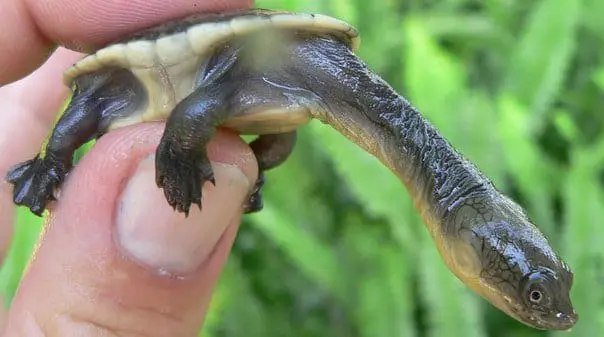
Snake-Neck Turtle Care Guide: Aquarium Setup for a Side-Necked Hunter
A snake-neck turtle looks almost improbable at first glance: a modest shell, a very long neck and a habit of folding that neck sideways under the rim rather than pulling it straight back. These side-necked turtles are aquatic hunters, and they need a deeper, cleaner water column than a typical hatchling slider bowl. This guide explains the setup and the snake-neck turtles at www.TortoiseTown.com.
Natural History
Snake-necked turtles belong to the side-necked group, Pleurodira. The animals most often called snake-neck turtles in the hobby are members of Chelodina and related Australasian genera, living in still and slow waters, billabongs, swamps and quiet river edges. They lie in wait or make slow, searching movements, then strike with that long neck at fish, tadpoles and invertebrates.

They share the side-necked body plan with quite different neighbors in the trade, including the South American Geoffrey’s side-neck turtle and the African East African serrated side-necked turtle. Those species have their own climate and diet details, but all of them need clean water and a design that respects a neck that does not retract like a slider’s.
Appearance
The shell is usually oval and somewhat flattened, in olive, brown or darker tones that help the turtle disappear against a muddy bottom. The head is narrow, the snout soft and the neck strikingly long, sometimes approaching the length of the carapace. The feet are webbed for swimming. Females are often larger and deeper-bodied than males; males have longer, thicker tails. Hatchlings are slender and delicate compared with a stocky musk turtle of the same age, which is why a calm, clean nursery tank matters.
Size and Lifespan
Adult size varies with the exact form, but many snake-neck turtles reach roughly 8 to 12 inches in shell length, plus that extra neck. They can live several decades in a well-maintained aquatic system, so the tank you start with should have a path to a larger, permanent setup.
Temperament
These turtles are often shy at first and then become keen, watchful feeders. They may sit motionless for long periods, then move quickly when food appears. The long neck and forward strike mean fingers at the waterline can be mistaken for prey, so feeding tongs are wiser than hand feeding. They generally do best as the only turtle in the tank, both to reduce stress and to keep water quality under control.
Aquarium Setup
Give a snake-neck turtle a long, generously deep aquarium rather than a wide, shallow tray. The turtle should be able to swim, bottom-walk and extend its neck without constantly hitting decor. A 75-gallon tank is a sensible adult target for many forms, and larger is better. Include:

- A deep water area with smooth sides and no tight gaps where a long neck or leg could catch
- A very strong filter; these are messy, protein-fed aquatic turtles
- A gently sloped haul-out or a low dock, because they bask less obsessively than sliders but still need to dry completely
- A secure lid, since a long neck can help a turtle hook over a rim
Fine sand or a bare bottom is easier on the plastron than sharp gravel. Keep decor simple. Tangled driftwood looks natural but can trap a long-necked animal.
Heat, UVB and Water Quality
Water in the mid to upper 70s°F suits most snake-neck turtles, with a modest basking area around 85°F. A heater with a guard, a reliable thermometer and a UVB lamp over the dock complete the climate. Because these turtles often spend more time submerged than a basking slider, excellent water quality is the real foundation of health. Oversize the filter, schedule partial water changes and remove uneaten food quickly.
Diet
Snake-neck turtles are largely carnivorous. A strong diet includes:

- High-quality aquatic turtle or carnivore pellets
- Earthworms, shrimp, fish and similar moist protein foods
- Snails or other calcium-rich items from time to time
Some individuals will nibble greens, but plant food should not be expected to replace a hunter’s menu. Feed small, frequent meals to juveniles and a measured schedule to adults so the tank does not become a soup of leftovers.
Handling
Support the shell with both hands and be aware of the neck, which can reach farther than people expect. Keep sessions short, and never dangle the turtle by the shell edge. Wash your hands after any contact.
Captive-Bred Animals
Captive-bred snake-neck turtles are far better prepared for enclosure life than wild-collected animals, and they help keep collection pressure off sensitive wetlands. The snake-neck turtles at www.TortoiseTown.com are a rewarding project for keepers who can offer deep, clean water and a patient feeding routine.
Frequently Asked Questions
Why doesn’t the turtle pull its head straight back?
It is a side-necked turtle. The neck folds sideways under the shell rather than retracting into the body the way a hidden-necked turtle does.
Do snake-neck turtles need a tall basking lamp all day?
They still need a dry dock, heat and UVB, but many individuals bask more briefly than sliders. The dock must still be easy to use and completely dry.
How deep should the water be?
Deep enough for true swimming, with a gradual way out. A shallow dish is not enough for this species group.
Can I keep two together?
It is usually simpler and safer to house them separately, because competition and water quality problems add up quickly.
Meet our captive-bred snake-neck turtles at www.TortoiseTown.com.


Leave a Reply
Want to join the discussion?Feel free to contribute!