
Albino Sulcata Tortoise Care Guide: Light, Shade, Diet and Growth
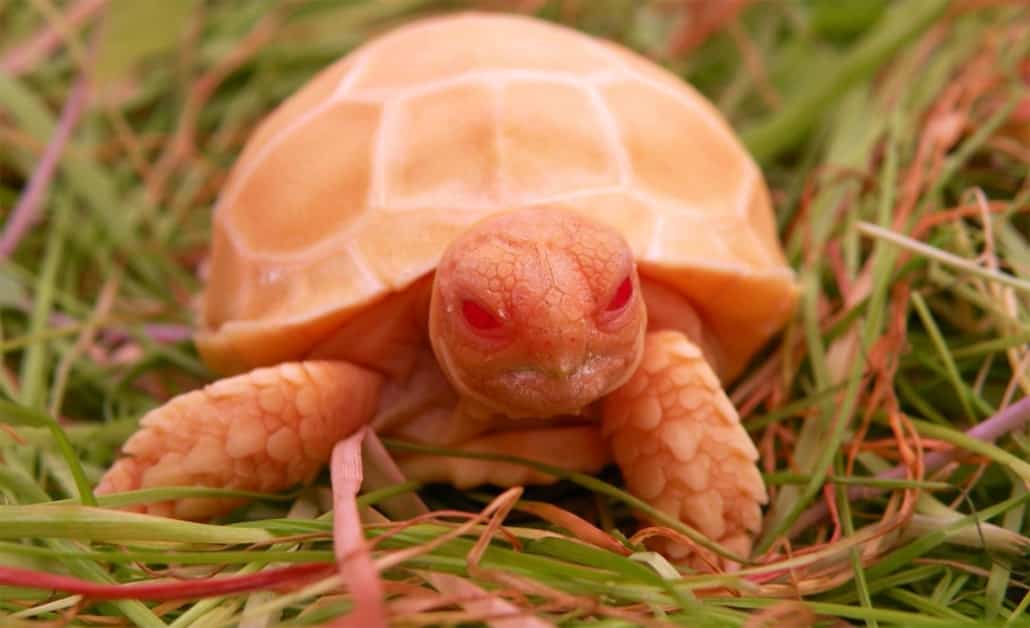
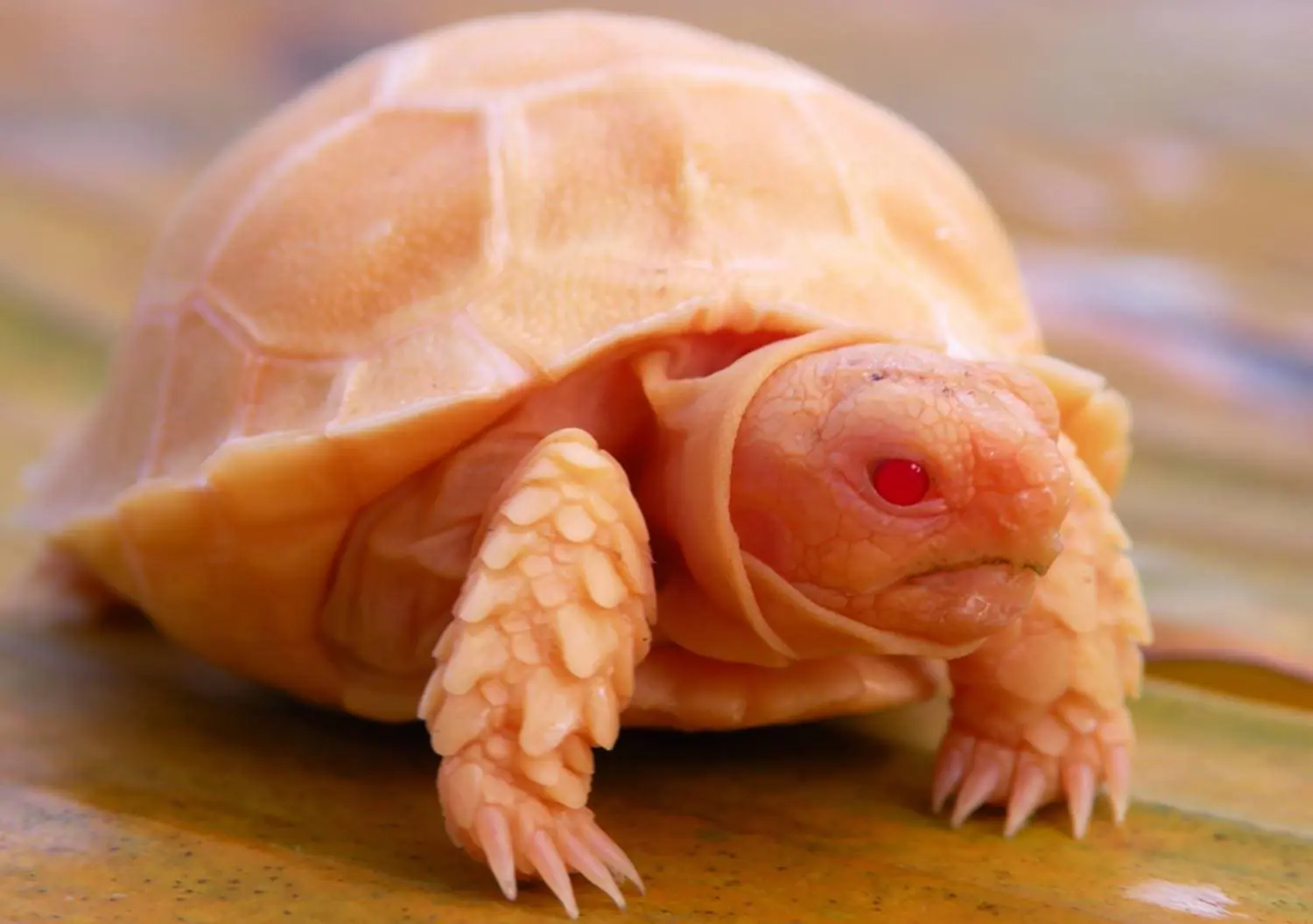
The albino sulcata tortoise is a rare color form of the African spurred tortoise (Centrochelys sulcata), the third-largest tortoise species on Earth. Albinos lack melanin, so instead of the familiar tan and brown, they show a pale cream to peach shell, light skin and pink or red eyes. They are striking animals, but they grow just as large and live just as long as any sulcata, and their light sensitivity adds a few extra care considerations. You can learn more about our captive-bred albino sulcata tortoise at www.TortoiseTown.com.
Natural History
Sulcatas come from the Sahel, the dry belt of grassland and savanna along the southern edge of the Sahara. To survive extreme heat and dry seasons, they dig deep burrows and graze on tough, fibrous grasses. Wild albinos would struggle in the open sun without protective pigment, which is why the albino form is known almost entirely from captive breeding.
Appearance
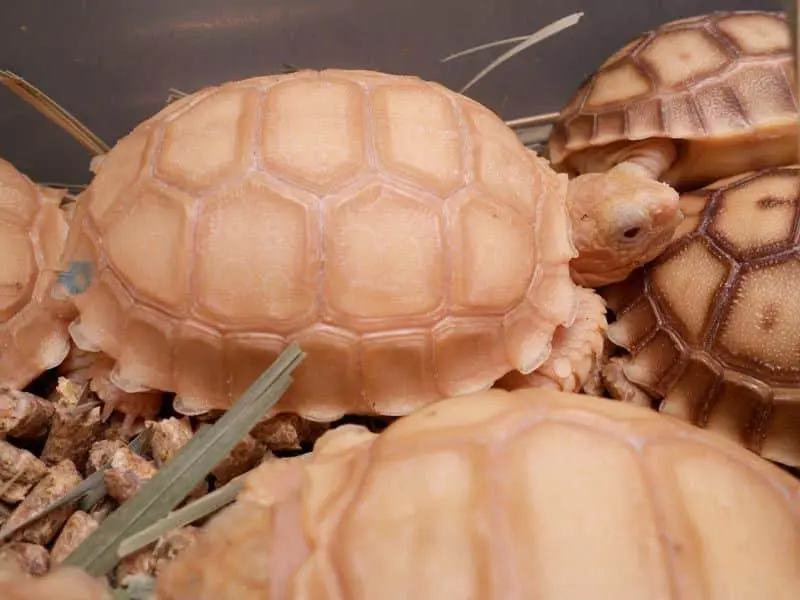
An albino sulcata keeps the same body shape as a normal: a broad, high shell with serrated front and rear edges, and thick forelegs covered in large, spur-like scales. The difference is color. Expect a cream, yellow or apricot shell, pale pink to white skin and pink eyes. Albinos are often confused with ivory sulcatas, but ivories are leucistic, typically whiter overall, and usually have dark eyes, while albinos have light eyes. If you like pale sulcatas, the ivory sulcata tortoise is worth comparing.
Size and Lifespan
Hatchlings are only about 2 inches long, but growth is fast. Adults commonly reach 24 to 30 inches in shell length and 70 to 100 pounds or more, with large males exceeding that. Lifespans of 70 years or longer are widely reported, so an albino sulcata may outlive its first owner. Plan for an outdoor enclosure and a heated shelter long before your tortoise reaches adult size.
Temperament
Sulcatas are bold, curious and food-motivated. Many learn their keeper’s routine and will approach for meals. They are powerful diggers and pushers, and adult males can be territorial with each other. Albinos share this personality, though some keepers notice they prefer shaded areas more than normals do.
Hatchling Enclosure
Indoors, start with a tortoise table or large open-top enclosure at least 4 x 2 feet for a hatchling, increasing as it grows. The Zoo Med Tortoise House works as a starter space for very young tortoises. Include:
- A substrate that holds a little moisture, such as cypress mulch, coconut coir or a soil and coir mix
- A humid hide lined with damp moss to support smooth shell growth
- Several shaded areas so the tortoise can step out of the light
- A shallow water dish and regular warm soaks two or three times a week
Heat, UVB and Shade
Provide a basking spot of about 95 to 100°F, a warm side in the low to mid 80s°F and a cooler end in the mid 70s°F. Night temperatures for hatchlings should stay around 70°F or above. Use a thermostat on ceramic or radiant heat sources.
Albinos still need UVB for calcium metabolism. Use a quality linear UVB tube and follow the brand’s distance guidance, but give your tortoise plenty of shade and cover to escape the light whenever it chooses. Outdoors, offer planted shelter, shade cloth and a hide, and watch for signs of light stress such as squinting or constant hiding.
Diet
Sulcatas are grazers that need a high-fiber, low-protein diet. Base meals on grasses, grass hays and broadleaf weeds such as dandelion, plantain, mallow and clover, plus occasional opuntia cactus pads. Dust greens with calcium a few times per week for hatchlings. A soaked pellet such as Mazuri Tortoise Chow can be offered occasionally as a supplement. Avoid fruit, beans, grains, dog or cat food and other high-protein items, which contribute to pyramiding and organ problems.

Adult Housing
Adult sulcatas need a large, securely fenced outdoor yard with grazing, a sturdy wall they cannot push through, and an insulated, heated shelter for cool nights. Expect digging, so bury fencing below ground or use solid barriers. In climates with cold winters, plan a heated indoor room or barn space.
Why Captive-Bred Matters
Captive-bred hatchlings start life on a proper diet, are free from the stresses of import, and come with a known age. For a rare form like the albino, captive breeding is the only realistic source. You can also compare the classic sulcata tortoise if you are deciding between color forms.
Albino Sulcata Tortoise Care FAQ
Do albino sulcatas need UVB?
Yes. Like all sulcatas they need UVB, but they should always have shade to retreat to.
How big will an albino sulcata get?
The same as a normal sulcata: often 24 to 30 inches and 70 to 100 pounds or more.
What is the difference between albino and ivory sulcatas?
Albinos lack melanin and have light pink eyes. Ivories are leucistic, usually whiter, and normally have dark eyes.
Can albino sulcatas live outside?
Yes, in warm weather and with plenty of shade, a secure fence and a heated shelter.
Meet our captive-bred albino sulcata tortoises at www.TortoiseTown.com and plan a bright, shaded home for a lifelong companion.


Leave a Reply
Want to join the discussion?Feel free to contribute!