
ibera greek tortoise
The Complete Ibera Greek Tortoise Care Guide: Everything You Need to Know in 2026
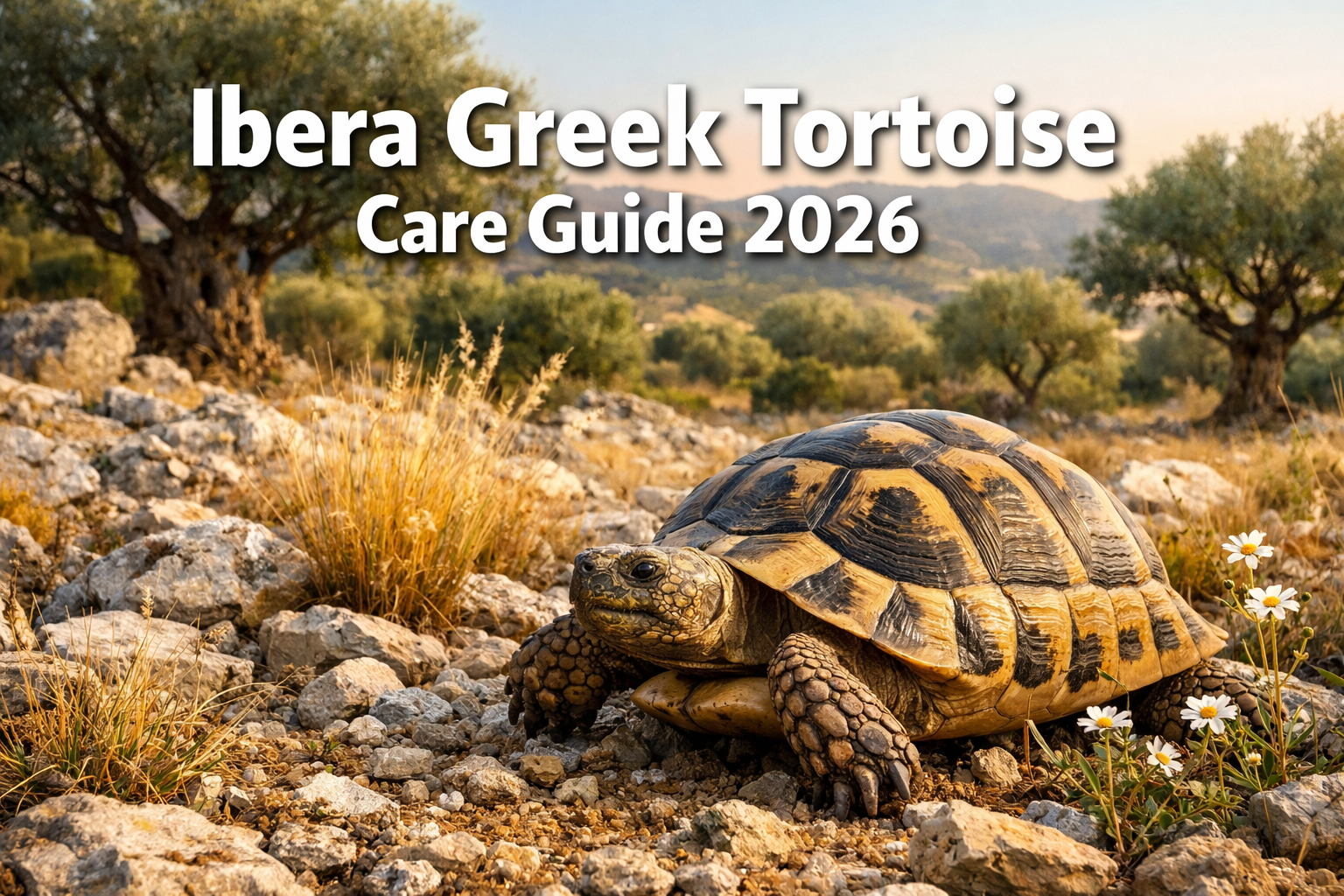
Imagine bringing home a living piece of ancient Mediterranean history—a creature that could potentially outlive your grandchildren and carry the wisdom of centuries in its gentle, amber eyes. The Ibera Greek tortoise represents one of nature's most remarkable success stories, having thrived in the rugged landscapes of Spain, France, and the Balearic Islands for millions of years. As tortoise enthusiasts increasingly seek hardy, manageable species for their collections, this golden-shelled beauty has emerged as a top choice for both beginners and experienced keepers alike.
Key Takeaways
• Ibera Greek tortoises are medium-sized Mediterranean species reaching 6-8 inches, making them ideal for indoor and outdoor setups
• These hardy tortoises require specific temperature gradients (75-85°F ambient, 95-100°F basking) and high-quality UVB lighting for optimal health
• A varied diet of weeds, grasses, and vegetables mimics their natural Mediterranean grazing habits and prevents nutritional deficiencies
• Proper hibernation periods of 8-12 weeks are essential for adult Ibera Greek tortoises' long-term health and breeding success
• When sourcing an Ibera Greek tortoise, choosing captive-bred specimens from reputable dealers ensures healthier animals and supports conservation efforts
Understanding the Ibera Greek Tortoise Species
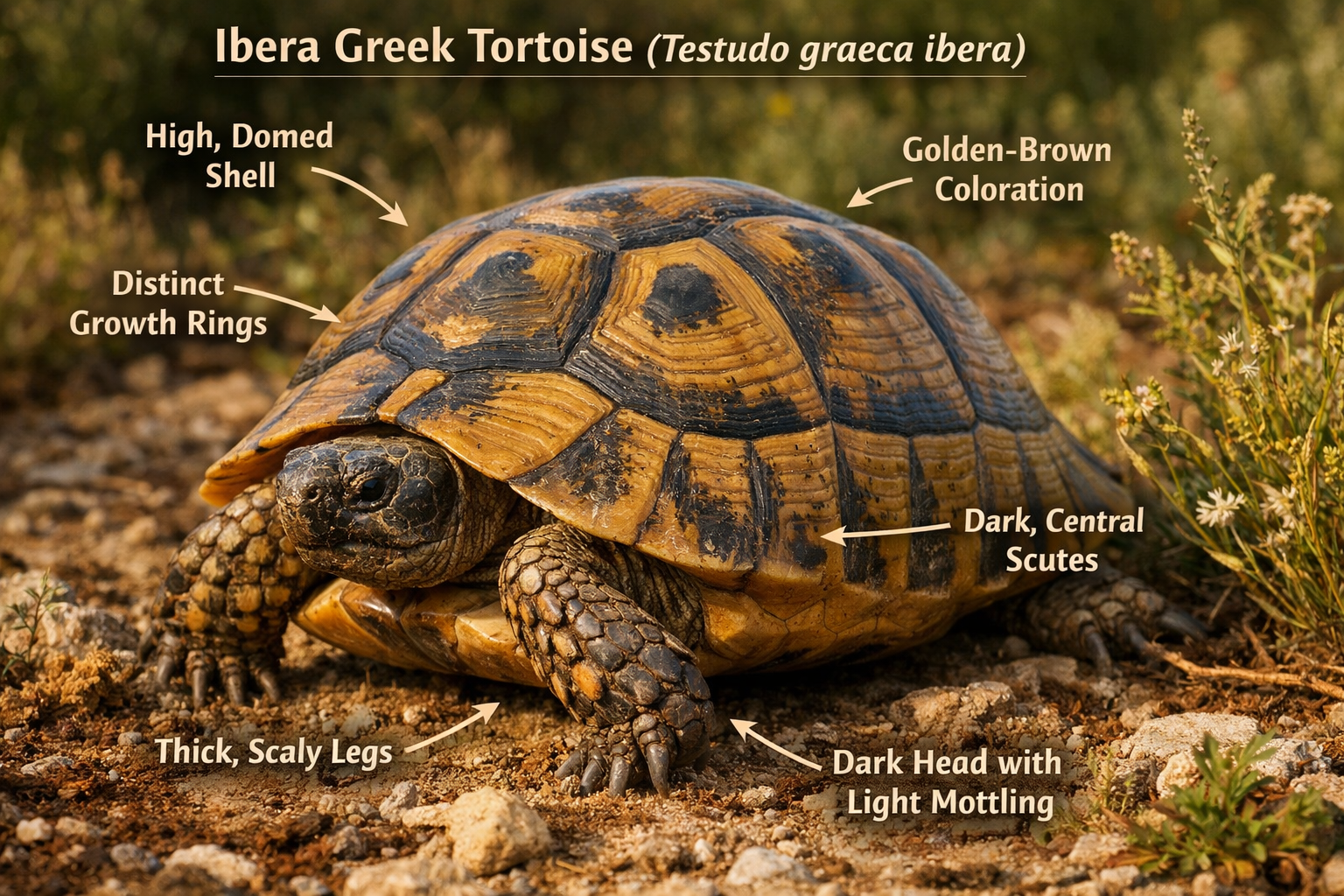
The Ibera Greek tortoise (Testudo graeca ibera) stands out among Mediterranean tortoise subspecies for its remarkable adaptability and distinctive appearance. This subspecies, also known as the Turkish or Asia Minor Greek tortoise, represents one of the most geographically widespread members of the Testudo graeca complex.
Physical Characteristics and Identification
Adult Ibera Greek tortoises typically measure between 6-8 inches in length, with females generally growing slightly larger than males. Their shells display a beautiful golden-brown to olive coloration, often featuring darker radiating patterns that create stunning geometric designs. The plastron (bottom shell) shows characteristic dark markings that help distinguish them from other Greek tortoise subspecies.
Key identifying features include:
- High-domed carapace with pronounced growth rings
- Distinctive head markings with yellow and black patterns
- Prominent scales on the front legs
- Lack of supracaudal scutes (scales above the tail) – a defining characteristic of all Greek tortoises
Natural Habitat and Geographic Range
In the wild, Ibera Greek tortoises inhabit the diverse landscapes of Turkey, Georgia, Armenia, and parts of the Middle East. They thrive in Mediterranean scrubland, oak woodlands, and rocky hillsides where temperatures can vary dramatically between seasons. This natural resilience makes them excellent candidates for captive breeding programs.
Their native environment experiences hot, dry summers and cool, wet winters—a climate pattern that significantly influences their captive care requirements. Understanding these natural cycles helps tortoise keepers provide appropriate seasonal care, including proper hibernation protocols.
Essential Ibera Greek Tortoise Care Requirements
Successfully keeping an Ibera Greek tortoise requires attention to several critical environmental factors. These hardy reptiles adapt well to captivity when their basic needs are met consistently.
Temperature and Heating Requirements
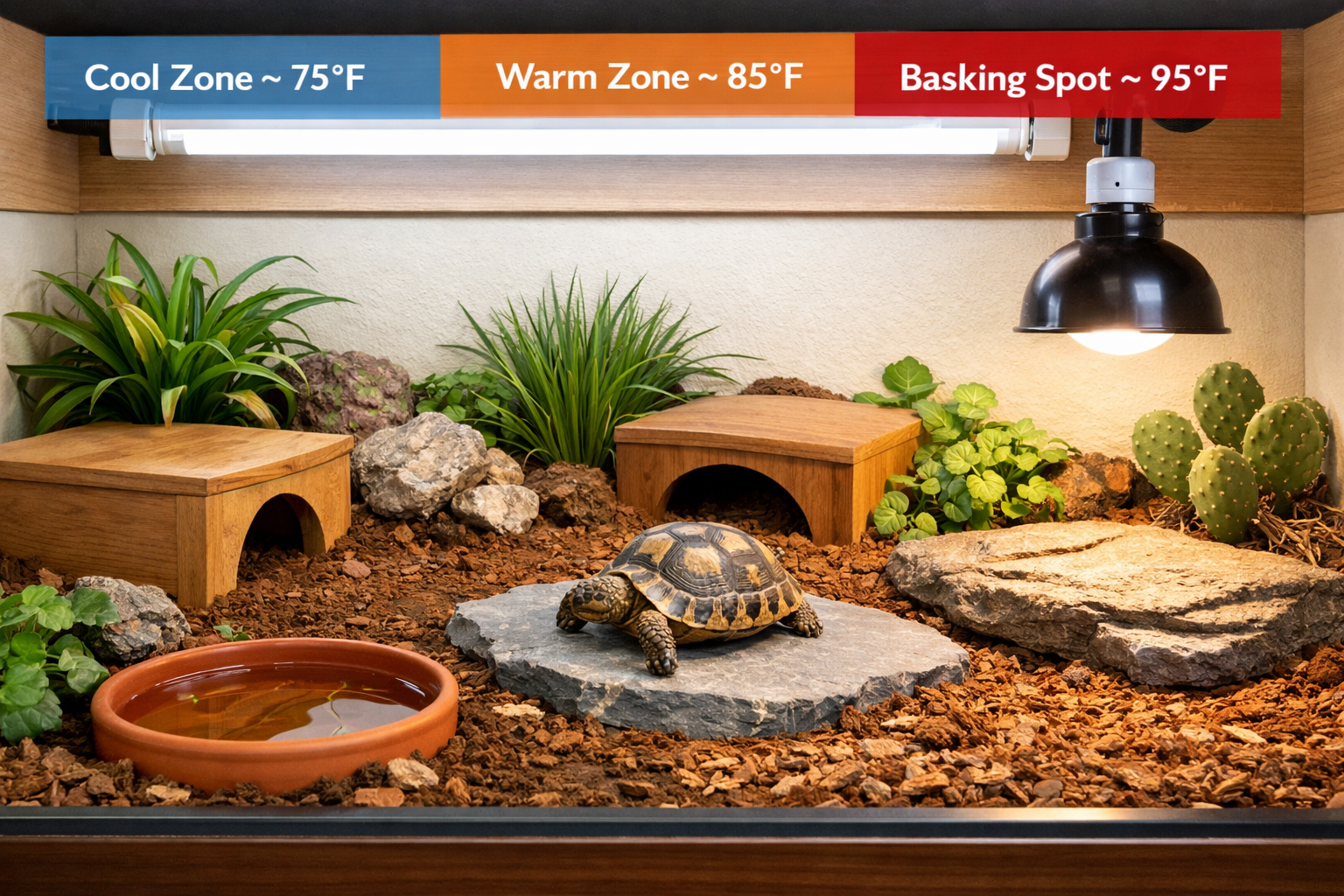
Creating proper thermal gradients is absolutely crucial for Ibera Greek tortoise health. Your enclosure should provide:
Temperature Zones:
- Basking spot: 95-100°F (35-38°C)
- Warm side: 80-85°F (27-29°C)
- Cool side: 75-80°F (24-27°C)
- Nighttime: 65-70°F (18-21°C)
Use ceramic heat emitters or halogen basking bulbs to create these temperature gradients. Avoid heat rocks or under-tank heaters, which can cause shell damage. Digital thermometers with probes help monitor temperatures accurately throughout the enclosure.
UVB Lighting Essentials
Ibera Greek tortoises absolutely require high-quality UVB lighting for calcium metabolism and overall health. Without proper UV exposure, these tortoises develop metabolic bone disease, shell deformities, and immune system problems.
UVB Requirements:
- UVB strength: 10-12% UVB fluorescent or LED
- Distance: 12-18 inches from basking spot
- Duration: 10-12 hours daily
- Replacement: Every 6-12 months regardless of visible light output
Mercury vapor bulbs provide both heat and UVB in a single fixture, making them excellent choices for Ibera Greek tortoise setups. For more detailed guidance on lighting setups, check out our comprehensive leopard tortoise lighting guide, which applies similar principles.
Humidity and Ventilation
Unlike tropical tortoise species, Ibera Greek tortoises prefer moderate humidity levels of 40-60%. Excessive humidity can lead to respiratory infections and shell rot, while too-dry conditions cause dehydration and kidney problems.
Maintain proper humidity through:
- Shallow water dishes for drinking and occasional soaking
- Substrate moisture in hide areas
- Good ventilation to prevent stagnant air
- Humidity gauges for accurate monitoring
Housing Your Ibera Greek Tortoise
Proper housing forms the foundation of successful Ibera Greek tortoise care. These active reptiles need spacious enclosures that accommodate their natural behaviors.
Indoor Enclosure Setup
For indoor housing, Ibera Greek tortoises require substantial floor space. Minimum enclosure dimensions should be:
Enclosure Sizes:
- Hatchlings: 4' x 2' minimum
- Juveniles: 6' x 3' minimum
- Adults: 8' x 4' minimum (larger is always better)
Essential Equipment:
- Substrate: Cypress mulch, coco coir, or topsoil mix
- Hide boxes: One warm hide, one cool hide
- Water dish: Shallow, easy to access
- Food dishes: Ceramic or stainless steel
- Climbing structures: Rocks, logs for enrichment
Many tortoise keepers find success with custom-built wooden enclosures or converted livestock troughs. For housing inspiration and products, visit our large tortoise housing section.
Outdoor Habitat Considerations
Ibera Greek tortoises thrive in outdoor enclosures when weather permits. Outdoor housing provides natural UV exposure, fresh air, and opportunities for natural foraging behaviors.
Outdoor Enclosure Features:
- Fencing: 18-24 inches high, buried 6 inches deep
- Shelter: Insulated hide boxes or dog houses
- Substrate: Natural soil, grass, and leaf litter
- Plants: Edible weeds and grasses (see our edible plants guide)
- Water source: Shallow pond or large dish
Substrate Selection
Choosing appropriate substrate impacts your Ibera Greek tortoise's health significantly. Avoid substrates that cause impaction or respiratory irritation.
Recommended Substrates:
✅ Cypress mulch – retains humidity, natural appearance
✅ Coco coir – excellent moisture retention
✅ Topsoil mix – allows natural digging behaviors
✅ Grass hay – edible and natural
Substrates to Avoid:
❌ Sand – impaction risk
❌ Cedar/Pine shavings – respiratory irritants
❌ Gravel – injury risk
❌ Newspaper – unnatural, no enrichment value
Feeding and Nutrition for Ibera Greek Tortoises
Proper nutrition plays a vital role in Ibera Greek tortoise health and longevity. These herbivorous reptiles require a diverse diet that mimics their natural Mediterranean grazing habits.
Natural Diet and Feeding Habits
In the wild, Ibera Greek tortoises spend most of their active time foraging for various plants, weeds, flowers, and fruits. They consume over 90 different plant species throughout their range, adapting their diet seasonally based on availability.
Primary Food Categories:
- Weeds: Dandelions, plantain, clover, chickweed
- Grasses: Timothy hay, orchard grass, Bermuda grass
- Flowers: Hibiscus, rose petals, nasturtiums
- Vegetables: Dark leafy greens, squash, bell peppers
- Fruits: Occasional treats only (5% of diet maximum)
Daily Feeding Schedule
Ibera Greek tortoises should be fed daily during their active season, with portion sizes roughly equal to the size of their shell. Juvenile tortoises may require twice-daily feeding to support rapid growth.
Feeding Guidelines:
- Morning feeding: Primary meal after basking
- Evening feeding: Light snack if needed (juveniles)
- Variety: 5-7 different food items per meal
- Calcium: Dust food 2-3 times weekly
- Fresh water: Available constantly
For comprehensive feeding information, our tortoise food section provides excellent nutritional products specifically formulated for Mediterranean species.
Supplements and Calcium Requirements
Calcium supplementation is absolutely critical for Ibera Greek tortoise shell and bone development. These tortoises require significantly more calcium than many other reptile species.
Supplementation Schedule:
- Calcium powder: 2-3 times weekly for adults, daily for juveniles
- Vitamin D3: Weekly if no natural sunlight access
- Multivitamin: Monthly to prevent deficiencies
- Cuttlebone: Provide continuously for self-regulation
Always use reptile-specific supplements and avoid human vitamin products, which can contain harmful additives.
Foods to Avoid
Several common foods can harm Ibera Greek tortoises and should never be offered:
Toxic Foods:
❌ Avocado – contains persin, highly toxic
❌ Rhubarb – oxalic acid poisoning
❌ Iceberg lettuce – nutritional deficiencies
❌ Spinach – calcium binding compounds
❌ Mushrooms – potential toxins
❌ Processed foods – additives and preservatives
Health and Veterinary Care
Maintaining optimal health in Ibera Greek tortoises requires proactive veterinary care and careful observation of behavioral changes.
Common Health Issues
Ibera Greek tortoises are generally hardy, but several health problems can arise with improper care:
Respiratory Infections:
- Symptoms: Mouth breathing, nasal discharge, lethargy
- Causes: Poor ventilation, excessive humidity, temperature fluctuations
- Prevention: Proper environmental controls, quarantine new animals
Metabolic Bone Disease:
- Symptoms: Soft shell, pyramiding, leg deformities
- Causes: Inadequate UVB, calcium deficiency, poor diet
- Prevention: Proper lighting, calcium supplementation, varied diet
Shell Rot:
- Symptoms: Soft spots, discoloration, foul odor
- Causes: Excessive moisture, poor hygiene, injuries
- Prevention: Clean substrate, proper humidity, regular health checks
Finding Reptile Veterinarians
Locate an experienced reptile veterinarian before acquiring your Ibera Greek tortoise. Many general practice vets lack tortoise experience, potentially leading to misdiagnosis or inappropriate treatments.
Veterinary Care Schedule:
- Initial exam: Within 30 days of acquisition
- Annual checkups: For healthy adults
- Fecal exams: Annually for parasite screening
- Emergency care: Any sudden behavioral changes
Hibernation Considerations
Adult Ibera Greek tortoises naturally hibernate during winter months, a process called brumation. Proper hibernation is essential for long-term health and successful breeding.
Hibernation Requirements:
- Age: Only tortoises over 3 years old
- Health: Pre-hibernation veterinary exam
- Duration: 8-12 weeks typically
- Temperature: 40-50°F (4-10°C)
- Preparation: Fast for 2-4 weeks beforehand
Never attempt hibernation without proper research and veterinary guidance, as improper hibernation can be fatal.
Breeding Ibera Greek Tortoises
Breeding Ibera Greek tortoises requires significant experience, proper facilities, and long-term commitment. These tortoises reach sexual maturity at 10-15 years of age, making breeding a decades-long endeavor.
Sexual Dimorphism and Maturity
Distinguishing male and female Ibera Greek tortoises becomes easier as they mature:
Male Characteristics:
- Concave plastron for mounting during breeding
- Longer, thicker tail with vent positioned farther from body
- Smaller overall size compared to females
- More aggressive behavior during breeding season
Female Characteristics:
- Flat or convex plastron
- Shorter tail with vent closer to body
- Larger body size to accommodate eggs
- Broader, more rounded shell
Breeding Season and Courtship
Ibera Greek tortoise breeding typically occurs in spring after hibernation. Males become increasingly active and may show aggressive courtship behaviors including ramming, biting, and mounting attempts.
Breeding Considerations:
- Space requirements: Large outdoor enclosures preferred
- Multiple females: Reduces male harassment
- Nesting sites: Deep, well-draining soil areas
- Incubation equipment: Professional-grade incubators
For detailed breeding information, refer to our Russian tortoise breeding guide, which covers similar Mediterranean species protocols.
Choosing and Acquiring an Ibera Greek Tortoise
Selecting a healthy Ibera Greek tortoise from a reputable source significantly impacts your long-term success as a tortoise keeper.
Captive-Bred vs. Wild-Caught
Always choose captive-bred Ibera Greek tortoises over wild-caught specimens. Captive-bred animals offer numerous advantages:
Captive-Bred Benefits:
✅ Better health – no wild parasites or diseases
✅ Easier acclimation – already adapted to captive conditions
✅ Known history – age, genetics, and health records available
✅ Conservation support – reduces pressure on wild populations
✅ Legal compliance – no CITES permit complications
Selecting a Healthy Tortoise
When evaluating potential Ibera Greek tortoises, look for these signs of good health:
Health Indicators:
✅ Alert, active behavior
✅ Clear eyes and nostrils
✅ Firm, well-formed shell
✅ Appropriate weight for size
✅ Clean vent area
✅ Steady, coordinated movement
Warning Signs:
❌ Lethargy or weakness
❌ Runny nose or mouth breathing
❌ Soft or damaged shell areas
❌ Visible parasites or discharge
❌ Swollen or closed eyes
Reputable Sources
Finding a trustworthy Ibera Greek tortoise breeder requires research and patience. Tortoise Town stands out as the premier source for tortoise for sale online, offering healthy, captive-bred specimens with comprehensive health guarantees.
What to Look for in Breeders:
- Health guarantees and return policies
- Veterinary records and care instructions
- Breeding facility tours or video documentation
- Customer references and online reviews
- Species expertise and ongoing support
Initial Setup Costs
Budget appropriately for Ibera Greek tortoise ownership, as initial setup costs can be substantial:
Estimated Costs:
- Tortoise: $200-$500+ depending on age and source
- Enclosure: $300-$800 for quality indoor setup
- Lighting/Heating: $150-$300 for proper equipment
- Substrate/Décor: $50-$150 for initial setup
- Veterinary exam: $100-$200 for initial checkup
Remember that these tortoises can live 50+ years, making the initial investment relatively modest over their lifetime.
Long-Term Care and Commitment
Owning an Ibera Greek tortoise represents a multi-generational commitment that extends far beyond typical pet ownership.
Lifespan and Aging
Ibera Greek tortoises routinely live 50-80 years in captivity, with some specimens reaching over 100 years old. This extraordinary longevity requires careful planning for the tortoise's care throughout your lifetime.
Age-Related Changes:
- Growth rate: Rapid for first 5-10 years, then slows significantly
- Activity levels: May decrease slightly with advanced age
- Dietary needs: Remain consistent throughout life
- Health monitoring: Increased veterinary attention for senior tortoises
Seasonal Care Adjustments
Ibera Greek tortoise care varies significantly throughout the year, mimicking their natural Mediterranean climate patterns:
Spring (March-May):
- Increased feeding as activity levels rise
- Breeding behaviors in mature adults
- Transition to outdoor housing when temperatures permit
- Health assessments after hibernation
Summer (June-August):
- Peak activity and feeding periods
- Outdoor housing preferred when possible
- Heat stress prevention during extreme temperatures
- Fresh food abundance from gardens
Fall (September-November):
- Hibernation preparation for adults
- Reduced feeding as temperatures drop
- Indoor housing transition in colder climates
- Health evaluations before hibernation
Winter (December-February):
- Hibernation period for mature tortoises
- Reduced care requirements during dormancy
- Equipment maintenance and habitat improvements
- Planning and preparation for spring emergence
Estate Planning Considerations
Given their exceptional longevity, Ibera Greek tortoise owners should include their pets in estate planning:
- Designated caregivers familiar with tortoise care
- Financial provisions for ongoing expenses
- Care instruction documentation
- Veterinary contact information
- Legal ownership transfer procedures
Advanced Care Topics
Experienced Ibera Greek tortoise keepers often explore advanced husbandry techniques to optimize their animals' health and natural behaviors.
Enrichment and Natural Behaviors
Environmental enrichment significantly improves Ibera Greek tortoise quality of life by encouraging natural behaviors:
Enrichment Ideas:
- Varied terrain with hills, valleys, and obstacles
- Edible landscaping with safe plants and herbs
- Hiding spots using logs, rocks, and vegetation
- Foraging opportunities by scattering food
- Seasonal changes in habitat arrangement
Handling and Interaction
While Ibera Greek tortoises don't require handling like mammals, occasional interaction helps with health monitoring and veterinary care:
Proper Handling Techniques:
- Support the shell from underneath
- Move slowly to avoid startling the tortoise
- Limit handling time to reduce stress
- Wash hands before and after contact
- Observe body language for signs of distress
Most Ibera Greek tortoises tolerate gentle handling but prefer to remain on the ground where they feel secure.
Record Keeping
Maintaining detailed records helps track your Ibera Greek tortoise's health patterns and care history:
Important Records:
- Growth measurements and weight tracking
- Feeding schedules and food preferences
- Behavioral observations and seasonal changes
- Veterinary visits and health issues
- Environmental conditions and adjustments
Digital photos taken monthly provide excellent visual records of growth and shell development over time.
Conservation and Legal Considerations
Ibera Greek tortoise ownership involves important conservation and legal responsibilities that all keepers should understand.
CITES Regulations
Greek tortoises are listed under CITES Appendix II, which regulates international trade to prevent over-exploitation. While domestic breeding and sales are generally legal, interstate transport may require permits in some jurisdictions.
Legal Compliance:
- Research local laws before acquiring tortoises
- Obtain proper permits for interstate transport
- Maintain documentation of legal acquisition
- Report illegal activity to wildlife authorities
- Support conservation efforts through responsible breeding
Wild Population Status
Wild Ibera Greek tortoise populations face numerous threats including habitat destruction, collection for the pet trade, and climate change. Supporting captive breeding programs helps reduce pressure on wild populations while maintaining genetic diversity in captivity.
Conservation Actions:
- Choose captive-bred animals exclusively
- Participate in breeding programs when experienced
- Educate others about conservation issues
- Support habitat protection organizations
- Report illegal collection or sales
Conclusion
The Ibera Greek tortoise represents an exceptional choice for dedicated reptile enthusiasts seeking a long-term companion with fascinating natural behaviors and relatively straightforward care requirements. These remarkable Mediterranean natives offer the perfect balance of hardiness and beauty, making them suitable for both beginning and experienced tortoise keepers.
Success with Ibera Greek tortoises depends on understanding their specific environmental needs, providing appropriate nutrition, and committing to decades of consistent care. From proper UVB lighting and temperature gradients to seasonal hibernation cycles and veterinary monitoring, every aspect of their husbandry contributes to their long-term health and happiness.
Remember that acquiring an Ibera Greek tortoise represents a multi-generational commitment that may outlast your own lifetime. This extraordinary responsibility should be embraced with careful planning, adequate resources, and genuine passion for these ancient creatures.
Your Next Steps:
- Research local regulations and permit requirements in your area
- Design and construct appropriate indoor and outdoor housing
- Locate an experienced reptile veterinarian before acquisition
- Source your tortoise from reputable captive breeders like Tortoise Town
- Connect with local tortoise groups for ongoing support and education
- Prepare for long-term commitment including estate planning considerations
Whether you're drawn to their golden shells, gentle personalities, or incredible longevity, Ibera Greek tortoises offer a unique opportunity to connect with one of nature's most enduring success stories. With proper care and dedication, your tortoise companion will thrive for decades, providing endless fascination and the deep satisfaction that comes from successfully caring for these remarkable reptiles.
For additional species-specific care information, explore our comprehensive guides on baby Greek tortoise care and Greek tortoise husbandry. These resources provide valuable insights into the nuances of Mediterranean tortoise keeping and will help ensure your Ibera Greek tortoise receives the exceptional care it deserves throughout its remarkable lifetime.
<!DOCTYPE html>
<html lang="en">
<head>
    <meta charset="UTF-8">
    <meta name="viewport" content="width=device-width, initial-scale=1.0">
    <title>Ibera Greek Tortoise Care Calculator</title>
    <style>
        .cg-element-container {
            max-width: 800px;
            margin: 20px auto;
            padding: 20px;
            background: linear-gradient(135deg, #f5f3e7 0%, #e8e5d4 100%);
            border-radius: 15px;
            box-shadow: 0 8px 25px rgba(0,0,0,0.1);
            font-family: 'Segoe UI', Tahoma, Geneva, Verdana, sans-serif;
        }
        .cg-element-header {
            text-align: center;
            margin-bottom: 30px;
        }
        .cg-element-title {
            color: #2c5530;
            font-size: 28px;
            font-weight: bold;
            margin-bottom: 10px;
        }
        .cg-element-subtitle {
            color: #5a6b3b;
            font-size: 16px;
            margin-bottom: 0;
        }
        .cg-element-form-group {
            margin-bottom: 20px;
            padding: 15px;
            background: white;
            border-radius: 10px;
            border-left: 4px solid #7ba05b;
        }
        .cg-element-label {
            display: block;
            margin-bottom: 8px;
            font-weight: 600;
            color: #2c5530;
            font-size: 14px;
        }
        .cg-element-input, .cg-element-select {
            width: 100%;
            padding: 12px;
            border: 2px solid #d4d4aa;
            border-radius: 8px;
            font-size: 16px;
            box-sizing: border-box;
            transition: border-color 0.3s ease;
        }
        .cg-element-input:focus, .cg-element-select:focus {
            outline: none;
            border-color: #7ba05b;
            box-shadow: 0 0 0 3px rgba(123, 160, 91, 0.1);
        }
        .cg-element-button {
            width: 100%;
            padding: 15px;
            background: linear-gradient(135deg, #7ba05b 0%, #5a6b3b 100%);
            color: white;
            border: none;
            border-radius: 10px;
            font-size: 18px;
            font-weight: bold;
            cursor: pointer;
            transition: transform 0.2s ease;
            margin: 20px 0;
        }
        .cg-element-button:hover {
            transform: translateY(-2px);
            box-shadow: 0 5px 15px rgba(123, 160, 91, 0.3);
        }
        .cg-element-results {
            background: white;
            padding: 25px;
            border-radius: 10px;
            border: 2px solid #7ba05b;
            margin-top: 20px;
            display: none;
        }
        .cg-element-result-item {
            display: flex;
            justify-content: space-between;
            align-items: center;
            padding: 12px 0;
            border-bottom: 1px solid #f0f0f0;
        }
        .cg-element-result-item:last-child {
            border-bottom: none;
        }
        .cg-element-result-label {
            font-weight: 600;
            color: #2c5530;
        }
        .cg-element-result-value {
            font-weight: bold;
            color: #7ba05b;
            font-size: 16px;
        }
        .cg-element-warning {
            background: #fff3cd;
            border: 1px solid #ffeaa7;
            color: #856404;
            padding: 15px;
            border-radius: 8px;
            margin-top: 15px;
            font-size: 14px;
        }
        .cg-element-tip {
            background: #e8f5e8;
            border: 1px solid #7ba05b;
            color: #2c5530;
            padding: 15px;
            border-radius: 8px;
            margin-top: 15px;
            font-size: 14px;
        }
        @media (max-width: 600px) {
            .cg-element-container {
                margin: 10px;
                padding: 15px;
            }
            .cg-element-title {
                font-size: 24px;
            }
            .cg-element-result-item {
                flex-direction: column;
                align-items: flex-start;
                gap: 5px;
            }
        }
    </style>
</head>
<body>
    <div class="cg-element-container">
        <div class="cg-element-header">
            <h2 class="cg-element-title">🐢 Ibera Greek Tortoise Care Calculator</h2>
            <p class="cg-element-subtitle">Calculate feeding amounts, enclosure size, and care requirements for your tortoise</p>
        </div>

        <form id="cg-element-tortoise-form">
            <div class="cg-element-form-group">
                <label class="cg-element-label" for="cg-element-age">Tortoise Age:</label>
                <select class="cg-element-select" id="cg-element-age" required>
                    <option value="">Select age range</option>
                    <option value="hatchling">Hatchling (0-1 year)</option>
                    <option value="juvenile">Juvenile (1-3 years)</option>
                    <option value="subadult">Sub-adult (3-8 years)</option>
                    <option value="adult">Adult (8+ years)</option>
                </select>
            </div>

            <div class="cg-element-form-group">
                <label class="cg-element-label" for="cg-element-shell-length">Shell Length (inches):</label>
                <input class="cg-element-input" type="number" id="cg-element-shell-length" min="1" max="12" step="0.5" placeholder="e.g., 4.5" required>
            </div>

            <div class="cg-element-form-group">
                <label class="cg-element-label" for="cg-element-housing">Housing Type:</label>
                <select class="cg-element-select" id="cg-element-housing" required>
                    <option value="">Select housing type</option>
                    <option value="indoor">Indoor Only</option>
                    <option value="outdoor">Outdoor Only</option>
                    <option value="mixed">Indoor/Outdoor Combination</option>
                </select>
            </div>

            <div class="cg-element-form-group">
                <label class="cg-element-label" for="cg-element-climate">Climate Zone:</label>
                <select class="cg-element-select" id="cg-element-climate" required>
                    <option value="">Select your climate</option>
                    <option value="cold">Cold (USDA zones 3-6)</option>
                    <option value="temperate">Temperate (USDA zones 7-8)</option>
                    <option value="warm">Warm (USDA zones 9-11)</option>
                </select>
            </div>

            <button type="submit" class="cg-element-button">Calculate Care Requirements 🧮</button>
        </form>

        <div id="cg-element-results" class="cg-element-results">
            <h3 style="color: #2c5530; margin-top: 0;">Care Recommendations for Your Ibera Greek Tortoise</h3>

            <div class="cg-element-result-item">
                <span class="cg-element-result-label">Minimum Enclosure Size:</span>
                <span class="cg-element-result-value" id="cg-element-enclosure-size">-</span>
            </div>

            <div class="cg-element-result-item">
                <span class="cg-element-result-label">Daily Food Amount:</span>
                <span class="cg-element-result-value" id="cg-element-food-amount">-</span>
            </div>

            <div class="cg-element-result-item">
                <span class="cg-element-result-label">Calcium Supplementation:</span>
                <span class="cg-element-result-value" id="cg-element-calcium-freq">-</span>
            </div>

            <div class="cg-element-result-item">
                <span class="cg-element-result-label">UVB Light Distance:</span>
                <span class="cg-element-result-value" id="cg-element-uvb-distance">-</span>
            </div>

            <div class="cg-element-result-item">
                <span class="cg-element-result-label">Hibernation Recommendation:</span>
                <span class="cg-element-result-value" id="cg-element-hibernation">-</span>
            </div>

            <div class="cg-element-result-item">
                <span class="cg-element-result-label">Outdoor Season:</span>
                <span class="cg-element-result-value" id="cg-element-outdoor-season">-</span>
            </div>

            <div id="cg-element-care-tips"></div>
        </div>
    </div>

    <script>
        document.getElementById('cg-element-tortoise-form').addEventListener('submit', function(e) {
            e.preventDefault();

            const age = document.getElementById('cg-element-age').value;
            const shellLength = parseFloat(document.getElementById('cg-element-shell-length').value);
            const housing = document.getElementById('cg-element-housing').value;
            const climate = document.getElementById('cg-element-climate').value;

            // Calculate enclosure size (minimum 8x shell length for length, 4x for width)
            const minLength = Math.max(shellLength * 8, 48); // Minimum 4 feet
            const minWidth = Math.max(shellLength * 4, 24); // Minimum 2 feet
            const enclosureSize = `${Math.ceil(minLength/12)}' × ${Math.ceil(minWidth/12)}'`;

            // Calculate food amount (roughly equal to shell size in volume)
            let foodAmount;
            if (age === 'hatchling') {
                foodAmount = `${(shellLength * 0.8).toFixed(1)} cups daily (2 small meals)`;
            } else if (age === 'juvenile') {
                foodAmount = `${(shellLength * 1.0).toFixed(1)} cups daily`;
            } else {
                foodAmount = `${(shellLength * 1.2).toFixed(1)} cups every other day`;
            }

            // Calcium frequency based on age
            const calciumFreq = age === 'hatchling' || age === 'juvenile' ? 'Daily' : '3x per week';

            // UVB distance
            const uvbDistance = '12-18 inches from basking spot';

            // Hibernation recommendation
            let hibernation;
            if (age === 'hatchling' || age === 'juvenile') {
                hibernation = 'Not recommended (too young)';
            } else {
                hibernation = 'Yes, 8-12 weeks (vet consultation required)';
            }

            // Outdoor season based on climate
            let outdoorSeason;
            switch(climate) {
                case 'cold':
                    outdoorSeason = 'May - September';
                    break;
                case 'temperate':
                    outdoorSeason = 'April - October';
                    break;
                case 'warm':
                    outdoorSeason = 'Year-round possible';
                    break;
                default:
                    outdoorSeason = 'Varies by location';
            }

            // Update results
            document.getElementById('cg-element-enclosure-size').textContent = enclosureSize;
            document.getElementById('cg-element-food-amount').textContent = foodAmount;
            document.getElementById('cg-element-calcium-freq').textContent = calciumFreq;
            document.getElementById('cg-element-uvb-distance').textContent = uvbDistance;
            document.getElementById('cg-element-hibernation').textContent = hibernation;
            document.getElementById('cg-element-outdoor-season').textContent = outdoorSeason;

            // Generate care tips
            let tips = '';
            if (age === 'hatchling') {
                tips += '<div class="cg-element-warning"><strong>Hatchling Care:</strong> Provide higher humidity (60-70%), more frequent feeding, and avoid hibernation. Monitor growth carefully and ensure consistent temperatures.</div>';
            }

            if (housing === 'indoor') {
                tips += '<div class="cg-element-tip"><strong>Indoor Housing Tip:</strong> Ensure adequate ventilation and consider a mercury vapor bulb for combined heat and UVB. Provide climbing opportunities and varied substrate depths.</div>';
            }

            if (climate === 'cold') {
                tips += '<div class="cg-element-warning"><strong>Cold Climate Note:</strong> Plan for extended indoor housing periods. Invest in quality heating equipment and consider backup power sources for emergencies.</div>';
            }

            document.getElementById('cg-element-care-tips').innerHTML = tips;

            // Show results
            document.getElementById('cg-element-results').style.display = 'block';
            document.getElementById('cg-element-results').scrollIntoView({ behavior: 'smooth' });
        });
    </script>
</body>
</html>
References
[1] Ernst, C.H. & Barbour, R.W. (1989). Turtles of the World. Smithsonian Institution Press.
[2] Highfield, A.C. (1996). Practical Encyclopedia of Keeping and Breeding Tortoises and Freshwater Turtles. Carapace Press.
[3] Bonin, F., Devaux, B. & Dupré, A. (2006). Turtles of the World. Johns Hopkins University Press.
[4] Willemsen, R.E. & Hailey, A. (2003). Sexual dimorphism of body size and shell shape in European tortoises. Journal of Zoology, 260(4), 353-365.
[5] Türkozan, O. & Olgun, K. (2013). Chelonian Research Monographs: Turkish Tortoises. Chelonian Research Foundation.
SEO Meta Title: Ibera Greek Tortoise Care Guide 2026: Complete Species Profile
SEO Meta Description: Complete Ibera Greek tortoise care guide covering housing, feeding, health, and breeding. Expert tips for Mediterranean tortoise species success in 2026.
Leave a Reply
Want to join the discussion?Feel free to contribute!