

Burmese Black Mountain Tortoise Care Guide: Asia’s Forest Giant
The Burmese black mountain tortoise is one of the largest tortoises in Asia and one of the most atmospheric animals a forest-style enclosure can hold. Dark, heavily built and fond of deep leaf litter, it needs a cooler, wetter world than the grassland species many keepers start with. This guide walks through that world and the Burmese black mountain tortoises at www.TortoiseTown.com.
Natural History
This tortoise is the dark northern form of the Asian forest tortoise, Manouria emys, usually referred to as Manouria emys phayrei. It ranges through parts of Myanmar, northeastern India, Bangladesh and adjacent mainland Southeast Asia, where it inhabits evergreen and mixed forest, bamboo and foothill valleys. The closely related Burmese brown mountain tortoise represents a more southerly, typically browner form of the same species group.
Unlike desert tortoises, mountain tortoises live in shade and moisture. They walk through leaf litter, soak in forest puddles and, uniquely among tortoises, the female builds a nest mound of leaves and debris that she may guard. Wild habitats are under pressure from land use and collection, which is one reason captive-bred animals are the only responsible choice for keepers.
Appearance
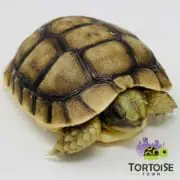
Adults are massive and slightly flattened compared with a high-domed sulcata, with a dark brown to nearly black carapace and thick, elephantine legs. The skin is gray to black, and pale markings, if present, are modest. Hatchlings are already substantial little tanks, usually in rich brown or blackish tones. Males develop a longer tail and a concave plastron; females are often broader through the shell.

Size and Lifespan
This is a true giant by Asian standards. Adults commonly reach 20 to 25 inches, and exceptional animals can be larger, with a weight that demands solid flooring and thoughtful moving plans. Hatchlings grow steadily when humidity and diet are right. Lifespan in good care is measured in many decades, often 50 years or more, so the enclosure you build should be one you can maintain for the long haul.
Temperament
Burmese mountain tortoises are generally calm, deliberate and surprisingly aware of their keepers. Many will approach at feeding time and investigate new objects in the pen. They are not naturally aggressive, but adults are immensely strong and can barge through weak fencing or overturn unstable decor. Males may become competitive if housed together. Handling should be rare, calm and well supported.
Enclosure Setup
Think forest floor, not sand box. Young animals need a spacious, enclosed area that holds humidity, at least 6 by 4 feet as they grow and much more for adults. In suitable climates a large, shaded outdoor pen with a muddy wallow, leaf piles and a sturdy shelter is outstanding. Indoors, a custom heated room or a very large wooden enclosure works better than any standard aquarium.

- Use a deep, moisture-holding substrate: leaf litter over topsoil, coconut coir or cypress mulch.
- Keep a shallow muddy wallow or a wide, easy-entry water pan large enough for soaking.
- Offer multiple hides, logs and plant cover so the tortoise can stay out of bright light.
- Build everything to adult strength, including doors, ramps and outdoor fencing.
Heat, UVB and Humidity
These tortoises prefer milder heat than sulcatas or leopards. Daytime ambient temperatures in the mid 70s to low 80s°F, with a modest basking area around 85 to 90°F, are a good target. Nights can ease into the low 70s. Avoid baking the enclosure; chronic overheating is a common mistake with forest species.
Provide UVB with plenty of shade, because this is a forest animal that will not sit in open glare all day. Humidity should stay high, often in the 70 to 80 percent range, with a substrate that is damp but not a stagnant swamp. Daily misting, a wallow and good ventilation together keep the air fresh and the shell smooth.
Diet
Mountain tortoises are broader feeders than pure grazers. A solid diet includes:

- Leafy greens, weeds and forest-style browse such as mulberry and hibiscus
- Mushrooms, squash and a modest amount of fruit such as berries or papaya
- Occasional moistened tortoise pellets
- A small amount of animal protein, such as earthworms, offered sparingly
Dust greens with calcium regularly. Keep the menu varied and moist enough for a forest species, but do not turn every meal into fruit.
Handling
Use both hands and, for larger animals, a second person or a low platform so the tortoise is never lifted far. Wash your hands after any contact, and keep outdoor pens secure from dogs and theft as well as escape.
Choosing Captive-Bred Animals
Because wild Asian forest tortoises are vulnerable, captive-bred hatchlings are the ethical path into this species. They also begin life in the humidity and diet they need for a smooth shell. The Burmese black mountain tortoises at www.TortoiseTown.com give keepers a chance to work with this impressive forest giant the right way.
Frequently Asked Questions
Is this a good first tortoise?
It is better suited to keepers who can provide high humidity, milder temperatures and a very large, long-term enclosure. A Mediterranean or grassland species is usually an easier starting point.
How wet should the enclosure be?
The substrate should stay evenly damp, and a soak or wallow should always be available, with enough airflow to prevent stale, stagnant conditions.
How large will a Burmese black mountain tortoise get?
Plan for 20 to 25 inches or more, with the strength and appetite of a truly large tortoise.
Can it share a pen with a sulcata?
It is unwise. The two species come from opposite climates, and an adult sulcata can injure a forest tortoise or overwhelm it at feeding time.
Meet our captive-bred Burmese black mountain tortoises at www.TortoiseTown.com.

Leave a Reply
Want to join the discussion?Feel free to contribute!