
indian star tortoise
The Complete Guide to the Indian Star Tortoise: Care, Habitat, and Husbandry
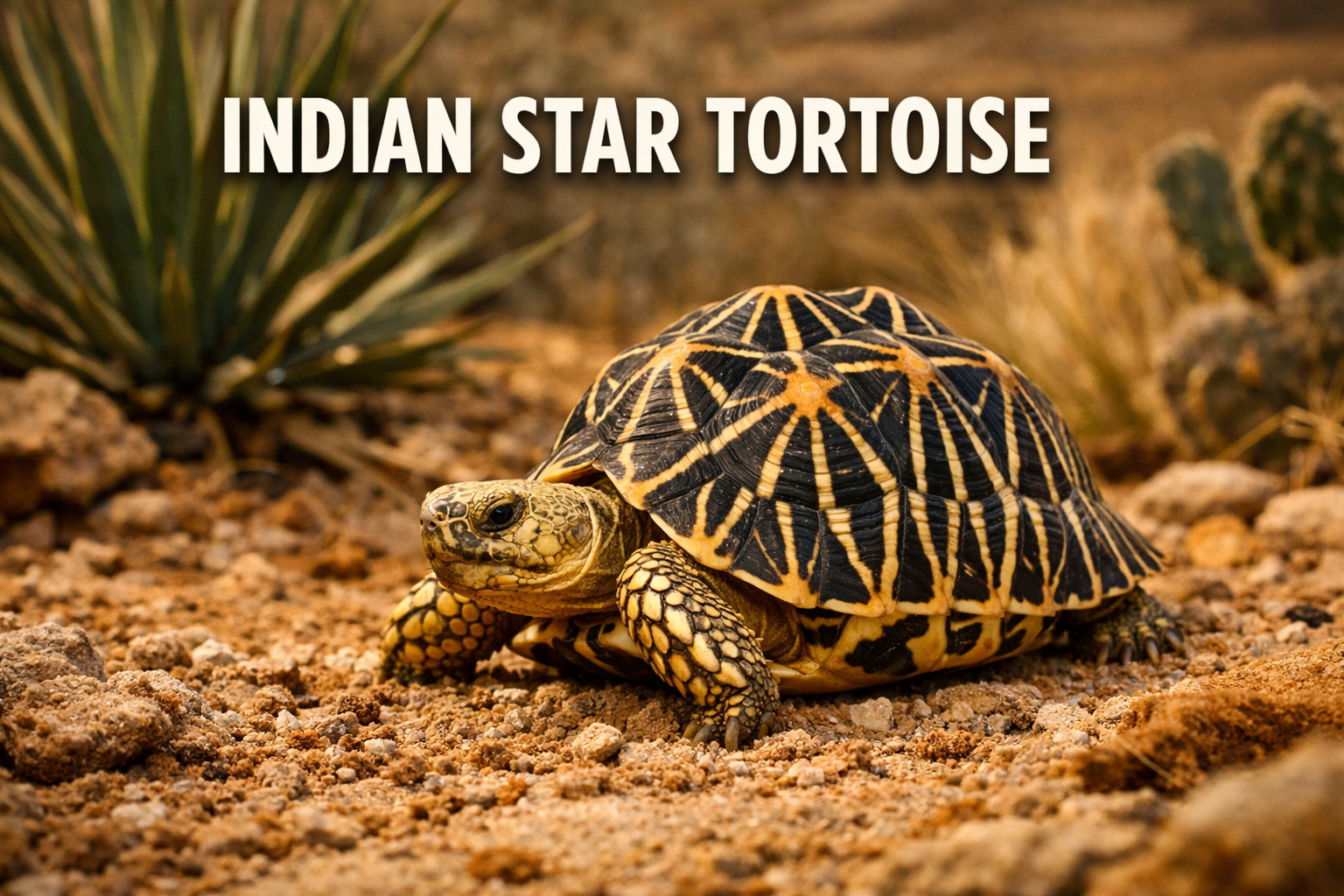
Picture this: you're walking through a pet store or browsing online for the perfect reptilian companion when you spot something truly extraordinary. A small, dome-shaped creature with intricate golden star patterns radiating across its dark shell catches your eye. This stunning beauty is the Indian star tortoise, one of nature's most artistically designed reptiles and a prized species among tortoise enthusiasts worldwide.
The Indian star tortoise (Geochelone elegans) stands out as one of the most visually striking tortoise species available to keepers today. With its distinctive star-burst shell patterns and manageable size, this species has captured the hearts of reptile lovers across the globe. However, behind that beautiful exterior lies a complex creature with specific care requirements that every potential owner must understand.
Key Takeaways
• Indian star tortoises are medium-sized tortoises requiring specialized care including proper UVB lighting, temperature gradients, and specific dietary needs
• These tortoises need both indoor and outdoor habitat options with careful attention to humidity levels, especially for hatchlings and juveniles
• Star tortoises are primarily herbivorous and require a varied diet of grasses, weeds, and vegetables with proper calcium supplementation
• Captive-bred specimens are essential for ethical ownership, with reputable breeders providing healthier animals than wild-caught imports
• Proper handling techniques and gradual socialization help these naturally shy tortoises become more comfortable with human interaction
Understanding the Indian Star Tortoise: Species Overview
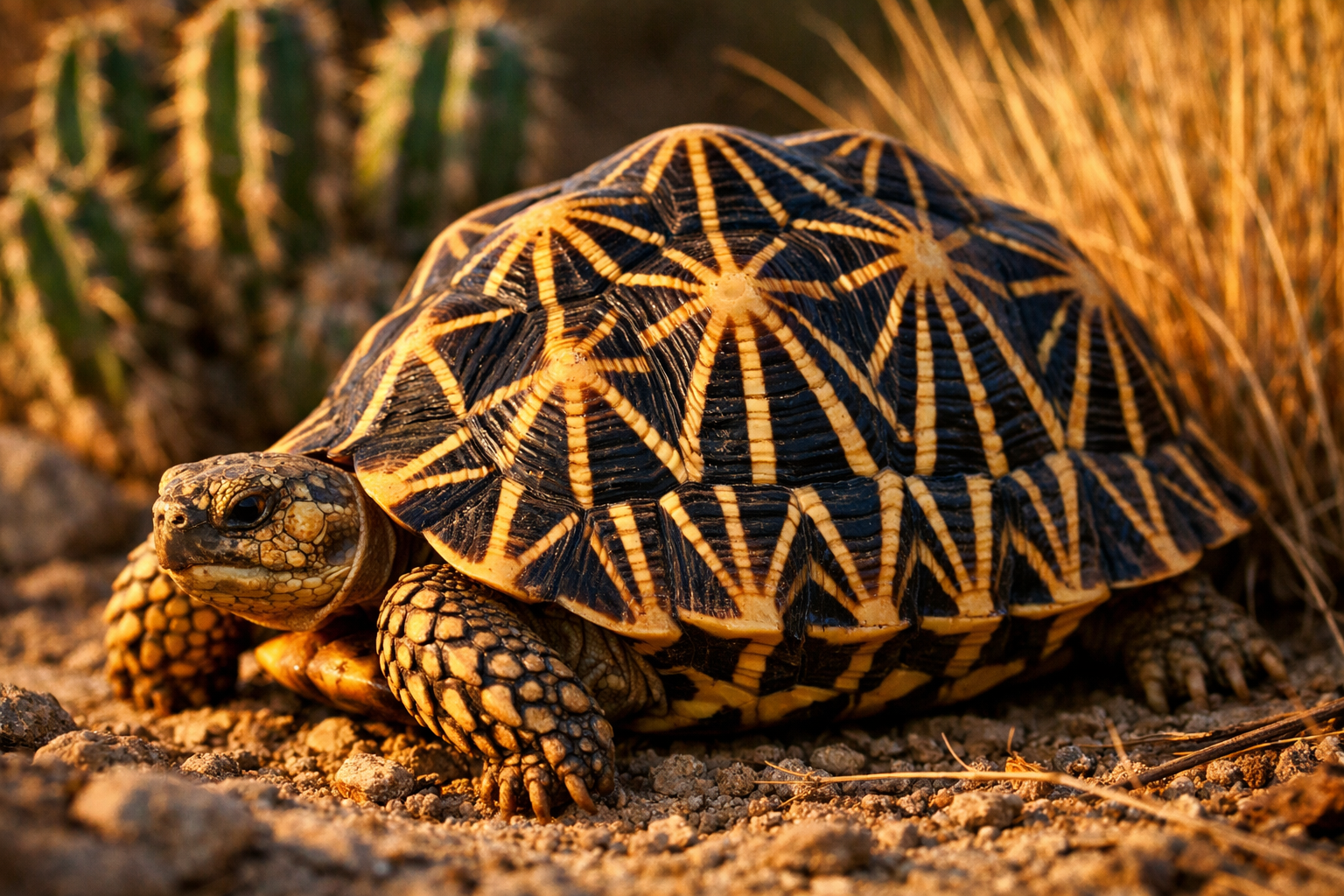
The Indian star tortoise belongs to the family Testudinidae and represents one of the most recognizable tortoise species in the world. Native to India, Pakistan, and Sri Lanka, these remarkable reptiles have adapted to life in dry grasslands, scrub forests, and semi-arid regions.
Physical Characteristics and Identification
What makes the Indian star tortoise truly special is its incredible shell pattern. Each scute (shell segment) displays a distinctive star pattern with yellow or cream-colored lines radiating outward from a central point. This creates an almost geometric design that looks hand-painted by nature itself.
Size and Growth Patterns:
- Adult males: 6-8 inches in length
- Adult females: 8-12 inches in length
- Weight range: 2-5 pounds when fully grown
- Growth rate: Slow and steady over 15-20 years
The sexual dimorphism in Indian star tortoises becomes apparent as they mature. Males typically remain smaller and develop a more pronounced concave plastron (bottom shell) to aid in mating. Females grow larger and maintain a flatter plastron to accommodate egg development.
Natural Habitat and Behavior
In the wild, Indian star tortoises inhabit diverse environments ranging from coastal dunes to inland grasslands. They're most active during the early morning and late afternoon hours, seeking shelter during the hottest parts of the day. This crepuscular behavior is crucial to understand when creating captive environments.
These tortoises are excellent diggers and will create shallow scrapes or burrows for thermoregulation and protection. They're also surprisingly good climbers for their size, often navigating rocky terrain and low vegetation with ease.
Indian Star Tortoise Care: Essential Requirements
Caring for an Indian star tortoise requires dedication, knowledge, and proper setup. These aren't beginner-friendly pets, but with the right approach, they can thrive in captivity for decades.
Temperature and Heating Requirements
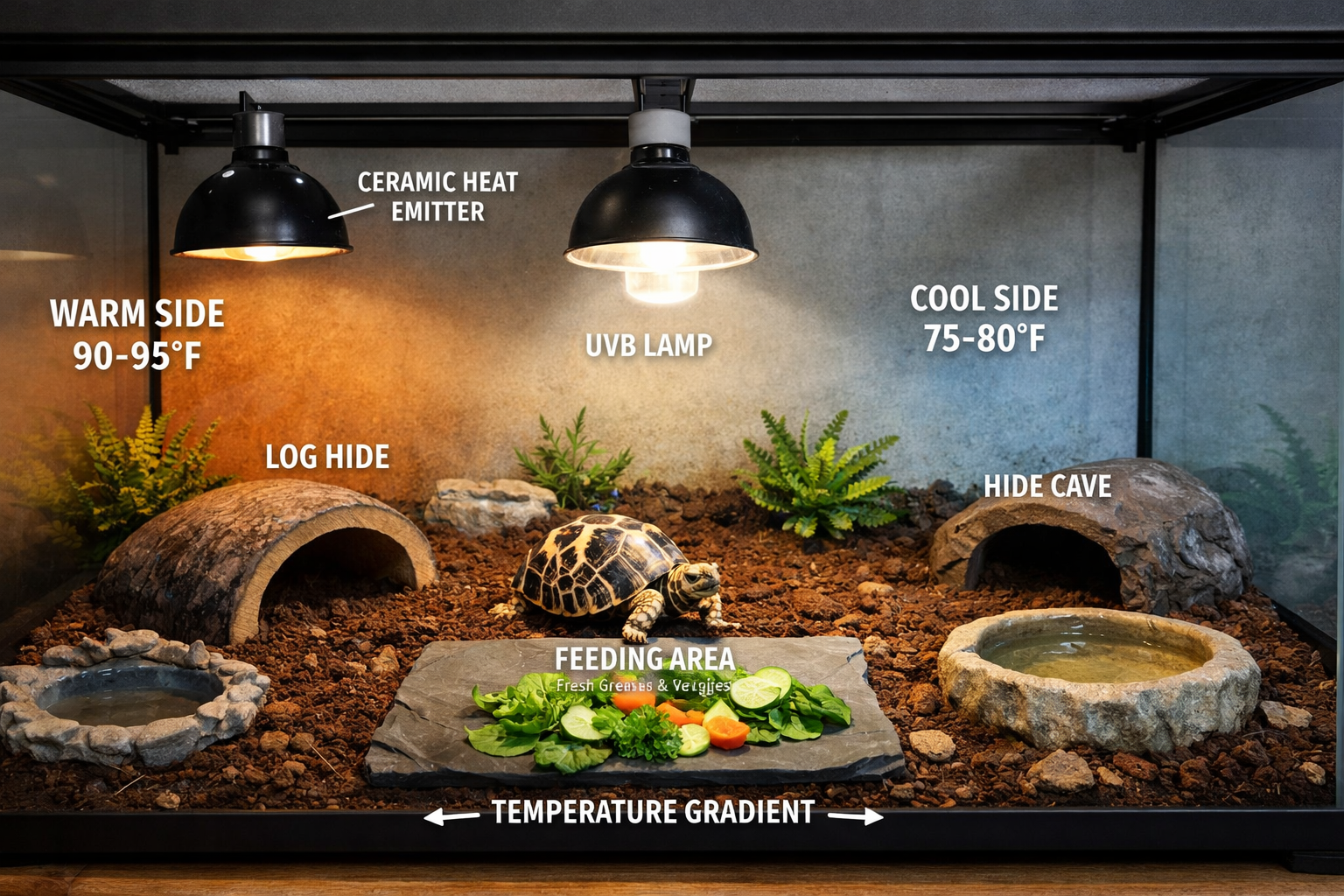
Indian star tortoises are ectothermic, meaning they rely on external heat sources to regulate their body temperature. Creating proper thermal gradients is absolutely critical for their health and wellbeing.
Temperature Guidelines:
- Basking spot: 95-100°F (35-38°C)
- Warm side: 85-90°F (29-32°C)
- Cool side: 75-80°F (24-27°C)
- Nighttime: 70-75°F (21-24°C)
I recommend using ceramic heat emitters or halogen bulbs for primary heating, as these provide the deep, penetrating warmth that tortoises need. Avoid heat rocks or under-tank heaters as primary heat sources, as these can cause thermal burns and don't create the natural temperature gradients these animals require.
UVB Lighting: A Critical Component
One of the most important aspects of Indian star tortoise care is providing adequate UVB lighting. In nature, these tortoises receive direct sunlight for several hours daily, which is essential for vitamin D3 synthesis and calcium metabolism.
UVB Lighting Requirements:
- UVB strength: 10-12% UVB output
- Photoperiod: 12-14 hours daily
- Distance: 12-18 inches from basking spot
- Replacement: Every 6-12 months regardless of visible light output
Quality UVB fixtures are non-negotiable for indoor star tortoise keeping. I've seen too many cases of metabolic bone disease and shell deformities in tortoises kept without proper UVB lighting. The investment in good lighting pays dividends in tortoise health and longevity.
Humidity Considerations
Unlike some desert tortoise species, Indian star tortoises require moderate humidity levels, especially during their juvenile years. Proper humidity helps prevent respiratory issues and supports healthy shell development.
Humidity Guidelines:
- Adults: 40-60% relative humidity
- Juveniles: 60-70% relative humidity
- Hatchlings: 70-80% relative humidity
Maintaining proper humidity can be achieved through several methods including humid hides, substrate moisture, and water features. For more detailed information on creating optimal conditions, check out our comprehensive guide on baby star tortoise care.
Indoor Housing for Indian Star Tortoises
Creating an appropriate indoor habitat for your Indian star tortoise requires careful planning and attention to detail. The enclosure serves as your tortoise's entire world, so it must meet all their physical and psychological needs.
Enclosure Size and Design
Minimum enclosure sizes:
- Hatchlings (0-2 years): 4×2 feet
- Juveniles (2-5 years): 6×3 feet
- Adults: 8×4 feet minimum
Remember, bigger is always better when it comes to tortoise enclosures. These animals are natural wanderers and need space to exercise, explore, and express natural behaviors. A cramped tortoise is often a stressed tortoise, which can lead to health problems and behavioral issues.
Substrate Selection
Choosing the right substrate is crucial for Indian star tortoise health and comfort. The substrate should allow for natural digging behaviors while maintaining appropriate humidity levels and being safe if accidentally ingested.
Recommended substrates:
- Cypress mulch: Excellent moisture retention, natural appearance
- Coconut coir: Good humidity control, digestible if eaten
- Topsoil/sand mix: Allows natural digging, mimics wild conditions
- Paper towels: Easy cleaning, ideal for quarantine or sick animals
Avoid cedar or pine shavings, as these can cause respiratory irritation. Also steer clear of small particle substrates like sand alone, which can cause impaction if consumed in large quantities.
Essential Enclosure Features
A proper Indian star tortoise enclosure should include several key elements:
Hide boxes: Provide at least two hiding spots – one on the warm side and one on the cool side. These should be just large enough for the tortoise to fit snugly inside.
Water dish: A shallow water dish large enough for soaking but not so deep as to pose a drowning risk. Change water regularly to prevent bacterial growth.
Feeding area: Designate a specific area for food presentation. This helps with monitoring food intake and maintaining enclosure cleanliness.
Climbing opportunities: Indian star tortoises enjoy climbing over rocks, logs, and other obstacles. These features also help file down nails naturally.
For those interested in exploring different tortoise species and their specific housing needs, our guide on large tortoise species provides valuable comparisons.
Outdoor Habitats and Seasonal Considerations
While indoor housing is essential for climate control and security, outdoor time provides irreplaceable benefits for Indian star tortoises. Natural sunlight, fresh air, and the ability to graze on living plants contribute significantly to their physical and mental wellbeing.
Designing an Outdoor Enclosure
An outdoor habitat for Indian star tortoises should prioritize security, appropriate microclimates, and natural enrichment opportunities.
Security features:
- Walls: Minimum 18 inches high, buried 6 inches deep
- Overhead protection: Mesh or solid cover to prevent aerial predators
- Escape prevention: Smooth walls without footholds for climbing
Climate considerations:
- Shade structures: Essential for temperature regulation
- Wind breaks: Protection from harsh weather
- Drainage: Prevent waterlogging during rain
Seasonal Management
Indian star tortoises can enjoy outdoor time in many climates, but seasonal adjustments are necessary for their safety and comfort.
Spring transition: Gradually introduce outdoor time as temperatures warm. Start with short periods during the warmest part of the day.
Summer management: Provide ample shade and fresh water. Monitor for overheating signs including excessive panting or seeking cool spots.
Fall preparation: Begin reducing outdoor time as temperatures drop. Watch for signs of sluggishness or reduced appetite.
Winter care: In most climates, Indian star tortoises should be brought indoors when nighttime temperatures consistently drop below 60°F (15°C).
Diet and Nutrition for Indian Star Tortoises
Proper nutrition forms the foundation of Indian star tortoise health. These herbivorous reptiles have evolved to process a wide variety of plant materials, and replicating this diversity in captivity is essential for their wellbeing.
Natural Diet and Feeding Behavior
In the wild, Indian star tortoises are opportunistic grazers, consuming grasses, weeds, fruits, and flowers as they become available. Their diet varies seasonally, with fresh growth during monsoon periods and dried vegetation during drier months.
Understanding this natural feeding pattern helps us create appropriate captive diets. These tortoises are adapted to periods of abundance followed by scarcity, which means they don't need daily feeding as adults.
Staple Foods and Diet Composition
A well-balanced Indian star tortoise diet should consist of approximately:
- 70% grasses and hay: Timothy hay, orchard grass, bermuda grass
- 20% leafy greens: Dandelions, plantain, hibiscus leaves
- 10% vegetables and occasional fruits: Squash, cactus pads, berries
High-quality staple foods include:
- Grasses: Fresh when available, quality hay year-round
- Weeds: Dandelions, clover, plantain, chickweed
- Vegetables: Squash, sweet potato, bell peppers
- Flowers: Hibiscus, nasturtiums, roses (pesticide-free)
For comprehensive information on safe plant options, our guide to edible plants for tortoises provides extensive lists and preparation tips.
Feeding Schedule and Portion Control
Feeding frequency:
- Hatchlings: Daily small portions
- Juveniles: Every other day
- Adults: 2-3 times per week
Portion sizes: Offer an amount equal to the size of the tortoise's shell. They should be able to consume everything within 30-60 minutes.
Supplements and Calcium Requirements
Indian star tortoises require calcium supplementation, especially growing juveniles and reproductive females. Dust food with calcium powder 2-3 times per week for adults, and every feeding for growing tortoises.
Vitamin D3: If providing adequate UVB lighting, choose calcium without D3. For tortoises with limited UVB exposure, calcium with D3 may be necessary, but use sparingly to avoid toxicity.
Quality tortoise food supplements can help ensure nutritional completeness, especially during winter months when fresh options are limited.
Health and Veterinary Care
Maintaining the health of your Indian star tortoise requires both preventive care and the ability to recognize potential problems early. These long-lived animals can suffer from various health issues, many of which are preventable with proper husbandry.
Common Health Issues
Respiratory infections: Often caused by inadequate temperatures, poor ventilation, or high stress. Signs include wheezing, mouth breathing, and nasal discharge.
Shell problems: Pyramid growth, soft shell, and shell rot can result from improper diet, inadequate UVB, or poor hygiene.
Parasites: Both internal and external parasites can affect Indian star tortoises. Regular fecal examinations by a qualified veterinarian help detect and treat parasitic infections.
Metabolic bone disease: Results from calcium deficiency or inadequate UVB lighting. Symptoms include soft shell, deformed growth, and lethargy.
Preventive Care
Annual veterinary checkups: Establish a relationship with a reptile-experienced veterinarian for routine health monitoring.
Quarantine protocols: New tortoises should be quarantined for 60-90 days before introduction to existing collections.
Hygiene maintenance: Regular enclosure cleaning and fresh water prevent many bacterial and fungal infections.
Weight monitoring: Regular weighing helps detect health problems early. Sudden weight loss or gain warrants veterinary attention.
Handling and Socialization
Indian star tortoises are naturally shy creatures, but with patient and consistent handling, they can become quite comfortable with human interaction. Proper handling techniques protect both the tortoise and the handler while building trust over time.
Safe Handling Techniques
Support the shell: Always support the tortoise's plastron (bottom shell) when lifting. Never grab just the sides of the shell or the legs.
Move slowly: Quick movements startle tortoises and can cause them to withdraw completely into their shells.
Stay low: Handle tortoises close to the ground or over soft surfaces to prevent injury from accidental drops.
Respect their space: Allow tortoises to explore and move freely during handling sessions rather than restraining them.
Building Trust and Reducing Stress
Start small: Begin with short, gentle interactions and gradually increase duration as the tortoise becomes more comfortable.
Hand feeding: Offering favorite foods by hand helps create positive associations with human contact.
Consistent routine: Regular, predictable interactions help reduce stress and build familiarity.
Read body language: Learn to recognize signs of stress (rapid withdrawal, hissing, urination) and respect these signals by giving the tortoise space.
<!DOCTYPE html>
<html lang="en">
<head>
    <meta charset="UTF-8">
    <meta name="viewport" content="width=device-width, initial-scale=1.0">
    <title>Indian Star Tortoise Care Calculator</title>
    <style>
        .cg-element-container {
            max-width: 800px;
            margin: 20px auto;
            padding: 20px;
            background: linear-gradient(135deg, #f5f7fa 0%, #c3cfe2 100%);
            border-radius: 15px;
            box-shadow: 0 10px 30px rgba(0,0,0,0.1);
            font-family: 'Segoe UI', Tahoma, Geneva, Verdana, sans-serif;
        }
        .cg-element-title {
            text-align: center;
            color: #2c3e50;
            margin-bottom: 30px;
            font-size: 28px;
            font-weight: bold;
        }
        .cg-element-section {
            background: white;
            padding: 20px;
            margin: 15px 0;
            border-radius: 10px;
            box-shadow: 0 5px 15px rgba(0,0,0,0.08);
        }
        .cg-element-input-group {
            margin: 15px 0;
        }
        .cg-element-label {
            display: block;
            margin-bottom: 5px;
            font-weight: 600;
            color: #34495e;
        }
        .cg-element-input, .cg-element-select {
            width: 100%;
            padding: 12px;
            border: 2px solid #e0e6ed;
            border-radius: 8px;
            font-size: 16px;
            transition: border-color 0.3s ease;
        }
        .cg-element-input:focus, .cg-element-select:focus {
            outline: none;
            border-color: #3498db;
        }
        .cg-element-button {
            background: linear-gradient(45deg, #3498db, #2980b9);
            color: white;
            border: none;
            padding: 15px 30px;
            border-radius: 8px;
            font-size: 18px;
            font-weight: bold;
            cursor: pointer;
            width: 100%;
            margin: 20px 0;
            transition: transform 0.2s ease;
        }
        .cg-element-button:hover {
            transform: translateY(-2px);
        }
        .cg-element-results {
            background: #e8f5e8;
            border-left: 5px solid #27ae60;
            padding: 20px;
            margin: 20px 0;
            border-radius: 0 8px 8px 0;
            display: none;
        }
        .cg-element-result-item {
            margin: 10px 0;
            padding: 10px;
            background: white;
            border-radius: 5px;
            display: flex;
            justify-content: space-between;
            align-items: center;
        }
        .cg-element-result-label {
            font-weight: 600;
            color: #2c3e50;
        }
        .cg-element-result-value {
            font-weight: bold;
            color: #27ae60;
        }
        .cg-element-warning {
            background: #fff3cd;
            border-left: 5px solid #ffc107;
            padding: 15px;
            margin: 15px 0;
            border-radius: 0 8px 8px 0;
        }
        @media (max-width: 600px) {
            .cg-element-container {
                margin: 10px;
                padding: 15px;
            }
            .cg-element-title {
                font-size: 24px;
            }
        }
    </style>
</head>
<body>
    <div class="cg-element-container">
        <h2 class="cg-element-title">🌟 Indian Star Tortoise Care Calculator</h2>

        <div class="cg-element-section">
            <h3>Tortoise Information</h3>
            <div class="cg-element-input-group">
                <label class="cg-element-label">Tortoise Age (years):</label>
                <input type="number" id="cg-age" class="cg-element-input" min="0" max="50" placeholder="Enter age in years">
            </div>
            <div class="cg-element-input-group">
                <label class="cg-element-label">Shell Length (inches):</label>
                <input type="number" id="cg-size" class="cg-element-input" min="1" max="15" step="0.5" placeholder="Enter shell length">
            </div>
            <div class="cg-element-input-group">
                <label class="cg-element-label">Indoor/Outdoor Setup:</label>
                <select id="cg-setup" class="cg-element-select">
                    <option value="">Select setup type</option>
                    <option value="indoor">Indoor Only</option>
                    <option value="outdoor">Outdoor Only</option>
                    <option value="both">Indoor + Outdoor</option>
                </select>
            </div>
            <div class="cg-element-input-group">
                <label class="cg-element-label">Current Season:</label>
                <select id="cg-season" class="cg-element-select">
                    <option value="">Select season</option>
                    <option value="spring">Spring</option>
                    <option value="summer">Summer</option>
                    <option value="fall">Fall</option>
                    <option value="winter">Winter</option>
                </select>
            </div>
        </div>

        <button class="cg-element-button" onclick="calculateCareRequirements()">
            Calculate Care Requirements 🔍
        </button>

        <div id="cg-results" class="cg-element-results">
            <h3>Your Indian Star Tortoise Care Plan</h3>
            <div id="cg-results-content"></div>
        </div>
    </div>

    <script>
        function calculateCareRequirements() {
            const age = parseFloat(document.getElementById('cg-age').value);
            const size = parseFloat(document.getElementById('cg-size').value);
            const setup = document.getElementById('cg-setup').value;
            const season = document.getElementById('cg-season').value;

            if (!age || !size || !setup || !season) {
                alert('Please fill in all fields to get your care recommendations.');
                return;
            }

            // Determine life stage
            let lifeStage = '';
            if (age < 1) lifeStage = 'hatchling';
            else if (age < 5) lifeStage = 'juvenile';
            else lifeStage = 'adult';

            // Calculate enclosure size
            let minLength = 0;
            if (lifeStage === 'hatchling') minLength = 4;
            else if (lifeStage === 'juvenile') minLength = 6;
            else minLength = 8;

            // Calculate feeding frequency
            let feedingFreq = '';
            if (lifeStage === 'hatchling') feedingFreq = 'Daily';
            else if (lifeStage === 'juvenile') feedingFreq = 'Every other day';
            else feedingFreq = '2-3 times per week';

            // Calculate humidity needs
            let humidity = '';
            if (lifeStage === 'hatchling') humidity = '70-80%';
            else if (lifeStage === 'juvenile') humidity = '60-70%';
            else humidity = '40-60%';

            // UVB recommendations
            let uvbHours = setup === 'outdoor' ? '4-6 hours natural sunlight' : '12-14 hours artificial UVB';

            // Seasonal adjustments
            let seasonalNote = '';
            if (season === 'winter') {
                seasonalNote = 'Increase indoor heating, reduce outdoor time, supplement with vitamin D3 if limited UVB exposure.';
            } else if (season === 'summer') {
                seasonalNote = 'Provide extra shade outdoors, ensure adequate water, monitor for overheating.';
            } else if (season === 'spring' || season === 'fall') {
                seasonalNote = 'Gradually transition between indoor/outdoor time, monitor temperature changes.';
            }

            // Display results
            const resultsContent = document.getElementById('cg-results-content');
            resultsContent.innerHTML = `
                <div class="cg-element-result-item">
                    <span class="cg-element-result-label">Life Stage:</span>
                    <span class="cg-element-result-value">${lifeStage.charAt(0).toUpperCase() + lifeStage.slice(1)}</span>
                </div>
                <div class="cg-element-result-item">
                    <span class="cg-element-result-label">Minimum Enclosure Size:</span>
                    <span class="cg-element-result-value">${minLength} x ${minLength/2} feet</span>
                </div>
                <div class="cg-element-result-item">
                    <span class="cg-element-result-label">Feeding Frequency:</span>
                    <span class="cg-element-result-value">${feedingFreq}</span>
                </div>
                <div class="cg-element-result-item">
                    <span class="cg-element-result-label">Humidity Range:</span>
                    <span class="cg-element-result-value">${humidity}</span>
                </div>
                <div class="cg-element-result-item">
                    <span class="cg-element-result-label">UVB Requirements:</span>
                    <span class="cg-element-result-value">${uvbHours}</span>
                </div>
                <div class="cg-element-result-item">
                    <span class="cg-element-result-label">Basking Temperature:</span>
                    <span class="cg-element-result-value">95-100°F (35-38°C)</span>
                </div>
                ${seasonalNote ? `<div class="cg-element-warning"><strong>Seasonal Note:</strong> ${seasonalNote}</div>` : ''}
            `;

            document.getElementById('cg-results').style.display = 'block';
        }

        // Add input validation
        document.getElementById('cg-age').addEventListener('input', function() {
            if (this.value > 50) this.value = 50;
            if (this.value < 0) this.value = 0;
        });

        document.getElementById('cg-size').addEventListener('input', function() {
            if (this.value > 15) this.value = 15;
            if (this.value < 0) this.value = 0;
        });
    </script>
</body>
</html>
Breeding and Reproduction
Breeding Indian star tortoises represents one of the most challenging and rewarding aspects of keeping these magnificent creatures. Successful reproduction requires extensive knowledge, proper facilities, and significant commitment to both the breeding animals and their offspring.
Sexual Maturity and Breeding Age
Indian star tortoises reach sexual maturity based on size rather than age alone. Males typically mature when they reach 4-5 inches in shell length, usually around 7-10 years of age. Females mature later, reaching breeding size at 6-8 inches and 10-15 years of age.
The extended maturation period means that breeding projects require long-term planning and patience. Many keepers underestimate the time investment required to establish a breeding colony of Indian star tortoises.
Breeding Season and Courtship
In captivity, Indian star tortoises can breed throughout the year, though they often show increased activity during spring and fall months. Courtship behavior includes:
Male behaviors:
- Head bobbing and shell ramming
- Circling the female
- Attempting to mount from behind
- Vocalizations during mating
Female behaviors:
- Initial avoidance or aggression
- Eventual acceptance if receptive
- Seeking secluded areas for nesting
Egg Laying and Incubation
Gravid (egg-bearing) females require special care and appropriate nesting sites. They may become restless, refuse food, and spend considerable time digging test holes before selecting a nesting site.
Nesting requirements:
- Substrate depth: 8-12 inches of suitable digging medium
- Moisture content: Slightly damp but not waterlogged
- Privacy: Quiet, secluded areas away from disturbance
- Multiple options: Several potential nesting sites
Incubation parameters:
- Temperature: 84-88°F (29-31°C)
- Humidity: 80-90%
- Duration: 90-120 days
- Substrate: Vermiculite or perlite-based medium
For detailed information on breeding protocols, our comprehensive guide on baby star tortoise care provides essential information for those considering breeding projects.
Where to Find Quality Indian Star Tortoises
When searching for an Indian star tortoise, the source you choose can make the difference between a healthy, well-adjusted animal and years of potential health problems. The reptile trade has evolved significantly, and today's responsible keepers prioritize captive-bred animals from reputable sources.
The Importance of Captive-Bred Animals
Captive-bred Indian star tortoises offer numerous advantages over wild-caught specimens:
Health benefits:
- No parasites from wild environments
- Adapted to captive conditions from birth
- Better feeding responses and human tolerance
- Known medical history and genetic background
Ethical considerations:
- No impact on wild populations
- Support for conservation through responsible breeding
- Better long-term survival rates in captivity
Legal compliance:
- Clear documentation and permits
- Reduced risk of illegal importation issues
- Support for legitimate breeding operations
Choosing a Reputable Breeder
When selecting a source for your Indian star tortoise, several factors indicate a quality breeder:
Professional standards:
- Clean, well-maintained facilities
- Detailed care instructions and ongoing support
- Health guarantees and veterinary records
- Transparent about breeding practices and animal origins
Knowledge and experience:
- Extensive knowledge of the species
- Willingness to answer questions and provide guidance
- Active in reptile community and conservation efforts
- References from other customers
For those seeking a quality tortoise for sale, Tortoise Town has established itself as a leading source for captive-bred reptiles, offering healthy animals with comprehensive care support and shipping options to ensure safe delivery.
Evaluating Animal Health
When selecting an Indian star tortoise, certain characteristics indicate a healthy animal:
Physical indicators:
- Bright, alert eyes without discharge
- Clean nose and mouth
- Firm, well-formed shell without soft spots
- Active movement and normal walking gait
- Appropriate weight for size
Behavioral signs:
- Alertness and responsiveness to environment
- Normal feeding behavior
- Proper basking and thermoregulatory behavior
- No signs of respiratory distress
The Seven Most Popular Tortoise Species for Keepers
While the Indian star tortoise represents one of the most beautiful species available to keepers, it's worth understanding how it compares to other popular tortoise species. Each species has unique characteristics, care requirements, and suitability for different keeper experience levels.
1. Russian Tortoise (Horsfieldi)
Size: 6-8 inches
Difficulty: Beginner-friendly
Climate needs: Temperate, cold-hardy
Russian tortoises are excellent starter species due to their hardiness and relatively simple care requirements. They tolerate temperature fluctuations better than many species and are naturally adapted to seasonal changes. For comprehensive care information, check our detailed Russian tortoise diet guide.
2. Hermann's Tortoise (Testudo hermanni)
Size: 6-8 inches
Difficulty: Beginner to intermediate
Climate needs: Mediterranean
Hermann's tortoises are prized for their docile nature and attractive shell patterns. They're excellent for keepers wanting a European species with moderate care requirements. Our Hermann's tortoise care guide provides detailed husbandry information.
3. Greek Tortoise (Testudo graeca)
Size: 5-8 inches
Difficulty: Intermediate
Climate needs: Mediterranean to semi-arid
Greek tortoises offer variety through their numerous subspecies, each with slightly different care requirements and appearances. They're active, personable tortoises that adapt well to outdoor keeping in appropriate climates.
4. Leopard Tortoise (Stigmochelys pardalis)
Size: 12-18 inches
Difficulty: Intermediate to advanced
Climate needs: Warm, grassland
Leopard tortoises are stunning animals that grow quite large, making them suitable for keepers with adequate space and experience. Their care requirements are similar to Indian star tortoises but they need more room due to their size. Learn more about leopard tortoise care for detailed husbandry information.
5. Red-Footed Tortoise (Chelonoidis carbonarius)
Size: 10-14 inches
Difficulty: Intermediate
Climate needs: Tropical, high humidity
Red-footed tortoises are among the most personable tortoise species, often recognizing their keepers and showing distinct personalities. They require higher humidity than most species and benefit from more varied diets. Check our red-footed tortoise diet guide for nutritional requirements.
6. Sulcata Tortoise (Centrochelys sulcata)
Size: 18-24+ inches
Difficulty: Advanced (due to size)
Climate needs: Hot, arid
Sulcata tortoises are impressive giants that can live over 100 years and weigh more than 100 pounds. They're only suitable for keepers with significant space and long-term commitment. Our sulcata tortoise diet guide covers their specific nutritional needs.
7. Indian Star Tortoise (Geochelone elegans)
Size: 6-12 inches
Difficulty: Intermediate to advanced
Climate needs: Warm, moderate humidity
The Indian star tortoise rounds out our list as one of the most visually striking species available. Their care requirements are more specific than beginner species, but their beauty and manageable size make them highly sought after by experienced keepers.
Comparing Care Requirements Across Species
Understanding how Indian star tortoise care compares to other species helps potential keepers make informed decisions about which tortoise best fits their situation.
Temperature Tolerance
Cold-hardy species (Russian, Hermann's, Greek): Can tolerate cooler temperatures and may even brumate (hibernate) in winter.
Warm-weather species (Indian star, Leopard, Red-footed, Sulcata): Require consistent warmth year-round and cannot tolerate cold temperatures.
Humidity Requirements
Low humidity (Russian, Greek, Sulcata): Prefer dry conditions similar to arid environments.
Moderate humidity (Indian star, Hermann's, Leopard): Need balanced humidity levels, not too wet or dry.
High humidity (Red-footed): Require tropical conditions with elevated moisture levels.
Space Requirements
Compact species (Russian, Hermann's, Greek, Indian star): Suitable for smaller outdoor enclosures and indoor keeping.
Large species (Sulcata, large Leopards): Require extensive outdoor space and are difficult to house indoors as adults.
Medium species (Red-footed, small Leopards): Need moderate space but can be managed in typical backyard settings.
Beginner Suitability
For new tortoise keepers, I typically recommend starting with Russian or Hermann's tortoises before advancing to more challenging species like the Indian star tortoise. The experience gained with hardier species provides valuable foundation knowledge for successfully keeping more demanding animals.
However, dedicated keepers who thoroughly research Indian star tortoise requirements and invest in proper equipment can succeed with this species as their first tortoise. The key is honest assessment of your commitment level and resources.
Advanced Husbandry Topics
Successful long-term keeping of Indian star tortoises requires understanding several advanced husbandry concepts that go beyond basic care requirements.
Microclimate Management
Creating appropriate microclimates within enclosures allows tortoises to self-regulate their environment more naturally. This involves establishing distinct zones with different temperature, humidity, and light levels.
Thermal gradients: Establish clear temperature zones from basking areas to cool retreats, allowing tortoises to move between them as needed.
Humidity gradients: Use substrate moisture, water features, and ventilation to create areas of varying humidity within the same enclosure.
Light gradients: Provide areas of full UVB exposure as well as shaded retreats where tortoises can escape intense lighting.
Seasonal Cycling
Even indoor Indian star tortoises benefit from seasonal environmental changes that mimic their natural habitat cycles.
Photoperiod adjustment: Gradually adjust light timing throughout the year to simulate natural seasonal changes.
Temperature cycling: Slight seasonal temperature variations can stimulate natural behaviors and breeding activity.
Humidity cycling: Adjust humidity levels to simulate wet and dry seasons, which can improve overall health and natural behavior expression.
Enrichment and Natural Behaviors
Environmental enrichment goes beyond meeting basic needs to promote natural behaviors and psychological wellbeing.
Foraging opportunities: Hide food items throughout the enclosure to encourage natural searching and grazing behaviors.
Terrain variation: Create hills, valleys, and obstacles that encourage climbing and exploration.
Sensory stimulation: Provide different textures, scents, and visual elements to maintain interest and engagement.
Social considerations: While Indian star tortoises are generally solitary, some individuals benefit from visual contact with other tortoises, even if housed separately.
Health Monitoring and Preventive Care
Proactive health monitoring is essential for Indian star tortoise longevity and wellbeing. These long-lived animals can suffer from various health issues, many of which are preventable with proper husbandry and early detection.
Regular Health Assessments
Establish a routine for monitoring your Indian star tortoise's health through regular observations and measurements.
Weekly observations:
- Activity levels and movement patterns
- Appetite and feeding behavior
- Shell condition and any changes
- Eye clarity and alertness
- Breathing patterns and respiratory sounds
Monthly measurements:
- Body weight tracking
- Shell length and width measurements
- Photographic documentation of shell condition
- Behavioral notes and any changes
Annual veterinary care:
- Comprehensive physical examination
- Fecal parasite testing
- Blood chemistry panels for older animals
- Nutritional assessment and diet review
Common Health Issues and Prevention
Understanding common health problems helps keepers recognize early warning signs and implement preventive measures.
Respiratory infections: Often caused by inadequate temperatures, poor ventilation, or stress. Prevention involves maintaining proper environmental conditions and minimizing stress factors.
Shell pyramiding: Results from rapid growth due to high-protein diets, inadequate humidity, or insufficient exercise. Prevention includes appropriate diet composition and proper environmental conditions.
Metabolic bone disease: Caused by calcium deficiency or inadequate UVB lighting. Prevention requires balanced nutrition and proper lighting protocols.
Parasitic infections: Can result from contaminated food, water, or substrate. Prevention involves good hygiene practices and regular veterinary screening.
Emergency Care Protocols
Knowing how to respond to health emergencies can save your Indian star tortoise's life.
Respiratory distress: Move to warm, well-ventilated area and seek immediate veterinary care.
Trauma or injury: Keep the animal calm and warm while arranging emergency veterinary treatment.
Prolapse: Keep the affected tissue moist with saline solution and seek immediate professional help.
Impaction: Warm baths and gentle exercise may help, but veterinary intervention is often necessary.
Conservation and Legal Considerations
The Indian star tortoise faces significant conservation challenges in the wild, making responsible captive keeping and breeding efforts increasingly important for the species' long-term survival.
Wild Population Status
Wild Indian star tortoise populations have declined dramatically due to habitat loss, illegal collection for the pet trade, and human encroachment on their natural habitats. The species is listed under CITES (Convention on International Trade in Endangered Species) Appendix II, which regulates international trade.
Primary threats:
- Habitat destruction and fragmentation
- Illegal collection for international pet trade
- Agricultural expansion and development
- Climate change affecting natural range
Conservation efforts:
- Habitat protection and restoration programs
- Captive breeding initiatives
- Education and awareness campaigns
- Enforcement of trade regulations
Legal Requirements for Ownership
Before acquiring an Indian star tortoise, research local and federal regulations regarding ownership and possession.
Federal regulations:
- CITES permits may be required for interstate transport
- Documentation of legal acquisition is essential
- Breeding operations may require additional permits
State and local laws:
- Many states have specific requirements for exotic pet ownership
- Some jurisdictions prohibit or restrict tortoise keeping
- Permit requirements vary by location
Documentation requirements:
- Proof of captive breeding
- Health certificates for transport
- Ownership records and chain of custody
Supporting Conservation Through Responsible Keeping
Responsible Indian star tortoise keeping contributes to conservation efforts in several ways:
Reducing wild collection pressure: Choosing captive-bred animals reduces demand for wild-caught specimens.
Maintaining genetic diversity: Responsible breeding programs help preserve genetic diversity in captive populations.
Education and awareness: Well-kept captive animals serve as ambassadors for their wild counterparts.
Supporting conservation organizations: Many keepers contribute to field conservation efforts through donations and volunteer work.
Conclusion
The Indian star tortoise represents one of nature's most beautiful and fascinating reptiles, offering dedicated keepers the opportunity to work with a truly spectacular species. Throughout this comprehensive guide, we've explored every aspect of Indian star tortoise care, from basic husbandry requirements to advanced breeding protocols and conservation considerations.
Success with these remarkable animals requires commitment, knowledge, and respect for their complex needs. The Indian star tortoise is not a beginner species, but for experienced keepers willing to provide appropriate care, they offer decades of rewarding companionship and the satisfaction of contributing to conservation efforts through responsible captive breeding.
Key takeaways for prospective Indian star tortoise keepers include the critical importance of proper temperature gradients, UVB lighting, and humidity control. These environmental factors, combined with appropriate nutrition and veterinary care, form the foundation of successful husbandry. The investment in quality equipment and setup pays dividends in animal health and longevity.
For those ready to embark on the journey of Indian star tortoise keeping, I recommend starting with thorough research, connecting with experienced keepers, and establishing relationships with reptile veterinarians before acquiring your first animal. The tortoise community is generally welcoming and supportive, offering valuable resources for both new and experienced keepers.
Next Steps for Prospective Keepers
-
Research thoroughly: Continue learning about Indian star tortoise care through reputable sources, books, and experienced keepers.
-
Prepare your setup: Invest in quality equipment and establish proper environmental conditions before acquiring your tortoise.
-
Find a qualified veterinarian: Locate a reptile-experienced veterinarian in your area and establish a relationship before you need emergency care.
-
Connect with the community: Join tortoise keeping groups, forums, and organizations to learn from experienced keepers and stay updated on best practices.
-
Consider your long-term commitment: Remember that Indian star tortoises can live 50+ years and require consistent, quality care throughout their lives.
-
Source responsibly: Choose captive-bred animals from reputable breeders who prioritize animal health and conservation.
The Indian star tortoise offers a unique opportunity to work with one of the world's most beautiful tortoise species while contributing to conservation efforts through responsible keeping and breeding. With proper preparation, dedication, and ongoing education, these magnificent animals can provide decades of fascination and companionship while serving as ambassadors for their wild counterparts.
Whether you're drawn to their stunning shell patterns, their interesting behaviors, or the challenge of working with a specialized species, the Indian star tortoise represents an exceptional choice for dedicated reptile keepers ready to provide the high-quality care these remarkable animals deserve.
References
[1] Ernst, C.H., & Barbour, R.W. (1989). Turtles of the World. Smithsonian Institution Press.
[2] Highfield, A.C. (1996). Practical Encyclopedia of Keeping and Breeding Tortoises and Freshwater Turtles. Carapace Press.
[3] Bonin, F., Devaux, B., & Dupré, A. (2006). Turtles of the World. Johns Hopkins University Press.
[4] Sharma, D.S.K. (1999). Tortoise and Freshwater Turtle Conservation in India. Marine Turtle Newsletter.
[5] McKeown, S. (1993). The General Care and Maintenance of Day Geckos. Advanced Vivarium Systems.
[6] Vetter, H. (2006). Turtles of the World, Vol. 4: East and South Asia. Edition Chimaira.
SEO Meta Title: Indian Star Tortoise Care Guide: Complete Husbandry & Setup 2026
Meta Description: Complete Indian star tortoise care guide covering habitat, diet, health, and breeding. Expert tips for successful husbandry of this stunning species.
Leave a Reply
Want to join the discussion?Feel free to contribute!