

Florida Softshell Turtle Care Guide: Space, Water and a Leathery Shell
The Florida softshell turtle is a fast, long-necked aquatic turtle with a leathery, pancake-like shell and a snorkel-shaped snout. It is an impressive animal, and it is also a serious space commitment. This guide explains what a healthy setup looks like and introduces the Florida softshell turtles at www.TortoiseTown.com.
Natural History
The Florida softshell, Apalone ferox, is native to the Florida peninsula and nearby parts of the southeastern United States. It lives in rivers, lakes, spring runs, canals and ponds with soft bottoms where it can bury itself and leave only the snout exposed. It is a strong swimmer and an ambush hunter, taking fish, insects, crustaceans and other animals that come within range of that long neck.

Softshells as a group share the flexible, leather-covered carapace and a lifestyle built around water. A patterned relative in the same care family is the leopard softshell turtle, which likewise needs smooth surfaces, deep water and excellent filtration.
Appearance
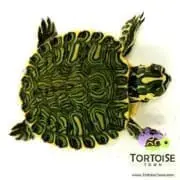
The shell is olive to brown, relatively flat and covered in tough skin rather than hard scutes. A pale rim often edges the carapace. The head is long, the nose is tubular, and the feet are broadly webbed. Juveniles may show spots or mottling that become more uniform with age. Females grow far larger than males. The soft shell is durable in mud and water, but it can be scratched or punctured by sharp rock, rough concrete or aggressive tankmates, so the habitat has to be designed around that.
Size and Lifespan
This is not a small pet turtle. Males may remain in a more moderate size range, but females can reach 15 to 20 inches or more and become very heavy-bodied. Growth is rapid when food and heat are generous. A Florida softshell can live several decades, often 20 to 40 years or longer, which means the pond or tank plan has to be honest from the beginning.
Temperament
Softshells are alert, food-oriented and often defensive if grabbed. They can strike quickly, and the long neck reaches farther than many keepers expect. In a pond they may become bold at feeding time and even learn to appear when a person approaches the bank. They are fascinating to watch and a poor choice for regular handling. House them alone; a large softshell can seriously injure other turtles.
Enclosure Setup
Hatchlings can start in a large, well-filtered aquarium with a smooth bottom, but they will outgrow it. Adults are best served by a very large indoor vat or, in a suitable climate, a secure outdoor pond with gentle banks, soft substrate and no sharp stonework. For any indoor stage, think well beyond a starter tank:

- Broad, deep water and lots of swimming room
- A soft or bare bottom; sand is friendlier than gravel
- A smooth haul-out where the turtle can dry completely, with no rough concrete
- A powerful filter and a secure cover, because these turtles are strong and messy
If you would not want to press your palm hard against a decoration, do not put a softshell against it either.
Heat, UVB and Water Quality
Water temperatures around 74 to 80°F and a basking area near 90°F are a good starting range. UVB should reach the dry area. Water quality is critical. A softshell living in dirty water is prone to skin and shell problems, and the animal’s high appetite makes waste build up quickly. Over-filter, change water on a schedule and remove uneaten food the same day.
Diet
Florida softshells are primarily carnivorous. Offer:

- High-quality aquatic turtle or fish-based pellets
- Fish, earthworms, shrimp and similar moist protein foods
- Occasional calcium-rich items such as snails
Growing females can be enthusiastic eaters; measure portions so the turtle stays sturdy rather than overfed, and keep the menu varied. They will often learn to take food from a target or a set feeding spot, which helps keep the rest of the pond cleaner.
Handling and Safety
Handle only when necessary, using both hands on the shell and staying well aware of the head. Keep the turtle low to the ground, and never hook fingers over the front of the shell near the neck. Wash your hands afterward. Outdoor ponds need fencing that keeps the turtle in and keeps people, dogs and wildlife from surprising a large, defensive animal.
Captive-Bred Softshells
Captive-bred Florida softshells that are already feeding well are a much better starting point than a wild-caught river turtle. They still require the same space and respect as adults. The Florida softshell turtles at www.TortoiseTown.com are for keepers who can offer deep, clean water and a long-term plan.
Frequently Asked Questions
Why is the shell soft?
The carapace is covered in leathery skin rather than hard scutes. It is a normal feature of the species and needs a smooth habitat to stay healthy.
How large will a Florida softshell get?
Females can reach 15 to 20 inches or more. Plan a pond or a very large aquatic system, not a small glass tank for life.
Are they good turtles to hold?
No. They are best enjoyed in the water. Handling should be limited to necessary health or habitat work.
Can a softshell live with sliders?
It is a bad mix. A large softshell can injure other turtles, and the water-quality demands already run high with one animal.
Meet our captive-bred Florida softshell turtles at www.TortoiseTown.com.



Leave a Reply
Want to join the discussion?Feel free to contribute!