

Eastern Box Turtle Care Guide: Woodland Humidity, Diet and Housing
The eastern box turtle is a high-domed woodland turtle with a hinged plastron that can close up like a chest, a colorful pattern and a surprisingly rich personality when it is kept in a humid, planted space. It is not an aquarium slider, and it is not a dry-country tortoise. This guide covers the middle ground it actually needs and the Eastern box turtles at www.TortoiseTown.com.
Natural History
The eastern box turtle, Terrapene carolina carolina, is native to much of the eastern United States, from New England and the Great Lakes region south through the Atlantic coastal states and into parts of the Gulf Coast. It lives in moist woods, meadow edges, floodplain thickets and suburban greenbelts, often following the same small home range for years.
After rain, box turtles move and forage. In heat or cold they burrow into leaf litter, loose soil or a shallow form. They are omnivores with a seasonal menu: fungi, slugs, worms, berries and tender greens in warm months, and a quieter metabolism when the weather turns. Closely related animals include the three-toed box turtle, a subspecies that often tolerates slightly drier conditions, and forest companions such as the North American wood turtle.
Appearance
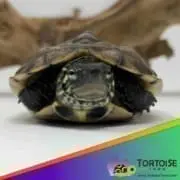
Adults have a tall, rounded carapace marked with yellow, orange or reddish streaks and blotches on a dark background. The plastron is hinged at the front, allowing the turtle to close tightly when threatened. Eyes are often red or orange in males and brown in females, though color is not a perfect test. Males usually have a longer, thicker tail and a slightly concave plastron. Hatchlings are more patterned and a little flatter until the dome builds with age.

Size and Lifespan
Most eastern box turtles reach 5 to 7 inches. They are not large, but they are long-lived. Several decades are typical, and many animals live 40 to 50 years or more. That long life is one reason wild collection is such a problem: a turtle taken from a roadside may already be a mature wild adult that will not settle well in a dry indoor box.
Temperament
Box turtles can be shy at first and then surprisingly responsive. Captive-bred animals that grow up around people often learn feeding routines and will walk out of cover when they see their keeper. They should be allowed to move on their own terms. Frequent handling is stressful, and a turtle that snaps shut is asking for space, not a closer look.
Enclosure Setup
The best home for an eastern box turtle, in a suitable climate, is a shaded, predator-proof outdoor pen with deep leaf litter, a shallow water pan, soft soil for burrowing and a mix of sun and deep shade. Buried walls keep the turtle from digging out and keep dogs and raccoons from digging in.

Indoors, use a large, well-ventilated tortoise table or custom enclosure rather than a water-filled tank. A 4 by 2 foot footprint is a starting point, not a forever maximum. Include:
- A deep, moisture-retaining substrate of topsoil, leaf litter and coconut coir
- A humid hide packed with damp moss
- A shallow dish of clean water large enough for the turtle to sit in
- Plants, cork and leaf cover so the turtle can disappear from view
Heat, UVB and Humidity
Daytime air temperatures in the mid 70s to around 80°F, with a gentle basking area near 85 to 88°F, suit this species well. Nights can drop into the 60s. UVB lighting is important indoors; outdoors, filtered natural sunlight and shade do the work.

Humidity is the detail many new keepers miss. Aim for a moist forest feel, often 60 to 80 percent, with a substrate that never dries to dust. Closed shells, swollen eyes and sluggish shedding are common when a box turtle is kept like a desert tortoise. At the same time, the enclosure should not be a stagnant swamp; fresh air matters as much as moisture.
Diet
Eastern box turtles are true omnivores. A balanced rotation looks like this:
- Earthworms, snails, slugs and appropriately sized insects
- Dark leafy greens and edible flowers
- Mushrooms and a modest amount of berries or other soft fruit
- Occasionally a high-quality, moistened turtle or omnivore diet
Dust animal foods with calcium, especially for growing turtles and females. Variety is more important than any single staple, and protein should be part of the diet rather than the entire diet.
Handling
Support the shell with both hands and keep the turtle low. After a short health check, put it back in cover. Always wash your hands. In outdoor pens, check for escape routes after heavy rain, when the soil is soft and turtles are most active.
Why Captive-Bred Box Turtles Matter
Wild eastern box turtles are declining in many parts of their range. Captive-bred hatchlings adapt to enclosure life far more reliably and do not remove a long-lived animal from the woods. The Eastern box turtles at www.TortoiseTown.com are raised for people who can offer humidity, leaf litter and a patient, woodland style of care.
Frequently Asked Questions
Can an eastern box turtle live in a fish tank?
A water-filled aquarium is the wrong habitat. These are terrestrial woodland turtles that need land, leaf litter and a shallow water dish, not a swimming tank.
How long do they live?
Several decades is normal, and many live 40 to 50 years or longer with consistent care.
Do they need to hibernate?
Wild adults brumate in cold regions. Indoor, steadily warm husbandry is safer for young or unproven animals. Outdoor brumation should only be attempted with healthy turtles in a climate and setup you understand well.
What is the biggest care mistake?
Keeping them too dry. Moisture, a humid hide and regular access to shallow water are essential.
Meet our captive-bred eastern box turtles at www.TortoiseTown.com.


Leave a Reply
Want to join the discussion?Feel free to contribute!