
baby tortoises
The Complete Guide to Baby Tortoises: Everything You Need to Know About Caring for Young Tortoises 🐢

Picture this: you're walking through a reptile expo when you spot the most adorable sight imaginable – tiny baby tortoises no bigger than a silver dollar, their shells perfectly formed miniatures of their adult counterparts. These remarkable creatures have captivated reptile enthusiasts for decades, and it's easy to see why. Baby tortoises represent one of nature's most incredible transformations, growing from coin-sized hatchlings into magnificent, long-lived companions that can outlive their human caregivers.
Whether you're a first-time reptile owner or an experienced keeper looking to expand your collection, understanding the unique needs of baby tortoises is crucial for their health and longevity. These ancient creatures require specialized care that differs significantly from adult tortoise husbandry, making proper education essential before bringing one home.
Key Takeaways
• Baby tortoises require specialized care including precise temperature gradients, high humidity levels, and species-specific dietary requirements that differ from adult tortoises
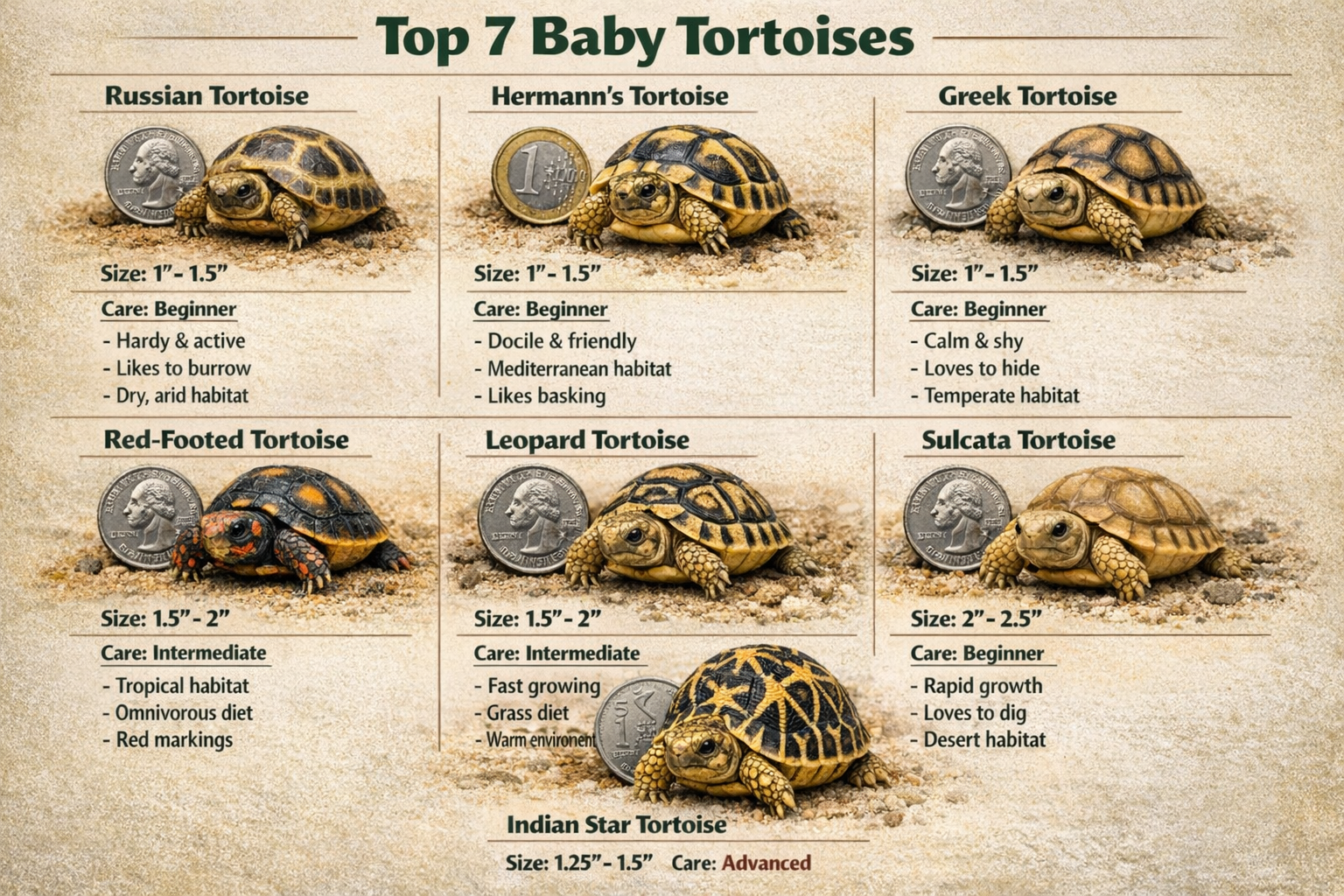
• The top 7 species for beginners include Russian, Hermann's, Greek, Red-footed, Leopard, Sulcata, and Indian Star tortoises, each with unique care requirements and adult sizes
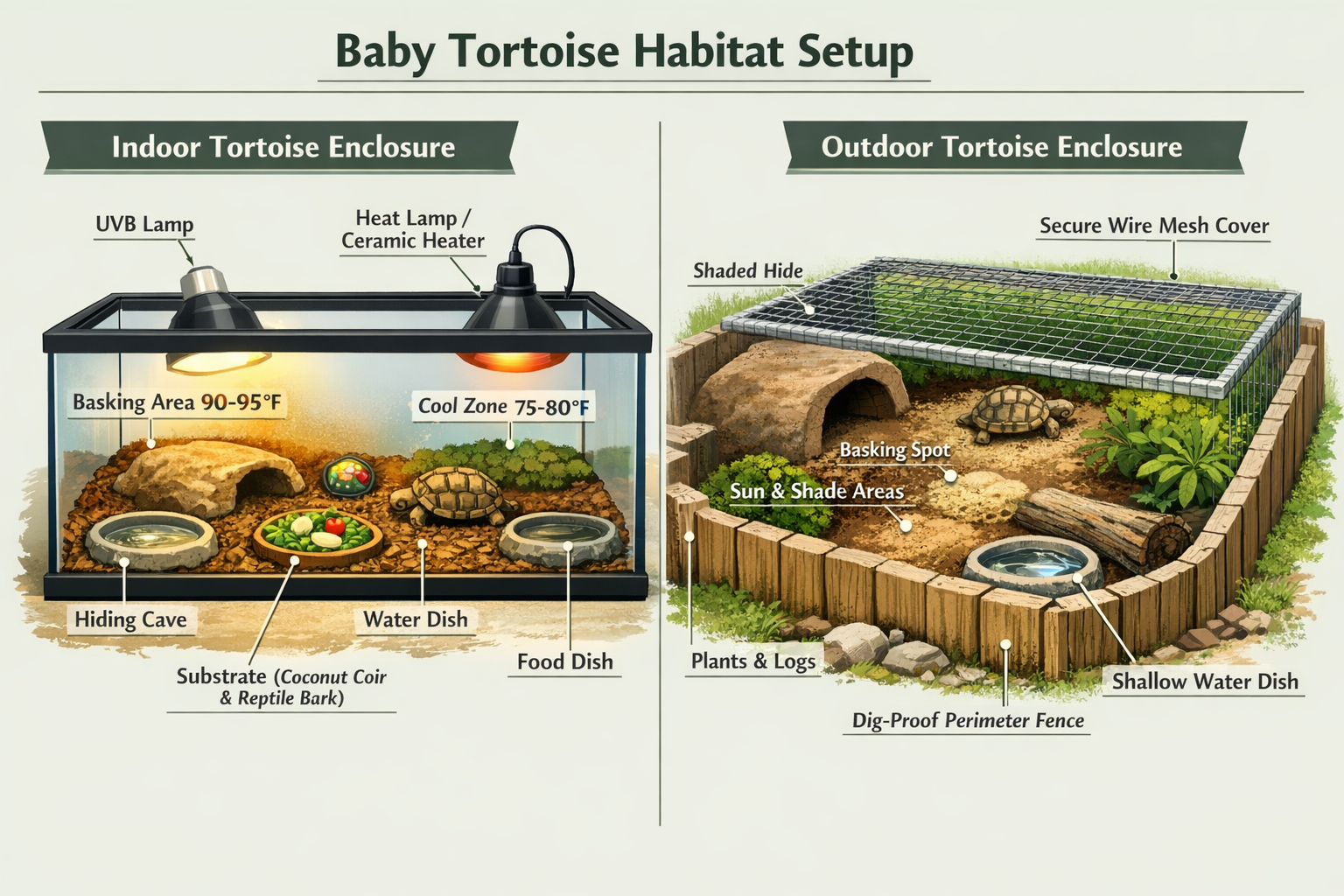
• Proper habitat setup is critical with both indoor and outdoor options requiring UVB lighting, appropriate substrates, and secure enclosures to prevent escapes
• Daily care involves monitoring temperatures, maintaining humidity, providing fresh foods, and regular health checks to ensure proper growth and development
• Choosing a reputable breeder like Tortoise Town ensures you receive healthy, captive-bred specimens with proper documentation and ongoing support
Understanding Baby Tortoises: The Basics
What Makes Baby Tortoises Special
Baby tortoises, also known as hatchlings, are among the most vulnerable yet resilient creatures in the reptile world. Unlike many other reptiles, tortoise hatchlings emerge from their eggs as fully-formed miniatures of their parents, complete with all the instincts they need to survive. However, this doesn't mean they're easy to care for – quite the opposite.
These tiny reptiles face unique challenges in captivity that require dedicated attention from their keepers. Their small size makes them more susceptible to temperature fluctuations, dehydration, and predation. Additionally, their rapid growth rate during the first few years of life means their nutritional and environmental needs are constantly changing.
The Importance of Captive Breeding
When considering adding baby tortoises to your collection, it's crucial to choose captive-bred specimens from reputable sources. Tortoise Town has established itself as the premier destination for those seeking a high-quality tortoise for sale, specializing in captive-bred animals that are healthier, more adaptable to captivity, and don't contribute to wild population decline.
Captive-bred baby tortoises offer several advantages:
- Better health: Reduced risk of parasites and diseases common in wild-caught specimens
- Known genetics: Clear lineage and breeding history
- Adaptation to captivity: Already accustomed to artificial environments and commercial diets
- Legal compliance: No concerns about permits or conservation regulations
- Ongoing support: Reputable breeders provide care guidance and health guarantees
The Top 7 Baby Tortoise Species for Keepers
1. Russian Tortoise (Horsfield's Tortoise) 🇷🇺
Size: 6-10 inches as adults
Difficulty: Beginner
Climate: Temperate, cold-hardy
Russian tortoises are among the most popular choices for first-time tortoise keepers, and for good reason. These hardy little creatures are incredibly adaptable and forgiving of minor care mistakes. Baby Russian tortoises typically measure 1-1.5 inches at hatching and grow steadily over their first few years.
Key characteristics:
- Extremely cold-tolerant (can hibernate naturally)
- Active diggers with strong claws
- Omnivorous tendencies (will eat some protein)
- Relatively small adult size makes housing manageable
- Long lifespan (75+ years)
For detailed care information, check out our comprehensive guide on baby Russian tortoise care which covers everything from habitat setup to feeding schedules.
2. Hermann's Tortoise 🇪🇺
Size: 5-8 inches as adults
Difficulty: Beginner to Intermediate
Climate: Mediterranean
Hermann's tortoises are prized for their beautiful shell patterns and manageable size. Baby Hermann's tortoises are particularly attractive with their bright yellow and black markings that become more subdued with age. These tortoises are known for their calm temperament and adaptability to various climates.
Notable features:
- Distinctive shell patterns with clear growth rings
- Excellent for outdoor keeping in temperate climates
- Natural hibernation behavior
- Strong food recognition abilities
- Generally docile and easy to handle
Our baby Hermann's tortoise care guide provides species-specific information for optimal husbandry.
3. Greek Tortoise 🇬🇷
Size: 5-8 inches as adults
Difficulty: Beginner to Intermediate
Climate: Mediterranean to arid
Greek tortoises, also known as spur-thighed tortoises, are closely related to Hermann's tortoises but have some distinct differences. Baby Greek tortoises are slightly more robust and show excellent adaptability to various environmental conditions.
Distinguishing traits:
- Prominent spurs on the rear legs
- More domed shell compared to Hermann's
- Excellent climbers and escape artists
- Varied subspecies with different size ranges
- Strong personalities and food preferences
For comprehensive care instructions, visit our baby Greek tortoise care resource.
4. Red-footed Tortoise 🌺
Size: 10-16 inches as adults
Difficulty: Intermediate
Climate: Tropical/Subtropical
Red-footed tortoises bring a splash of color to any collection with their distinctive red and orange markings on their legs and head. Baby red-footed tortoises require higher humidity than Mediterranean species but are incredibly rewarding to keep.
Unique aspects:
- Vibrant coloration that intensifies with age
- Omnivorous diet including fruits and occasional protein
- High humidity requirements (60-80%)
- Social behavior and recognition of keepers
- Excellent appetite and steady growth
Learn more about proper husbandry in our baby red-footed tortoise care guide, which covers their specialized tropical requirements.
5. Leopard Tortoise 🐆
Size: 12-18 inches as adults
Difficulty: Intermediate to Advanced
Climate: Semi-arid grassland
Leopard tortoises are among the most beautiful tortoise species, with intricate spotted patterns that give them their name. Baby leopard tortoises are relatively large at hatching and grow quickly with proper care.
Characteristics:
- Stunning shell patterns unique to each individual
- Large adult size requires substantial space
- Grazing behavior – prefer grasses and weeds
- Sensitive to humidity levels (prefer lower humidity)
- Active and curious personalities
For detailed information on caring for these magnificent tortoises, see our leopard tortoise hatchling care guide.
6. Sulcata Tortoise (African Spurred) 🌍
Size: 18-24+ inches as adults
Difficulty: Advanced
Climate: Arid desert
Sulcata tortoises are the third-largest tortoise species in the world, making them a serious commitment. Baby sulcata tortoises are adorable but will eventually require substantial space and resources.
Important considerations:
- Rapid growth rate – can reach 50+ pounds
- Powerful diggers that can escape most enclosures
- Heat-loving species requiring warm temperatures year-round
- Long lifespan (100+ years)
- Substantial space requirements as adults
Before committing to a Sulcata, read our hatchling Sulcata tortoise care guide to understand their long-term needs.
7. Indian Star Tortoise ⭐
Size: 6-10 inches as adults
Difficulty: Advanced
Climate: Tropical monsoon
Indian Star tortoises are arguably the most beautiful tortoise species, with radiating star patterns on each scute. Baby star tortoises are delicate and require experienced keepers due to their specific environmental needs.
Special requirements:
- Intricate star-pattern shell markings
- High humidity with good ventilation
- Sensitive to temperature fluctuations
- Specific dietary requirements
- Slower growth rate than other species
For expert care advice, consult our baby star tortoise care guide.
Essential Baby Tortoise Care Requirements
Temperature Management 🌡️
Temperature control is perhaps the most critical aspect of baby tortoise care. Unlike adults, hatchlings cannot regulate their body temperature effectively and rely entirely on their environment. Each species has specific temperature requirements, but general guidelines include:
Basking Spot: 95-105°F (35-40°C)
Cool Side: 75-85°F (24-29°C)
Nighttime: 70-80°F (21-27°C)
Temperature gradients are essential, allowing baby tortoises to thermoregulate by moving between warmer and cooler areas. Use multiple thermometers to monitor different zones within the enclosure, and consider ceramic heat emitters for nighttime heating when UVB lights are off.
Humidity Requirements 💧
Humidity needs vary significantly between species:
- Desert species (Sulcata, Russian): 30-50% humidity
- Mediterranean species (Hermann's, Greek): 40-60% humidity
- Tropical species (Red-footed, Star): 60-80% humidity
Maintain humidity through:
- Substrate choice: Cypress mulch, coconut coir, or sphagnum moss
- Water features: Shallow dishes or humid hides
- Misting: Light misting for tropical species (avoid over-saturation)
- Ventilation: Proper airflow prevents mold and respiratory issues
UVB Lighting Requirements ☀️
UVB lighting is non-negotiable for baby tortoises. Without proper UVB exposure, they cannot synthesize vitamin D3, leading to metabolic bone disease and shell deformities. Key points include:
- UVB strength: 10-12% UVB for most species
- Distance: 6-12 inches from basking spot
- Duration: 10-12 hours daily
- Replacement: Every 6-12 months regardless of visible light output
- Quality brands: Reptisun, Arcadia, or Zoo Med
For species-specific lighting requirements, our leopard tortoise UVB lighting guide provides excellent technical details.
Setting Up Baby Tortoise Habitats
Indoor Enclosure Options 🏠
Indoor housing offers complete environmental control and protection from predators and weather. Several options work well for baby tortoises:
Glass Terrariums
- Pros: Easy to clean, good visibility, retain humidity well
- Cons: Limited ventilation, can overheat, size constraints
- Best for: Small species, temporary housing, quarantine
Plastic Storage Tubs
- Pros: Inexpensive, various sizes, easy to modify
- Cons: Poor aesthetics, may warp under heat lamps
- Best for: Budget setups, multiple animals, temporary housing
Custom Wooden Enclosures
- Pros: Large sizes possible, good insulation, attractive
- Cons: More expensive, potential moisture damage
- Best for: Permanent setups, larger species, display purposes
Tortoise Tables
- Pros: Open-top design, excellent ventilation, easy access
- Cons: Humidity control challenges, escape potential
- Best for: Mediterranean species, experienced keepers
Outdoor Enclosure Considerations 🌿
Outdoor housing provides natural sunlight, fresh air, and space for natural behaviors. However, it requires careful planning:
Security Features:
- Walls at least 18 inches high for babies
- Buried barriers to prevent digging out
- Overhead protection from birds of prey
- Secure latches on access gates
Environmental Elements:
- Shelter from rain and extreme temperatures
- Varied terrain with hiding spots
- Safe plants for browsing
- Water source (shallow and easily accessible)
Seasonal Considerations:
- Bring indoors when temperatures drop below species tolerance
- Provide extra shade during extreme heat
- Monitor for seasonal parasites and predators
- Adjust feeding schedules based on activity levels
Substrate Selection 📦
Choosing the right substrate affects humidity, cleanliness, and natural behavior:
Cypress Mulch
- Retains moisture well
- Natural appearance
- Allows digging behavior
- Can mold if too wet
Coconut Coir
- Excellent moisture retention
- Natural and safe if ingested
- Good for tropical species
- Requires regular replacement
Paper Towels
- Easy to clean and replace
- Allows monitoring of waste
- Hygienic for sick animals
- Unnatural appearance
Topsoil/Sand Mix
- Natural substrate for digging
- Good drainage when mixed properly
- Allows natural behaviors
- Can be dusty, requires careful sourcing
<!DOCTYPE html>
<html lang="en">
<head>
    <meta charset="UTF-8">
    <meta name="viewport" content="width=device-width, initial-scale=1.0">
    <title>Baby Tortoise Species Comparison Tool</title>
    <style>
        .cg-tortoise-tool {
            max-width: 1000px;
            margin: 0 auto;
            padding: 20px;
            font-family: Arial, sans-serif;
            background: linear-gradient(135deg, #f5f7fa 0%, #c3cfe2 100%);
            border-radius: 15px;
            box-shadow: 0 10px 30px rgba(0,0,0,0.1);
        }
        .cg-tool-header {
            text-align: center;
            margin-bottom: 30px;
        }
        .cg-tool-title {
            color: #2c3e50;
            font-size: 28px;
            margin-bottom: 10px;
            font-weight: bold;
        }
        .cg-tool-subtitle {
            color: #7f8c8d;
            font-size: 16px;
        }
        .cg-filter-section {
            background: white;
            padding: 20px;
            border-radius: 10px;
            margin-bottom: 20px;
            box-shadow: 0 5px 15px rgba(0,0,0,0.05);
        }
        .cg-filter-row {
            display: flex;
            gap: 20px;
            flex-wrap: wrap;
            align-items: center;
            margin-bottom: 15px;
        }
        .cg-filter-group {
            display: flex;
            flex-direction: column;
            gap: 5px;
        }
        .cg-filter-label {
            font-weight: bold;
            color: #34495e;
            font-size: 14px;
        }
        .cg-filter-select {
            padding: 8px 12px;
            border: 2px solid #bdc3c7;
            border-radius: 5px;
            font-size: 14px;
            background: white;
            cursor: pointer;
            transition: border-color 0.3s;
        }
        .cg-filter-select:focus {
            border-color: #3498db;
            outline: none;
        }
        .cg-species-grid {
            display: grid;
            grid-template-columns: repeat(auto-fit, minmax(300px, 1fr));
            gap: 20px;
            margin-top: 20px;
        }
        .cg-species-card {
            background: white;
            border-radius: 10px;
            padding: 20px;
            box-shadow: 0 5px 15px rgba(0,0,0,0.1);
            transition: transform 0.3s, box-shadow 0.3s;
            border-left: 5px solid #3498db;
        }
        .cg-species-card:hover {
            transform: translateY(-5px);
            box-shadow: 0 10px 25px rgba(0,0,0,0.15);
        }
        .cg-species-name {
            font-size: 20px;
            font-weight: bold;
            color: #2c3e50;
            margin-bottom: 10px;
        }
        .cg-species-info {
            display: grid;
            grid-template-columns: 1fr 1fr;
            gap: 10px;
            margin-bottom: 15px;
        }
        .cg-info-item {
            display: flex;
            justify-content: space-between;
            padding: 5px 0;
            border-bottom: 1px solid #ecf0f1;
        }
        .cg-info-label {
            font-weight: bold;
            color: #7f8c8d;
        }
        .cg-info-value {
            color: #2c3e50;
        }
        .cg-difficulty-badge {
            display: inline-block;
            padding: 4px 12px;
            border-radius: 20px;
            font-size: 12px;
            font-weight: bold;
            text-transform: uppercase;
        }
        .cg-beginner {
            background: #2ecc71;
            color: white;
        }
        .cg-intermediate {
            background: #f39c12;
            color: white;
        }
        .cg-advanced {
            background: #e74c3c;
            color: white;
        }
        .cg-species-features {
            margin-top: 15px;
        }
        .cg-features-title {
            font-weight: bold;
            color: #34495e;
            margin-bottom: 8px;
        }
        .cg-feature-list {
            list-style: none;
            padding: 0;
        }
        .cg-feature-item {
            padding: 3px 0;
            color: #7f8c8d;
            font-size: 14px;
        }
        .cg-feature-item:before {
            content: "✓ ";
            color: #27ae60;
            font-weight: bold;
        }
        .cg-no-results {
            text-align: center;
            padding: 40px;
            color: #7f8c8d;
            font-size: 18px;
            grid-column: 1 / -1;
        }
        @media (max-width: 768px) {
            .cg-filter-row {
                flex-direction: column;
                gap: 15px;
            }
            .cg-species-grid {
                grid-template-columns: 1fr;
            }
            .cg-species-info {
                grid-template-columns: 1fr;
            }
        }
    </style>
</head>
<body>
    <div class="cg-tortoise-tool">
        <div class="cg-tool-header">
            <h2 class="cg-tool-title">🐢 Baby Tortoise Species Selector</h2>
            <p class="cg-tool-subtitle">Find the perfect tortoise species based on your experience level and preferences</p>
        </div>

        <div class="cg-filter-section">
            <div class="cg-filter-row">
                <div class="cg-filter-group">
                    <label class="cg-filter-label">Experience Level</label>
                    <select class="cg-filter-select" id="experienceFilter">
                        <option value="all">All Levels</option>
                        <option value="beginner">Beginner</option>
                        <option value="intermediate">Intermediate</option>
                        <option value="advanced">Advanced</option>
                    </select>
                </div>

                <div class="cg-filter-group">
                    <label class="cg-filter-label">Adult Size</label>
                    <select class="cg-filter-select" id="sizeFilter">
                        <option value="all">All Sizes</option>
                        <option value="small">Small (5-10 inches)</option>
                        <option value="medium">Medium (10-15 inches)</option>
                        <option value="large">Large (15+ inches)</option>
                    </select>
                </div>

                <div class="cg-filter-group">
                    <label class="cg-filter-label">Climate Type</label>
                    <select class="cg-filter-select" id="climateFilter">
                        <option value="all">All Climates</option>
                        <option value="temperate">Temperate</option>
                        <option value="mediterranean">Mediterranean</option>
                        <option value="tropical">Tropical</option>
                        <option value="arid">Arid/Desert</option>
                    </select>
                </div>
            </div>
        </div>

        <div class="cg-species-grid" id="speciesGrid">
            <!-- Species cards will be populated by JavaScript -->
        </div>
    </div>

    <script>
        const tortoiseSpecies = [
            {
                name: "Russian Tortoise",
                difficulty: "beginner",
                size: "small",
                climate: "temperate",
                adultSize: "6-10 inches",
                lifespan: "75+ years",
                humidity: "30-50%",
                temperature: "75-95°F",
                features: ["Cold-hardy", "Great for beginners", "Active diggers", "Hibernates naturally", "Manageable size"]
            },
            {
                name: "Hermann's Tortoise",
                difficulty: "beginner",
                size: "small",
                climate: "mediterranean",
                adultSize: "5-8 inches",
                lifespan: "80+ years",
                humidity: "40-60%",
                temperature: "75-90°F",
                features: ["Beautiful shell patterns", "Docile temperament", "Good for outdoor keeping", "Natural hibernation", "Easy to handle"]
            },
            {
                name: "Greek Tortoise",
                difficulty: "intermediate",
                size: "small",
                climate: "mediterranean",
                adultSize: "5-8 inches",
                lifespan: "80+ years",
                humidity: "40-60%",
                temperature: "75-90°F",
                features: ["Distinctive leg spurs", "Good climbers", "Strong personalities", "Multiple subspecies", "Escape artists"]
            },
            {
                name: "Red-footed Tortoise",
                difficulty: "intermediate",
                size: "medium",
                climate: "tropical",
                adultSize: "10-16 inches",
                lifespan: "50+ years",
                humidity: "60-80%",
                temperature: "80-95°F",
                features: ["Vibrant coloration", "Omnivorous diet", "Social behavior", "High humidity needs", "Recognizes keepers"]
            },
            {
                name: "Leopard Tortoise",
                difficulty: "intermediate",
                size: "large",
                climate: "arid",
                adultSize: "12-18 inches",
                lifespan: "80+ years",
                humidity: "30-50%",
                temperature: "75-95°F",
                features: ["Stunning spotted patterns", "Grazing behavior", "Active personality", "Large adult size", "Lower humidity needs"]
            },
            {
                name: "Sulcata Tortoise",
                difficulty: "advanced",
                size: "large",
                climate: "arid",
                adultSize: "18-24+ inches",
                lifespan: "100+ years",
                humidity: "30-40%",
                temperature: "80-100°F",
                features: ["Third largest species", "Powerful diggers", "Rapid growth", "Heat-loving", "Substantial space needs"]
            },
            {
                name: "Indian Star Tortoise",
                difficulty: "advanced",
                size: "small",
                climate: "tropical",
                adultSize: "6-10 inches",
                lifespan: "80+ years",
                humidity: "60-80%",
                temperature: "80-90°F",
                features: ["Intricate star patterns", "Sensitive to changes", "Slower growth", "High humidity needs", "Beautiful appearance"]
            }
        ];

        function getDifficultyClass(difficulty) {
            return `cg-${difficulty}`;
        }

        function createSpeciesCard(species) {
            return `
                <div class="cg-species-card">
                    <div class="cg-species-name">${species.name}</div>
                    <div class="cg-species-info">
                        <div class="cg-info-item">
                            <span class="cg-info-label">Difficulty:</span>
                            <span class="cg-difficulty-badge ${getDifficultyClass(species.difficulty)}">${species.difficulty}</span>
                        </div>
                        <div class="cg-info-item">
                            <span class="cg-info-label">Adult Size:</span>
                            <span class="cg-info-value">${species.adultSize}</span>
                        </div>
                        <div class="cg-info-item">
                            <span class="cg-info-label">Lifespan:</span>
                            <span class="cg-info-value">${species.lifespan}</span>
                        </div>
                        <div class="cg-info-item">
                            <span class="cg-info-label">Humidity:</span>
                            <span class="cg-info-value">${species.humidity}</span>
                        </div>
                        <div class="cg-info-item">
                            <span class="cg-info-label">Temperature:</span>
                            <span class="cg-info-value">${species.temperature}</span>
                        </div>
                        <div class="cg-info-item">
                            <span class="cg-info-label">Climate:</span>
                            <span class="cg-info-value">${species.climate}</span>
                        </div>
                    </div>
                    <div class="cg-species-features">
                        <div class="cg-features-title">Key Features:</div>
                        <ul class="cg-feature-list">
                            ${species.features.map(feature => `<li class="cg-feature-item">${feature}</li>`).join('')}
                        </ul>
                    </div>
                </div>
            `;
        }

        function filterSpecies() {
            const experienceFilter = document.getElementById('experienceFilter').value;
            const sizeFilter = document.getElementById('sizeFilter').value;
            const climateFilter = document.getElementById('climateFilter').value;

            const filteredSpecies = tortoiseSpecies.filter(species => {
                const matchesExperience = experienceFilter === 'all' || species.difficulty === experienceFilter;
                const matchesSize = sizeFilter === 'all' || species.size === sizeFilter;
                const matchesClimate = climateFilter === 'all' || species.climate === climateFilter;

                return matchesExperience && matchesSize && matchesClimate;
            });

            const grid = document.getElementById('speciesGrid');

            if (filteredSpecies.length === 0) {
                grid.innerHTML = '<div class="cg-no-results">No species match your selected criteria. Try adjusting your filters.</div>';
            } else {
                grid.innerHTML = filteredSpecies.map(createSpeciesCard).join('');
            }
        }

        // Initialize the tool
        document.addEventListener('DOMContentLoaded', function() {
            filterSpecies();

            // Add event listeners to filters
            document.getElementById('experienceFilter').addEventListener('change', filterSpecies);
            document.getElementById('sizeFilter').addEventListener('change', filterSpecies);
            document.getElementById('climateFilter').addEventListener('change', filterSpecies);
        });
    </script>
</body>
</html>
Daily Care and Handling of Baby Tortoises
Feeding Baby Tortoises 🥬
Proper nutrition is crucial for healthy growth and development in baby tortoises. Their dietary needs differ significantly from adults, requiring more frequent feeding and careful attention to nutritional balance.
Feeding Frequency:
- 0-6 months: Daily feeding
- 6-12 months: Daily to every other day
- 1-2 years: Every other day
- Adults: 2-3 times per week
Nutritional Requirements:
Baby tortoises need a diet rich in calcium and fiber but low in protein and phosphorus. The ideal calcium-to-phosphorus ratio should be 2:1 or higher. Avoid high-protein foods that can cause pyramiding (abnormal shell growth).
Safe Foods Include:
- Weeds and grasses: Dandelion, plantain, clover, timothy hay
- Dark leafy greens: Collard greens, mustard greens, turnip greens
- Vegetables: Squash, bell peppers, carrots (in moderation)
- Flowers: Hibiscus, nasturtiums, pansies
- Cacti: Prickly pear pads and fruits (for desert species)
For comprehensive feeding guides, visit our resources on edible plants for tortoises and tortoise-safe weeds.
Hand-Feeding Techniques 🤲
Hand-feeding baby tortoises can help build trust and ensure they're eating adequately. However, it should be done carefully to avoid creating dependency:
Best Practices:
- Use feeding tongs or offer food on your flat palm
- Allow the tortoise to approach the food naturally
- Don't force feeding or grab the tortoise while eating
- Vary feeding locations to encourage natural foraging
- Monitor food intake to ensure adequate nutrition
Building Trust:
- Move slowly and speak softly around baby tortoises
- Offer favorite foods from your hand occasionally
- Allow them to investigate you at their own pace
- Avoid sudden movements that might startle them
- Be patient – trust building takes time
Supplementation and Calcium 💊
Baby tortoises have higher calcium requirements than adults due to rapid shell and bone growth. Proper supplementation prevents metabolic bone disease and shell deformities.
Calcium Supplementation:
- Dust food with calcium powder 2-3 times per week
- Use calcium with D3 sparingly (once per week maximum)
- Provide cuttlebone or calcium blocks for self-regulation
- Ensure proper UVB lighting for natural D3 synthesis
Multivitamin Supplements:
- Use reptile-specific multivitamins once per week
- Avoid human vitamins (wrong ratios and potentially toxic)
- Rotate between different supplement brands
- Monitor for signs of over-supplementation
Natural Calcium Sources:
- Crushed eggshells (cleaned and sterilized)
- Calcium-rich plants like dandelions
- Limestone flour mixed with food
- Bone meal (sparingly and only reptile-safe versions)
For species-specific dietary information, check our guides on Russian tortoise diet and red-footed tortoise diet.
Handling Baby Tortoises Safely 🤗
Proper handling is essential for health checks, enclosure maintenance, and building a relationship with your tortoise. Baby tortoises are delicate and require special care:
Safe Handling Techniques:
- Support the shell from underneath with both hands
- Never grab by the legs, head, or tail
- Keep handling sessions short (5-10 minutes maximum)
- Handle close to the ground to prevent injury from falls
- Wash hands before and after handling
When to Handle:
- Health checks and weighing
- Moving between enclosures
- Veterinary visits
- Brief socialization sessions
- Emergency situations only
Signs of Stress:
- Rapid breathing or gasping
- Withdrawal into shell for extended periods
- Loss of appetite after handling
- Aggressive behavior (biting, ramming)
- Excessive hiding or lethargy
Health Monitoring and Common Issues 🏥
Regular health monitoring helps catch problems early when they're most treatable. Baby tortoises are particularly susceptible to certain health issues:
Daily Health Checks:
- Eyes: Clear, bright, no discharge or swelling
- Nose: No discharge, clear breathing
- Shell: Firm, no soft spots or unusual growth
- Behavior: Active, alert, normal appetite
- Waste: Regular defecation, normal consistency
Common Health Problems:
Respiratory Infections:
- Symptoms: Wheezing, mouth breathing, nasal discharge
- Causes: Poor ventilation, temperature fluctuations, stress
- Treatment: Veterinary care, improved husbandry
Shell Rot:
- Symptoms: Soft, discolored, or foul-smelling shell areas
- Causes: High humidity, poor sanitation, injuries
- Treatment: Dry environment, topical treatment, vet care
Pyramiding:
- Symptoms: Abnormally raised shell scutes
- Causes: Excessive protein, inadequate humidity, poor diet
- Prevention: Proper diet, appropriate humidity levels
Parasites:
- Symptoms: Weight loss, poor appetite, abnormal waste
- Causes: Contaminated food/water, stress, poor hygiene
- Treatment: Veterinary diagnosis and medication
Advanced Care Topics
Breeding Considerations for the Future 👶
While baby tortoises won't reach sexual maturity for many years, understanding breeding basics helps plan for the future:
Sexual Maturity Ages:
- Small species: 10-15 years
- Medium species: 15-20 years
- Large species: 20-30 years
Breeding Requirements:
- Proper nutrition and body condition
- Appropriate environmental cycling
- Compatible mates (genetic diversity important)
- Adequate space and resources
- Legal permits (required in some areas)
For detailed breeding information, see our guides on Russian tortoise breeding and Sulcata tortoise breeding.
Seasonal Care Adjustments 🌅
Baby tortoises require different care throughout the year, especially in temperate climates:
Spring Preparation:
- Gradually increase temperatures and lighting
- Begin transitioning to outdoor enclosures
- Increase feeding frequency as activity rises
- Perform health checks after winter dormancy
Summer Management:
- Provide adequate shade and ventilation
- Monitor for overheating
- Increase water availability
- Watch for increased parasite activity
Fall Transition:
- Gradually reduce temperatures and lighting
- Decrease feeding frequency
- Prepare indoor enclosures
- Health checks before winter
Winter Care:
- Maintain consistent indoor temperatures
- Provide adequate UVB lighting
- Monitor for respiratory issues
- Some species may brumate (tortoise hibernation)
Enrichment and Natural Behaviors 🌱
Providing environmental enrichment promotes natural behaviors and psychological well-being:
Physical Enrichment:
- Varied terrain with hills and valleys
- Hiding spots and shelter options
- Different substrate textures
- Climbing opportunities (for appropriate species)
- Safe plants for browsing
Feeding Enrichment:
- Scatter feeding to encourage foraging
- Hide food items around the enclosure
- Provide whole plants to graze
- Use feeding puzzles or slow feeders
- Rotate feeding locations
Social Enrichment:
- Visual barriers to reduce stress
- Mirrors for some species (use cautiously)
- Interaction with compatible tank mates
- Regular but brief human interaction
- Exposure to safe environmental changes
Choosing Your Baby Tortoise
Finding Reputable Breeders 🔍
Selecting the right breeder is crucial for getting a healthy baby tortoise. Tortoise Town stands out as the premier source for captive-bred tortoises, offering:
What to Look For:
- Health guarantees: Reputable breeders stand behind their animals
- Breeding records: Documentation of lineage and genetics
- Husbandry advice: Ongoing support and care guidance
- Legal compliance: Proper permits and documentation
- Facility tours: Willingness to show breeding facilities
Red Flags:
- Unwillingness to provide health records
- Multiple species from unknown sources
- Extremely low prices (often indicates problems)
- No health guarantees or return policies
- Poor communication or evasive answers
Questions to Ask Breeders:
- What are the parents' health histories?
- What feeding and care protocols do you recommend?
- What health guarantees do you provide?
- Can you provide references from previous customers?
- What ongoing support do you offer?
Shipping and Acclimation 📦
When purchasing baby tortoises online, proper shipping and acclimation are critical:
Shipping Considerations:
- Use overnight shipping only (never longer)
- Ship during moderate weather conditions
- Require signature confirmation for delivery
- Insist on live arrival guarantees
- Plan to be available for immediate receipt
For reliable shipping options, check Tortoise Town's shipping policies which ensure safe delivery of your new pet.
Acclimation Process:
- Immediate Setup: Have enclosure ready before arrival
- Initial Quarantine: Separate from other animals for 30-60 days
- Veterinary Check: Schedule within first week
- Gradual Introduction: Slowly introduce to permanent enclosure
- Monitoring: Watch closely for signs of stress or illness
Legal Considerations 📋
Before purchasing baby tortoises, research local and federal regulations:
Federal Regulations:
- Some species require CITES permits
- Interstate transport may require documentation
- Import/export restrictions apply to certain species
State and Local Laws:
- Many states require permits for tortoise ownership
- Some municipalities ban exotic pets
- Breeding may require additional licenses
- Release into wild is typically illegal
Important Documentation:
- Purchase receipts and health records
- Breeding documentation
- Permits and licenses
- Veterinary records
- Insurance policies (if applicable)
Long-term Commitment and Planning
Lifespan and Life Planning 📅
Tortoises are among the longest-lived animals on Earth, making them a serious long-term commitment:
Typical Lifespans:
- Russian Tortoise: 75+ years
- Hermann's Tortoise: 80+ years
- Greek Tortoise: 80+ years
- Red-footed Tortoise: 50+ years
- Leopard Tortoise: 80+ years
- Sulcata Tortoise: 100+ years
- Indian Star Tortoise: 80+ years
Planning Considerations:
- Will arrangements: Include tortoises in estate planning
- Caregiver succession: Identify future caregivers
- Financial planning: Budget for decades of care costs
- Space requirements: Plan for adult size needs
- Veterinary relationships: Establish long-term vet care
For insights into tortoise longevity, read our article on African Sulcata tortoise lifespan.
Cost Considerations 💰
Owning baby tortoises involves significant ongoing costs:
Initial Setup Costs:
- Enclosure: $200-$2,000+
- Lighting and heating: $150-$500
- Substrate and décor: $50-$200
- The tortoise itself: $100-$1,000+
Ongoing Annual Costs:
- Food and supplements: $200-$500
- Electricity (heating/lighting): $200-$600
- Veterinary care: $200-$1,000+
- Substrate replacement: $100-$300
- Equipment replacement: $100-$500
Unexpected Costs:
- Emergency veterinary care: $500-$5,000+
- Enclosure upgrades as tortoise grows
- Boarding during vacations
- Permit and licensing fees
Creating a Support Network 🤝
Successful tortoise keeping benefits from a strong support network:
Professional Support:
- Exotic veterinarian: Essential for health care
- Reptile nutritionist: For dietary guidance
- Experienced breeders: For husbandry advice
- Pet sitters: For vacation care
Community Support:
- Local reptile clubs: Networking and education
- Online forums: 24/7 advice and support
- Social media groups: Species-specific communities
- Reptile shows: Education and equipment sources
Educational Resources:
- Books and publications: Ongoing learning
- Veterinary courses: First aid and basic care
- Breeding seminars: Future planning
- Conservation programs: Contributing to species preservation
Conclusion
Caring for baby tortoises represents one of the most rewarding yet challenging aspects of reptile keeping. These remarkable creatures offer the opportunity to witness decades of growth and development while providing companionship that can span multiple generations of human families. From the hardy Russian tortoise perfect for beginners to the stunning Indian Star tortoise that challenges experienced keepers, each species brings unique joys and requirements to the table.
The key to success lies in thorough preparation, ongoing education, and commitment to providing optimal care throughout your tortoise's long life. Whether you choose a small Mediterranean species or commit to the space requirements of a Sulcata, proper habitat setup, nutrition, and veterinary care form the foundation of responsible tortoise ownership.
Remember that purchasing from reputable sources like Tortoise Town ensures you receive healthy, well-started animals with ongoing support. The investment in quality breeding stock and proper initial setup pays dividends in reduced health problems and enhanced enjoyment of your tortoise companion.
As you embark on this incredible journey with baby tortoises, embrace the learning process and connect with the broader tortoise-keeping community. These ancient creatures have much to teach us about patience, longevity, and the rewards of dedicated care. With proper preparation and commitment, your baby tortoise will grow into a magnificent adult that brings joy and wonder to your life for decades to come.
Next Steps
- Research thoroughly – Use the species selector tool above to identify the best match for your situation
- Prepare your setup – Have all equipment ready before your tortoise arrives
- Connect with experts – Establish relationships with veterinarians and experienced keepers
- Join communities – Engage with online and local tortoise keeping groups
- Plan for the future – Consider long-term space, care, and succession planning
- Start your journey – Purchase from reputable breeders who provide ongoing support
The world of baby tortoise care awaits, offering a lifetime of learning, growth, and companionship with one of nature's most remarkable creatures. 🐢
References
[1] Ernst, C. H., & Barbour, R. W. (1989). Turtles of the World. Smithsonian Institution Press.
[2] Highfield, A. C. (2019). Practical Encyclopedia of Keeping and Breeding Tortoises and Freshwater Turtles. Carapace Press.
[3] McArthur, S., Wilkinson, R., & Meyer, J. (2004). Medicine and Surgery of Tortoises and Turtles. Blackwell Publishing.
[4] Bonin, F., Devaux, B., & Dupré, A. (2006). Turtles of the World. Johns Hopkins University Press.
[5] Tortoise Trust. (2026). "Tortoise Care Guidelines." Tortoise Trust International.
SEO Meta Title: Baby Tortoises: Complete Care Guide for 7 Top Species (2026)
SEO Meta Description: Comprehensive guide to baby tortoise care covering the top 7 species, habitat setup, feeding, handling, and health. Expert advice for successful tortoise keeping in 2026.
Leave a Reply
Want to join the discussion?Feel free to contribute!